Economy
SEC, NGX Group in South Africa to Understudy JSE Governance Structure
By Aduragbemi Omiyale
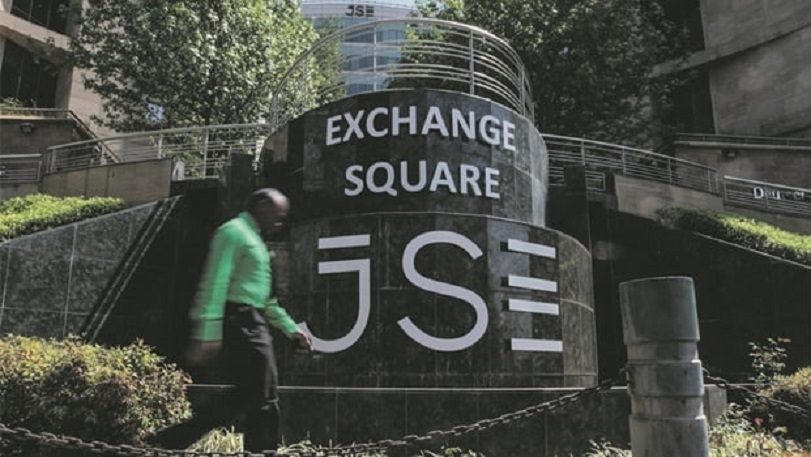
The Securities and Exchange Commission (SEC) and the Nigerian Exchange (NGX) Group Plc have visited South Africa to understudy the governance structure of the Johannesburg Stock Exchange (JSE).
The high-level delegation from Nigeria also held talks with the JSE on ways to strengthen a strategic partnership that will lead to dual listings and growth of the local capital market.
The chairman of NGX Group, Mr Umaru Kwairanga, said, “Understanding JSE’s governance structure, as a demutualized exchange like NGX Group, will significantly influence our decision-making moving forward.”
Also, the chief executive of NGX Group, Mr Temi Popoola, said, “This has been a productive engagement, and we look forward to a synergistic partnership with JSE across several areas that would contribute to market development and inform our strategic orientation as an exchange group.
“We are particularly optimistic about the potential of private markets, innovation, and technology in product development to drive the transformation of our business and markets.”
On his part, the Director General of SEC, Mr Emomotimi Agama, said, “SEC fully supports initiatives like this, which have the potential to steer the Nigerian capital market towards greater heights. The learnings from this engagement with JSE, another demutualized exchange, will be instrumental to our market’s development.”
In her remarks, the chief executive of JSE, Ms Leila Fourie, emphasised the growing importance of African capital markets in the global investment landscape, highlighting recent positive trends in South Africa’s capital market, including reduced outflows and improved investor sentiment, positioning it as a key player in the continent’s financial ecosystem.
She expressed her organisation’s readiness to collaborate with the NGX Group on carbon markets, data sharing, and private markets, which are crucial areas for revenue diversification.
In addition, the two exchange groups shared insights on governance, risk management, and self-regulation, with a focus on private markets and mergers and acquisitions, reinforcing the collaborative spirit of the meeting.
“There is a clear opportunity for African exchanges to unite in drawing global investment interest towards the continent,” Ms Fourie stated.
Economy
Buying Interest Lifts NASD OTC Exchange by 0.40%
By Adedapo Adesanya
The NASD Over-the-Counter (OTC) Securities Exchange rose by 0.40 per cent on Monday, July 13, buoyed by buying interest in 11 Plc, Central Securities Clearing System (CSCS) Plc and UBN Property Plc, which offset the profit-taking in Food Concepts Plc, the parent company of Chicken Republic.
11 Plc gained N20.69 to end at N227.64 per share compared with last Friday’s price of N206.95 per share, CSCS Plc grew by N1.83 to N91.48 per unit from N89.65 per unit, and UBN Property Plc added 1 Kobo to sell at N1.81 per share versus N1.80 per share.
On the flip side, Food Concepts Plc depreciated by 24 Kobo to close at N2.45 per unit, in contrast to the preceding session’s N2.69 per unit.
As a result, the market capitalisation increased by N9.2 billion to N2.587 trillion from N2.578 trillion, and the NASD Security Index (NSI) improved by 15.33 points to 4,311.67 points from 4,296.34 points.
Yesterday, the volume of securities traded by investors surged by 615.9 per cent to 9.1 million units from the previous 1.3 million units, and the value of securities rose by 997.1 per cent to N320.4 million from the preceding session’s N29.2 million, while the number of deals decreased by 12.5 per cent to 28 deals from last Friday’s 32 deals.
At the close of trades, Great Nigeria Insurance (GNI) Plc remained the most active stock by value on a year-to-date basis, with 3.4 billion units valued at N8.4 billion, followed by Infrastructure Credit Guarantee (Infracredit) Plc with 2.3 billion units worth N6.5 billion, and CSCS Plc with 73.9 million units exchanged for N5.2 billion.
GNI Plc also closed the session as the most traded stock by volume on a year-to-date basis, with 3.4 billion units sold for N8.4 billion, followed by Infracredit Plc with 2.3 billion units traded for N6.5 billion, and Resourcery Plc with 1.1 billion units transacted for N415.7 million.
Economy
Naira Maintains Stability Against US Dollar at Official Market
By Adedapo Adesanya
The Naira maintained stability against the US Dollar in the Nigerian Autonomous Foreign Exchange Market (NAFEX) on Monday, July 13, at N1,379.65/$1.
However, it appreciated against the Pound Sterling in the official market by N2.44 to exchange at N1,848.18/£1 compared with the previous rate of N1,850.62/£1, and lost 73 Kobo against the Euro to sell at N1,576.39/€1 versus last Friday’s N1,575.66/€1.
At the GTBank fore counter, the Naira declined by N2 to settle at N1,388/$1, in contrast to the previous session’s rate of N1,386/$1, and at the black market, it traded flat at N1,400/$1.
Market analysts expect the Naira to trade within a relatively stable range, supported by sustained FX inflows and a continued market intervention by the Central Bank of Nigeria (CBN), although persistent underlying FX demand is likely to keep depreciation pressures elevated.
According to Monday’s trading data, interbank FX turnover surged by 21.14 per cent to $86.136 million from $71.044 million at the previous trading session on Friday.
However, interbank deal counts declined to 85 from 87 on Monday, reflecting the absence of pressure from US Dollar payments against local units. Last week, total foreign exchange inflows amounted to $0.97 billion, according to a Coronation Merchant Bank research report.
Analysts reported that foreign portfolio investors (FPIs) remained the largest source of inflows, contributing 30.29% or $0.29 billion, closely followed by Exporters and Importers at 30.14 per cent.
Non-bank corporates accounted for 26.49 per cent or $0.26 billion, while the CBN contributed 6.93 per cent or $0.07 billion. Other sources made up the remaining 5.4 per cent of total inflows.
In the cryptocurrency market, major coins came under pressure following heightened expectations for a Federal Reserve interest-rate increase as soon as July, just ahead of key US inflation data and congressional testimony from Chairman Kevin Warsh came into focus.
Bitcoin (BTC) fell by 0.2 per cent to $62,627.03, Solana (SOL) dipped by 1.5 per cent to $75.18, TRON (TRX) depreciated by 0.2 per cent to $0.3248, Ripple (XRP) slumped by 0.6 per cent to $1.06, and Cardano (ADA) lost 0.6 per cent to close at $0.1589.
On the flip side, Ethereum (ETH) appreciated by 0.5 per cent to $1,784.26, Dogecoin (DOGE) grew by 0.2 per cent to $0.073, and Binance Coin (BNB) jumped by 0.2 per cent to $569.23, while the US Dollar Tether (USDT) and the US Dollar Coin (USDC) traded flat at $1.00 apiece.
Economy
Brent Jumps Nearly 10% to $83 on Renewed Hormuz Supply Concerns
By Adedapo Adesanya
Brent jumped to $83 per barrel on Monday after the United States announced a fresh blockade that reignited concerns over energy shipments through the Strait of Hormuz.
The international crude benchmark soared by $7.29 or 9.59 per cent to $83.30 per barrel, while the US West Texas Intermediate (WTI) crude gained $6.73 or 9.42 per cent to trade at $78.14 a barrel.
US President Donald Trump announced that he would reinstate a blockade on Iran, forcing traders to once again price in the risk of prolonged disruption to energy flows through the Strait of Hormuz. The blockade, due to begin on Tuesday, will cover Iran’s entire coastline, ports and oil terminals, as well as all vessels regardless of flag.
The US President also said vessels receiving protection while transiting Hormuz would reimburse the country through a 20 per cent charge on cargoes, Reuters reported.
President Trump’s idea would mean that a 20 per cent fee on a supertanker that carries about 2 million barrels of crude at $80 per barrel would be equivalent to around $32 million, or an additional cost of $16 per barrel.
“This is significantly higher than the $1/bbl toll for which Iran has been pushing,” ING’s strategists said.
The proposal was also criticised by the International Maritime Organisation (IMO) because international law does not provide for mandatory transit fees through straits used for international navigation. Energy companies have also rejected similar proposals previously advanced by Tehran, arguing that freedom of navigation remains a cornerstone of global maritime trade.
Iran’s top joint military command had earlier said it would not allow the US to intervene in the management of the strait, and any attempt by the US to transit without its authorisation would be confronted.
Analysts now expect countries to work on ways to permanently bypass the Strait of Hormuz. Goldman Sachs estimated that expanding pipeline capacity in the Middle East could shield more than 60 per cent of pre-war Gulf oil exports from any future Hormuz disruptions by the end of 2028.
The bank’s base-case forecast assumes pipeline capacity bypassing Hormuz will rise by 3.8 million barrels per day by end-2027 and 7.3 million barrels per day cumulatively by end-2028, taking total effective bypass capacity to more than 14 million barrels per day by end-2028.
The Organisation of the Petroleum Exporting Countries (OPEC) has trimmed its 2026 global oil demand growth forecast for the third straight month, even as crude production rebounds across the Gulf and tanker traffic slowly returns to the Strait of Hormuz.
In its monthly oil market report released Monday, OPEC lowered expected oil demand growth this year to 780,000 barrels per day, down another 190,000 barrels per day from last month’s forecast. The producer group still expects stronger consumption than many other forecasters, including the International Energy Agency, and even raised its demand growth estimate for 2027 by 210,000 barrels per day to 1.94 million barrels per day.