Connect with us

Economy

SEC Wants 2.5% of Fees Collected by NSE, FMDQ, NASD, CSCS, Others

Published

on

sec capital market

By Dipo Olowookere

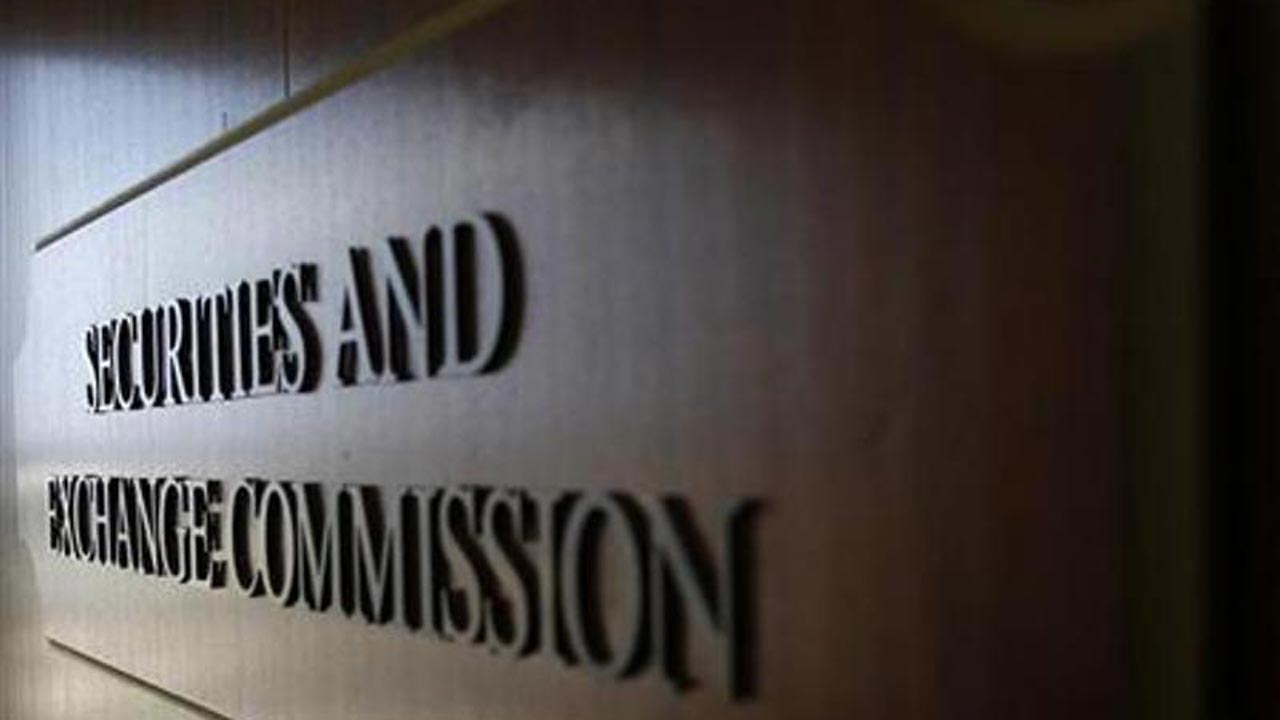
The Securities and Exchange Commission (SEC), the apex regulatory agency in the Nigerian capital market, is proposing to take 2.5 percent of fees collected by the securities exchanges under its control so as to get more funds to carry out its statutory duties.

These securities exchanges and clearing houses include the Nigerian Stock Exchange (NSE), FMDQ Securities Exchange Plc, which does clearing and depository functions; NASD OTC Securities Exchange and Central Securities Clearing System (CSCS).

The commission, in a notice justifying this move, explained that, “In order for the commission to continue to effectively carry out its core mandate, which is increasingly becoming more expensive due to the expansion of the market in terms of size, complexity and product offerings, it is imperative that the commission charges annual fees on Exchanges and FMIs.”

It further said it “expends huge resources in the course of regulating these entities, ranging from costs of target and periodic inspections/investigations, review and approval of requests for rules making/amendments, etc,” pointing out that, “Currently, Exchanges and other FMIs do not pay renewal fees.”

Business Post reports that in order to achive its goal, SEC, in the amendment titled Proposed amendment to Schedule I (Registration Fees, Minimum Capital Requirements, Securities and others), which seeks to create a new “Part E” to provide for annual regulatory charges to be paid by Securities Exchanges and FMIs, it wants a registered securities exchange to “pay to the commission, within thirty days of end of each financial year, an amount equal to 2.5 percent of the aggregate listing fees paid to it by issuers whose securities are listed or admitted on it, during that year.”

It further proposes that, “A depository shall pay to the commission, within thirty days of end of each year an amount equal to 2.5 percent of the aggregate annual depository fees paid to it by the issuers whose securities are deposited with it.”

Also, SEC further proposes that, “A registered clearing house or central counterparty clearing house shall pay to the commission, within thirty days of end of each financial year, an amount equal to 2.5 percent of the aggregate clearing fees charged by it for clearing functions, [while] other FMIs shall be required to pay annual fees to the commission as may be determined from time to time.”

Business Post reports further that SEC is proposed an amendment to Rule 199(3), which guides removal of a company trading its shares on any of the exchanges from the different trading platforms..

The existing rule states that, “The issuer of a security listed on an exchange may file an application to withdraw the security from listing on any exchange in accordance with the rules of that exchange and notify the commission accordingly. The exchange shall within ten (10) days consider and dispose of the application and notify the commission when such application is approved.”

In the proposed amendment, SEC wants this changed to, “The issuer of a security listed on an exchange may file an application to withdraw the security from listing on any exchange in accordance with the rules of that exchange. The Issuer shall give prior notice of such an application to the commission and notify the commission accordingly. The exchange shall within ten (10) days consider and dispose of the application and notify the Commission when such application is approved.”

Explaining the reason for this change, the agency said, “Rule 199 (1) requests an exchange to notify the commission seven (7) days prior to delisting an issuer when the initiative to delist is from the exchange itself. Thus similarly when such initiative is from the issuer, it is proposed for the concerned Exchange to similarly notify the commission before delisting the issuer.”


Dipo Olowookere is a journalist based in Nigeria that has passion for reporting business news stories. At his leisure time, he watches football and supports 3SC of Ibadan. Mr Olowookere can be reached via [email protected]

Click to comment

Leave a Reply

Your email address will not be published. Required fields are marked *

Economy

Champion Breweries Posts N14.36bn Revenue in Q1 2026 After Group Structure Transition

Published

on

Champion Breweries

By Aduragbemi Omiyale

Champion Breweries Plc has released its first consolidated financial results as an expanded organisation following its recent strategic expansion.

The company transitioned to a group structure after the acquisition of an 80 per cent equity interest in enJOYbev BV, whose performance is now consolidated into the group accounts for the first time.

In the results for the first quarter of 2026 released to the Nigerian Exchange (NGX) Limited, Champion Breweries posted a revenue of N14.36 billion, representing a strong increase compared to the prior year, driven by the consolidation of its newly acquired subsidiary.

Operating performance remained resilient, with operating profit rising to approximately N3.02 billion at the group level, reflecting continued discipline in cost management and operational efficiency.

Despite a softer consumer environment and lower volumes in the core domestic market, the company maintained a solid gross profit margin of 48 per cent, supported by improved cost efficiencies and disciplined commercial execution, underscoring the strength of its underlying business fundamentals.

This strategic expansion has already begun to contribute positively to earnings, with the subsidiary delivering operating profitability within the reporting period. While the company recorded a net loss at the standalone level, primarily driven by financing costs associated with its recent strategic investments, group-level profitability remained positive, with profit after tax of approximately N881 million, reflecting the early benefits of diversification and the strengthening of the brewer’s earnings base through its expanded portfolio.

Importantly, the firm continues to generate finance income from invested funds, reflecting prudent treasury management and supporting overall liquidity. This provides additional stability as the group advances its strategic initiatives.

Looking ahead, Champion Breweries says it remains confident in its outlook, noting that with the group structure now in place, improved earnings contributions from its expanded operations, and a clear focus on market execution, it expects a progressively stronger performance trajectory in the coming quarters.

Management reiterated its commitment to delivering sustainable value to shareholders, strengthening market positioning, and navigating prevailing economic conditions with discipline and resilience.

Continue Reading

Economy

CBN at 27.5% is Forcing a Major Reset in Forex Trading Strategies Across Nigeria

Published

on

HFM forex trading app

Nigeria’s trading environment has changed sharply since the Central Bank of Nigeria pushed rates to 27.5%, and the impact is being felt across the currency market. A rate that high does more than tighten financial conditions. It changes how traders read momentum, how they manage risk, and how they think about the naira against the dollar. Reuters reported that the CBN raised the policy rate to 27.50% in November 2024 after a string of hikes, and later kept it there as inflation and exchange rate pressures remained central concerns.

For anyone active in Nigeria’s currency space, forex trading now requires a very different mindset. What worked in a looser money environment does not always work when rates stay this high. Liquidity behaves differently, sentiment shifts faster, and market participants become much more sensitive to inflation data, policy guidance, and reserve trends. Reuters also reported that the CBN has tied its tight stance to the need to control inflation and stabilize the market, while reforms have improved reserves and confidence in the foreign exchange system.

Why a 27.5% rate changes the market mood

A rate this high affects more than borrowing costs. It resets expectations. Traders start looking at the naira through a different lens because such an aggressive stance tells the market that policymakers are serious about defending stability, even if growth conditions become tougher. In Lagos and Abuja, where many traders track both official policy signals and real market pricing, that shift has become impossible to ignore.

Higher rates reshape risk appetite

When rates rise to this level, speculative behavior often becomes more cautious. Some traders reduce position sizes. Others stop chasing moves and wait for stronger confirmation before entering. Why does that happen? Because a tight policy environment tends to punish weak conviction and reward discipline.

There is also a psychological effect. A market with a 27.5% policy rate feels heavier. It is like driving on a road where every turn demands more care than before. That change in mood forces traders to become more selective, especially in a country like Nigeria where inflation and currency sentiment still move together closely. Reuters said inflation eased after a statistical rebase, but the central bank still held rates high because broader pressure had not disappeared.

The naira story is no longer just about panic

Nigeria’s currency narrative has also become more layered. Earlier fears were largely about shortages and disorder, but now traders are also watching reforms, reserves, and policy credibility. Reuters reported that net foreign exchange reserves rose strongly in 2025 and that the CBN said clearer rules and reforms had reduced distortions and volatility.

That matters because strategy changes when the market starts trusting policy a little more. Traders can no longer rely only on the old playbook of assuming one direction and staying there.

How trading strategies are being reset

The biggest reset is in time horizon. In a market shaped by tight policy, many traders become less comfortable with broad, lazy positioning. They look for cleaner setups and faster reactions instead. A currency market under heavy policy influence often rewards timing more than stubborn conviction.

Shorter setups are becoming more practical

Many Nigeria focused traders now pay closer attention to event driven opportunities. Central bank comments, inflation releases, reserve updates, and reform announcements matter more than they used to. Reuters reported in March 2026 that the CBN eased some foreign exchange rules for oil companies to improve market liquidity and confidence, another sign that policy decisions are still actively shaping the currency landscape.

That makes short and medium term strategy more relevant. You might see a naira move that looks technical on the surface, but underneath it is often responding to policy changes, liquidity shifts, or fresh confidence in reserves. In Nigeria, the chart and the macro story now feel more connected than before.

Risk management matters more than prediction

This is where serious traders separate themselves from hopeful ones. A high rate environment does not just reward the right view. It rewards survival. Traders in Port Harcourt or Lagos who stay too attached to a single bias can get caught when policy or liquidity changes suddenly alter the mood.

I have seen markets like this before. They look calm until they do not. Then the move comes fast. That is why many traders are adjusting stop placement, reducing leverage, and focusing more on capital protection than on chasing every opportunity.

The reset, in other words, is not only strategic. It is behavioral.

Why Nigeria’s market may keep evolving

The CBN’s policy stance has already pushed traders to adapt, but the story is still developing. Reuters reported in April 2025 that the central bank sold nearly $200 million to support the naira after tariff related market shocks, showing that officials remain willing to act when volatility becomes disruptive. Reuters also reported this month that the naira had been relatively stable, supported by dollar liquidity from bond investments and exporter repatriations.

Stability can create a different kind of opportunity

A more orderly market does not mean fewer opportunities. It means different ones. Instead of trading pure panic, participants may increasingly trade around policy credibility, flow trends, and relative stability. For Nigeria, that could mark an important shift.

That is why the 27.5% rate matters so much. It has forced traders to stop relying on old assumptions and start working with a market that is slowly becoming more policy driven, more selective, and in some ways more professional.

Conclusion

The CBN’s 27.5% policy rate is forcing a major reset because it changes how traders approach risk, timing, and market structure in Nigeria. High rates, stronger reserves, and ongoing reforms have made the naira story more complex than it was before, and that means strategy has to evolve as well.

For traders in Nigeria, the message is clear. This is no longer a market where old habits are enough. Tight policy has raised the standard, and the traders who adjust their methods are more likely to stay effective as the next phase of the currency story unfolds.

Continue Reading

Economy

NASD Exchange Falls 0.22% After Investors Lose N4.8bn

Published

on

NASD securities exchange

By Adedapo Adesanya

The NASD Over-the-Counter (OTC) Securities Exchange weakened by 0.22 per cent on Tuesday, April 28, with the market capitalisation down by N4.8 billion to N2.420 trillion from N2.425 trillion, and the NASD Unlisted Security Index (NSI) down by 9.01 points to 4,044.96 points from 4,053.97 points.

During the session, the price of Central Securities Clearing System (CSCS) Plc went down by N1.82 to N767.05 per share from N78.87 per share, while FrieslandCampina Wamco Nigeria Plc appreciated by N1.90 to N100.00 per unit from N98.10 per unit.

According to data, the value of trades increased by 265.7 per cent to N27.1 million from N7.4 million units, and the volume of transactions surged by 305.2 per cent to 1.3 million units from 319,831 units, while the number of deals decreased by 6.9 per cent to 27 deals from 29 deals.

Great Nigeria Insurance (GNI) Plc remained the most traded stock by value on a year-to-date basis, with the sale of 3.4 billion units valued at N8.4 billion, followed by CSCS Plc with 59.8 million units exchanged for N4.0 billion, and Okitipupa Plc with 27.8 million units traded for N1.9 billion.

GNI Plc also finished as the most traded stock by volume on a year-to-date basis, with a turnover of 3.4 billion units worth N8.4 billion, trailed by Resourcery Plc with 1.1 billion units transacted for N415.7 million, and Infrastructure Guarantee Credit Plc with 400 million units sold for N1.2 billion.

Continue Reading

Trending