Economy
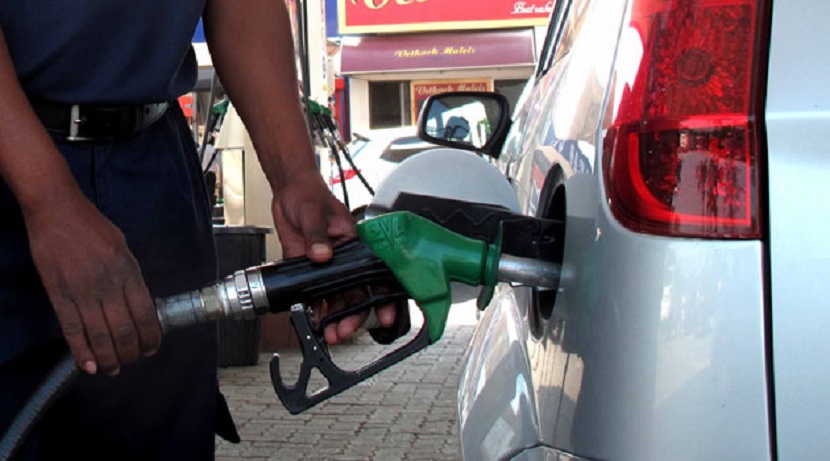
Senate Moves to Investigate Fuel Subsidy Regime
By Adedapo Adesanya
The Senate has constituted an ad hoc committee to investigate the fuel subsidy regime of the Nigerian National Petroleum Company (NNPC) Limited, which cost about N4.3 trillion alone in 2022.
This followed the adoption of a motion tagged Need to Investigate the Controversial Huge Expenditure on Premium Motor Spirit (PMS) under the Subsidy/Under Recovery Regime by the Nigerian National Petroleum Company Limited (NNPCL) by Senator Patrick Chinwuba during plenary on Tuesday.
Moving the motion, Mr Chinwuba said that the federal government, on May 11, 2016, announced an increase in fuel pump price from N87 to between N135 and N145 per litre.
“This was in its fight against corruption and in order to plug the presumed highly proliferated leakages, wastages, and slippages surrounding the fuel subsidy as well as in an attempt to end the controversial subsidy regime.
“At the inauguration of the present government on May 29, the President took a bold step to announce the total removal of fuel subsidy, noting that the scheme has increasingly favoured the rich more than the poor,” he said.
He said that the government’s interest in exiting the subsidy regime was in line with the policy of reducing the cost of governance and the desire to eliminate corrupt practices surrounding the scheme.
“The NNPCL, within the period of subsidy exit attempt, substituted the term subsidy with under recovery without any recourse to the National Assembly or supervision by any other arm of the government.
“While NNPCL within 10 years, 2006 and 2015, claimed about N170 billion as under-recovery, the same NNPCL within 13 months, January 2018 to January 2019 claimed a whopping sum of N843.121 billion as under-recovery,” he said.
The lawmaker expressed worry that the uninvestigated and alarming cost of under-recovery/direct deductions by NNPCL without necessary checks had led to a great misunderstanding of the government’s good intention on subsidy removal.
Supporting the motion, Senator Jibrin Isa said that the utilisation of the savings arising from the removal of the subsidy was very important.
“This is where our oversight function comes to play.
“These monies that are going to be recovered from the discontinuance of fuel subsidy should be used to revive some of the ailing companies in particular; the Ajaokuta Steel Complex, Itakpe Iron Ore Mining Company in Kogi and Oshogbo Iron and Steel Rolling Mills in Osun.
“Those projects can create a lot of employment opportunities, create a lot of revenue for the government,” he said.
Also, Senator Osita Izunaso said “we need to look at the palliatives to cushion the effects of subsidy removal.
“Much as we are going to make a lot of gains from subsidy removal, we have to look at the suffering of our people.”
On his part, Senator Mohammed Monguno said that the previous government did not have the political will to withdraw the subsidy.
“We thank this government for taking the bull by the horn and gathering all the political will to withdraw the subsidy in the interest of Nigerians.
“We are now saving a lot of money, which we can use to deploy for revamping our infrastructure.
“In view of the hardship unleashed on Nigerians as a result of the subsidy, there is the need for government to take responsibility in cushioning the effect of the removal,” he said.
Economy
Nigeria’s Crude Oil Production Drops Slightly to 1.422mb/d in December 2025
By Adedapo Adesanya
Nigeria’s crude oil production slipped slightly to 1.422 million barrels per day in December 2025 from 1.436 million barrels per day in November, according to data from the Organisation of Petroleum Exporting Countries (OPEC).
OPEC in its Monthly Oil Market Report (MOMR), quoting primary sources, noted that the oil output was below the 1.5 million barrels per day quota for the nation.
The OPEC data indicate that Nigeria last met its production quota in July 2025, with output remaining below target from August through December.
Quarterly figures reveal a consistent decline across 2025; Q1: 1.468 million barrels per day, Q2: 1.481 million barrels per day, Q3: 1.444 million barrels per day, and 1.42 million barrels per day in Q4.
However, the cartel acknowledged that despite the gradual decrease in oil production, Nigeria’s non-oil sector grew in the second half of last year.
The organisation noted that “Nigeria’s economy showed resilience in 2H25, posting sound growth despite global challenges, as strength in the non-oil economy partly offset slower growth in the oil sector.”
According to the report, cooling inflation, a stronger Naira, lower refined fuel imports, and stronger remittance inflows are improving domestic and external conditions.
“A stronger naira, easing food prices due to the harvest, and a cooling in core inflation also point to gradually fading underlying pressures”, the report noted.
It forecast inflation to decelerate further on the back of past monetary tightening, currency strength, and seasonal harvest effects, though it noted that monetary policy remains restrictive.
“Seasonally adjusted real GDP growth at market prices moderated to stand at 3.9%, y-o-y, in 3Q25, down from 4.2% in 2Q25. Nonetheless, this is still a healthy and robust growth level, supported by strengthening non-oil activity, with growth in that segment rising by 0.3 percentage points to 3.9%, y-o-y. Inflation continued to decelerate in November, with headline CPI falling for an eighth straight month to 14.5%, y-o-y, following 16.1%, y-o-y, in October”.
OPEC, however, stated that while preserving recent disinflation gains is important, the persistently high policy rate – implying real interest rates of around 12% – risks weighing on aggregate demand in the near term.
Economy
NBS Puts Nigeria’s December Inflation Rate at 15.15% After Recalculation
By Aduragbemi Omiyale
The National Bureau of Statistics (NBS) on Thursday revealed that inflation rate for December 2025 stood at 15.15 per cent compared with the 14.45 per cent it put the previous month.
However, it recalculated the November 2025 inflation rate at 17.33 per cent after using a 12-month index reference period where the average consumer price index (CPI) for the 12 months of 2024 is equated to 100. This is a departure from the single-month index reference period, in which December 2024 was set to 100, which would have produced an artificial spike in the December 2025 year-on-year inflation rate.
The NBS had earlier informed stakeholders a few days ago that it was changing its methodology for inflation to reflect the economic reality. This is coming after the organisation changed the base year from 2009 to 2024 earlier in 2025.
In its report released today, the stats agency explained that this process was in line with international best practice as contained in the Consumer Price Index Inter-national Monetary Fund (IMF) Manual, specifically in Section 9.125 and the ECOWAS Harmonised CPI Manual, which address index reference period maximisation, following a rebasing exercise.
On a month-on-month basis, the headline inflation rate in December 2025 was 0.54 per cent, lower than the 1.22 per cent recorded in November 2025.
The NBS also revealed that on a year-on-year basis, the urban inflation rate for last month stood at 14.85 per cent versus 37.29 per cent in December 2024, while on a month-on-month basis, it jumped to 0.99 per cent from 0.95 per cent in the preceding month.
As for the rural inflation rate in December 2025, it stood at 14.56 per cent on a year-on-year basis from 32.47 per cent in December 2024, and on a month-on-month basis, it declined to -0.55 per cent from 1.88 per cent in November 2025.
It was also disclosed that food inflation rate in December 2025 was 10.84 per cent on a year-on-year basis from 39.84 per cent in December 2024, while on a month-on-month basis, it declined to -0.36 per cent from 1.13 per cent in November 2025 (1.13%).
This was attributed to the rate of decrease in the average prices of tomatoes, garri, eggs, potatoes, carrots, millet, vegetables, plantain, beans, wheat grain, grounded pepper, fresh onions and others.
Economy
LIRS Reminds Companies of Annual Tax Returns Filing Deadline
By Modupe Gbadeyanka
Companies operating in Lagos State have been reminded of their obligations to file their annual tax returns for the 2025 financial year on or before January 31, 2026.
This reminder was given by the Lagos State Internal Revenue Service (LIRS) in a statement made available to Business Post on Thursday.
In the notice signed by the chairman of the tax agency, Mr Ayodele Subair, it was stressed that filing the tax returns is an obligation as stipulated in the Nigeria Tax Administration Act (NTAA) 2025.
He explained that employers are required to file detailed returns on emoluments and compensation paid to their employees, as well as payments made to their service providers, vendors and consultants, and to ensure that all applicable taxes due for the year 2025 are fully remitted.
Mr Subair emphasised that filing of annual returns is a mandatory legal obligation, and warned that failure to comply will result in statutory sanctions, including administrative penalties, as prescribed under the new tax law.
According to Section 14 of the NTAA, employers are required to file detailed annual returns of all emoluments paid to employees, including taxes deducted and remitted to relevant tax authorities. Such returns must be filed and submitted not later than January 31 each year.
“Employers must prioritise the timely filing of their annual income tax returns. Compliance should be part of our everyday business practice.
“Early and accurate filing not only ensures adherence to the law as required by the Nigerian Constitution, but also supports effective revenue tracking, which is important to Lagos State’s fiscal planning and sustainability,” he noted.
The LIRS chief disclosed that electronic filing via the organisation’s eTax platform remains the only approved and acceptable mode of filing, as manual submissions have been completely phased out. This measure, he said, is aimed at simplifying and standardising tax administration processes in the state.
Employers are therefore required to submit their annual tax returns exclusively through the LIRS eTax portal: https://etax.lirs.net.
Dr Subair described the channel as secure, user-friendly, accessible 24/7, and designed to provide employers with a convenient and efficient means of fulfilling their tax obligations, advising firms to ensure that the tax identification number (Tax ID) of all employees is correctly captured in their filings, noting that employees without a Tax ID must generate one promptly to avoid disruptions during the filing process.
-
Feature/OPED6 years agoDavos was Different this year
-
Travel/Tourism9 years ago
Lagos Seals Western Lodge Hotel In Ikorodu
-
Showbiz3 years agoEstranged Lover Releases Videos of Empress Njamah Bathing
-
Banking8 years agoSort Codes of GTBank Branches in Nigeria
-
Economy3 years agoSubsidy Removal: CNG at N130 Per Litre Cheaper Than Petrol—IPMAN
-
Banking3 years agoFirst Bank Announces Planned Downtime
-
Banking3 years agoSort Codes of UBA Branches in Nigeria
-
Sports3 years agoHighest Paid Nigerian Footballer – How Much Do Nigerian Footballers Earn