

Economy
Senate Passes N2.176trn 2023 Supplementary Appropriation Bill
By Adedapo Adesanya
The Senate, on Thursday, passed the N2.176 trillion 2023 Supplementary Appropriation Bill after the third reading.
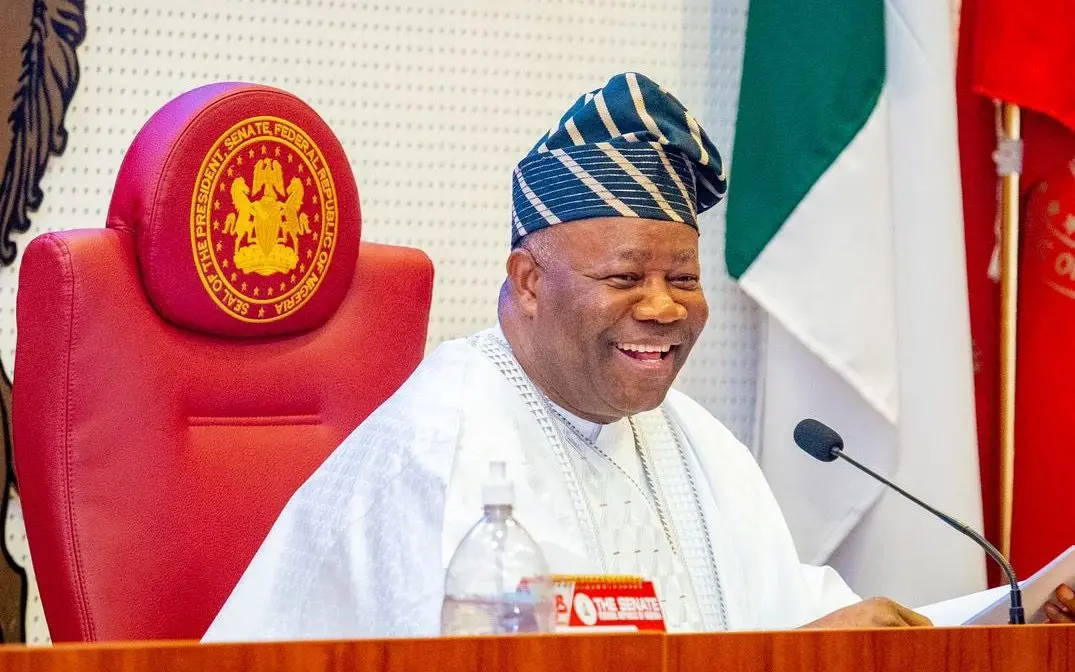
Before the passage of the bill, the Senate adopted the report of the harmonized sittings of both red and green chambers on the 2023 supplementary budget as submitted by the Chairman of the Appropriations Committee, Mr Solomon Olamilekan Adeola.
Recall that the National Assembly recently passed a Supplementary Appropriation Bill 2023 for a total of N819.5 billion for critical economic policy decisions of the federal government.
A few days ago, President Bola Tinubu wrote to the parliament, saying, “It has, however, become necessary to make further provision for additional palliative measures, including the wage award for public servants and the enhanced cash transfer program which is intended to benefit the most vulnerable members of our society.
“In addition, critical defence expenditures are also urgently required to provide for peace and the security of lives and property without which the government’s economic growth agenda cannot be achieved.
“Similarly, critical investments are also required to construct much-needed infrastructure, particularly roads which projects must be commenced within the (dry season) period between now and the end of the year.”
The N2.176 trillion 2023 supplementary budget proposal by President Tinubu, submitted to the House of Representatives on Tuesday, prioritised the security of Nigerians and their property as defence got the highest allocation of N476.543 billion. Works was allocated N300 billion while the Ministry of Agriculture and Food Security got N200 billion.
Housing got N100 billion, the Federal Capital Territory Administration got N100 billion While Police Commands and Allocation got N50 billion.
Also included in the supplementary appropriation bill are Service Wide Votes which were allocated N615 billion, capital supplementation (N210 billion) while State House was allocated N28 billion.
Others include the Department of State Services (N49 billion), Office of the National Security Adviser (N29.7 billion) and Independent National Electoral Commission (N18 billion) for the conduct of the off-cycle governorship election in Bayelsa, Kogi and Imo States on November 11.
Economy
Brent Futures Climb $1 on US-Iran War Uncertainty
By Adedapo Adesanya
Brent futures climbed $1.06 or 1.3 per cent to $83.55 a barrel on Friday amid ongoing uncertainty about the negotiations in progress that determine control of and reopening of the key shipping artery of the Strait of Hormuz.
In the same vein, the US West Texas Intermediate (WTI) futures finished at $78.18 a barrel after it chalked up 89 cents or 1.15 per cent.
Iran is reviewing a bill to ban American and Israeli vessels from the Strait of Hormuz, through which roughly a fifth of the world’s oil and liquefied natural gas normally passed before the war began at the end of February.
Market analysts noted that while this week’s signals on a potential deal have sent a roller-coaster ride in market sentiment, the market remains in the dark as to what needs to happen for the agreement to be clinched.
Part of the question being asked is whether the Iran-Oman agreement would allow a US-flagged vessel to transit the Strait of Hormuz or allow a vessel headed for an American port to go through.
Shipping through Hormuz remains heavily constrained as Middle East oil production is still well below pre-war levels while attacks on commercial vessels have continued even as negotiators discuss possible arrangements for the waterway.
Some also said that this week’s developments have signalled that hostilities between Iran and the US are not yet over. This is because the proposed deal is not easily workable because of sanctions and restrictive insurance clauses on any payments by the US government.
Iran is seeking fees of between 5 per cent and 7 per cent of the price of cargoes from ships using the strait, while Oman is discussing fees of about 3 per cent, while the Donald Trump administration wants no fees at all.
Citi has raised its third-quarter Brent crude forecast to $80 per barrel from $75 as the war drags on and repeated attempts at a deal fail to restore normal oil flows through the strait.
The bank still expects the conflict to be resolved, but the five-month war has lasted longer than Citi anticipated and kept more geopolitical risk in crude prices. Citi left its fourth-quarter Brent forecast unchanged at $70 per barrel and still sees the benchmark averaging $65 in 2027.
Economy
Dangote Eyes New Investments, Acquisitions as Goldman Sachs Tours Refinery
By Adedapo Adesanya
Nigerian businessman and chief executive of Dangote Industries Limited, Mr Aliko Dangote, has unveiled plans for a new phase of investments and acquisitions as the conglomerate pushes towards its target of generating $100 billion in annual revenue by 2030.
Mr Dangote disclosed this while receiving a delegation of senior executives from global investment banking and financial services firm Goldman Sachs, led by co-chief executive of Goldman Sachs International and Global Co-Head of Investment Banking, Mr Anthony Gutman, during a tour of the Dangote Petroleum Refinery & Petrochemicals and Dangote Fertiliser Limited complex in Lagos.
Speaking after the visit, Mr Dangote said the refinery and associated industrial facilities underscore the transformative impact of long-term investment in Africa, stressing that the group’s ambitions extend beyond its current strategic plan.
“No matter how we try to explain what we have built, you cannot fully appreciate it until you see it. But this is only the beginning. We need to look beyond 2030.
“The next phase of our journey will include new investments and acquisitions as we continue to scale the business,” he said.
He added that detailed internal modelling had reinforced management’s confidence that the Group’s target of generating $100 billion in annual revenue by 2030 was achievable.
According to him, the projections were based on conservative assumptions and had strengthened the company’s conviction to pursue an even more ambitious long-term growth strategy.
Mr Dangote also revealed that the strong participation of employees in the refinery’s recent private placement reflected growing internal confidence in the company’s long-term strategy and future prospects.
The Goldman Sachs delegation, after an extensive tour of the 700,000 barrels-per-day refinery, described the project as an extraordinary achievement.
“It is extraordinary what Mr Dangote and the whole organisation have achieved. The ambition, the scale of the project, the quality of the project and the culture of the people is very impressive,” the executives said.
According to a statement issued by Dangote Group on Friday, the delegation was led by Mr Anthony Gutman and included Mr Adib N. Zouein, Co-Head of EMEA Emerging Markets Regional Sales and Head of the Middle East and North Africa region for Global Banking & Markets Public; Mr Ryad Yousuf, Global Head of FICC Sales Strats and Structuring; and Mr Jimi Adesanya, Head of Sub-Saharan Africa Sales (excluding South Africa).
The visitors were received by Dangote; Group Vice President, Oil & Gas, Mr Devakumar Edwin; Managing Director and Chief Executive Officer of Dangote Petroleum Refinery & Petrochemicals, Mr David Bird; Group Executive Director, Oil & Gas, Ms Fatima Aliko Dangote; Chief of Staff to the President/CEO, Ibrahim Dikko; Group Chief Branding and Communication Officer, Mr Anthony Chiejina; Group Chief Economist, Mr Hassan Mahmud; Group Chief Strategy Officer, Mr Aliyu Suleiman; and Head of Administration, Dangote Petroleum Refinery & Petrochemicals, Mr Musa Bala, among other senior executives.
Economy
Senate Probes N1.2trn Fuel Subsidy Deductions as NEITI Claims N1.16tn Spent in 2021
By Adedapo Adesanya
The Senate Public Accounts Committee has heard that Nigeria spent N1.16 trillion on fuel subsidy in 2021, while N1.20 trillion was deducted from federation crude oil sales proceeds during the same period.
The disclosure came from the Chairman of the Revenue Mobilisation Allocation and Fiscal Commission (RMAFC), Mr Mohammed Bello Shehu, during the committee’s ongoing investigation into the 2021 to 2023 Nigeria Extractive Industries Transparency Initiative (NEITI) audit reports on the oil and gas sector.
According to the commission, crude and petroleum product losses cost N16.2 billion, pipeline repairs accounted for N22.05 billion, while strategic stock holding attracted N6.75 billion.
The revelations come against the backdrop of Nigeria’s long-running fuel subsidy regime, which successive governments maintained to keep the pump price of petrol artificially low despite mounting fiscal pressures.
Over the years, subsidy payments consumed trillions of Naira, significantly reducing revenues available to the three tiers of government and contributing to widening budget deficits.
The issue reached a turning point in May 2023 when President Bola Tinubu announced the removal of fuel subsidy during his inauguration speech, declaring that “fuel subsidy is gone.” The decision followed years of concerns over the rising cost of the programme, allegations of fraud, and repeated recommendations by fiscal authorities and international financial institutions that the subsidy had become unsustainable.
The removal triggered a sharp increase in the pump price of Premium Motor Spirit (petrol), leading to higher transportation and living costs across the country. In response, the federal government introduced a series of palliative measures, including cash transfers, support for mass transit, and wage-related interventions, while arguing that savings from the subsidy would be redirected to infrastructure, education, healthcare, and other critical sectors of the economy.
The commission also argued that the current method of calculating the 13 per cent derivation fund undermines the constitutional intention of the policy.
Meanwhile, the committee stood down the Niger Delta Development Commission’s presentation until next Wednesday to allow lawmakers review its submission.
The committee also expressed displeasure over the absence of the Auditor-General of the Federation, warning that he must appear before lawmakers next Tuesday or face compulsory appearance through the constitutional powers of the National Assembly.



