Economy
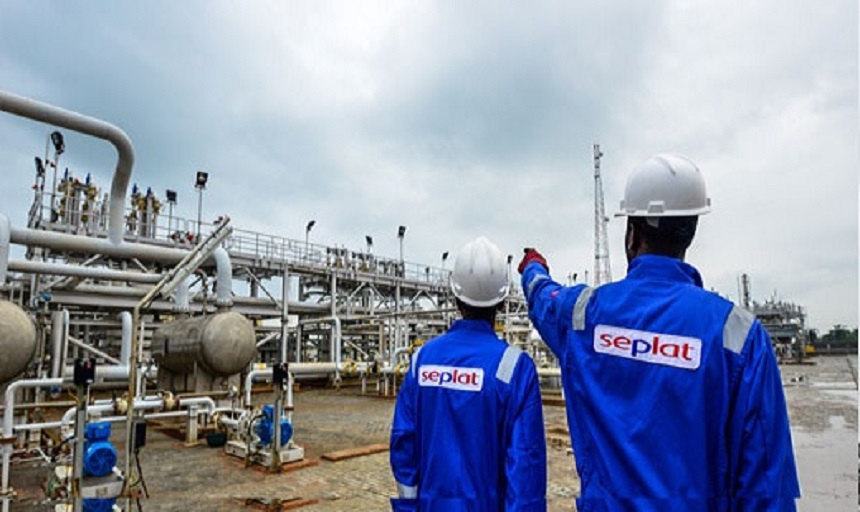
Seplat Able to Withstand Low Oil Prices
By Modupe Gbadeyanka
The ability of Seplat Petroleum Development Company Plc to remain strong in the face of falling crude oil prices at the global oil market has been reaffirmed.
Seplat is a company listed on both the Nigerian Stock Exchange (NSE) and the London Stock Exchange (LSE).
In recent times, the price of the company’s stock at the NSE had been declining, causing some shareholders to fret over it.
Prices of crude oil have not been too positive this year due to the coronavirus disease pandemic, which caused decline in demand for the commodity.
In April 2020, members of the Organisation of the Petroleum Exporting Countries (OPEC), as part of moves to make prices of crude oil remain green, agreed to cut global supply of the product by 9.7 million barrels per day in May and June.
This decision has helped prices to remain above $40 per barrel as at last week and on Saturday, they agreed to extend the cut to July before relaxing it in August.
Last week, one of the rating agencies in the world, Moody’s Investors Service, announced the completion of a periodic review of ratings of Seplat.
In a press statement, the agency said the Nigerian oil giant has the ability to withstand low oil prices in the near term.
According to Moody’s, this is supported by short term oil hedges and contracted gas revenue representing 29 percent of 2019 revenue.
It said in addition, Seplat’s moderately positioned credit metrics and sizable unrestricted cash balances, provide a buffer against a decline in its operating cash flow from lower oil prices over the next 18 months.
The rating organisation stressed that the leading exploration and production (E&P) firm has long-term oil and gas field licensing agreements that can make it remain stronger despite the challenges.
However, Moody’s said, “The ratings are constrained by the company’s exposure to volatile oil prices; small scale of production; concentration to a single asset block, Oil Mining Licences (OML) 4, 38 and 41 which account for 70 percent of the company’s working interest production; and operational concentration to a single country, Nigeria (B2 negative) with reliance on Nigerian government-owned entities for the timely payment of capital cash calls.
“Moody’s also note that there are significant uncertainties related to the impact of the coronavirus on the company’s credit metrics and liquidity as well as the shape of a future recovery of crude oil prices.”
Few days ago, Seplat paid over N30 as dividend to shareholders of the company for the 2019 financial year. The firm has been consistent in rewarding its investors.
Business Post reports that as at Monday afternoon, share price of the company was down by N47.60 or 9.99 percent to N428.80 per share.
Economy
Renewed Buying Interest Lifts NASD OTC Market by 0.52%
By Adedapo Adesanya
The NASD Over-the-Counter (OTC) Securities Exchange opened the week with a 0.52 per cent rise on Monday, July 20, driven by renewed buying interest.
The volume of securities traded during the opening session surged by 6,663.3 per cent to 52.6 million units from the previous 777,002 units, and the value of securities rose by 200.9 per cent to N191.2 million from the preceding session’s N104.2 million, while the number of deals depreciated by 15.2 per cent to 28 deals compared to the preceding session’s 33 deals.
Great Nigeria Insurance (GNI) Plc remained the most active stock by value on a year-to-date basis, with 3.4 billion units sold for N8.4 billion, followed by Infrastructure Credit Guarantee (Infracredit) Plc with 2.3 billion units valued at N6.5 billion in trades, and Central Securities Clearing System (CSCS) Plc with 75.4 million units exchanged for N5.3 billion.
GNI Plc also closed the day as the most traded stock by volume on a year-to-date basis, with 3.4 billion units worth N8.4 billion, followed by Infracredit Plc with 2.3 billion units transacted for N6.5 billion, and Resourcery Plc with 1.1 billion units traded for N415.7 million.
Yesterday, there were two price gainers and three price losers, led by FrieslandCampina Wamco Nigeria Plc, which slid by 66 Kobo to end at N141.15 per unit versus last Friday’s N141.81 per unit, Food Concepts Plc lost 24 Kobo to close at N2.31 per share versus N2.55 per share, and Geo-Fluids Plc declined by 17 Kobo to settle at N2.25 per unit compared with the previous closing price of N2.42 per unit.
Conversely, CSCS Plc chalked up N5.19 to close at N99.33 per share versus N94.14 per share, and Mass Telecoms Plc appreciated by 3 Kobo to sell at 35 Kobo per unit from 32 Kobo per unit.
As a result, the market capitalisation increased by N13.57 billion to N2.606 trillion from N2.593 trillion, and the NASD Security Index (NSI) gained 22.6 points to quote at 4,343.27 points, in contrast to the previous 4,320.67 points.
Economy
Naira Gains 7 Kobo Against US Dollar in Official FX Market
By Adedapo Adesanya
The Naira almost traded flat against the United States Dollar in the Nigerian Autonomous Foreign Exchange Market (NAFEX) on Monday, July 20. It gained 7 Kobo during the session to sell at N1,380.11/$1, in contrast to last Friday’s value of N1,380.18/$1.
It also appreciated against the Euro in the same market window during the session by N1.64 to close at N1,575.95/€1 versus the preceding session’s N1,576.99/€1, but depreciated against the Pound Sterling by N2.93 to trade at N1,857.35/£1 compared with the previous trading day’s N1,854.42/£1.
At the GTBank forex desk, the Nigerian Naira lost N1 against the US Dollar to quote at N1,389/$1 versus N1,388/$1, and at the black market, it traded flat at N1,405/$1.
Data from the Central Bank of Nigeria (CBN) showed that interbank FX turnover settled at $266.2 million, 7.5 per cent lower than the previous close of $287.8 million. Also, the number of deals at the interbank FX market declined to 68 from 106.
Despite this, there are signals that the Naira has pillars that can prop up its stability. Updated data from the apex bank showed Nigeria’s gross foreign exchange reserves increased to $51.92 billion as of July 16, 2026, reflecting continued improvements in the country’s external position.
A slew of analysts predict further increases will lift the gross balance above $52 billion this week, the highest seen since 2009.
Also, there are expectations that the country will be able to boost remittances into the country to $1 billion on a monthly basis by the end of the year; this will help ease pressure on the FX markets.
Meanwhile, in the crypto market, Bitcoin (BTC) climbed to about $65,500, reaching a two-week high, as the semiconductor selloff that dragged crypto lower last week reversed and Asian chip stocks led a broad risk rally. It rose by 2.4 per cent to $65,676.01.
There was also support from five straight days of inflows into US spot Bitcoin ETFs totalling more than $600 million, marking the strongest stretch of institutional buying since mid-July.
Cardano (ADA) jumped by 8.3 per cent to $0.1756, Ethereum (ETH) grew by 4.0 per cent to $1,930.33, Ripple (XRP) improved by 3.9 per cent to $1.13, Solana (SOL) appreciated by 3.2 per cent to $78.34, Binance Coin (BNB) added 1.9 per cent to sell for $575.34, and Dogecoin (DOGE) expanded by 1.7 per cent rise to $0.0729.
However, TRON (TRX) declined by 0.1 per cent to $0.3261, and the US Dollar Tether (USDT) and the US Dollar Coin (USDC) traded flat at $1.00 each
Economy
NGX All-Share Index Rises 1.12% on Sustained Bargain-Hunting
By Dipo Olowookere
Sustained bargain-hunting in local stocks further lifted the Nigerian Exchange (NGX) Limited by 1.12 per cent on Monday.
The buying pressure was across the major sectors of Customs Street, though the consumer goods space came under profit-taking, closing flat.
But the banking counter expanded by 3.14 per cent, the industrial goods index gained 2.82 per cent, the insurance sector increased by 0.25 per cent, and the energy segment soared by 0.08 per cent.
Consequently, the All-Share Index (ASI) surged by 2,721.83 points to 246,183.96 points from 243,462.13 points, and the market capitalisation went up by N1.755 trillion to N158.812 trillion from N157.057 trillion.
Custodian Investment and NEM Insurance chalked up 10.00 per cent each to sell for N75.90 and N30.80, respectively, BUA Cement rose by 9.98 per cent to N303.10, First Holdco improved by 9.95 per cent to N105.50, and FTN Cocoa advanced by 9.94 per cent to N9.29.
On the flip side, SUNU Assurances shrank by 10.00 per cent to N3.60, Tripple Gee slipped by 9.77 per cent to N3.51, ABC Transport tumbled by 9.62 per cent to N7.05 per cent, Abbey Bank crashed by 9.00 per cent to N9.10, and Coronation Insurance dipped by 7.69 per cent to N2.40.
The market breadth index was flat yesterday, as there were 31 price gainers and 31 price losers.
First Holdco led the activity chart during the session, with a turnover of 203.9 million shares valued at N21.5 billion. Access Holdings sold 190.7 million equities worth N4.8 billion, UBA traded 29.2 million stocks for N1.4 billion, Zenith Bank transacted 24.7 million shares valued at N2.9 billion, and Sterling Holdings exchanged 23.6 million equities worth N187.4 million.
When trading activities ended at 4 pm, investors traded 851.6 million stocks for N49.6 billion in 56,873 deals compared with the 685.9 million stocks valued at N42.7 billion transacted in 44,134 deals last Friday, representing a rise in the trading volume, value, and number of deals by 24.16 per cent, 16.16 per cent, and 28.86 per cent, respectively.