
Economy
Shift in Geopolitical Relations: Russia’s Roadmap to Nigeria, ECOWAS and Africa

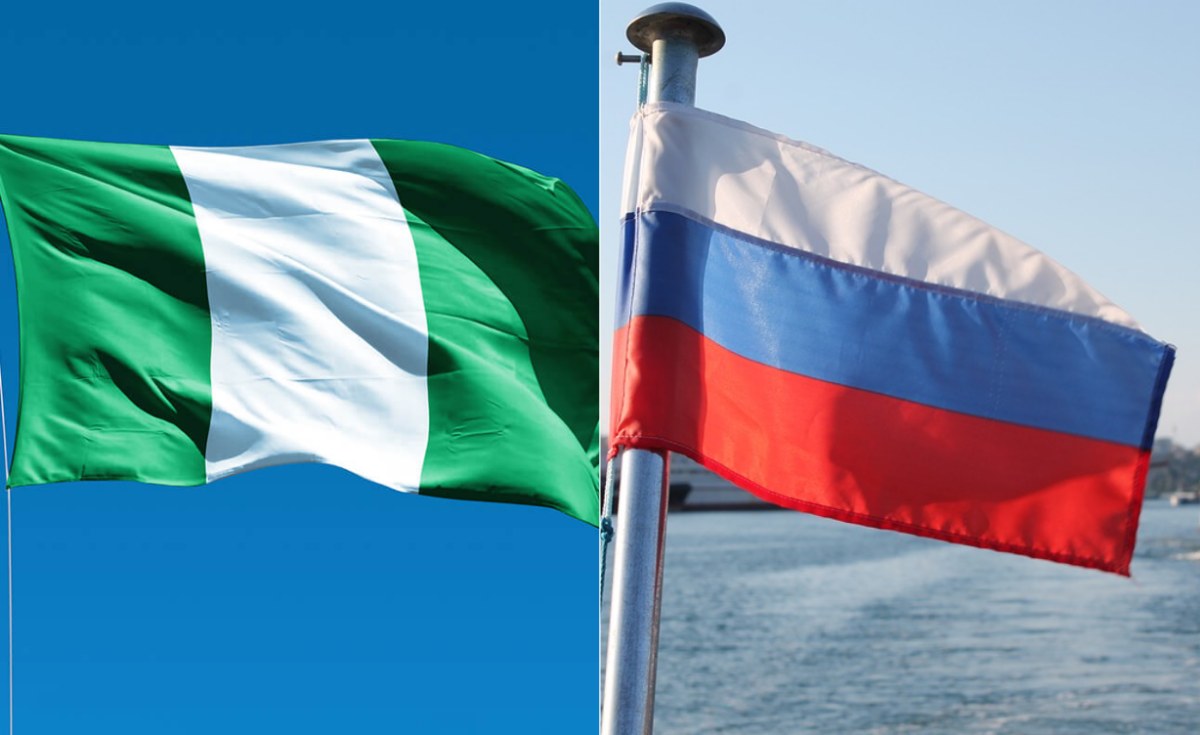
By Professor Maurice Okoli
The growing US-China rivalry and Russia-Western allies’ geopolitical tension have shaken the international peace and security system’s foundation and significantly shaped Russia’s diplomacy with Africa. While that seems to be the general trend across the board, the Federal Republic of Nigeria is also getting highly renewed attention from Moscow. Historically Nigeria, like a number of African states, has had relations from the Soviet times and still maintains traditional relationships after the Soviet’s collapse in 1991. Nevertheless, it is interesting to explicitly note that a new wave of democratic change has also blown all over Africa. We can convincingly point to the fact that old ideological friends of the Soviet Union changed camps and transformed in favour of the capitalist-democratic model, in line with the changing political dynamics inside Africa and around the world.
In practical terms, the Soviet Union offered enormous assistance during the decolonization process of African countries in the late 1950s and early 1960s, and the Kremlin’s policy, at that period, for the newly liberated African countries included:
To gain a lasting presence in the African continent,
To have a voice in African affairs,
To undermine Western influence in the African continent by equating capitalism with imperialism, and
To keep communist China out of the African continent.
In pursuit of its foreign policy agenda, the Soviet Union maintained diplomatic relations between Nigeria and many on the continent. There were 48 diplomatic offices across Africa. Nigeria established diplomatic relations on November 25, 1960, after it had attained political independence from Britain. The mission was formally opened in 1961.
There are noticeable bits of historical landmarks between Nigeria and Russia. Olusegun Obasanjo visited Russia in 2001. That was followed by Muhammadu Buhari in 2019. However, in June 2009, Dmitry Medvedev, president of Russia, visited Nigeria for the first time and held topmost state-level talks on possible nuclear energy, oil exploration and military cooperation. There were talks also focusing on establishing a petrochemical plant in Nigeria. There was also a declaration on principles of friendly relations and partnership between Nigeria and the Russian Federation.
Russia’s second-largest oil company, and privately controlled Lukoil, has gone back and forth these several years with plans to expand its operations in Nigeria and several West African countries. There has been a long-dead silence after Gazprom, the Russian energy giant, signed an agreement with the Nigerian National Petroleum Corporation (NNPC) on the exploration and exploitation of gas reserves with a new joint venture company known as NiGaz Energy Company.
Despite the complexities and obstacles, Nigeria is still high on Russia’s agenda for reviving multifaceted business ties, at least to share the market and take up opportunities similar to external players such as the United States, Europe and China. We sincerely acknowledge efforts by Russians now gearing up to revamp the Ajaokuta Iron and Steel Complex, which was abandoned after the collapse of the Soviet Union three decades ago, and further take up energy, oil and gas projects in Nigeria, as well as facilitate trade between Nigeria and Russia.
Further to the above, there could be specific points of focus in the current relations: The strategic point of convergence between Moscow and Abuja is stability in the West African region, which is vital for both countries in their interests. It could best be achieved through ensuring security, boosting economic development, expanding tentacles in energy and infrastructure projects and raising cooperation with the regional bloc – the Economic Community of West African States (ECOWAS).
Suffice it to say that Russia’s passion for humanitarian cooperation is strongly recommended here. This will help sustain its traditional sphere of influence in the western region of Africa. The main reasons are that Nigeria is considered the economic powerhouse. Ghana now hosts the headquarters of the African Continental Free Trade Area (AfCFTA), spanning 54 states over the next years with the potential to unite more than 1.3 billion people in a $2.5 trillion economic bloc. It has the potential to generate a range of benefits through supporting trade creation, structural transformation, productive employment and poverty reduction. The AfCFTA opens up more opportunities for both local African and foreign investors from around the world.
Both African and foreign policy experts argue that African countries need to support meaningful dialogue and take steps toward addressing the economic dimensions in the continent, and this must necessarily reflect in their relations with potential external partners while, at the same time, maintaining their territorial integrity and political independence. We strongly believe that African economic diplomacy and partnerships could be raised to appreciably new levels the Russia-Africa relations. This is where I shared my views with both foreign and our African experts that these measures will contribute tremendously, in pursuit of the economic integration of our continent, towards the attainment of the well-known vision: Agenda 2063, the Africa We Want.
Egypt, Nigeria, and South Africa are the biggest economies on the continent, and Nigeria, for example, plays a major role in the West African region. The Nigerian economy is based on private enterprise, but the state participates in many ways. That is why Russia has to redirect its focus to the private sector to enhance its economic profile. In this case, Nigeria, Ghana, Cote d’Ivoire (Ivory Coast) and other countries have enormous potential to cooperate with Russia in the West African region. According to reports, on different occasions, former Vice President Yemi Osinbajo expressed keen interest in developing bilateral cooperation and spoke frankly about the need to increase the presence of Russian companies in Nigeria.
Three key factors are at work here for Russia to get a foothold in West Africa. First, Russia is seen as the provider of security, and Russia’s defence capabilities continue to play a crucial role in maintaining stability in the region. One more point here is the French-speaking Sahel-5 (Burkina et al.) is nearly under the control of Russia. Reports pointed out that cooperation among forces from the so-called G5 countries – Burkina Faso, Chad, Mali, Mauritania and Niger – remains difficult given the anti-French sentiments in the country, forcing under-equipped local armies to quickly step up their game against Islamist rebels in the volatile Sahel region.
With high interest, Russians are consistently pushing for military-technical cooperation. For Nigeria, Russian military equipment supply could be a high-value addition to the fight against the notorious Boko Haram, which threatens West African states. Many experts say conflict resolution should be coordinated and undertaken within the framework of multilateralism, which, of course, falls within Russia’s interest in forging relations with respective Security Councils of ECOWAS, the African Union and the United Nations.
Second, an opportunity to have market access to the West African region if potential Russian investors decide to locate some kind of production with the rules and regulations put in place under the African Continental Free Trade Area (AfCFTA). Unlike Russia, United States investors look forward to exploring several opportunities in the African Continental Free Trade Area (AfCFTA), a policy signed by African countries to make the continent a single market. Russian investors could similarly pursue public-private partnerships that support Russian and African businesses, including women-owned and led Small- and Medium-Scale Enterprises (SMEs).
Third, to carefully look at optional ways of utilizing civil society and private sector organizations. If Russia wants to play a pivotal role in advancing its economic influence, it has to navigate, leverage or make inroads into the private sector. Understanding these factors is crucial in formulating policies and appropriate mechanisms for realizing them. Worth to say that efficiency and effectiveness must reflect in its policy implementation. On the other hand, the shifting geopolitical landscape dictates new refined strategies. It also implies the ability to choose the multi-alignment dimension of countries rather than just dealing with a few in the region.
Notwithstanding multiple challenges with pursuing general policy goals in Africa, I would also note here in this article that Russia has maintained a traditional friendship, particularly with Nigeria and broadly with West Africa, so it is important that some focus be given to issues raised here at the forthcoming Russia-Africa summit. The critical focus areas are agriculture, energy, oil and gas, telecommunications, healthcare, transport, financing, marine exploration, aerospace, and other areas where Russian technology can have a comparative advantage.
Many Russian companies such as Lukoil, Gazprom, Rosatom and Rosneft are some of Russia’s energy and power industries actively engaged in Nigeria, Egypt, Angola, Algeria and Ethiopia. It must be stressed that in 2018, “Nigerian oil and gas Exploration Company Oranto Petroleum announced that it would be cooperating with Russia’s largest oil producer, Rosneft, to develop 21 oil assets across 17 African countries.” Unfortunately, this has not materialized due to Rosneft’s lack of interest in doing business in Africa. Additionally, Russian Rosatom has signed nuclear energy agreements with 18 African countries, including Nigeria, Egypt, Ethiopia and Rwanda, to address the power needs of those countries.
The Russian strategic policy interest in Africa and given the strong limitation of its current capability, according to Paul Stronski, one-time Senior Analyst for Russian domestic politics for the U.S. State Department Bureau of Intelligence and Research, “in many respects, Russia’s re-emergence in Africa, is an earnest attempt to resume relations where they were left when the Soviet Union departed the scene.” Paul Stronski further argues, “In sub-Saharan Africa, Russia’s priority is on exploiting new commercial opportunities and securing diplomatic support for its positions in multilateral institutions.”
The trade volume between Russia and Africa was $ 14.5 billion annually in 2020. However, this figure pales insignificance when compared with China, whose trade with Africa has attained $ 165 billion per annum during the same period and $ 254 billion in 2021, even with its late-comer status in Africa. This is to say that the doubling of trade relations within the next five years between Africa and Russia, as stated by Vladimir Putin in 2019, Sochi is not only a vision in the right direction of growing Russia’s partnership with Africa but also a desirable imperative.
In this sense, a new partnership with Africa could be defined not in terms of ideology but by alternative economic and developmental options which give Africa competitive parity. There are two distinctive initiatives which are appreciated: (i) President Vladimir Putin’s debt cancellation of twenty billion dollars ($20 billion) owed to Russia by African countries, which, in his very own word, “was not only a mark of generosity but also a manifestation of pragmatism.”
(ii) The systematization of regular summits. The joint declaration says, “At the initiative of African participants, a new dialogue mechanism – the Russia-Africa partnership forum – has been created. Top-level meetings will occur within its framework once every three years, alternately in Russia and African states. And, the foreign ministers of Russia and three African countries – the current, future and previous chairpersons of the African Union – will meet for annual consultations.”
The two sides have set goals and tasks for further developing Russia-Africa cooperation. They moved from an “ad hoc approach” and often controversial decision-making modalities to “a more comprehensive structured long-term policy plan” dealing with relations.
Beyond the summit, it is necessary to follow up on the concrete decisions as these will give a new impetus to the wide-ranging and long-term multifaceted relations with the countries in West Africa. Ghana, Nigeria and a few countries are already traditional markets for foreign producers and investors, including the United States, Europe, China, India, and even the Gulf states. Ghana and Nigeria open wide windows and doors to the real African market, beginning with the formidable Economic Community of West African States (ECOWAS) regional market.
“Today, for instance, Nigeria offers Russia the advantage of that cheap and robust labour. Given Russia’s recent experience of sanctions by America and its Western allies, a new model of doing business with Africa through investment has become not only sustainable but also imperative.” This was argued by Professor Shehu Abdullai Yibaikwal, Ambassador Extraordinary and Plenipotentiary of the Federal Republic of Nigeria, with concurrent accreditation to the Republic of Belarus. In his academic lecture at the Diplomatic Academy of the Russian Federation, perhaps one of the sectors where this model of doing business can be symbiotically harnessed is the field of agriculture and its value chain as a result of the steep rise in the large African market and the projected certainty of huge returns on investment in this sector.
Russia has expressed deep interest in Nigeria, highly pledging to build nuclear power plants, petroleum pipelines, railways and infrastructure. Unfortunately, these corporate plans have not been realized; Russia sees instability or neo-colonialism as factors impeding its investment. Then there are also the project financing and legal aspects that must be mutually resolved.
Our part is to ensure sustainability by making partnerships more reliable, workable and long-termed. We still have skyline hope and optimism for building back better relations between the two countries, and most importantly within the context of the Declaration “On the Principles of Friendly Relations and Partnership between the Russian Federation and the Federal Republic of Nigeria” signed as far back in 2001, and the multilateral cooperation that was signed between Russia and Nigeria by both leaders at the first Russia-Africa Summit held in Sochi. The forthcoming second summit in July 2023 also signals Russia’s practical preparedness and commitment to work based on a single rule book for trade and investment and towards sustainable development growth across Africa.
To finalize this article, we should refer to the quote by Egyptian President Abdel Fattah el-Sisi, Chairperson of the African Union (AU) in 2019 and co-chair of the first Russia-Africa Summit: “Our declaration has reaffirmed the goals of Agenda 2063 and the 2030 Agenda for Sustainable Development. We have approved a ministerial mechanism for promoting dialogue and partnership. We appreciate all these moves and believe they have created a solid foundation for further developing Russian-African relations.” Aware of this common responsibility, the Russian and African sides will continue coordinating their efforts to monitor the implementation of the documents adopted at the summit. This meets the desires and aspirations of African states and the Russian Federation.
Professor Maurice Okoli is a fellow at the Institute for African Studies and the Institute of World Economy and International Relations, Russian Academy of Sciences. He is also a fellow at the North-Eastern Federal University in Russia.





By Adedapo Adesanya
The NASD Over-the-Counter (OTC) Securities Exchange extended its stay in the south territory with a decline of 0.56 per cent on Wednesday, April 2.
This brought down the market capitalisation by N13 billion to N2.417 trillion from N2.430 trillion, and downed the NASD Unlisted Security Index (NSI) by 22.57 points to 4,062.87 points from the previous session’s 4,062.87 points.
It was observed that the NASD exchange ended with three price gainers and three price losers during the trading day.
MRS Oil Plc depreciated by N19.00 to close at N171.00 per unit compared with the previous price of N190.00 per unit, NASD Plc lost N4.14 to trade at N37.36 per share compared with Wednesday’s N41.50 per share, and Central Securities Clearing System (CSCS) Plc gave up N2.00 to sell at N78.00 per unit versus N80.00 per unit.
On the flip side, FrieslandCampina Wamco Nigeria Plc appreciated by 19 Kobo to N93.00 per share from N92.81 per share, Food Concepts Plc expanded by 15 Kobo to N2.87 per unit from N2.72 per unit, and Great Nigeria Insurance (GNI) Plc improved by 2 Kobo to 52 Kobo per share from 50 Kobo per share.
Yesterday, the volume of securities dipped by 91.8 per cent to 260.2 million units from 3.2 billion units, the value of securities went down by 98.1 per cent to N154.2 million from N8.3 billion, while the number of deals soared by 53.3 per cent to 46 deals from 30 deals.
GNI Plc was the most active stock by value on a year-to-date basis with 3.4 billion units worth N8.4 billion, followed by CSCS Plc with 56.9 million units valued at N3.9 billion, and Okitipupa Plc with 27.5 million units traded for N1.8 billion.
The most traded stock by volume on a year-to-date basis was also GNI Plc with 3.4 billion units sold for N8.2 billion, trailed by Resourcery Plc with 1.1 billion units exchanged for N415.7 million, and Infrastructure Guarantee Credit Plc with 400 million units transacted for N1.2 billion.
By Adedapo Adesanya
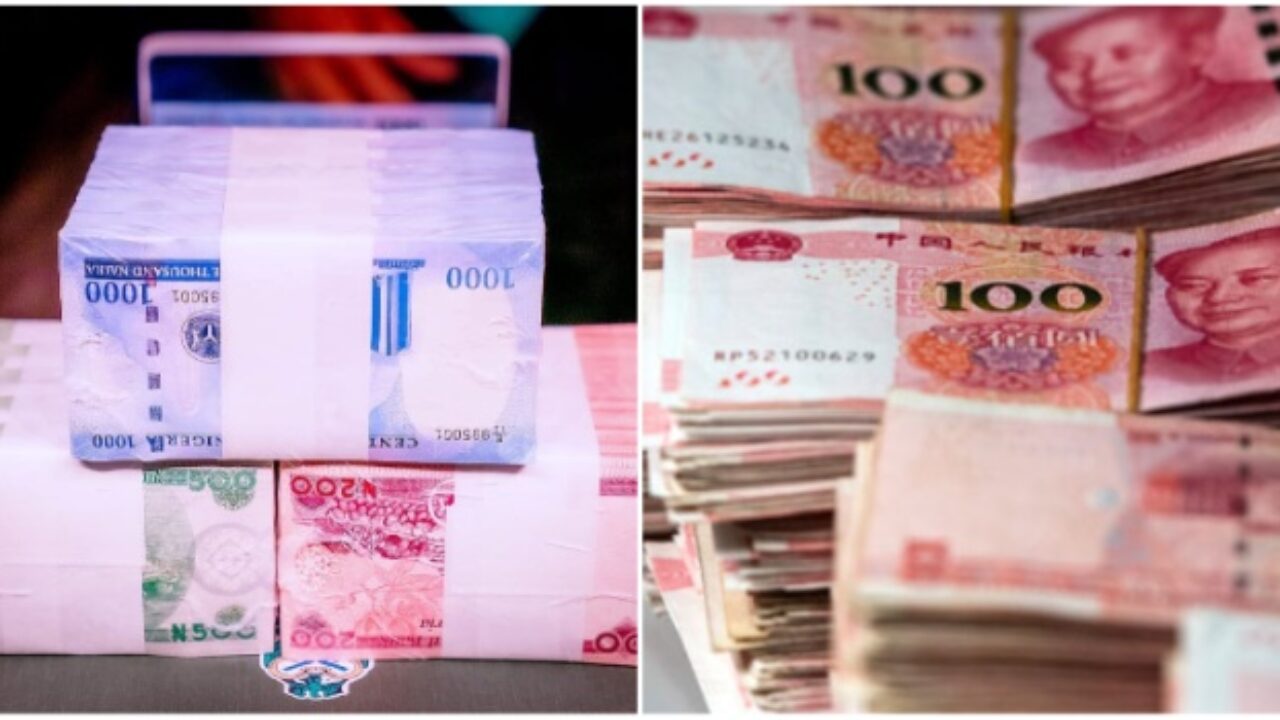
The Naira dropped N2.09 or 0.15 per cent against the United States Dollar in the Nigerian Autonomous Foreign Exchange Market (NAFEX) on Thursday, April 2, to trade at N1,380.79/$1 compared with Wednesday’s rate of N1,378.70/$1.
However, it appreciated against the Pound Sterling in the official market by N2.77 to quote at N1,824.86/£1 versus the N1,836.57/£1 it was traded at midweek, and improved its value against the Euro by N10.54 to N1,591.92/€1 from N1,602.46/€1.
Yesterday was the last trading session of the week for the local currency in the spot market, as the market will be closed on Friday and Monday for the Easter Holiday.
At the black market, the Nigerian Naira maintained stability against the greenback yesterday at N1,405/$1, but gained N8 at the GTBank FX counter to settle at N1,388/$1, in contrast to the previous session’s N1,396/$1.
Pressure eased on the domestic currency as strong policy indicators have helped calm the majority of worries within the financial systems. Particularly in the remittance segment, the apex bank has directed all International Money Transfer Operators (IMTOs) to route remittance transactions through designated Naira settlement accounts in banks, a move aimed at boosting transparency and channelling more foreign exchange into the formal market.
This helps take off pressure from the foreign reserves, which have fallen below the $50 billion mark as they are gradually decreasing rather than falling sharply.
Meanwhile, the cryptocurrency market was bullish on Thursday, as macro sentiment shifted against recent optimism after reports that Iran is drafting a protocol with Oman to manage traffic through the Strait of Hormuz, easing concerns about disruptions to a key global oil route.
The remarks came after U.S. President Trump on Wednesday night vowed to hit Iran “extremely hard” in the coming weeks and that the Strait of Hormuz would “open naturally” once the war ends.
Cardano (ADA) chalked up 1.9 per cent to trade at $0.2435, Dogecoin (DOGE) grew by 1.2 per cent to $0.0912, Ethereum (ETH) appreciated by 0.8 per cent to $2,066.37, Bitcoin (BTC) added 0.5 per cent to sell at $67,080.53, Solana (SOL) increased by 0.5 per cent to $79.91, and Ripple (XRP) jumped 0.2 per cent to $1.31.
Conversely, Binance Coin (BNB) dipped 0.7 per cent to $586.90, and TRON (TRX) depreciated by 0.3 per cent to $0.3147, while the US Dollar Tether (USDT) and the US Dollar Coin (USDC) closed flat at $1.00 each.

By Dipo Olowookere
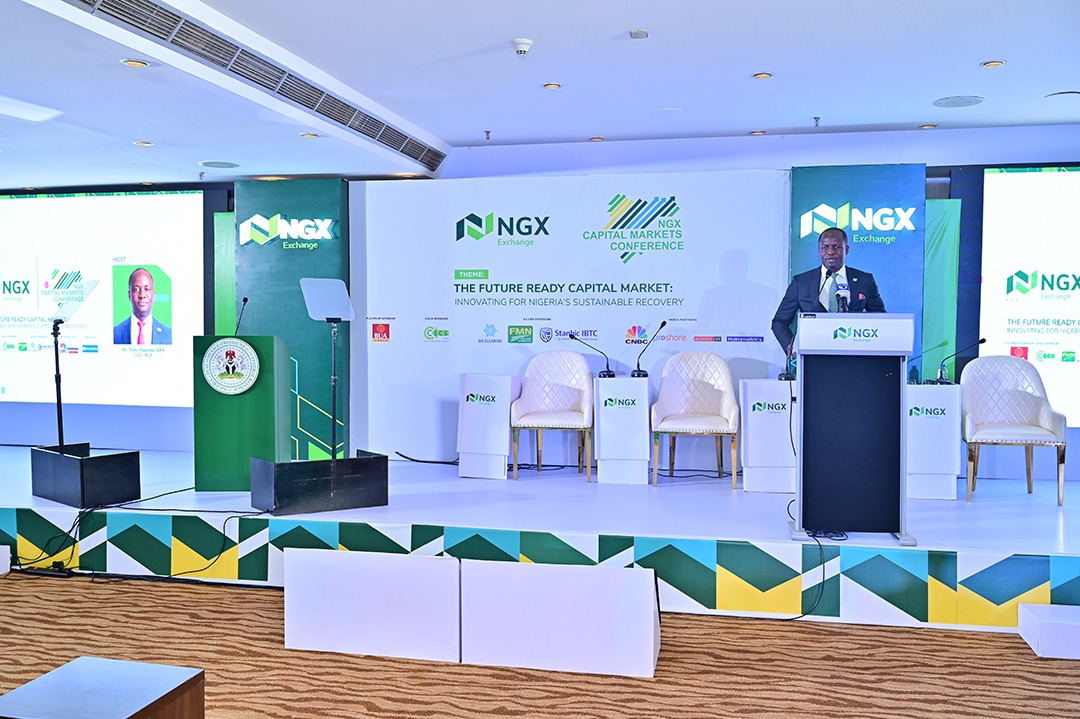
The local stock market was relatively flat on Friday, as the bears and the bulls shared the spoils of war, though investor sentiment turned bullish compared with the preceding session’s bearish posture.
Data from the Nigerian Exchange (NGX) Limited showed that the All-Share Index (ASI) was marginally down by 4.66 points as it ended at 201,698.89 points versus Wednesday’s 201,703.55 points, and the market capitalisation slightly contracted by N3 billion to N129.806 trillion from N129.809 trillion.
Customs Street was shut on Friday because of the public holidays declared by the federal government today and next Monday.
Business Post reports that John Holt declined by 9.91 per cent to N15.45, Abbey Mortgage Bank shed 9.60 per cent to trade at N8.95, International Energy Insurance slipped by 6.48 per cent to N3.32, Chams shrank by 5.30 per cent to N3.75, and Tantalizers depreciated by 5.18 per cent to N4.03.
On the flip side, Unilever Nigeria improved by 10.00 per cent to N103.40, Fortis Global Insurance gained 9.82 per cent to trade at N1.23, Multiverse appreciated 9.81 per cent to N20.15, Legend Internet advanced by 9.38 per cent to N6.30, and Zichis grew by 9.02 per cent to N14.14.
The market breadth index was positive during the trading session, as there were 35 appreciating stocks and 24 depreciating stocks.
Yesterday, investors traded 560.0 million equities valued at N19.3 billion in 49,676 deals, in contrast to the 815.5 million equities worth N33.3 billion transacted in 52,641 deals in the preceding day, representing a drop in the trading volume, value, and number of deals by 31.33 per cent, 42.04 per cent, and 5.63 per cent, respectively.
Secure Electronic Technology dominated the activity log with 59.7 million shares valued at N61.1 million, Wema Bank exchanged 52.0 million equities worth N1.4 billion, VFD Group transacted 36.0 million stocks for N410.5 million, Access Holdings sold 35.3 million shares valued at N914.8 million, and Chams traded 31.0 million equities worth N115.0 million.
-
 Feature/OPED6 years ago
Davos was Different this year
-
Travel/Tourism10 years ago
Lagos Seals Western Lodge Hotel In Ikorodu
-

 Showbiz3 years ago
Estranged Lover Releases Videos of Empress Njamah Bathing
-
 Banking8 years ago
Sort Codes of GTBank Branches in Nigeria
-

 Economy3 years ago
Subsidy Removal: CNG at N130 Per Litre Cheaper Than Petrol—IPMAN
-

 Banking3 years ago
Sort Codes of UBA Branches in Nigeria
-

 Banking3 years ago
First Bank Announces Planned Downtime
-

 Sports3 years ago
Highest Paid Nigerian Footballer – How Much Do Nigerian Footballers Earn