Connect with us

Economy

South East, North East Attract $0 into Nigeria in Q3, South West Rakes $5bn

Published

on

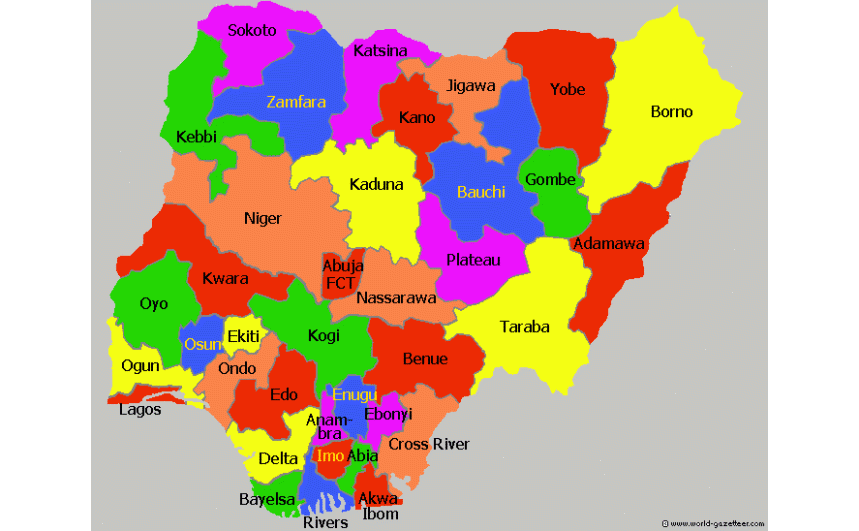
map of nigeria

By Adedapo Adesanya

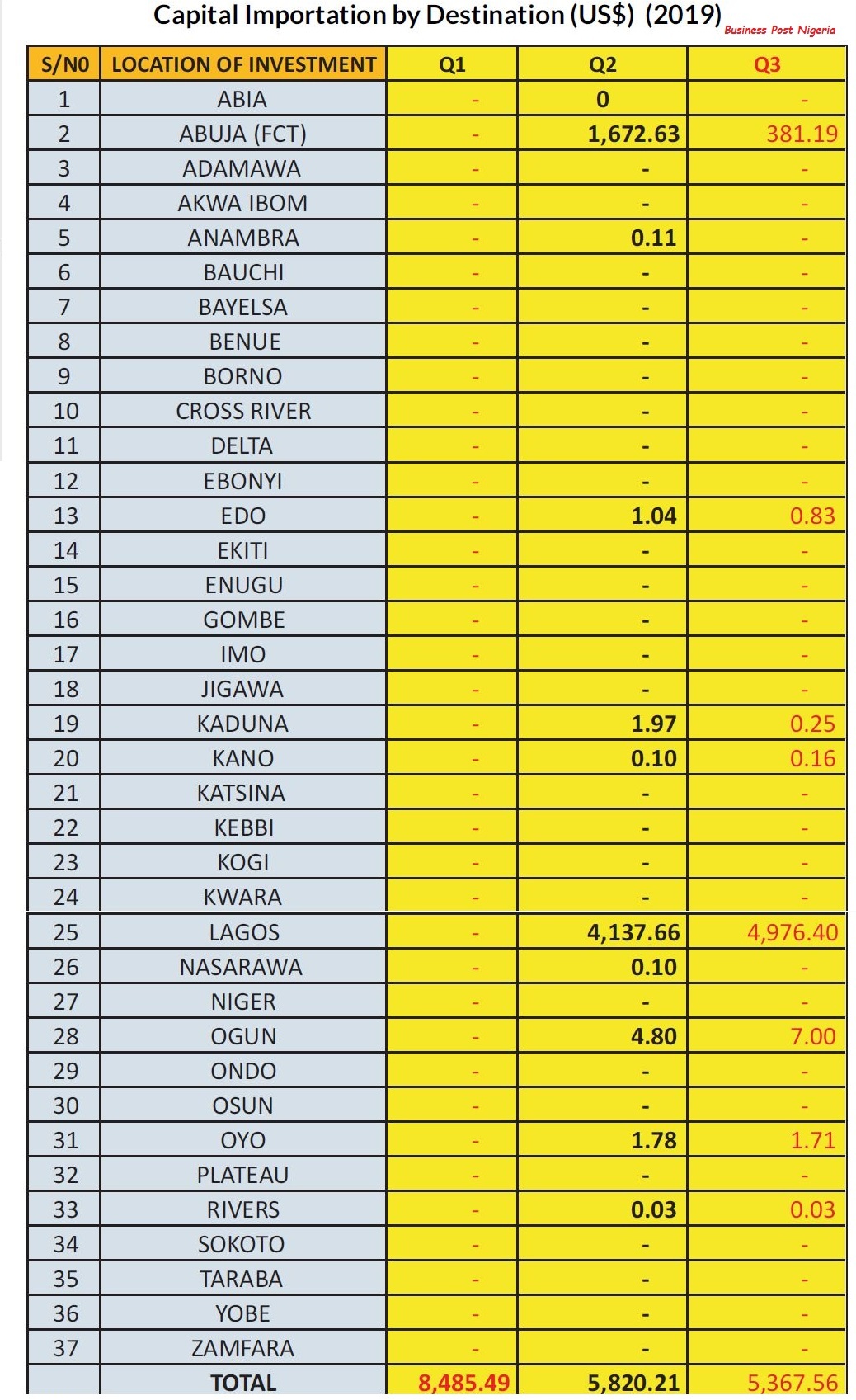
Some days ago, the National Bureau of Statistics (NBS) released data on Capital Importation into Nigeria in the third quarter of 2019, and an investigation done by Business Post showed that out of the total of $5.368 billion attracted into the country through foreign investments in the period, the South East and North East regions of the nation contributed zero Dollar to the amount.

This means that none of the five states in the South Eastern region of Nigeria; Abia, Anambra, Ebonyi, Enugu, and Imo attracted any form of investment in the third quarter of this year, just like the six states in the North Eastern territory; Adamawa, Bauchi, Borno, Gombe, Taraba, and Yobe.

A further analysis carried out by Business Post indicated that out of the 36 states and the Federal Capital Territory, Abuja, only eight states brought in foreign investments in the country, while the 29 other states recorded zero capital importation in Q3 ’19.

In the South West, only three out of the six states attracted an aggregate of $4.985 billion, with Lagos State taking the lion share as usual, both in the region and the country as a whole. Lagos attracted investments worth $4.976 billion, followed by Ogun and Oyo States which recorded $7 million and $1.7 million respectively. The trio of Osun, Ondo, and Ekiti contributed nothing.

Moving to the South-South zone, also known as Niger Delta, only two out of the six states contributed the $860,000 that came in as foreign investment to the region despite being highly rich in crude oil, Nigeria’s main source of foreign exchange. Edo brought in a total of $830,000 followed by Rivers with $30,000 while Delta, Cross River, Bayelsa, Akwa Ibom, and Bayelsa added nothing.

In the North-Central, the input of the FCT at $381.2 million was the only investment that came from the region, while states such as Kogi, Plateau, Kwara, Benue, Nasarawa, and Niger had no foreign investment in the period under review, according to the stats office.

For North West, only Kano and Kaduna States made contributions to capital inflow in Q3 2019, with the latter bringing in $250,000 worth of foreign investments and the former, Kano, raking $160,000. Other states in the geopolitical zone, Sokoto, Jigawa, Kebbi, Zamfara, and Katsina had no inflow into the country.

According to the NBS, Nigeria recorded a decline in capital importation in the third quarter of 2019. It was stated that the investment inflows of $5.4 million was 7.8 percent lower than the $5.8 billion attracted in the second quarter of this year, but 87.9 percent higher than the Q3, 2018 figures.
Adedapo Adesanya is a journalist, polymath, and connoisseur of everything art. When he is not writing, he has his nose buried in one of the many books or articles he has bookmarked or simply listening to good music with a bottle of beer or wine. He supports the greatest club in the world, Manchester United F.C.

Click to comment

Leave a Reply

Your email address will not be published. Required fields are marked *

Economy

Pathway Advisors Closes Fresh N16.76bn Oversubscribed Veritasi Homes CP

Published

on

Pathway Advisors Limited

By Adedapo Adesanya

Pathway Advisors Limited, an issuing house and financial advisory firm, has announced the successful completion of the Series 2 Commercial Paper issuance for Veritasi Homes & Properties Plc.

The Series 2 offer, issued under Veritasi Homes’ newly registered N20.00 billion Commercial Paper Programme, raised N16.76 billion, significantly above its initial N12.00 billion target on the back of strong institutional demand.

This issuance builds on the company’s track record in the Nigerian debt capital market and follows the recently concluded N10 billion 3-year 20 per cent  Series 1 Fixed Rate Bond Issuance, further reinforcing investor confidence in Veritasi Homes’ strong credit profile.

The 364-day tenor instrument attracted robust participation from a diverse pool of institutional investors, underscoring sustained confidence in the Company’s financial strength, operating model, and governance standards.

Commenting on the deal, the Founder/CEO of Pathway Advisors Limited, Mr Adekunle Alade (MBA, FCA, M.CIod), noted that the outcome further validates investor appetite for well-structured transactions in the Nigerian capital market.

“The strong oversubscription speaks to the market’s confidence in Veritasi Homes’ performance, governance, and repayment track record. We are pleased to continue supporting issuers with strong fundamentals in accessing efficient funding.’’

He further highlighted that Veritasi Homes’ consistent market activities since 2022, including successful issuances and full redemption of matured obligations, continue to strengthen its reputation among institutional investors.

“Pathway Advisors Limited remains committed to maintaining its leadership position within Nigeria’s capital markets through the origination and execution of transformative, value-driven, and commercially viable transactions by deploying innovative financial solutions and facilitating strategic capital formation across critical sectors.

“We are committed to supporting credible corporates in accessing efficient short-term and long-term financing solutions within the Nigerian capital market,” he said in a statement on Monday.

Speaking on the transaction, the Managing Director/CEO of Veritasi Homes & Properties Plc, Mr Nola Adetola, described the outcome as a strong endorsement of the company’s fundamentals.

“This result reflects the resilience of our business model, our growing market reputation, and the continued trust of the investment community. We are grateful to all institutional investors for their confidence in Veritasi Homes.”

He added that the proceeds from the issuance will be deployed to support the company’s working capital requirements, enhance liquidity, and complete the ongoing development activities across its real estate portfolio.

Mr Adetola also commended Pathway Advisors Limited for its advisory and arranging role in the successful execution of the transaction.

Continue Reading

Economy

SEC Okays Migration to T+1 Settlement Cycle for Capital Market Transactions

Published

on

Investments and Securities Act 2025

By Aduragbemi Omiyale

The Securities and Exchange Commission (SEC) has approved the transition to the T+1 settlement cycle for capital market transactions from June 1, 2026.

This is coming some months after Nigeria moved from the T+3 settlement cycle to the T+2 settlement cycle.

The T+ settlement cycle is the number of working days required to complete a capital market transaction, such as the trading of securities, shares, and others, from the first day the trade was executed by an investor.

In a notice on Monday, the SEC, which is the apex capital market regulator in Nigeria, said it was authorising the new system to “promote an efficient, fair, and transparent capital market.”

Under the new arrangement, equities and commodities traded by investors at the market would be cleared and settled by the Central Securities Clearing System (CSCS) within one day.

The agency noted that the migration to a T+1 settlement cycle forms part of its ongoing market modernisation initiatives aimed at enhancing market efficiency and strengthening risk management. reducing counterparty exposure, improving liquidity, and aligning the Nigerian capital market with international standards and global best practices.

“Accordingly, all eligible trades executed in the Nigerian capital market shall settle one business day after the trade date (T+1),” a part of the statement noted.

It was stressed that “Friday, May 29, 2026, shall be the final trading day under the existing T+2 settlement cycle. Trades executed on Friday, May 29, 2026, and Monday, June 1, 2026, shall both settle on Tuesday, June 2, 2026. All trades executed from Monday, June 1, 2026, onward shall be subject to the T+1 settlement cycle.”

SEC tasked all capital market operators, securities exchanges, clearing and settlement infrastructure providers, custodians, registrars, issuers, and other relevant stakeholders to take all necessary measures to ensure full operational readiness and compliance with the new settlement framework.

“Market participants are expected to review and align their systems, processes, controls, and operational workflows ahead of the implementation date,” it further stated, promising to continue to engage stakeholders and monitor the implementation process to ensure an orderly and seamless transition.

The regulator said it remains committed to strengthening market integrity, enhancing investor confidence, and fostering the development of a modern. resilient and globally competitive Nigerian capital market.

Continue Reading

Economy

Budget Office Explains Reason for Quarterly Report Delay

Published

on

2026 budget tinubu

By Adedapo Adesanya

The Budget Office of the Federation has defended the delay in publishing three outstanding Quarterly Budget Implementation Reports, saying the situation arose from the repeal and re-enactment of the 2025 Appropriation Act and the subsequent extension of the budget’s implementation period to June 2026.

The last publication on the budget office’s website is Q3 2025, a development that breaks the Fiscal Responsibility Act amid the country’s rising borrowing costs and mounting fiscal pressure.

In a clarification statement, the DG of the Budget Office, Mr Tanimu Yakubu, said public concerns over the absence of the reports must be understood within the constitutional and fiscal framework governing public finance administration in Nigeria, stressing that a fiscal year is not strictly tied to the January–December calendar, but is instead a legislative construct defined by appropriation laws passed by the National Assembly.

“The fiscal year is not necessarily synonymous with the calendar year. The calendar year is a fixed chronological construct of twelve months running from January to December.

“The fiscal year, however, is a juridical and legislative creation whose duration, commencement, and terminal date are determined by the extant appropriation framework enacted by law,” he said.

Mr Yakubu claimed that the recent reporting delay followed the Repeal and Re-enactment of the 2025 Appropriation Act concluded in December 2025, alongside an extension of the budget’s execution period.

These changes, he said, effectively altered the operational timeline for fiscal reporting and necessitated comprehensive reconciliations before publication of the affected quarterly reports.

“In substance and in law, therefore, the fiscal year becomes not merely a chronological concept, but a legislatively sustained expenditure window,” he explained.

The Budget Office further noted that Nigeria’s fiscal practice has historically accommodated adjustments such as supplementary budgets, rollover provisions, and implementation extensions, particularly for capital projects, to ensure continuity and prevent wastage of public resources.

It added that similar practices exist in other jurisdictions, where fiscal years are defined by law rather than fixed to the calendar year.

Citing constitutional provisions, the office referenced Sections 80 and 81 of the 1999 Constitution (as amended), which require that public expenditure be backed by appropriation laws rather than a rigid annual cycle. It maintained that as long as legislative authority exists, expenditure remains valid within the approved framework.

The DG also pointed to judicial precedents underscoring the supremacy of the National Assembly in public finance matters, noting that executive spending must align with statutory approval.

He also explained that the current reconciliation process involves revenue performance reviews, cash flow adjustments, debt analysis, and inter-agency coordination to ensure accuracy and audit integrity of the outstanding reports.

Mr Yakubu then assured that the missing quarterly reports are being finalised and will be released in phases in the coming weeks, adding that reforms are underway to strengthen digital reporting systems and improve transparency and timeliness in fiscal data publication.

In his words, “Accordingly, the outstanding Quarterly Budget Implementation Reports are being finalised and will be released in phases over the coming weeks.

“In parallel, the Budget Office is strengthening its digital reporting architecture, data harmonisation systems, and institutional coordination mechanisms to support more comprehensive, timely, and analytically robust fiscal reporting in line with evolving international public finance reporting standards.”

Continue Reading

Trending