
Economy
Startup On A Budget? Side Hustles To Boost Your Cash Flow


The entrepreneurial spirit burns bright in many, but a common hurdle stands in the way: funding. Bootstrapping a business or relying on personal savings and limited resources can feel like building a rocket ship out of cardboard.
Statistics from SCORE reveal that a whopping 28% of small businesses fail within the first year, and lack of funding is a major culprit.
But fear not, aspiring entrepreneur! The world of side hustles offers a powerful solution. A side hustle is a secondary income stream you can build alongside your main job.
This isn’t just about making a few extra bucks for that weekend getaway. Side hustles, when chosen strategically, can be the launchpad for your dream business.
For this, you have to validate your area, build your skills and network, and find your startup. Stay with us and learn about the top side hustles to try as an entrepreneur.
So, you’ve chosen to explore the exciting world of side hustles! But with so many options and the realities of daily life, how do you ensure your side hustle thrives and fuels your startup dreams?
Tips for Success With 4 Side Hustle
So, you’ve chosen to know about the side hustle options you have as an entrepreneur.! But with so many options and the realities of daily life, how do you ensure your side hustle is growing and helping your startup dreams?
The Perfect Side Hustle Match
Know Your Strengths – Take a skills inventory. Are you a whiz with graphic design software? A coding maestro? Using your existing skills minimizes the learning curve and maximizes efficiency.
Passion Projects Pay Off – Consider your interests. Do you love baking intricate cakes? Perhaps a custom cake side hustle is a perfect fit! Aligning your hustle with your passions makes it more enjoyable and sustainable.
Time Management is Key – Be realistic about your available hours. Can you dedicate evenings and weekends? Early mornings? Choose a side hustle that fits comfortably within your existing schedule to avoid burnout.
Your Brand & Client Base
A Compelling Online Presence – Create a website or utilize platforms like Upwork or Fiverr to showcase your skills and experience. Invest in high-quality visuals and clear messaging to establish yourself as a professional.
The Networking – Don’t underestimate the power of your network! Connect with friends, family, and former colleagues. Spread the word about your side hustle and offer referral incentives.
Competitive Rates Attract Clients – Research the market rates for your chosen side hustle. While undercutting the competition might seem tempting, offering competitive rates ensures your value is recognized and attracts high-quality clients.
Your Time & Money
- Schedule Like a Boss – Develop a realistic schedule for your side hustle. Block dedicated work hours in your calendar and treat them with the same respect as your main job.
- Track Your Hustle – Keep meticulous records of your income and expenses. Utilize accounting tools or spreadsheets to monitor profitability and identify areas for optimization.
- Minimize Expenses – Look for cost-effective ways to operate your side hustle. Explore free online tools, barter with other businesses, or utilize resources from your local library.
The 4 Common Side Hustle Ideas For Startup Owners
If you are running a startup, your main focus is building your dream business. Side hustles can provide the financial fuel and practical experience needed to reach the finish line. Here are four common categories of side hustles perfectly suited for startup founders:
Skills that Pay the Bills
Freelancing Freedom – If you possess in-demand skills like writing, editing, graphic design, or virtual assistance, freelancing platforms like Upwork or Fiverr can be a goldmine. This allows you to leverage your existing expertise for immediate income while potentially attracting future clients for your startup.
Online Tutoring or Teaching – Are you a math whiz or a language maestro? Share your knowledge! Online tutoring platforms like VIPKid or Cambly connect you with students worldwide, offering flexible hours and the potential to build a loyal student base that could translate to future customers for your startup.
Consulting Expertise – Don’t underestimate the value of your startup experience! Offer consulting services in your area of expertise to established businesses. This provides valuable income while allowing you to test your ideas and network with potential partners or investors for your startup.
Trading As A Side Hustle – If you think you have a knack for trading, then you can go for digital gold, which is cryptocurrency. As a beginner in this sector, you can opt for tools like intermagnum app to keep an eye on the market and invest in the currency that has long-term potential. Invest and forget and use the tool to check when the price of that digital gold is sky rockettimg. This is the time you sell it for a greater amount and earn thousands of dollars.
Turning Stuff Into Cash
The Sharing Economy Advantage – The sharing economy is booming! Do you have a spare room or unused storage space? Platforms like Airbnb or Neighbor allow you to rent out these underutilized assets for passive income. This can benefit location-independent startups, offering flexibility while generating revenue.
Craft Your Passion into Profit – Are you a culinary whiz or a crafting enthusiast? Sell your homemade creations online through platforms like Etsy or local farmers’ markets. This allows you to turn your passion into profit while potentially attracting a customer base that aligns with your startup’s target audience.
Declutter and De-clench – Everyone has unwanted items gathering dust. Host an online garage sale through platforms like Facebook Marketplace or local classifieds. De-cluttering your space generates income and frees up resources you can reinvest in your startup.
From Side Hustle to Startup Star
Blogging for Business Growth – Start a blog related to your startup’s niche. Share industry insights, establish yourself as a thought leader, and attract potential customers organically. This builds brand awareness for your startup while potentially generating income through advertising or affiliate marketing.
Your Startup’s Showcase – The power of video content is undeniable. Create a YouTube channel to showcase your startup’s product or service, offer tutorials or explainer videos, and connect with a wider audience. This not only promotes your side hustle but also lays the groundwork for your future startup’s marketing strategy.
Social Media Savvy – Do you have a knack for social media engagement? Offer social media management services to businesses. This allows you to hone your marketing skills while potentially attracting clients who could become future investors or partners for your startup.
Odd Jobs and Microtasks: Filling the Gaps with Flexibility
Delivery on Demand – Platforms like DoorDash or Uber Eats offer flexible delivery options for food and groceries. This can be a great way for your startup to earn extra income during off-peak hours, providing much-needed flexibility.
Be a Part of the Testing Revolution – Websites like Amazon Mechanical Turk offer microtasks like data entry, online surveys, or user testing. While the income might be modest, these tasks can be completed in short bursts, filling the gaps in your schedule.
The Helpful Handyman – Do you have a knack for fixing things? Offer handyman services through local classifieds or online platforms. This uses your existing skills for immediate income while potentially building a customer base that could translate to future business for your startup.
Summing Up
Side hustles offer options for startup owners. You can leverage your existing skills through freelancing or consulting, monetize underutilized assets by renting out space or selling creations, build an online presence with a blog or become a social media management guru, or fill free time with quick income through odd jobs.
A well-chosen side hustle can be the financial springboard your startup needs. So don’t wait; identify your strengths, explore your options, and turn your entrepreneurial vision into a thriving reality!






By Adedapo Adesanya
The NASD Over-the-Counter (OTC) Securities Exchange extended its stay in the south territory with a decline of 0.56 per cent on Wednesday, April 2.
This brought down the market capitalisation by N13 billion to N2.417 trillion from N2.430 trillion, and downed the NASD Unlisted Security Index (NSI) by 22.57 points to 4,062.87 points from the previous session’s 4,062.87 points.
It was observed that the NASD exchange ended with three price gainers and three price losers during the trading day.
MRS Oil Plc depreciated by N19.00 to close at N171.00 per unit compared with the previous price of N190.00 per unit, NASD Plc lost N4.14 to trade at N37.36 per share compared with Wednesday’s N41.50 per share, and Central Securities Clearing System (CSCS) Plc gave up N2.00 to sell at N78.00 per unit versus N80.00 per unit.
On the flip side, FrieslandCampina Wamco Nigeria Plc appreciated by 19 Kobo to N93.00 per share from N92.81 per share, Food Concepts Plc expanded by 15 Kobo to N2.87 per unit from N2.72 per unit, and Great Nigeria Insurance (GNI) Plc improved by 2 Kobo to 52 Kobo per share from 50 Kobo per share.
Yesterday, the volume of securities dipped by 91.8 per cent to 260.2 million units from 3.2 billion units, the value of securities went down by 98.1 per cent to N154.2 million from N8.3 billion, while the number of deals soared by 53.3 per cent to 46 deals from 30 deals.
GNI Plc was the most active stock by value on a year-to-date basis with 3.4 billion units worth N8.4 billion, followed by CSCS Plc with 56.9 million units valued at N3.9 billion, and Okitipupa Plc with 27.5 million units traded for N1.8 billion.
The most traded stock by volume on a year-to-date basis was also GNI Plc with 3.4 billion units sold for N8.2 billion, trailed by Resourcery Plc with 1.1 billion units exchanged for N415.7 million, and Infrastructure Guarantee Credit Plc with 400 million units transacted for N1.2 billion.

By Adedapo Adesanya
The Naira dropped N2.09 or 0.15 per cent against the United States Dollar in the Nigerian Autonomous Foreign Exchange Market (NAFEX) on Thursday, April 2, to trade at N1,380.79/$1 compared with Wednesday’s rate of N1,378.70/$1.
However, it appreciated against the Pound Sterling in the official market by N2.77 to quote at N1,824.86/£1 versus the N1,836.57/£1 it was traded at midweek, and improved its value against the Euro by N10.54 to N1,591.92/€1 from N1,602.46/€1.
Yesterday was the last trading session of the week for the local currency in the spot market, as the market will be closed on Friday and Monday for the Easter Holiday.
At the black market, the Nigerian Naira maintained stability against the greenback yesterday at N1,405/$1, but gained N8 at the GTBank FX counter to settle at N1,388/$1, in contrast to the previous session’s N1,396/$1.
Pressure eased on the domestic currency as strong policy indicators have helped calm the majority of worries within the financial systems. Particularly in the remittance segment, the apex bank has directed all International Money Transfer Operators (IMTOs) to route remittance transactions through designated Naira settlement accounts in banks, a move aimed at boosting transparency and channelling more foreign exchange into the formal market.
This helps take off pressure from the foreign reserves, which have fallen below the $50 billion mark as they are gradually decreasing rather than falling sharply.
Meanwhile, the cryptocurrency market was bullish on Thursday, as macro sentiment shifted against recent optimism after reports that Iran is drafting a protocol with Oman to manage traffic through the Strait of Hormuz, easing concerns about disruptions to a key global oil route.
The remarks came after U.S. President Trump on Wednesday night vowed to hit Iran “extremely hard” in the coming weeks and that the Strait of Hormuz would “open naturally” once the war ends.
Cardano (ADA) chalked up 1.9 per cent to trade at $0.2435, Dogecoin (DOGE) grew by 1.2 per cent to $0.0912, Ethereum (ETH) appreciated by 0.8 per cent to $2,066.37, Bitcoin (BTC) added 0.5 per cent to sell at $67,080.53, Solana (SOL) increased by 0.5 per cent to $79.91, and Ripple (XRP) jumped 0.2 per cent to $1.31.
Conversely, Binance Coin (BNB) dipped 0.7 per cent to $586.90, and TRON (TRX) depreciated by 0.3 per cent to $0.3147, while the US Dollar Tether (USDT) and the US Dollar Coin (USDC) closed flat at $1.00 each.
By Dipo Olowookere
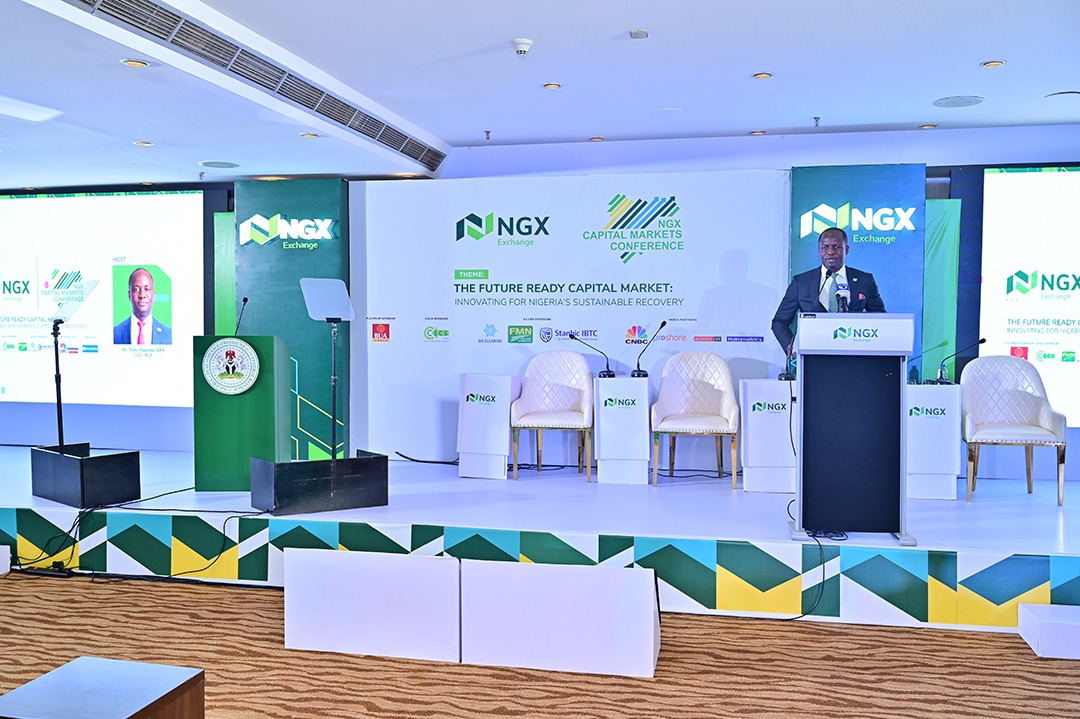
The local stock market was relatively flat on Friday, as the bears and the bulls shared the spoils of war, though investor sentiment turned bullish compared with the preceding session’s bearish posture.
Data from the Nigerian Exchange (NGX) Limited showed that the All-Share Index (ASI) was marginally down by 4.66 points as it ended at 201,698.89 points versus Wednesday’s 201,703.55 points, and the market capitalisation slightly contracted by N3 billion to N129.806 trillion from N129.809 trillion.
Customs Street was shut on Friday because of the public holidays declared by the federal government today and next Monday.
Business Post reports that John Holt declined by 9.91 per cent to N15.45, Abbey Mortgage Bank shed 9.60 per cent to trade at N8.95, International Energy Insurance slipped by 6.48 per cent to N3.32, Chams shrank by 5.30 per cent to N3.75, and Tantalizers depreciated by 5.18 per cent to N4.03.
On the flip side, Unilever Nigeria improved by 10.00 per cent to N103.40, Fortis Global Insurance gained 9.82 per cent to trade at N1.23, Multiverse appreciated 9.81 per cent to N20.15, Legend Internet advanced by 9.38 per cent to N6.30, and Zichis grew by 9.02 per cent to N14.14.
The market breadth index was positive during the trading session, as there were 35 appreciating stocks and 24 depreciating stocks.
Yesterday, investors traded 560.0 million equities valued at N19.3 billion in 49,676 deals, in contrast to the 815.5 million equities worth N33.3 billion transacted in 52,641 deals in the preceding day, representing a drop in the trading volume, value, and number of deals by 31.33 per cent, 42.04 per cent, and 5.63 per cent, respectively.
Secure Electronic Technology dominated the activity log with 59.7 million shares valued at N61.1 million, Wema Bank exchanged 52.0 million equities worth N1.4 billion, VFD Group transacted 36.0 million stocks for N410.5 million, Access Holdings sold 35.3 million shares valued at N914.8 million, and Chams traded 31.0 million equities worth N115.0 million.
-
 Feature/OPED6 years ago
Davos was Different this year
-
Travel/Tourism10 years ago
Lagos Seals Western Lodge Hotel In Ikorodu
-

 Showbiz3 years ago
Estranged Lover Releases Videos of Empress Njamah Bathing
-
 Banking8 years ago
Sort Codes of GTBank Branches in Nigeria
-

 Economy3 years ago
Subsidy Removal: CNG at N130 Per Litre Cheaper Than Petrol—IPMAN
-

 Banking3 years ago
Sort Codes of UBA Branches in Nigeria
-

 Banking3 years ago
First Bank Announces Planned Downtime
-

 Sports3 years ago
Highest Paid Nigerian Footballer – How Much Do Nigerian Footballers Earn
Pingback: Strategies for Launching Your Real Estate Tech Startup Successfully | Business Post Nigeria