Economy
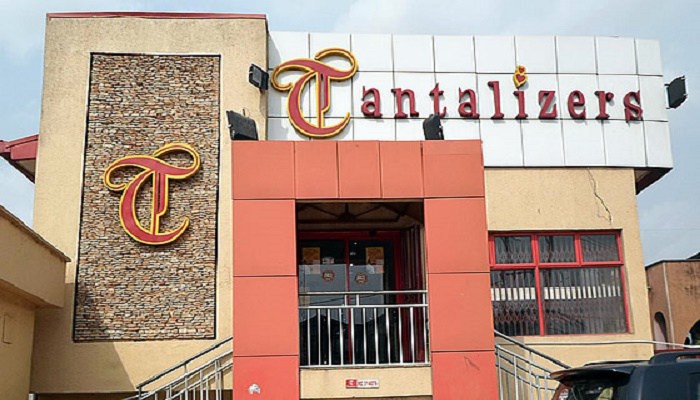
Strategic Initiatives: Tantalizers Assures Shareholders Positive 2017 Performance
By Modupe Gbadeyanka
Shareholders of Tantalizers Plc, Nigeria’s foremost fast food company and the only quoted QSR Company on the Nigeria Stock Exchange (NSE), can be most certain that they will smile when the firm releases its full year 2017 performance.
This is because management of the company has expressed business optimism regarding the efficiency of its on-going strategic initiatives aimed at reversing the recent declining profitability in the business.
The initiatives, which commenced in the last two years, are designed to totally restructure the business, stem the declining performance and boost shareholders’ funds.
Investigations show that as a result of the positive results from some of the initiatives, the company’s total systems revenue (corporate and franchise) has grown in the last two years by a minimum of 6 percent per annum and is projected to grow further by an additional 10 percent to N4 billion in 2017.
According to sources close to the company, to address the capital structure imbalance which had threatened its business fortunes, the company, two years ago, engaged notable consulting groups to assist in bringing in equity investors and, though the process has been largely stalled with the economic recession in the country, there has been a renewed interest from both local and foreign potential investors which is expected to crystallize before the end of 2017.
“The company is constantly looking at its cost structure particularly with the high cost of doing business in Nigeria. To this end, we have reduced outlet space where necessary in our renovated stores to make us more attractive, compact and efficient. We will continue to explore more avenues for cost reduction, while addressing other areas that we are sure will improve our competitiveness,” a recent media statement from the company stated.
“In the meantime, to manage the existing debt portfolio, the company has been in discussion with the local banks and IFC for debt restructuring.
“The discussions have been positive as the debts are already being re-structured. The overall effect of this will be seen in the results of the second half of the year,” it added.
While predicting a strong outlook for the second half of the year 2017, the company, in a recent presentation on the floor of the NSE, said its franchise model which was adopted three years ago is already yielding positive results.
“In the second half of 2017, we will open 5 additional stores in virgin territories thereby increasing our total foot print to 65 outlets.
“The planned opening of these outlets is an attestation to the strong equity of the Tantalizers brand and the consumers’ yearning for its location in their community.
“This will have significant impact on our market share and further consolidate our position as a market leader in the industry.”
The company further noted that “based on these ongoing initiatives and the support from all our stakeholders, we expect to commence the return to profitability position by the end of 2017 while we project dividend payment to commence as profitability improves within the next 24 months.”
“As we continue to grow total systems revenue, we will aggressively pursue over the next five years business expansion through new outlets, franchising and diversification. With this planned growth, we will return the company to a healthy profitable position and improve shareholders’ fund to over N3 billion in the next three years,” it further stated.
Economy
MRS Oil, Three Others Sink NASD OTC Exchange by 0.22%
By Adedapo Adesanya
Four price decliners weakened the NASD Over-the-Counter (OTC) Securities Exchange by 0.22 per cent on Thursday, January 15, with MRS Oil the gang leader after it lost N5.00 to close at N195.00 per share compared with the previous day’s N200.00 per share.
Central Securities Clearing System (CSCS) Plc declined during the session by 47 Kobo to settle at N40.50 per unit versus Wednesday’s closing price of N40.97 per unit, Geo-Fluids Plc depreciated by 21 Kobo to end at N6.59 per share versus N6.80 per share, and Lagos Building Investment Company (LBIC) Plc dipped by 2 Kobo to sell at N3.10 per unit, in contrast to the N3.12 it was traded at midweek.
The losses printed by the above quartet reduced the market capitalisation of the trading platform by N4.88 billion to N2.195 trillion from N2.2 trillion, while the NASD Unlisted Security Index (NSI) sank by 8.03 points to 3,670.10 points from 3,678.13 points.
During the trading day, the volume of transactions was up by 7.1 per cent to 690,886 units from 645,002 units, but the value of trades went down by 29.2 per cent to N17.3 million from the N24.4 million recorded in the previous trading session, and the number of deals executed at the session dipped by 10.5 per cent to 17 deals from 19 deals.
At the close of trades, CSCS Plc remained the busiest stock by value on a year-to-date basis with a turnover of 2.9 million units worth N117.9 million, trailed by MRS Oil Plc with 270,773 units valued at N54.1 million, and Geo-Fluids Plc with 6.5 million units traded for N43.9 million.
But the most active stock by volume on a year-to-date basis was Geo-Fluids Plc with 6.5 million units sold for N43.9 million, followed by Industrial and General Insurance (IGI) Plc with 3.1 million units traded for N1.9 million, and CSCS Plc with the same of 2.9 million units valued at N117.9 million.
Economy
Why Africa’s Investment Market May Look Very Different Soon
Africa’s investment market is entering a phase of visible transition, driven not by a single shock but by the gradual accumulation of structural changes. For years, the continent was often discussed through simplified narratives — either as an untapped frontier or as a high-risk environment requiring exceptional tolerance. That framing is beginning to lose relevance as investors reassess how and where capital actually performs under evolving global conditions.
What is changing first is not the volume of interest, but its direction. Capital is becoming more selective, less patient with inefficiency, and more focused on how investments interact with trade, logistics, and regional demand rather than isolated national stories. This shift is subtle, but it alters the underlying logic of how Africa is evaluated as an investment destination.
In this context, the growing attention around platforms and ecosystems such as westafricatradehub reflects a broader reorientation toward connectivity and execution. Investment discussions increasingly revolve around trade flows, supply chains, and integration mechanisms instead of abstract growth potential. The emphasis is moving from “where growth exists” to “where growth can realistically be accessed.”
Several forces are converging to accelerate this change. Global capital is operating under tighter constraints, with higher financing costs and stronger pressure to demonstrate resilience. At the same time, African markets are becoming more internally differentiated. Some regions benefit from improved infrastructure, digital adoption, and regulatory clarity, while others struggle to convert opportunity into consistent returns. This divergence makes generalized strategies less effective.
As a result, investors are adjusting their approach in practical ways, including:
- Prioritizing regions with established trade corridors rather than standalone markets
- Favoring business models tied to everyday demand instead of long-term speculation
- Structuring investments in stages rather than committing large amounts upfront
- Placing greater value on operational partners with local execution capacity
These adjustments do not signal reduced confidence, but a more disciplined allocation mindset.
Another factor reshaping the market is the changing perception of risk. Traditional concerns such as political stability and currency volatility remain relevant, but they are now weighed alongside newer considerations. Execution risk, infrastructure reliability, and regulatory consistency often matter more than macroeconomic projections. In some cases, smaller but better-connected markets outperform larger economies where friction remains high.
This evolution also affects which sectors attract attention. Instead of broad category enthusiasm, interest clusters around areas where investment aligns with trade and consumption realities. Logistics, processing, digital services, and trade-enabling infrastructure increasingly define where capital feels comfortable operating. Growth still exists elsewhere, but it is approached more cautiously.
Importantly, this transformation is not uniform or immediate. Africa’s investment market will not change overnight, nor will it move in a single direction. What makes the current moment distinct is the fading dominance of legacy assumptions. Investors are no longer satisfied with potential alone; they want visibility, access, and durability, mentioned the editorial team of https://westafricatradehub.com/.
In the near future, Africa’s investment landscape may look very different not because opportunities disappear, but because the criteria for recognizing them have changed. The market is becoming less about promise and more about precision — and that shift is quietly redefining where growth is expected to emerge next.
Economy
Naira Appreciates to N1,419/$1 as FX Pressure Eases Across Market Windows
By Adedapo Adesanya
The Naira appreciated on the US Dollar on Thursday, January 15 by 76 Kobo or 0.05 per cent in the Nigerian Autonomous Foreign Exchange Market (NAFEX) to N1,419.28/$1 from the N1,420.04/$1 it was traded in the previous session.
The Naira rallied against the Pound Sterling by N17.74 in the official market during the session to N1,893.35/£1 from N1,911.09/£1 and gained N5.56 on the Euro to close at N1,649.92/€1 versus Wednesday’s closing price of N1,655.48/€1.
At the GTBank forex desk, the Nigerian Naira appreciated against the greenback yesterday by N2 to sell at N1,425/$1 compared with the preceding day’s rate of N1,427/$1, and maintained stability against the Dollar in the parallel market at N1,490/$1.
Thursday’s appreciation was supported by relatively improved supply conditions, which helped to moderate demand pressures, across several FX segments.
Market analysts noted that further intervention from policies and supply from the Central Bank of Nigeria (CBN) will continue to keep the FX market afloat while others including stronger external inflows from foreign portfolio investors (FPIs) and improving current account dynamics, will act as pillars.
Nigeria’s headline inflation rate declined to 15.15 per cent in December 2025 after a tweak to the data following the projection of a temporary “artificial spike” in the country’s December 2025 inflation rate.
The artificial spike is as a result of the base effect of December 2024, which is equated to 100, following the rebasing exercise which changed the base year from 2024 from 2009.
Meanwhile, the cryptocurrency market was down after a US Senate committee postponed a key market structure bill, further cooling sentiment after a recent rally.
The US Senate Banking Committee postponed markup on the market structure bill after opposition from parts of the industry.
Litecoin (LTC) declined by 3.5 per cent to $72.03, Cardano (ADA) slumped by 2.4 per cent to $0.3931, Dogecoin (DOGE) weakened by 2.1 per cent to $0.1401, and Ripple (XRP) slipped by 1.1 per cent to $2.07.
Further, Solana (SOL) depreciated by 0.9 per cent to $143.04, Bitcoin (BTC) slipped by 0.6 per cent to $95,624.34, Binance Coin (BNB) went down by 0.2 per cent to $933.51, and Ethereum (ETH) shrank by 0.1 per cent to $3,310.08, while the US Dollar Tether (USDT) and the US Dollar Coin (USDC) were flat at $1.00 each.
-
Feature/OPED6 years agoDavos was Different this year
-
Travel/Tourism9 years ago
Lagos Seals Western Lodge Hotel In Ikorodu
-
Showbiz3 years agoEstranged Lover Releases Videos of Empress Njamah Bathing
-
Banking8 years agoSort Codes of GTBank Branches in Nigeria
-
Economy3 years agoSubsidy Removal: CNG at N130 Per Litre Cheaper Than Petrol—IPMAN
-
Banking3 years agoFirst Bank Announces Planned Downtime
-
Banking3 years agoSort Codes of UBA Branches in Nigeria
-
Sports3 years agoHighest Paid Nigerian Footballer – How Much Do Nigerian Footballers Earn