
Economy
Subsidy Removal: CNG at N130 Per Litre Cheaper Than Petrol—IPMAN

By Adedapo Adesanya
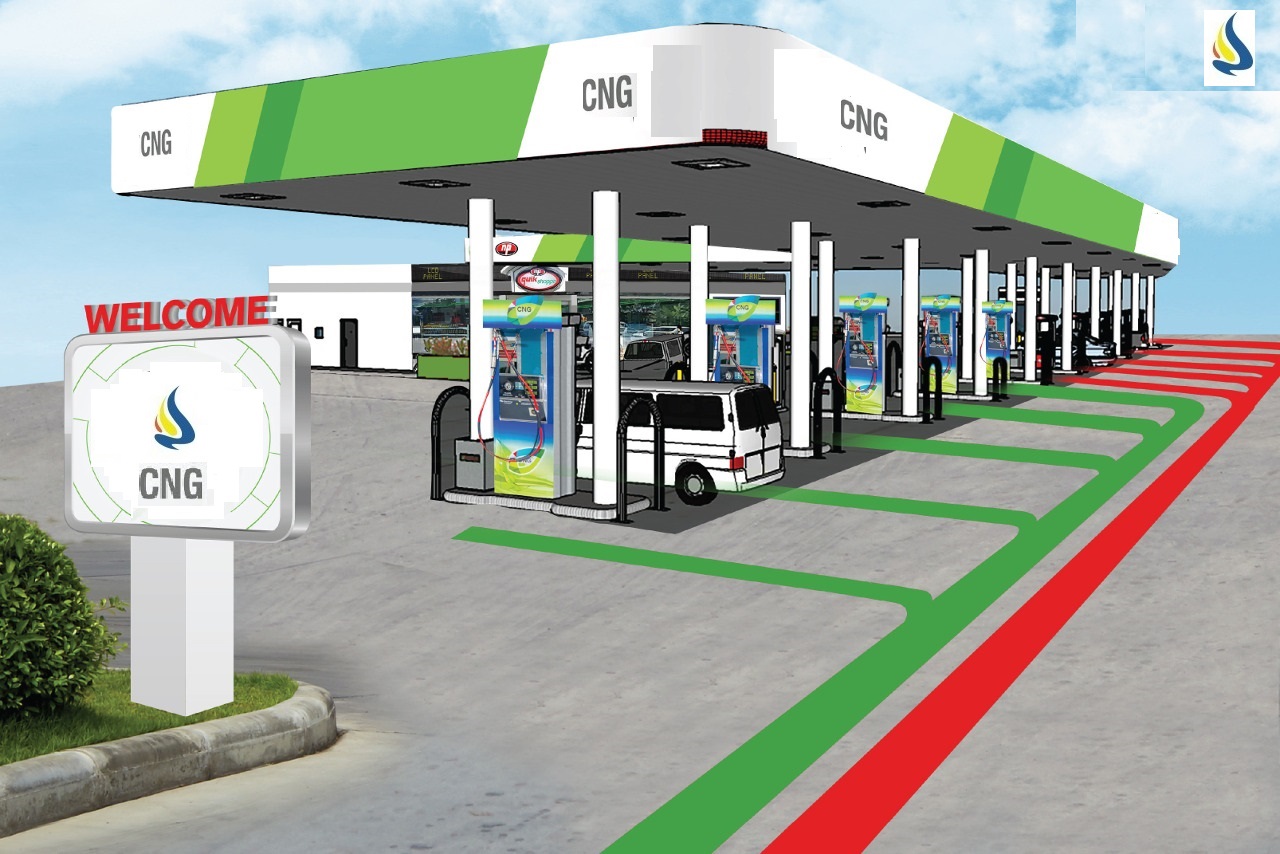
The Independent Petroleum Manufacturers Association of Nigeria (IPMAN) has advised Nigerians to begin to look into the direction of Compressed Natural Gas (CNG) as an alternative energy source to cushion the effect of subsidy removal.
The National President of IPMAN, Mr Chinedu Okorokwo, made this known in an interview with the News Agency of Nigeria (NAN) in Abuja on Wednesday, as the federal government continues its dialogue with the organised labour over the hike in the price of premium motor spirit (PMS), otherwise known as petrol.
On May 29, 2023, during his inaugural speech, President Bola Tinubu said the payment of subsidy for fuel had ended because there was no provision for it in the 2023 budget beyond June 30.
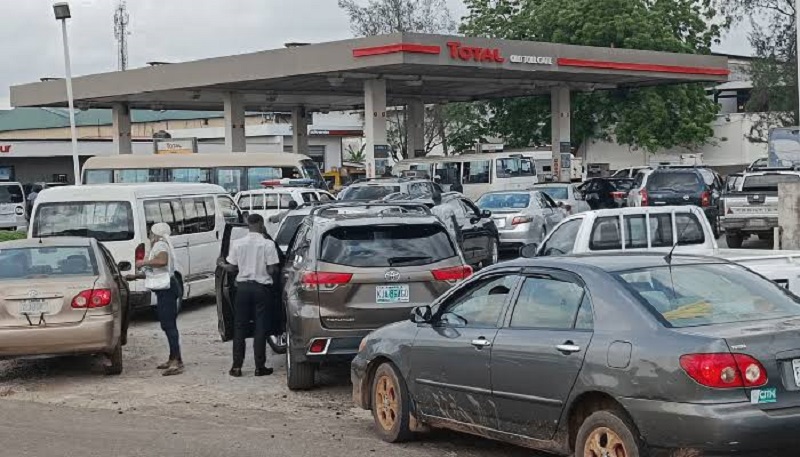
His announcement triggered the hoarding of fuel by marketers, and when the Nigerian National Petroleum Company (NNPC) Limited increased the price of the product across its retail outlets, prices of food, transportation and services went up, forcing the Nigeria Labour Congress (NLC) and the Trade Union Congress (TUC) to threaten a nationwide strike, which was supposed to start today but was stopped by the National Industrial Court.
At a meeting on Monday night between the government and the labour unions, it was agreed that the adoption of CNG as an alternative fuel would be the best option, and it was agreed that the CNG conversion programme earlier planned in 2021 should be revived.
CNG, which is a gas mainly composed of methane and produces less emission, is the cleanest burning fuel operating today with less vehicle maintenance and longer engine life.
In the interview with NAN, Mr Okoronkwo said bringing CNG, which was cheaper than even firewood, as an alternative energy, would create relief for the government and its citizens.
“We have also discovered that bringing an alternative that is cheaper than even firewood which is CNG, will not only create relief for the government and its citizens but it is environmentally friendly.
“The CNG is abundantly available in Nigeria than anywhere in Africa.
“In the Niger Delta region, you see billions of tonnes of gas flare being wasted daily, these are huge amounts that should be accruing to our GDP, but we are wasting it because there is no market for it.
“So, we are asking the government to create the market. How do you create the market?
“What Egypt and India did was to give soft loans to be paid back within stipulated periods; from there, you can get vehicles to use gas instead of fuel,” he said.
“There’s a franchise for the bottling of CNG so that an average woman in the kitchen can use it,’’ he added, noting that the introduction of CNG would cushion the effect occasioned by the high price of fuel currently as a litre of CNG would not cost more than N130.
He advised that repairing the local refineries as well would reduce the impact of the removal as it would eliminate the cost of importation and exportation.







By Adedapo Adesanya
Brent crude traded at $108.65 per barrel on Thursday after earlier hitting $119 during the session, as the Middle East crisis took a different dimension.
Prices had surged dramatically on the back of an Israeli attack on the South Pars gas field and an Iranian attack on energy infrastructure across the region. The escalations briefly pushed Brent beyond $119 per barrel earlier on Thursday, as fears of further serious supply disruptions peaked.
Supply disruptions intensified following the Iranian attack on Qatar’s Ras Laffan Industrial City (RLIC), which hosts the world’s biggest LNG liquefaction complex.
Qatar had already halted the Ras Laffan LNG complex in the early hours of the war, mostly as a precaution following a drone attack near the site and because of the de facto closure of the Strait of Hormuz.
The market is desperately looking to replace disrupted supply with US oil now being directed through the Panama Canal to help deal with the shortfall in Asia.
Meanwhile, US Treasury Secretary Scott Bessent said the US may soon remove sanctions from Iranian oil that is stranded on tankers, amounting to around 140 million barrels.
He also said another release of crude oil from the US Strategic Petroleum Reserve was possible.
Saudi Arabia said it intercepted four ballistic missiles and an attempted drone attack on a gas facility. Its SAMREF refinery in the Red Sea port of Yanbu, was also targeted in an aerial attack on Thursday. Oil loadings at the port were disrupted but have since resumed.
Kuwait Petroleum Corporation said its Mina al-Ahmadi refinery was hit by a drone, igniting a limited fire.
Israeli Prime Minister Benjamin Netanyahu suggested the Iran war could end sooner than expected, saying that joint US-Israel strikes had significantly degraded Iran’s strategic capabilities and that the war would “end faster than people think.”
He emphasised that the campaign would not be open-ended and indicated that Israel would refrain from further attacks on Iran’s South Pars gas field at the request of President Donald Trump.
The move helped ease immediate concerns about further escalation targeting critical energy infrastructure.

By Adedapo Adesanya
Nigeria and the United Kingdom are moving to tackle a long-standing £1.2 billion discrepancy in their trade records, with both countries agreeing to develop a structured data-sharing system aimed at improving transparency and accountability across bilateral commerce.
The agreement was reached during a high-level meeting in London on March 18, 2026, held on the sidelines of President Bola Tinubu’s State Visit, under the Nigeria–United Kingdom Enhanced Trade and Investment Partnership (ETIP).
According to a statement by Nigeria Customs Service (NCS) spokesperson, Mr Abdullahi Maiwada, the talks signal a shift toward deeper operational cooperation between both countries’ customs authorities.
At the centre of the discussions was a persistent mismatch in trade figures. While Nigeria recorded about £504 million worth of imports from the UK in 2024, British records show exports to Nigeria at approximately £1.7 billion for the same period, leaving a gap of roughly £1.2 billion.
To address this, the two countries agreed to explore a pre-arrival data exchange framework that will connect their digital customs systems, with the aim of improving risk management, reconciling trade data, and strengthening compliance monitoring along the corridor.
The meeting was led by Comptroller-General of Customs, Mr Adewale Adeniyi and Ms Megan Shaw, Head of International Customs and Border Engagement at His Majesty’s Revenue and Customs (HMRC), and also focused on customs modernisation and data transparency.
Mr Adeniyi underscored the broader economic implications of the initiative, noting that customs collaboration plays a central role in trade facilitation.
“Effective customs cooperation remains a critical enabler of economic growth and sustainable trade development,” he said.
He added that “customs administrations serve as the frontline institutions responsible for ensuring that trade flows between both countries are transparent, secure, and mutually beneficial.”
The Nigeria–UK trade relationship spans multiple sectors, including industrial goods, agriculture, energy, and consumer products — all of which depend heavily on efficient port and border operations.
Beyond addressing data gaps, the meeting also highlighted ongoing modernisation efforts on both sides. The UK showcased advancements in artificial intelligence-driven trade tools, digital verification systems, and real-time analytics designed to enhance cargo processing, risk assessment, and border security.
The engagement further produced plans for a Customs Mutual Administrative Assistance Framework, alongside technical groundwork for capacity building, knowledge exchange, and a joint engagement mechanism under the ETIP platform.
Mr Maiwada said the outcomes are expected to strengthen Nigeria’s trade ecosystem and support broader economic reforms.
“The NCS has reaffirmed its commitment to deepening international partnerships as part of a broader modernisation agenda designed to promote transparency, efficiency, and competitiveness in Nigeria’s trading environment,” the statement said.
It added that “insights from this engagement will strengthen its operational capacity, enhance trade facilitation, and support Nigeria’s economic reform objectives under the Renewed Hope programme.”
By Adedapo Adesanya
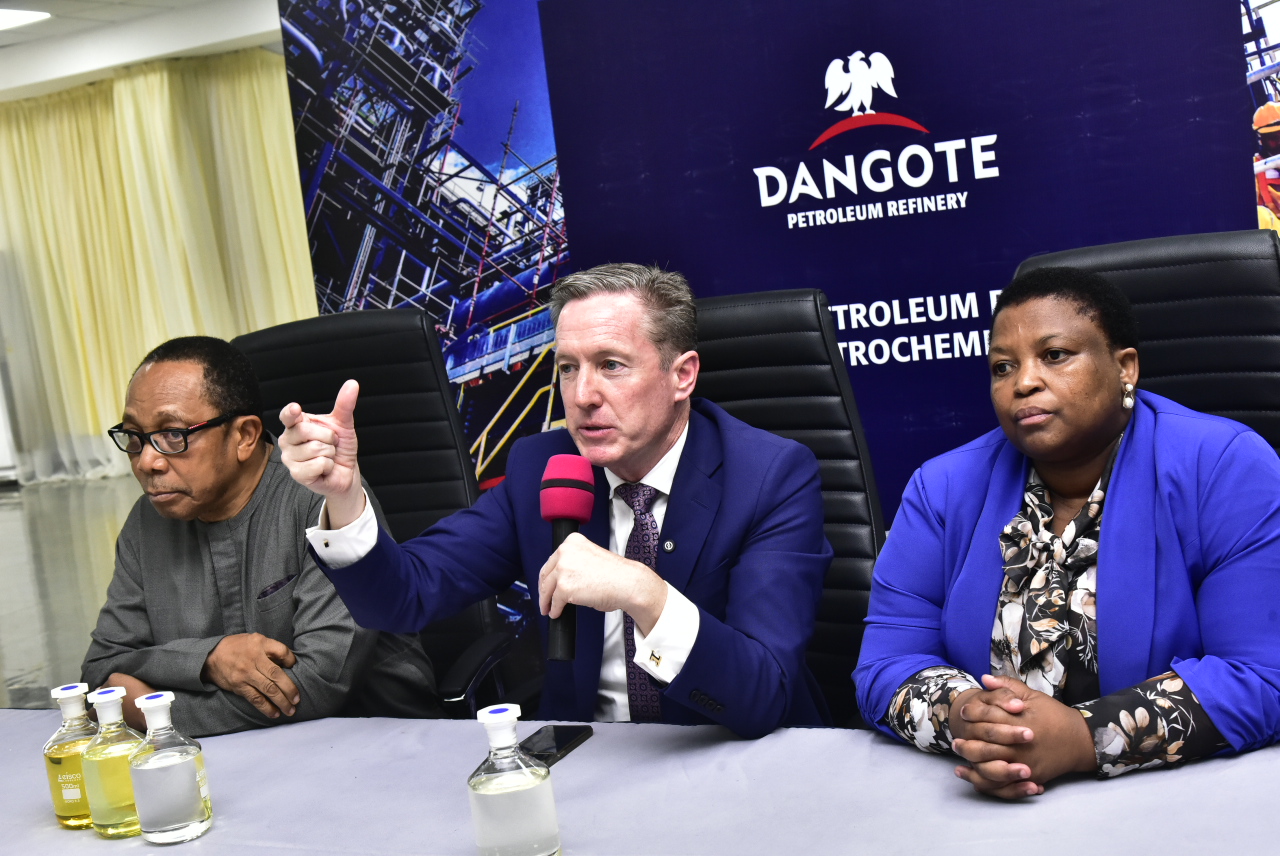
Dangote Petroleum Refinery imported a total of $3.74 billion) worth of crude oil in 2025, to make up for shortfalls that threatened the plant’s 650,000-barrel-a-day operational capacity.
The data disclosed in the Central Bank of Nigeria’s Balance of Payments report noted that “Crude oil imports of $3.74 billion by Dangote Refinery” contributed to movements in the country’s current account position, as Nigeria imported crude oil worth N5.734 trillion between January and December 2025.
Last year, as the Nigerian National Petroleum Company (NNPC), which is the refinery’s main trade partner and minority stakeholder, faced its challenges, the company had to forge alternative supply links. This led to the importation of crude from Brazil, Equatorial Guinea, Angola, Algeria, and the US, among others.
For instance, in March 2025, the company said it now counts Brazil and Equatorial Guinea among its global oil suppliers, receiving up to 1 million barrels of the medium-sweet grade Tupi crude at the refinery on March 26 from Brazil’s Petrobras.
Meanwhile, crude oil exports dropped from $36.85 billion in 2024 to $31.54 billion in 2025, representing a 14.41 per cent decline, further shaping the external balance.
The report added that the refinery’s operations also reduced Nigeria’s reliance on imported fuel, noting that “availability of refined petroleum products from Dangote Refinery also led to a substantial decline in fuel imports.”
Specifically, refined petroleum product imports fell sharply to $10.00 billion in 2025 from $14.06 billion in 2024, representing a 28.9 per cent decline, while total oil-related imports also eased.
However, this was offset by a rise in non-oil imports, which increased from $25.74 billion to $29.24 billion, up 13.6 per cent year-on-year, reflecting sustained demand for foreign goods.
At the same time, the goods account remained in surplus at $14.51 billion in 2025, rising from $13.17 billion in 2024, supported largely by activities linked to the Dangote refinery and improved export performance in other segments.
The CBN stated that the stronger goods balance was driven by “significant export of refined petroleum products worth $5.85bn by Dangote Refinery,” alongside increased gas exports to other economies.
Nigeria posted a current account surplus of $14.04 billion in 2025, lower than the $19.03 billion recorded in 2024 but significantly higher than $6.42 billion in 2023. The decline from 2024 was driven partly by structural changes in oil trade flows, including crude imports for domestic refining, according to the report.
Pressure on the current account came from higher external payments. Net outflows for services rose from $13.36 billion in 2024 to $14.58 billion in 2025, driven by increased spending on transport, travel, insurance, and other services.
Similarly, net outflows in the primary income account surged by 60.88 per cent to $9.09 billion, largely due to higher dividend and interest payments to foreign investors.
In contrast, secondary income inflows declined slightly from $24.88 billion in 2024 to $23.20 billion in 2025, as official development assistance and personal transfers weakened, although remittances remained a key source of inflow, as domestic refineries grappled with persistent feedstock shortages, exposing a deepening supply paradox in the country’s oil sector.
This comes despite the Federal Government’s much-publicised naira-for-crude policy designed to prioritise local supply.









-
 Feature/OPED6 years ago
Davos was Different this year
-
Travel/Tourism10 years ago
Lagos Seals Western Lodge Hotel In Ikorodu
-

 Showbiz3 years ago
Estranged Lover Releases Videos of Empress Njamah Bathing
-
 Banking8 years ago
Sort Codes of GTBank Branches in Nigeria
-

 Banking3 years ago
Sort Codes of UBA Branches in Nigeria
-

 Banking3 years ago
First Bank Announces Planned Downtime
-

 Sports3 years ago
Highest Paid Nigerian Footballer – How Much Do Nigerian Footballers Earn
-
 Technology5 years ago
How To Link Your MTN, Airtel, Glo, 9mobile Lines to NIN
1 Comment