Economy
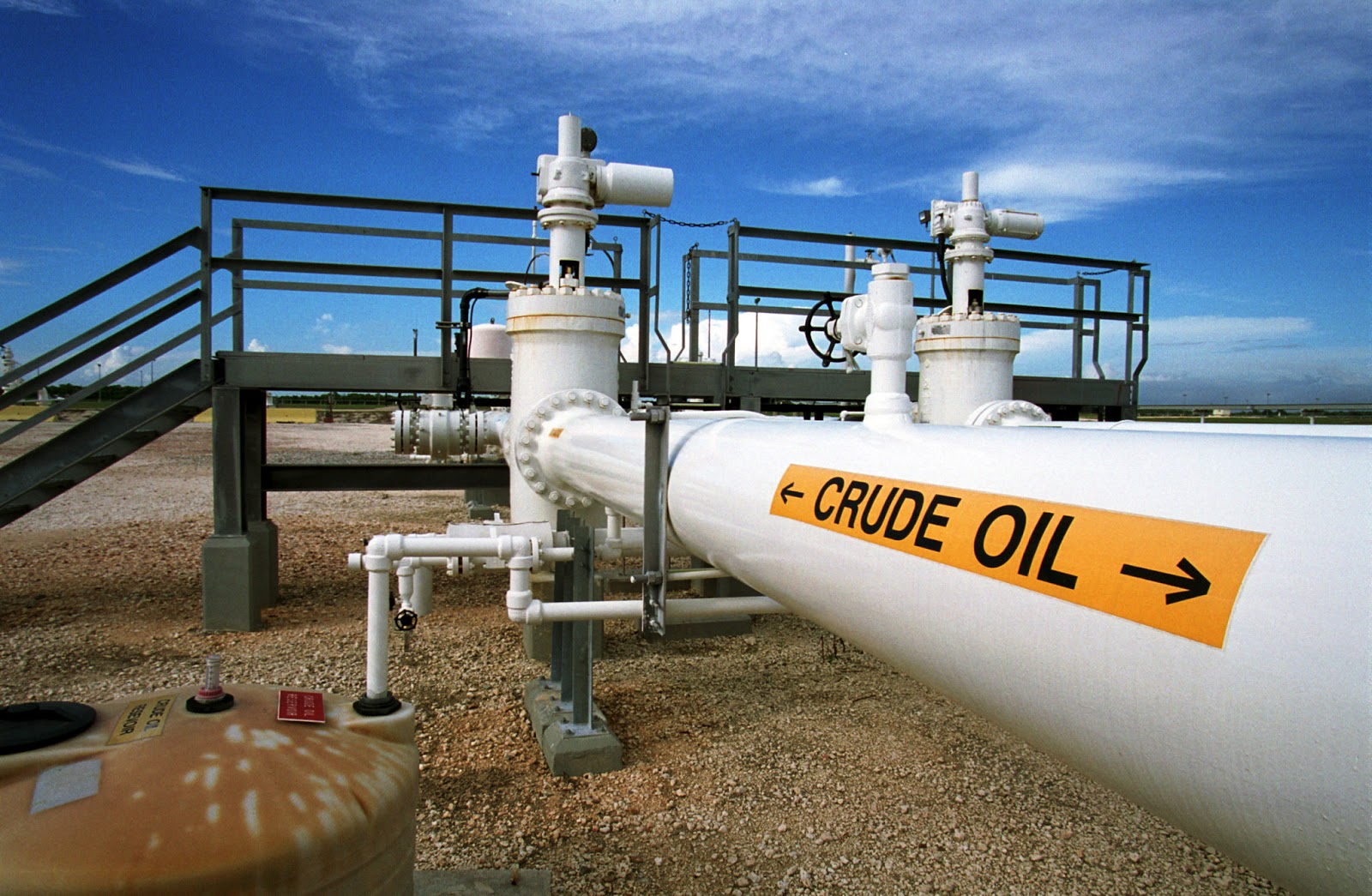
Tight Global Supply After OPEC+ Cuts Supports to Oil Prices
By Adedapo Adesanya
Oil prices rose more than 1 per cent on Thursday, holding at three-week highs after it was agreed to tighten global supply with a deal to cut production targets by 2 million barrels per day, the largest reduction since 2020.
Brent crude futures settled at $94.42 per barrel after going up by $1.05 or 1.1 per cent, with the United States West Texas Intermediate (WTI) crude futures closing at $88.45 per barrel after adding 69 cents or 0.8 per cent.
Market analysts note that even though oil prices rose after the Organisation of the Petroleum Exporting Countries and allies (OPEC+) agreed to cut production, it did in a much more limited way than many would have predicted.
This remains to be seen how much of the cut would be physical and what the US would do in response to the move.
Due to a lack of clarity, there are estimates that the actual production cuts will be half a million barrels daily because of the gap between targets and output.
Indeed, OPEC+ has been undershooting its production targets for months, with the August figure at over 3 million barrels daily.
This led some analysts to suggest that the production cut agreed at this meeting would be more of an attempt to move targets closer to actual production than anything else.
Saudi Energy Minister Abdulaziz bin Salman said the real supply cut would be about 1 million to 1.1 million barrels per day and Saudi Arabia’s share of the cut is about 500,000 barrels per day.
Several OPEC+ members have struggled to produce at quota levels because of theft, underinvestment, and sanctions.
Until it becomes clear whether OPEC+ will be cutting actual production or moving targets, the price rally forecast ahead of the meeting in Vienna on Wednesday will probably wait.
Regarding the US reaction, President Biden has signalled that the likely response would be to release yet more crude from the Strategic Petroleum Reserve (SPR).
The Biden administration needs low fuel prices, and it needs them now and over the next month until the midterm elections.
President Biden expressed disappointment over OPEC+ plans and said the US, which is not a member of OPEC+ but is the world’s largest oil-producing country, was looking at ways to keep prices from rising.
“There’s a lot of alternatives. We haven’t made up our minds yet,” Mr Biden told reporters at the White House.
Also supporting prices, US crude inventories dropped by 1.4 million barrels to 429.2 million barrels in the week ended Sept. 30, the Energy Information Administration (EIA) said.
An investment bank, Goldman, raised its oil price target to $110 per barrel of Brent for the final quarter of the year, and JP Morgan also suggested Brent could rebound to $100 in the current quarter following OPEC+’s move to cut.
Meanwhile, headwinds remain, the strongest among them being the fear of a global economic slowdown, with recessions expected for some of the world’s biggest economies, such as Germany.
Economy
Nigeria to Frustrate Illegal Fishing Via €59m West Africa Ocean Initiative
By Adedapo Adesanya
The federal government has expressed readiness to leverage the €59 million West Africa Sustainable Ocean Programme (WASOP) as part of intensified efforts to combat illegal, unreported and unregulated (IUU) fishing while strengthening sustainable management of its marine resources.
The Minister of Marine and Blue Economy, Mr Adegboyega Oyetola, made this known in Abuja during a meeting with the European Union Ambassador to Nigeria, Mr Gautier Mignot, where both sides reaffirmed their commitment to deepening cooperation on maritime security and sustainable ocean governance.
Welcoming the EU Ambassador, Mr Oyetola commended the group for its longstanding partnership with Nigeria, particularly its support for maritime stability in the Gulf of Guinea, a region critical to global shipping and regional economic development.
He noted that the West Africa Sustainable Ocean Programme (WASOP) presents a timely opportunity to strengthen coordinated action against illegal fishing, improve ocean governance, and promote sustainable exploitation of marine resources across West Africa.
He said Nigeria is keen to fully engage with the programme to attract technical and financial support that will enhance enforcement capacity and boost the country’s blue economy ambitions.
The Minister stressed that illegal fishing remains a major threat to the marine ecosystem and coastal livelihoods, warning that IUU fishing continues to deplete fish stocks, undermine food security, and erode the economic well-being of coastal communities.
He said: “Illegal, unreported, and unregulated (IUU) fishing is a direct threat to national security, food sovereignty, and the survival of our coastal communities. We cannot afford to stand by and watch our marine ecosystems be depleted and economic livelihoods eroded.
“We are calling for an era of stronger international collaboration, backed by aggressive monitoring and uncompromised enforcement systems, to permanently dismantle these illicit operations and safeguard our waters.”
Mr Oyetola also highlighted ongoing reforms in Nigeria’s maritime sector under the National Policy on Marine and Blue Economy, which prioritises innovation, private sector investment, and sustainable development of ocean resources.
He referenced key milestones in the sector, including improvements in port operations and logistics, as well as enhanced maritime security.
He further noted that Nigeria is strengthening initiatives aimed at expanding its maritime infrastructure and improving competitiveness in global trade.
The Minister also reiterated the need for broader cooperation beyond piracy control, urging development partners to support Nigeria in addressing environmental crimes, human trafficking, and illegal fishing in a more integrated and coordinated manner.
He sought increased technical assistance from the European Union, particularly in surveillance systems, fisheries monitoring, and enforcement capacity to strengthen Nigeria’s ability to curb IUU fishing across the Gulf of Guinea.
On his part, Mr Mignot reaffirmed the European Union’s commitment to strengthening maritime cooperation with Nigeria and supporting regional efforts to ensure safer and more sustainable oceans.
He highlighted the West Africa Sustainable Ocean Programme (WASOP), a major EU-funded initiative designed to promote integrated ocean governance, sustainable fisheries management, and protection of coastal and marine ecosystems across West African countries.
According to him, the programme will support improved coordination among coastal states, strengthen enforcement mechanisms, and promote a more inclusive and sustainable blue economy in the region.
Economy
65 Equities Drown Nigerian Exchange by 3.11% in Five Days
By Dipo Olowookere
The Nigerian Exchange (NGX) Limited recorded a 3.11 per cent week-on-week loss last week as a result of the decline suffered by 65 equities. In the preceding week, the bourse ended with 51 price decliners.
In the five-day trading week, 23 equities appreciated compared with 34 equities a week earlier, while 58 equities remained unchanged versus 61 equities in the preceding week.
Business Post reports there was no room for the bulls in the week, as all other indices closed in red, except for the sovereign bond, which finished flat.
ABC Transport lost 24.73 per cent to trade at N6.21, University Press shrank by 17.07 per cent to N5.10, Eterna crashed by 12.92 per cent to N30.00, John Holt slipped by 12.09 per cent to N14.90, and First Holdco decreased by 11.43 per cent to N62.00.
On the flip side, International Energy Insurance gained 60.62 per cent to sell for N7.26, Abbey Mortgage Bank expanded by 47.24 per cent to N9.35, Tripple Gee grew by 9.80 per cent to N4.37, Ikeja Hotel increased by 9.45 per cent to N44.00, and RT Briscoe soared by 8.86 per cent to N14.86.
At the close of business, market participants traded 3.966 billion shares worth N175.659 billion in 343,587 deals, in contrast to the 2.398 billion shares valued at N111.480 billion transacted in 241,313 deals a week earlier, which had only three trading sessions due to the Sallah holiday.
The financial services industry led the activity chart with 2.690 billion stocks sold for N69.975 billion in 134,882 deals, contributing 67.83 per cent and 39.84 per cent to the total trading volume and value, respectively.
The services sector exchanged 323.601 million shares worth N6.443 billion in 25,906 deals, and the ICT segment traded 176.039 million equities valued at N27.892 billion in 40,837 deals.
Access Holdings, Abbey Mortgage Bank, and Sterling Holdco accounted for 1.290 billion units worth N17.560 billion in 17,768 deals, contributing 32.53 per cent and 10.00 per cent to the total equity turnover volume and value, respectively.
Economy
MRS Oil, FrieslandCampina Wamco Shrink NASD Index by 0.68%
By Adedapo Adesanya
The duo of MRS Oil and FrieslandCampina Wamco Nigeria Plc weakened the NASD Over-the-Counter (OTC) Securities Exchange by 0.68 per cent on Friday, June 5.
MRS Plc lost N19.00 during the session to sell at N171.00 per share compared with Thursday’s value of N190.00 per share, and FrieslandCampina Wamco Nigeria Plc depreciated by N8.70 to finish at N181.68 per unit compared with the preceding session’s N190.38 per unit.
As a result, the market capitalisation further lost N22.59 billion to close at N2.607 trillion versus the N2.630 trillion it ended a day earlier, and the NASD Unlisted Security Index (NSI) dropped 37.76 points to settle at 4,358.32 points, in contrast to the previous day’s 4,396.08 points.
The alternative stock market closed the last trading day of this week with a price gainer, Central Securities Clearing System (CSCS) Plc, which gained 6 Kobo to quote at N78.40 per share compared with the preceding session’s N78.34 per share. However, it could not prevent the market from going down at the close of business.
Yesterday, the volume of securities bought and sold by investors went down by 50.0 per cent to 140,345 units from the preceding day’s 280,714 units, the value of stocks decreased by 16.5 per cent to N17.9 million from the previous session’s N21.5 million, and the number of deals carried out by market participants fell by 35.7 per cent to 27 deals from the 42 deals recorded on Thursday.
When trading activities closed for the day, Great Nigeria Insurance (GNI) Plc remained the most active stock by value on a year-to-date basis, with 3.4 billion units exchanged for N8.4 billion, trailed by Infrastructure Credit Guarantee (Infracredit) Plc with 2.3 billion units sold for N6.5 billion, and CSCS Plc with 64.7 million units traded for N4.4 billion.
GNI Plc also ended the session as the most traded stock by volume on a year-to-date basis, with 3.4 billion units worth N8.4 billion, followed by Infracredit Plc with 2.3 billion units transacted for N6.5 billion, and Resourcery Plc with 1.1 billion units valued at N415.7 million.
-
Feature/OPED6 years agoDavos was Different this year
-
Travel/Tourism10 years ago
Lagos Seals Western Lodge Hotel In Ikorodu
-
Showbiz3 years agoEstranged Lover Releases Videos of Empress Njamah Bathing
-
Banking8 years agoSort Codes of GTBank Branches in Nigeria
-
Economy3 years agoSubsidy Removal: CNG at N130 Per Litre Cheaper Than Petrol—IPMAN
-
Banking3 years agoSort Codes of UBA Branches in Nigeria
-
Banking3 years agoFirst Bank Announces Planned Downtime
-
Sports3 years agoHighest Paid Nigerian Footballer – How Much Do Nigerian Footballers Earn