Connect with us

Economy

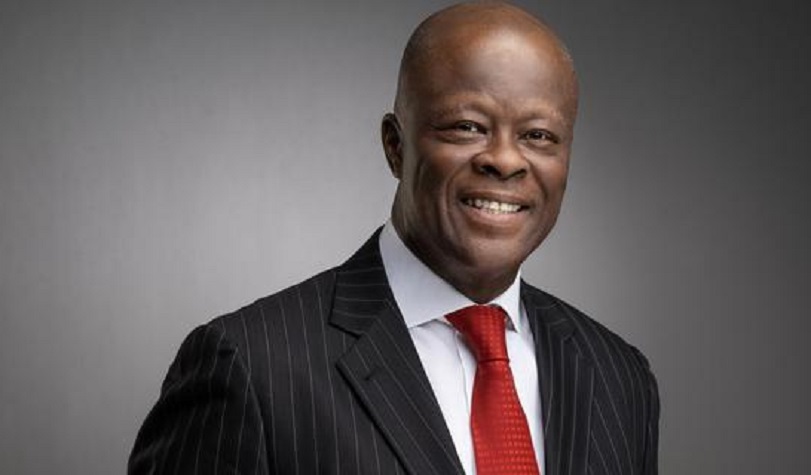
Tinubu Names Wale Edun as Finance Minister, Keyamo as Aviation Minister

Published

on

Wale Edun Monetary Policies

By Adedapo Adesany and Aduragbemi Omiyale

President Bola Tinubu on Wednesday night released the names of his Ministers with portfolios assigned to them nearly three months after he assumed office.

In the list, the President named Mr Wale Edun as the Minister of Finance and Coordinating Minister of the Economy, while the immediate past Governor of Rivers State, Mr Nyesom Wike, is the Minister of FCT, and Mrs Doris Anieete is the Minister of Trade and investment.

Also, he appointed the immediate Minister of State for Labour and Productivity, Mr Festus Keyamo, as the Minister of Aviation and Aerospace Development, while Mr Lateef Fagbemi (SAN) is the Minister of Justice and Attorney General of the Federation (AGF).

In addition, Mr Bosun Tijani will also get a newly structured ministry as he will become Nigeria’s Minister of Communications, Innovation and Digital Economy as predicted, as the immediate past Governor of Osun State, Mr Adegboyega Oyetola, is the Minister of Transportation, and Ms Betta Edu is in charge of Humanitarian Affairs and Poverty Alleviation.

Below is the list:

1. Minister of Communications, Innovation and Digital Economy, Bosun Tijani
2. Minister of State, Environment and Ecological Management, Ishak Salaco
3. Minister of Finance and Coordinating Minister of the Economy Wale Edun
4. Minister of Marine and Blue Economy, Bunmi Tunji
5. Minister of Power, Adedayo Adelabu
6. Minister of State, Health and Social Welfare, Tunisia Alausa
7. Minister of Solid Minerals Development, Dele Alake
8.Minister of Tourism, Lola Ade-John
9. Minister of Transportation, Adegboyega Oyetola
10. Minister of Industry, Trade and Investment, Doris Anite
11. Minister of Innovation Science and Technology, Uche Nnaji
12. Minister of State, Labour and Employment, Nkiruka Onyejeocha
13. Minister of Women Affairs, Uju Kennedy
14. Minister of Works, David Umahi
15. Minister of Aviation and Aerospace Development, Festus Keyamo
16. Minister of Youth, Abubakar Momoh
17. Minister of Humanitarian Affairs and Poverty Alleviation, Betta Edu
18. Minister of State, Gas Resources, Ekperikpe Ekpo
19. Minister of State, Petroleum Resources, Heineken Lokpobiri
20. Minister of Sports Development, John Enoh
21. Minister of Federal Capital Territory, Nyesom Wike
22. Minister of Art, Culture and the Creative Economy, Hannatu Musawa
23. Minister of Defence, Mohammed Badaru
24. Minister of State Defence, Bello Matawalle
25. Minister of State Education, Yusuf T. Sunumu
26. Minister of Housing and Urban Development, Ahmed M. Dangiwa
27. Minister of State, Housing and Urban Development, Abdullah T. Gwarzo
28. Minister of Budget and Economic Planning, Atiku Bagudu
29. Minister of Environment and Ecological Management, (Kaduna)
30. Minister of State, Federal Capital Territory, Mairiga Mahmud
31. Minister of State, Water Resources and Sanitation, Bello M. Goronyo
32. Minister of Agriculture and Food Security, Abubakar Kyar
33. Minister of Education, Tahir Maman
34. Minister of Interior, Sa’Idu A. Alkali
35. Minister of Foreign Affairs, Yusuf M. Tuggar
36. Coordinating Minister of Health and Social Welfare, Ali Pate
37. Minister of Police Affairs, Ibrahim Geidam
38. Minister of Steel Development, Shuaibu A. Audu
39. Minister of Information and National Orientation, Muhammed Idris
40. Attorney General of the Federation and Minister of Justice, Lateef Fagbemi
41. Minister of Labour and Employment, Simon B. Lalong
42. Minister of State, Police Affairs, Imaan Sulaiman-Ibrahim
43. Minister of Special Duties and Inter-Govermental Affairs, Zephaniah Jisalo
44. Minister of Water Resources and Sanitation, Joseph Utsev
45. Minister of State, Agriculture and Food Security, Aliyu Sabi Abdullahi
46. Minister of State, Steel Development, U. Maigari Ahmadu


Adedapo Adesanya is a journalist, polymath, and connoisseur of everything art. When he is not writing, he has his nose buried in one of the many books or articles he has bookmarked or simply listening to good music with a bottle of beer or wine. He supports the greatest club in the world, Manchester United F.C.

Click to comment

Leave a Reply

Your email address will not be published. Required fields are marked *

Economy

NASD OTC Exchange Sustains Uptrend With 0.52% Gain

Published

on

OTC stock exchange

By Adedapo Adesanya

The NASD Over-the-Counter (OTC) Securities Exchange started the new week on an upward trajectory after it closed higher by 0.52 per cent on Monday, May 4.

This raised the market capitalisation by N12.48 billion to N2.409 trillion from last Thursday’s N2.396 trillion, and moved the NASD Unlisted Security Index (NSI) higher by 20.86 points to 4,026.64 points from 4,005.78 points.

The unlisted securities market gained weight yesterday despite recording two price gainers and two price losers.

FrieslandCampina Wamco Nigeria Plc added N8.92 to sell at N98.14 per share versus N89.24 per share, and Central Securities Clearing System (CSCS) Plc appreciated by N1.12 to N77.14 per unit from N76.02 per unit.

Conversely, NASD Plc lost N3.47 to sell at N31.23 per share compared with the previous price of N34.70 per share, and Food Concepts Plc declined by 26 Kobo to settle at N2.41 per unit, in contrast to the previous rate of N2.67 per unit.

During the session, the volume of securities traded by investors fell by 14.4 per cent to 751,518 units from 877,682 units, and the number of deals decreased by 44.1 per cent to 31 deals from 56 deals, while the value of securities climbed 32.8 per cent to N35.4 million from N26.7 million.

The most active stock by value on a year-to-date basis remained Great Nigeria Insurance (GNI) Plc with 3.4 billion units worth N8.4 billion, followed by CSCS Plc with 60.2 million units transacted for N4.1 billion, and Okitipupa Plc with 27.8 million units sold for N1.9 billion.

GNI Plc also ended the session as the most traded stock by volume on a year-to-date basis with 3.4 billion units valued at N8.4 billion, trailed by Resourcery Plc with 1.1 billion units exchanged for N415.7 million, and Infrastructure Guarantee Credit Plc with 400 million units traded for N1.2 billion.

Continue Reading

Economy

Naira Gains 0.7% to Trade N1,365/$1 at Official Market

Published

on

reject old Naira notes

By Adedapo Adesanya

The Naira opened the week in the green territory in the Nigerian Autonomous Foreign Exchange Market (NAFEX) on Monday after it further appreciated against the US Dollar by N9.71 or 0.7 per cent to quote at N1,365.23/$1 compared with the previous session’s value of N1,374.94/$1.

The scenario was not different with the Pound Sterling at the same market window, where it gained N6.99 to sell for N1,851.25/£1 versus last Thursday’s closing price of N1,858.24/£1, and appreciated against the Euro by N8.62 to close at N1,607.58/€1, in contrast to the N1,612.87/€1 it was traded in the previous trading day.

Similarly, at the black market, the Naira improved its value against the greenback yesterday by N5 to settle at N1,380/$1 versus the previous rate of N1,385/$1, and at the GTBank FX desk, it closed flat at N1,384/$1.

The Nigerian Naira put up a good performance against the Dollar during the session due to sustained monetary tightening by the Central Bank of Nigeria (CBN) and a steady increase in foreign exchange inflows.

Specifically, stronger diaspora remittances, oil-related inflows, and a decline in speculative demand for the Dollar played pivotal roles in anchoring market expectations.

Sufficient FX liquidity has continued to keep the Naira stable. The local currency stayed strong despite an 83 per cent decline in CBN FX intervention in April to $150 million from $985 million in March.

As for the cryptocurrency market, prices were mixed as broader crypto markets were diverse and macro risks persisted, amid ongoing US-Iran tensions and steady central bank policy, with upcoming US earnings and jobs data seen as potential catalysts for further bitcoin volatility.

Bitcoin (BTC) gained 1.3 per cent to sell at $80,889.94, Ethereum (ETH) jumped 0.3 per cent to $2,376.40, Cardano (ADA) increased by 0.2 per cent to $0.2529, and TRON (TRX) appreciated by 0.2 per cent to $0.3399.

On the flip side, Dogecoin (DOGE) slid 0.8 per cent to $0.1113, Ripple (XRP) went down by 0.5 per cent to $1.40, Binance Coin (BNB) dropped 0.4 per cent to $626.41, and Solana (SOL) shrank by 0.3 per cent to $84.60, while the US Dollar Tether (USDT) and the US Dollar Coin (USDC) remained unchanged at $1.00 apiece.

Continue Reading

Economy

Oil Prices Jump 6% as Iran Escalates Attacks in Gulf

Published

on

oil prices cancel iran deal

By Adedapo Adesanya

Oil prices jumped about 6 per cent on Monday as Iran stepped up attacks on the United Arab Emirates (UAE) and ships in the Middle East ‌over the past 24 hours, the most serious escalation since a US-Iran ceasefire came into force in early April.

This pushed the price of Brent futures higher by $6.27 or 5.8 per cent to $114.44 per barrel, and raised the US West Texas Intermediate (WTI) crude by $4.48 or 4.4 per cent to $106.42 a barrel.

Iran hit several ships in the Strait of Hormuz on Monday and set a UAE oil port ablaze, as President Donald Trump’s attempt to use the US Navy to free up shipping provoked the war’s biggest escalation since a ceasefire was declared last month.

The UAE said its air defences were engaging missile and drone threats on ⁠Monday evening as firefighters battled a blaze at a major oil industry zone.

The US military said it destroyed six Iranian small boats and intercepted Iranian cruise missiles and drones fired by Iran as it sought to thwart a new US naval effort to open shipping through the Strait of Hormuz. About 20 per cent of global oil and liquefied natural gas supplies passed through the strait before the US and Israel launched strikes against Iran on February 28.

Meanwhile, Iran’s Revolutionary Guards Navy (IGRC) issued a map that it said was expanding the areas controlled by Iran near the Strait of Hormuz.

The United Kingdom Maritime Trade Operations (UKMTO) said it received a report of an incident involving ⁠a cargo vessel about 36 nautical miles north of Dubai. The UKMTO also reported a separate incident earlier in the day near the UAE.

Oil executives from the Gulf and ⁠global oil traders have said that even when shipping through the Strait of Hormuz reopens, it will take several weeks, if not months, for flows to normalise.

Separately, the energy minister in the UAE, which left the Organisation of the Petroleum Exporting Countries (OPEC) last week, said the country owes it to its investment partners to produce what global oil markets require ⁠without restrictions, while cooperating with other crude producers.

OPEC and its allies, known as OPEC+, said they would raise oil output targets by 188,000 barrels per day in June for seven members, marking the third consecutive monthly increase.

The seven members who met on Sunday were Saudi Arabia, Iraq, Kuwait, Algeria, Kazakhstan, Russia, and Oman. With the UAE leaving, OPEC+ includes 21 members, including Iran. However, in recent years, only the seven nations plus the UAE have been involved in monthly production decisions.

Continue Reading

Trending