Economy
Traders Union Experts Have Selected the Best 5 Minute Binary Options Strategy
Imagine a trading approach that doesn’t tie you down for long periods but still reaps profits from the market. Welcome to the world of binary options, where simplicity meets potential gains. Among various strategies, the 5-minute binary options strategy stands out, beloved by traders of all kinds. It’s a way to maximize returns swiftly, catering to your trading goals. With the guidance of Traders Union experts, you can tap into this strategy’s potential and navigate the dynamic market with precision. Discover how this 5 minute binary options strategy can elevate your trading experience and lead you towards profitability, in a mere 5 minutes.
How do binary options work?
A binary options strategy is a crucial approach used in the trading of binary options, a financial instrument that allows traders to speculate on the direction of asset commodities or market conditions. As TU analysts emphasize, binary options trading offers a straightforward risk/reward profile with clear outcomes based on “yes or no” predictions. This simplicity, coupled with the flexibility to profit from various market situations, makes binary options strategies essential. They cater to short-term trades due to their hourly contract expirations, providing opportunities to profit from directional bets, sideways markets, or volatility. Unlike traditional options, binary options have distinct payout structures, fees, and risks, necessitating unique strategies for success. With the guidance of Traders Union experts, traders can navigate this volatile market with proven strategies, minimizing losses and increasing their chances of success.
Mastering 5-Minute Binary Options Strategies
A 5-minute binary options strategy can empower you to trade with confidence within a short timeframe. To effectively employ this approach, you’ll need a broker or trading platform that provides the necessary tools. Leading brokers offer the flexibility to integrate essential indicators into your charts, allowing you to tailor your strategy to match your trading plan and preference. While Forex stands out, according to analysts at TU, you can also trade stocks, precious metals, energies, and cryptocurrencies using 5-minute binary options contracts. Here are key 5-minute binary options strategies to consider:
- Signals Strategy: Employing signals is a simple and effective approach. This strategy guides traders in making affirmative binary options trades based on signals generated by humans, algorithms, or bots. While no strategy guarantees 100% trade accuracy, combining signals with chart analysis and news updates enhances decision-making.
- Momentum Strategy: Momentum strategy caters to both long-term investors and day traders. Simply trade in the direction of momentum. Strong momentum indicates entering the market while avoiding setups with low probability. This approach helps anticipate market reversals and informs decision-making for 5-minute binary options contracts.
- Trend Following Strategy: A trend-following strategy is user-friendly and effective. Binary options trading thrives on traders’ speculations, driving asset price fluctuations. Recognizing and trading with trends, studying charts, and monitoring trend lines can enhance success rates.
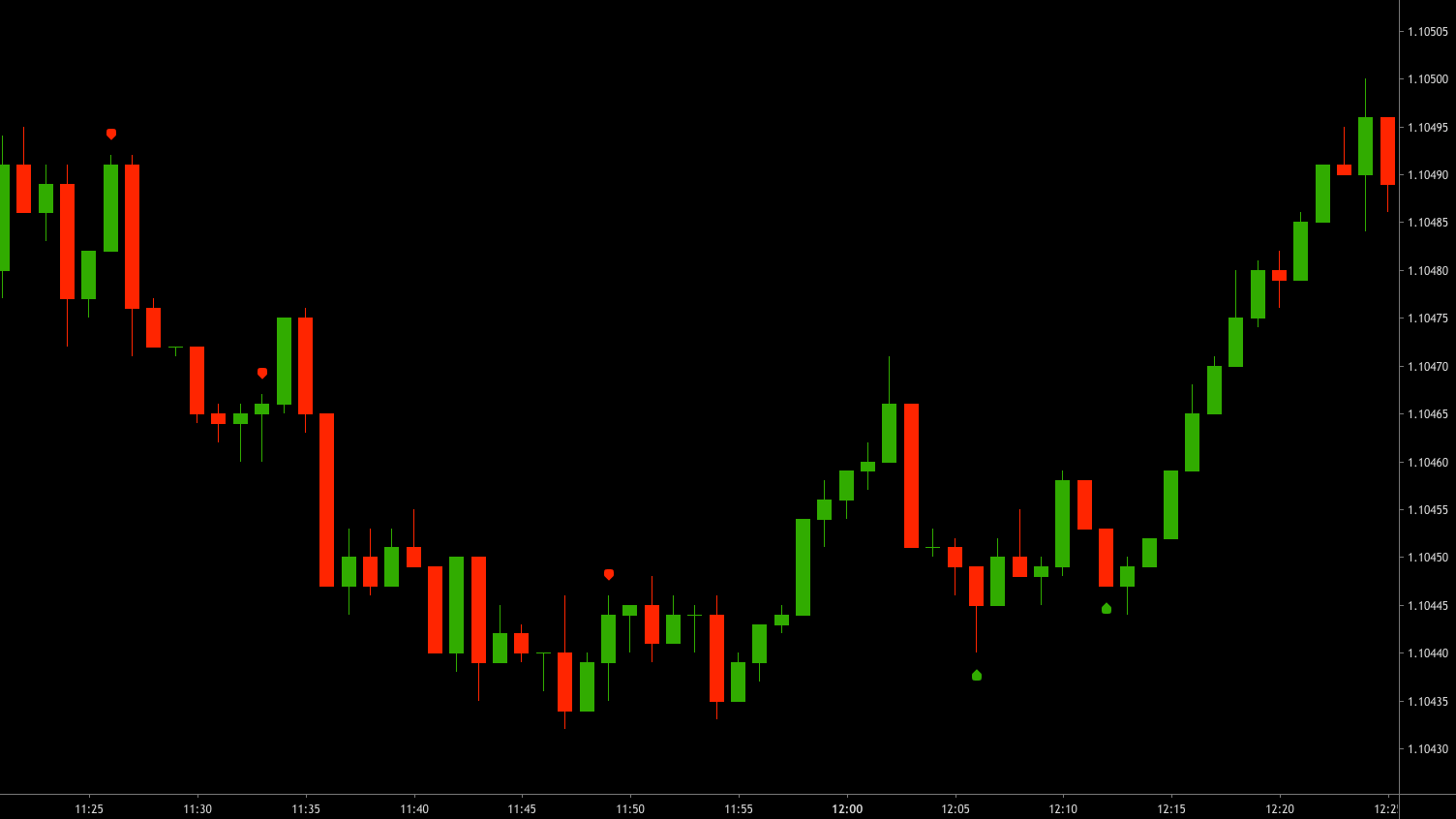
- Candlesticks Strategy: Japanese candlesticks simplify market assessment by visualizing price movements. Understanding candle colors, shapes, and heights aids in grasping market dynamics. Incorporating candlestick charts with Bollinger Bands offers insights into short-term trends and volatility, supporting accurate price predictions.
- Bollinger Bands Strategy: Bollinger Bands, along with candlestick charts, prove effective for trading 5-minute binary options. These bands identify upper and lower levels based on recent price movements, indicating trends and market volatility. Wider bands imply heightened market activity.
Conclusion
In conclusion, remember that becoming a successful trader requires careful planning and a strategy that fits your chosen market. Whether you use technical or fundamental analysis, your strategy is crucial for managing risks. No matter the time frame you choose, adopting the right strategy is key to succeeding in binary options trading. Take the five-minute binary options strategy, for instance – it offers various trading opportunities. This strategy capitalizes on the natural ups and downs of five-minute options, allowing for profitable trends within a reasonable time. With Traders Union’s expert guidance, you can craft your strategy thoughtfully to enhance your success in the dynamic world of trading.
Economy
NGX All-Share Index Gives up 0.58% to Profit-taking
By Dipo Olowookere
The Nigerian Exchange (NGX) Limited tasted defeat for the first time in a while on Tuesday after closing lower by 0.58 per cent as a result of profit-taking.
The market came under selling pressure yesterday, though investor sentiment remained bullish, as there were 45 price gainers and 25 price losers, implying a positive market breadth index.
Guinness Nigeria lost 10.00 per cent to close at N447.30, Union Dicon shed 9.82 per cent to finish at N19.75, AIICO Insurance depreciated by 9.28 per cent to N4.30, Wema Bank dipped by 8.72 per cent to N30.35, and MTN Nigeria crashed by 8.63 per cent to N836.00.
On the flip side, McNichols gained 10.00 per cent to sell for N7.92, RT Briscoe expanded by 10.00 per cent to N12.87, Zichis grew by 10.00 per cent to N25.08, Vitafoam rose by 10.00 per cent to N170.50, and CAP advanced by 9.99 per cent to N175.65.
Business Post reports that the energy index was down by 2.91 per cent and the banking sector declined by 1.48 per cent.
However, the industrial goods segment rose by 2.49 per cent, the insurance counter appreciated by 0.94 per cent, and the consumer goods space expanded by 0.40 per cent.
The All-Share Index (ASI) contracted by 1,411.37 points during the session to 241,750.15 points from 243,161.52 points, and the market capitalisation retreated by N906 billion to N155.152 trillion from N156.058 trillion.
Market participants transacted 1.3 billion stocks valued at N75.2 billion in 102,665 deals on Tuesday compared with the 967.5 million stocks worth N43.8 billion traded in 122,041 deals on Monday, showing a shortfall in the number of deals by 15.88 per cent, and a surge in the trading volume and value by 34.37 per cent and 71.69 per cent, respectively.
FCMB was the busiest equity yesterday with 160.6 million units sold for N1.8 billion, GTCO traded 94.1 million units worth N13.1 billion, Access Holdings transacted 81.8 million units valued at N2.1 billion, Zenith Bank exchanged 63.1 million units for N8.1 billion, and Fidelity Bank traded 48.4 million units valued at N911.8 million.
Economy
Nigeria Loses N1.493trn Potential Revenue to Gas Flaring in 2025
By Adedapo Adesanya
Nigeria lost $1.1 billion (N1.493 trillion) to gas flaring in 2025, as oil and gas companies operating in the country burnt 323 billion Standard Cubic Feet (SCF) of gas between January and December 2025.
This is according to the latest data released by the National Oil Spill Detection and Remediation Agency (NOSDRA).
The agency, in its gas flare report for 2025, released recently, disclosed that the volume of gas flared in 2025 was 7.2 per cent higher than the 301.3 billion SCF (BSCF) of gas flared in 2024, which was also valued at $1.1 billion, about N1.493 billion.
The environmental impact regulator further stated that the volume of gas flared in the 12-month period of 2025 contributed 17.2 million tonnes of carbon dioxide into the atmosphere; had the potential to generate 32,300 gigawatt-hours (GWh) of electricity; while the offending companies were liable for penalties payment of $646.1 million, about N876.622 billion.
NOSDRA maintained that in the 12-month period of 2024, the 301.3 billion SCF of gas flared by oil and gas firms was valued at $1.1 billion, about N1.493 trillion, with penalties payable at $602.7 million, about N818.271 billion, while it contributed 16 million tonnes of carbon dioxide emissions, and had power generation potential of 30,100 GWh.
Providing a breakdown of gas flared data across segments of the oil-producing space in 2025, the agency reported that 206.3 billion SCF of gas was flared by oil and gas firms operating in the country’s onshore oil space, accounting for 63.8 per cent of total gas flared in the period under review, and was 18.36 per cent higher than the volume lost to gas flaring in this same segment in 2024.
NOSDRA added that the volume of gas flared onshore caused the country a loss of 20,600 GWh of electricity, and the emission of 11 million tonnes of greenhouse gases; this was valued at $722 million, about N979.754 billion; while the companies were liable to pay penalties of $412.6 million, about N560.441 billion.
In comparison, the 174.3 billion SCF of gas flared in 2024 by companies operating onshore was valued at $610 million, about N827.77 billion; with penalties payable at $348.6 million, about N473.593 billion; caused the loss of power generation potential of 17,400 GWh; and contributed 9.3 million tonnes of carbon dioxide into the atmosphere.
On the other hand, companies operating offshore accounted for 36.2 per cent of total gas flared between January and December 2025, with 116.8 billion SCF of gas, valued at $408.7 million (N555.013 billion); penalties payable at $233.5 million (N317.538 billion); contributed 6.2 million tonnes of carbon dioxide emission; and eroded 11,700 GWh of electricity generation potential.
Similarly, in the same 12-month period in 2024, offshore operations emitted 6.7 million tonnes of carbon dioxide into the atmosphere, causing the loss of power generation capacity of 12,700 GWh, with 127.1 billion SCF of gas flared, valued at $444.7 million (N603.865 billion), and penalties payable at $254.1 million (N344.678 billion).
NOSDRA noted that the offending companies flared gas from Oil Mining Leases (OML) 04, 05, 11, 13, 14, 17, 18, 22, 28, 23, 24, 38, 40, 42, 43, 72, 49, 54, 86, 90, 95, 67, 70, 104, 59, 99, 100, 101, 102, 110 and Oil Prospecting Licences (OPL) 090, 209, 212, 216, 222, 246, 316 and 306, among others.
It identified the offending companies as Shell Petroleum, Development Company (SPDC), Nigerian Petroleum Development Company (NPDC), Chevron Nigeria, Mobil Oil, Elf Petroleum Nigeria, Nigeria Agip Oil Company (NAOC), Addax Petroleum, Texaco Overseas (Nigeria), Esso Exploration and Production Nigeria, Allied Energy Resources, Ultramar Petroleum, Atlas Petroleum; Cromwell, Afric Oil and Marketing, Famfa Oil, Moni Pulo, and South Atlantic Petroleum, Star Deep Water, Summit Oil, among others.
Economy
NUPRC Allocates 61.9 million Barrels of Crude Oil to Dangote, Others
By Aduragbemi Omiyale
About 61.9 million barrels of crude oil were allocated to domestic refineries, including Dangote Petroleum Refinery, in the first quarter of 2026.
This information was revealed by the Nigerian Upstream Petroleum Regulatory Commission (NUPRC) in a statement by its Head of Media and Corporate Communication, Mr Eniola Akinkuotu, on Tuesday.
In the statistics on the enforcement of the Domestic Crude Supply Obligation (DCSO) for the quarter under review, it was emphasised that producers collectively offered a higher volume of 68.7 million barrels, but actual supply to local refineries was 28.5 million barrels, translating to a supply conversion rate of 36-46 per cent between January 2026 and March 2026.
A breakdown of the DCSO month by month reveals that in the month of January, following consultations with stakeholders, including crude oil producers, the commission mandated producers to supply 22.6 million barrels to the local refiners.
Producers exceeded expectations, offering 25.3 million barrels, representing a rise of 11.9 per cent, or an additional 2.7 million barrels, in the month. However, 9.2 million barrels were ultimately supplied to local refiners.
In February, the agency, in discharging its DCSO, allocated 20.5 million barrels to local refineries, but producers offered slightly less at 19.8 million barrels, missing the target by 700,000 barrels. Actual supply was down at 9.1 million barrels.
In March, there was a modest improvement in deliveries, which rose to 10.1 million barrels, up from 9.2 million barrels in January and 9.1 million barrels in February. During the same period, DCSO allocations stood at 18.8 million barrels, while producers offered a significantly higher 23.6 million barrels, representing an excess of 4.8 million barrels or 25.5 per cent.
It was stated that the shortfall between volumes offered and actual deliveries was primarily due to pricing gaps between producers and domestic refiners.
According to NUPRC, the current framework operates on a “willing buyer, willing seller” basis, which continues to shape transaction outcomes.
Despite these developments, the commission reaffirmed its commitment to achieving the government’s objective of energy sufficiency.
“Leveraging the framework of the PIA, 2021, the commission aims to sustain recent gains in crude oil production while continuously refining the DCSO methodology to enhance transparency, efficiency, and ensure that local refineries are supplied as committed,” the statement said.
-
Feature/OPED6 years agoDavos was Different this year
-
Travel/Tourism10 years ago
Lagos Seals Western Lodge Hotel In Ikorodu
-
Showbiz3 years agoEstranged Lover Releases Videos of Empress Njamah Bathing
-
Banking8 years agoSort Codes of GTBank Branches in Nigeria
-
Economy3 years agoSubsidy Removal: CNG at N130 Per Litre Cheaper Than Petrol—IPMAN
-
Banking3 years agoSort Codes of UBA Branches in Nigeria
-
Banking3 years agoFirst Bank Announces Planned Downtime
-
Sports3 years agoHighest Paid Nigerian Footballer – How Much Do Nigerian Footballers Earn