Economy
UACN Property to Slash N20.8bn Debt to N4.8bn
By Adedapo Adesanya
The management of UACN Property Development (UPDC) Plc has announced plans by the company to reduce its current debt obligation of about N20.8 billion to about N4.8 billion.
Addressing some analysts and members of the media, including Business Post at the Exchange on Tuesday in Lagos, the CEO of UPDC, Mr Folasope Aiyesimoju, stated that this was one of the main reasons for the firm’s N16 billion rights issue, which is to be used to refinance its short-term debt and reduce finance costs.
He said the optimal performance of its recapitalisation through this right issue will see the debt cut to N4.8 billion by repaying the bridge loan facility owed its former parent company, UAC of Nigeria Plc.
At the company’s Facts Behind the Issue presentation yesterday, Mr Aiyesimoju disclosed the company’s broader strategy to create long term shareholder value through the recapitalisation effort.
UPDC, in the second quarter of 2019, had obtained a one-year N16 billion bridge loan for debt obligations and to reduce high debt service cost. The facility was used to pay the company’s maturing short term obligations of N6.5 billion in Commercial Papers, N7.4 billion Commercial Paper-related support facility, and N2.1 billion in intra-group working capital facilities.
In 2019, UAC of Nigeria Plc offloaded its entire stock in its real estate subsidiary, UPDC, following years of loss–making despite efforts to turn it around. Results of the company for the half year ended June 2019 showed that the former parent company recorded a N1.2 billion loss while in 2018, it recorded a N15 billion loss due to UPDC.
The company now plans to raise fresh funds via a rights issue of 15,961,574,145 ordinary shares of 50 kobo each at N1.00 per share on the basis of 43 new ordinary shares for every 7 ordinary shares held as at the close of business on Monday, September 30, 2019 through its issuing house, Stanbic IBTC Capital.
Set to reposition the real estate company, Mr Aiyesimoju, who was appointed in August 2019 after the board was reconstituted, is seeking to strengthen and improve its capital structure by focusing on affordable housing to cater for young middle management professionals.
The company also said that it will be looking at expanding its hotel service in Lagos to offer a more with the current housing demands of its target clientele.
He explained that with the teeming youth population in Nigeria, the company deemed it necessary to address the gap in residential units for young professionals one unit at a time.
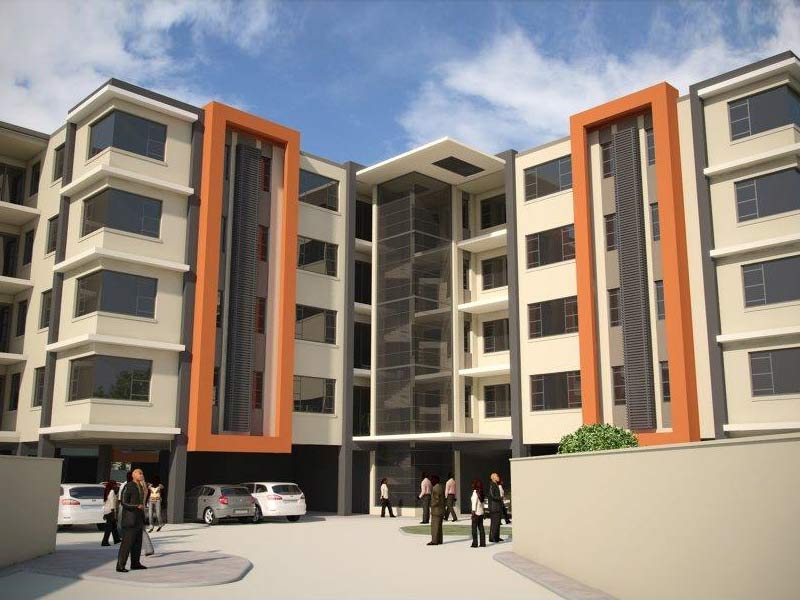
“Recognising a shift in the demographics in Nigeria with a rising youth population, and limited home ownership opportunities for young middle management professionals in close proximity to the central business areas of Lagos, we tested the market with our first residences development in Festac, Lagos.
“The residences offered 196 units of 1- and 2-bedroom apartment at a price of N22 million to N30 million per unit,” he said.
According to the UPDC CEO, this is the fastest selling development of the company, adding that in years to come, it will replicate this in other parts of Lagos.
“Our aim is to expand this concept for middle income housing for young professionals further into areas such as Surulere, Yaba, and Ibeju-Lekki over the next three years,” he added.
“Located opposite our mixed-use Festival Complex in Festac, this development is scheduled to commence in the third quarter of 2020. The project will be funded with a mix of developer equity and off-plan sales,” he added.
To improve its hotel performance, Mr Aiyesimoju said, “Our plan is to convert one of the three hotel wings into serviced residential apartments for sale, similar to our successful residences development.”
Economy
Nigeria’s Economy Strong Enough to Absorb Oil Market Shocks—Edun
By Adedapo Adesanya
The federal government has begun assessing the potential economic implications of the escalating geopolitical tensions in the Middle East and adjusting policies to shield Nigeria from possible disruptions.
This was disclosed by the Minister of Finance, Mr Wale Edun, as the Economic Management Team (EMT) convened to evaluate the risks posed by the US-Israel-Iran standoff to global energy routes, such as the Strait of Hormuz.
He said Nigeria’s robust 4.07 per cent real GDP growth in Q4 2025 positions the country to weather looming oil market shocks from Iran tensions.
Mr Edun, who chairs the EMT, in a statement issued on Tuesday by the Assistant Director for Information and Public Relations in the ministry, Uloma Amadi, said the government was closely monitoring developments and remained committed to safeguarding Nigeria’s economic stability.
The EMT moved to review the potential impact of the unfolding crisis on the Nigerian economy.
Mr Edun also chaired a Naira-for-Crude policy coordination meeting to evaluate developments in the global energy market and their possible domestic implications.
The government noted that the situation remained fluid, with global markets already showing signs of uncertainty amid concerns about potential disruptions to critical energy supply routes, particularly the Strait of Hormuz.
Such disruptions, it said, could lead to volatility in crude oil prices and financial markets worldwide.
Given Nigeria’s integration into global commodity and financial markets, the government identified three major channels through which the crisis could affect the domestic economy.
These include crude oil and gas prices, capital flows and financial market conditions, as well as global logistics and supply costs.
The statement noted that volatility in global energy markets was already pushing up the prices of key commodities, with possible implications for domestic fuel, diesel, cooking gas, and fertiliser costs.
It added that heightened geopolitical risks could also lead to a shift by global investors toward safe-haven assets, potentially affecting capital inflows into emerging markets, including Nigeria.
In addition, disruptions to major shipping and energy supply routes could increase international freight and logistics costs, thereby exerting upward pressure on domestic prices.
The Minister of Finance noted that, beyond these immediate effects, sustained instability in the region could lead to higher prices for goods and services, further intensifying inflationary pressures and the cost of living.
During the EMT meeting, ministers provided sector-specific updates on the evolving situation, with discussions focusing on the likely scale of impact on Nigeria depending on the duration and intensity of the conflict.
Particular attention was placed on how developments in the global oil market could influence Nigeria’s fiscal outlook and external reserves.
The government said the Economic Management Team is closely monitoring key macroeconomic indicators, including global crude oil prices, exchange rate developments, and their potential impact on domestic prices.
It is also tracking capital flows, financial market conditions and broader implications for Nigeria’s fiscal position.
Despite global uncertainty, the Federal Government said Nigeria is entering the period from a position of strengthened economic fundamentals.
It cited recent economic data showing that the country recorded a real Gross Domestic Product growth of 4.07 per cent in the fourth quarter of 2025, one of the strongest quarterly performances in more than a decade.
According to the statement, the growth reflects the impact of ongoing economic reforms and improved macroeconomic coordination.
The government said it remains committed to protecting these gains and ensuring that recent progress in economic stabilisation and revenue mobilisation is not undermined by external shocks.
To achieve this, the Economic Management Team is maintaining close coordination across fiscal, monetary and energy policy institutions.
Policy options are also being kept under continuous review to mitigate potential volatility and protect households and businesses from the possible spillover effects of the global crisis.
Mr Edun emphasised that careful policy calibration would remain central to the government’s response to evolving global developments.
Economy
NASD Investors Lose N16.25bn
By Adedapo Adesanya
The NASD Over-the-Counter (OTC) Securities Exchange faced south on Tuesday, March 10, by 0.64 per cent, with the market capitalisation dropping N16.25 billion to close at N2.540 trillion versus the preceding session’s N2.556 trillion, and the NASD Unlisted Security Index (NSI) shrinking by 27.15 points to 4,245.97 points from 4,273.12 points.
The red team had more members than the green team yesterday, with the former comprising four and the latter three.
Central Securities Clearing System (CSCS) Plc depreciated by N2.43 to sell at N80.00 per share versus N83.78 per share, Afriland Properties Plc lost N1.90 to trade at N17.60 per unit versus N19.50 per unit, Geo-Fluids Plc declined by 30 Kobo to N3.00 per share from N3.30 per share, and Acorn Petroleum Plc declined by 2 Kobo to N1.33 per unit from N1.35 per unit.
Conversely, FrieslandCampina Wamco Nigeria Plc appreciated by N2.85 to N136.70 per share from N133.85 per share, Lagos Building Investment Company (LBIC) Plc added 25 Kobo to sell at N4.00 per unit compared with Monday’s price of N3.75 per unit, and First Trust Mortgage Bank Plc gained 1 Kobo to settle at N1.91 per share versus N1.90 per share.
The volume of securities surged during the session by 1,253.2 per cent to 14.9 million units from 1.1 million units, the value of securities jumped 180.7 per cent to N132.7 million from N47.3 million, and the number of deals increased by 61.1 per cent to 58 deals from 36 deals.
The most active stock by value (year-to-date) was CSCS Plc with 38.1 million units exchanged for N2.4 billion, Okitipupa Plc occupied the second spot with 6.3 million units worth N1.1 billion, and the third place was taken by MRS Oil Plc with 3.4 million units valued at N507.8 million.
The most traded stock by volume (year-to-date) was Resourcery Plc with 1.05 billion units sold for N408.7 million, followed by Geo-Fluids Plc with 130.6 million units transacted for N503.8 million, and CSCS Plc with 38.1 million units worth N2.4 billion.
Economy
Naira Weakens to N1,401/$ at Official Market
By Adedapo Adesanya
The Naira further weakened against the United States Dollar in the Nigerian Autonomous Foreign Exchange Market (NAFEX) on Tuesday, March 10.
Yesterday, the local currency depreciated against the greenback by N8.14 or 0.58 per cent to sell at N1,401.40/$1 compared with the previous day’s N1,393.26/$1.
In the same vein, the domestic currency tumbled against the Pound Sterling in the official market by N22.67 to trade at N1,885.73/£1 versus Monday’s closing price of N1,863.06/£1, and lost N19.37 against the Euro to settle at N1,631.51/€1, in contrast to the preceding day’s N1,612.14/€1.
Similarly, the Naira crashed against the US Dollar in the black market during the trading day by N5 to close at N1,420/$1 compared with the previous day’s N1,415/$1, but gained N3 at the GTBank forex counter to end at N1,416/$1 versus N1,419/$1.
With the latest level, the Naira hit a two-month low despite improvements in externalities that could offer enough backing for the local currency, including a stabilisation of oil prices to levels that could strengthen the current account balance and improve FX liquidity.
The last time the exchange rate hit the N1,400/$1 region was January 27, when the local currency traded at N1,401.2 against the American currency.
Inflows into the FX market have strengthened in recent weeks, but likewise, the US Dollar has strengthened at the international market due to recent upheaval involving the United States, Israel and Iran.
Meanwhile, in the cryptocurrency market, the price of the top 1o coins rallied as easing fears of an oil supply shock, helped by the move toward a possible release of emergency reserves, lifted risk sentiment across global markets.
The gainers were led by Dogecoin (DOGE) which chalked up 1.7 per cent to trade at $0.0926, Cardano (ADA) jumped 0.5 per cent to $0.2599, TRON (TRX) added 0.3 per cent to sell at $0.2867, Bitcoin (BTC) appreciated by 0.2 per cent to $69,619.49, and Ripple (XRP) grew by 0.1 per cent to $1.38.
On the flip side, Ethereum (ETH) crashed by 0.3 per cent to $2,022.42, Solana (SOL) slid 0.2 per cent to $86.57, and Binance Coin (BNB) lost 0.1 per cent to finish at $640.29, while the US Dollar Tether (USDT) and the US Dollar Coin (USDC) traded flat at $1.00 apiece.
-
Feature/OPED6 years agoDavos was Different this year
-
Travel/Tourism10 years ago
Lagos Seals Western Lodge Hotel In Ikorodu
-
Showbiz3 years agoEstranged Lover Releases Videos of Empress Njamah Bathing
-
Banking8 years agoSort Codes of GTBank Branches in Nigeria
-
Economy3 years agoSubsidy Removal: CNG at N130 Per Litre Cheaper Than Petrol—IPMAN
-
Banking3 years agoSort Codes of UBA Branches in Nigeria
-
Banking3 years agoFirst Bank Announces Planned Downtime
-
Sports3 years agoHighest Paid Nigerian Footballer – How Much Do Nigerian Footballers Earn