
Economy
Understanding Forex and Cryptocurrency Risks

The global financial market is no longer limited to banks and traditional assets. Today, investors move money between foreign exchange (forex) and cryptocurrencies. Both markets offer opportunities, but they also carry risks that need careful control.
Forex is the world’s largest financial market, trading more than $7.5 trillion a day, according to the Bank for International Settlements. Cryptocurrencies are smaller but far more volatile and less regulated. Investors who stay disciplined usually do better than those chasing fast profits.
Leverage and Market Exposure
In forex, one of the main risks is leverage. Brokers allow traders to open large positions with only a small deposit. This can increase profits, but also makes losses bigger. Even a price move of less than one percent can wipe out an account.
Crypto trading has similar dangers. Prices can fall by double digits in a single day. For this reason, stop-loss strategies are essential in both forex and crypto to avoid sudden, heavy losses.
Beginners who want extra guidance can turn to trusted trading guides for beginners, which explain how to manage risk, use leverage safely, and build a structured approach to trading.
Liquidity and Price Swings
Forex usually has high liquidity and fast execution. But during events like central bank decisions, political crises, or natural disasters, spreads can widen. This leads to higher trading costs.
Currencies also respond to interest rate changes. For example, when the US Federal Reserve raises rates, the dollar often strengthens and emerging market currencies weaken. Traders who ignore these cycles face unexpected risks.
Crypto markets face different liquidity problems. Bitcoin and Ethereum trade in large volumes, but many smaller coins lack depth. This makes it hard to exit positions quickly without big price losses.
Counterparty and Security Risks
Forex trading also carries counterparty risk. Regulated brokers protect client funds by keeping them separate from company money. Unregulated or offshore brokers may not do this, which puts investors at risk. Always check a broker’s licence before opening an account.
For crypto, the biggest issue is security. Wallets and exchanges are common targets for hackers. Billions have been lost through scams and breaches. Using cold storage, two-factor authentication, and strong passwords is critical for protecting funds.
Regulation and Government Policy
Forex has strong global oversight, with regulators in Europe, North America, and Asia setting clear rules. These create a safer environment for traders.
Crypto, on the other hand, is less predictable. Government actions such as tax rules, exchange bans, or restrictions often trigger sudden sell-offs. Traders who fail to follow regulatory updates can face heavy losses.
Risk Management Practices
Good risk management is central to long-term success. Traders should commit only a small part of their capital to each position. Stop-loss orders limit sudden shocks, while diversification across different assets reduces overall risk.
Ongoing learning is also critical. Monitoring central bank calendars, blockchain updates, and regulatory changes helps traders prepare for moves. Backtesting strategies and using demo accounts create extra layers of preparation. Nigerian traders can also find useful guidance in forex trading tips, which cover current trends and practical tools in the local market.
Practical Steps for Traders
To reduce risks, traders should:
- Use leverage with caution.
- Choose licensed and secure platforms.
- Expect high volatility in digital assets.
- Follow global economic indicators.
- Keep clear records of all trades.
Forex and crypto will continue to attract investors looking for growth and diversification. But both markets carry serious risks, from leverage and liquidity to regulation and security. Traders who stay disciplined, informed, and cautious have a better chance of building consistent results.












By Adedapo Adesanya
The NASD Over-the-Counter (OTC) Securities Exchange further lost 0.28 per cent on Wednesday, March 11, cutting down the market capitalisation by N7.21 billion to N2.533 trillion from the preceding session’s N2.540 trillion.
In the same vein, the NASD Unlisted Security Index (NSI) was down during the session by 12.06 points to finish at 4,233.91 points compared with the 4,245.97 points it ended on Tuesday.
The midweek session experienced a decline in the volume of securities by 91.3 per cent to 1.3 million units from 14.9 million units, as the value of securities decreased by 75.9 per cent to N31.9 million from the N132.7 million recorded on Tuesday, and the number of deals fell 37.9 per cent to 36 deals from the preceding session’s 58 deals.
The session ended with Central Securities Clearing System (CSCS) Plc as the most traded stock by value on a year-to-date basis with 38.1 million units valued at N2.4 billion. Okitipupa Plc followed with 6.3 million units traded at N1.1 billion, and FrieslandCampina Wamco Nigeria Plc recorded the sale of 5.8 million units worth N529.9 million.
Resourcery Plc remained as the most traded stock by volume on a year-to-date basis with 1.05 billion units sold for N408.7 million, trailed by Geo-Fluids Plc with 130.6 million units exchanged for N503.8 million, and CSCS Plc with 38.1 million units worth N2.4 billion.
The alternative stock market closed the day with three price decliners and three price gainers led by IPWA Plc, which added 41 Kobo to sell at N4.56 per unit versus the previous day’s N4.15 per unit, MRS Oil Plc appreciated by 10 Kobo to N210.10 per share from N210.00 per share, and Lighthouse Financial Services Plc increased its value by 5 Kobo to 55 Kobo per unit from 50 Kobo per unit.
Conversely, FrieslandCampina Wamco Nigeria Plc lost N3.92 to quote at N132.78 per share versus N136.70 per share, UBN Property Plc dropped 20 Kobo to settle at N2.38 per unit from N2.18 per unit, and First Trust Mortgage Bank Plc declined by 1 Kobo to N1.90 per share from N1.91 per share.
By Adedapo Adesanya
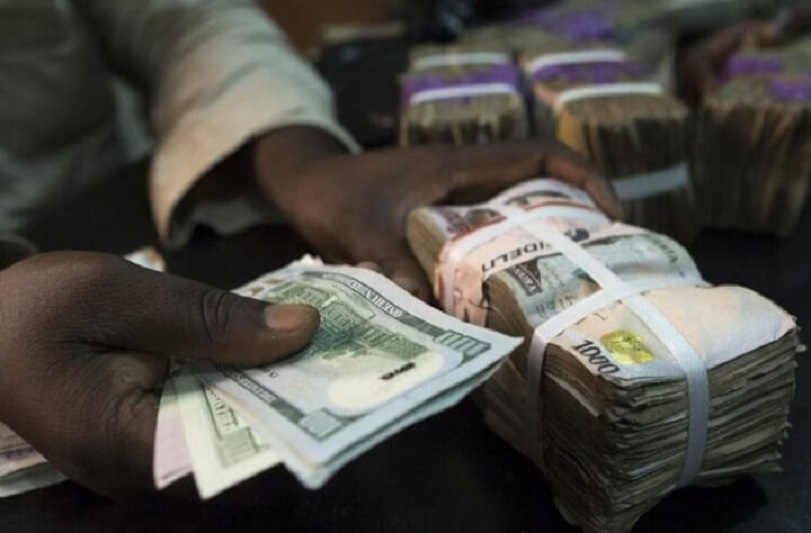
For the first time in a while, the value of the Nigerian Naira improved against its United States counterpart, the Dollar, in the Nigerian Autonomous Foreign Exchange Market (NAFEX) on Wednesday, March 11.
At the midweek session, it gained N25.21 or 1.8 per cent on the greenback in the official market to trade at N1,376.19/$1 compared with the previous day’s value of N1,401.40/$1.
It was also a positive outcome for the Naira in the spot market, as it appreciated against the Pound Sterling yesterday by N40.26 to close at N1,845.47/£1 versus Tuesday’s value of N1,885.73/£1, but closed flat against the Euro at N1,631.51/€1.
At the GTBank FX desk, the Nigerian currency appreciated against the Dollar yesterday by N9 to settle at N1,407/$1, in contrast to the N1,416/$1 it was exchanged a day earlier, and in the black market, it maintained stability at N1,420/$1.
The FX market pressure eased from a two-month low, as foreign reserves topped the $50 billion mark for the first time since January 2009, buoyed by a positive oil price threshold and forex inflows that could strengthen the current account balance and improve FX liquidity.
Inflows into the FX market have strengthened in recent weeks, but likewise, the US Dollar has strengthened in the international market due to the recent crisis facing the global markets involving the United States, Israel, and Iran.
As for the digital currency market, it was mixed on Wednesday amid renewed Middle East tensions, as on-chain data show persistent selling pressure and weak demand as investors grapple with conflict-driven stagflation fears and fading prospects for near-term Federal Reserve rate cuts ahead of next week’s meeting.
Solana (SOL) slumped 0.9 per cent to $85.11, Ripple (XRP) declined by 0.6 per cent to $1.38, Bitcoin (BTC) dropped 0.4 per cent to sell for $69,433.43, and Cardano (ADA) depreciated 0.2 per cent to $0.2591.
But TRON (TRX) added 1.0 per cent to sell at $0.2900, Binance Coin (BNB) gained 0.8 per cent to close at $644.54, Ethereum (ETH) appreciated by 0.5 per cent to $2,027.98, and Dogecoin (DOGE) grew by 0.2 per cent to $0.0919, while the US Dollar Tether (USDT) and the US Dollar Coin (USDC) remained unchanged at $1.00 each.

By Adedapo Adesanya
Oil prices appreciated by nearly 5 per cent on Wednesday as fresh attacks on ships in the Strait of Hormuz worsened supply disruption fears.
Brent futures gained $4.18 or 4.8 per cent to settle at $91.98 a barrel, while the US West Texas Intermediate (WTI) futures increased by $3.80 or 4.6 per cent to $87.25 a barrel.
Three more vessels have been hit by projectiles in the Strait of Hormuz, maritime security and risk firms said on Wednesday. That brought the number of ships struck in the region to at least 14 since the Iran war began.
Iran warned that no oil shipments will be allowed to pass through the Strait of Hormuz until the attacks stop, placing the world’s most critical oil trade point at the centre of the escalating conflict. The narrow waterway between Iran and Oman normally handles roughly 20 per cent of global oil supply and a large share of liquified natural gas (LNG) trade, making any sustained disruption a major threat to global energy markets.
Tanker movements through the region have already begun slowing as insurers and ship operators reassess the risks of transiting the corridor.
The country, which is one of the largest producers in the Organisation of the Petroleum Exporting Countries, on Wednesday said that crude could surge to $200 per barrel if the war involving the US and Israel continues to destabilise the Middle East’s energy corridors.
Crude briefly surged to around three digits earlier this week before retreating toward the $90 range after US President Donald Trump suggested the conflict might end soon. However, renewed attacks on shipping and infrastructure have quickly revived fears of supply disruptions.
Meanwhile, the International Energy Agency (IEA) recommended the release of 400 million barrels of oil, the largest such move in its history, to try to rein in energy prices, which are now up more than 25 per cent since the war began. The energy watchdog said the time frame for the release will be decided in due course.
The proposed volume is more than double the 182 million barrels released in 2022 following Russia’s invasion of Ukraine. Analysts, however, said it was ultimately insufficient to resolve supply losses from a prolonged war in the Middle East.
Member countries collectively hold roughly 1.2 billion barrels of strategic reserves, which can be tapped during supply emergencies.
Crude oil inventories in the US increased by 3.8 million barrels during the week ending March 6, according to data from the US Energy Information Administration (EIA). The EIA’s data release follows figures from the American Petroleum Institute (API) that were released a day earlier, which reported that crude oil inventories fell by 1.7 million barrels in the period.













-
 Feature/OPED6 years ago
Davos was Different this year
-
Travel/Tourism10 years ago
Lagos Seals Western Lodge Hotel In Ikorodu
-

 Showbiz3 years ago
Estranged Lover Releases Videos of Empress Njamah Bathing
-
 Banking8 years ago
Sort Codes of GTBank Branches in Nigeria
-

 Economy3 years ago
Subsidy Removal: CNG at N130 Per Litre Cheaper Than Petrol—IPMAN
-

 Banking3 years ago
Sort Codes of UBA Branches in Nigeria
-

 Banking3 years ago
First Bank Announces Planned Downtime
-

 Sports3 years ago
Highest Paid Nigerian Footballer – How Much Do Nigerian Footballers Earn