Connect with us

General

GenCos, NLC Trade Words Over N6.5trn Power Debt

Published

on

power sector debt

By Adedapo Adesanya

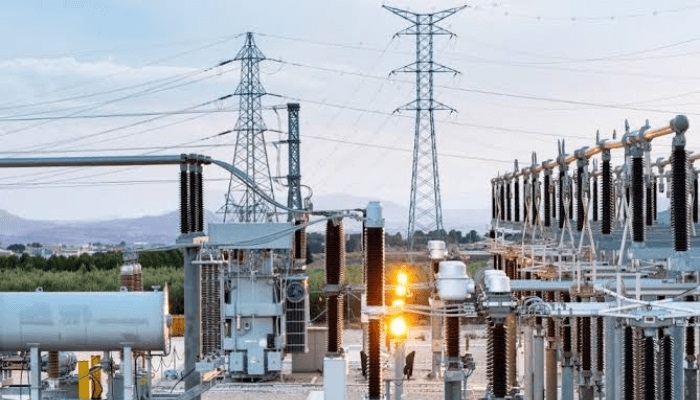
The Nigeria Labour Congress (NLC) and the Association of Power Generation Companies (APGC), an umbrella body for power generation companies (GenCos), have traded words over the N6.5 trillion in power debt.

The labour union attacked the association over the payment of the N6 trillion as well as a proposed N3 trillion federal bailout, describing the move as a “heist” and an attempt to loot public funds.

The NLC accused the power firms of attempting to transfer the burden of their operational failures to Nigerians, insisting that electricity consumers and taxpayers must not be made to pay for what it called the “collapse of a flawed privatisation model.”

In a rebuttal, the APGC has warned the NLC to stop victimising the GenCos and refuted the allegation that the power sector has “institutionalised extortion.”

The chief executive of APGC, Mrs Joy Ogaji, said the group firmly rejects the NLC’s characterisation of the sector’s challenges, adding that labelling the legitimate operations of power firms as “robbery” and a “grand deception” is a simplistic and inflammatory narrative that ignores the complex realities of the industry.

“We view these allegations, which include claims of “institutionalised extortion” and a phantom subsidy, as a misrepresentation of the facts and a disservice to the ongoing efforts to stabilise Nigeria’s electricity supply industry,” said Mrs Ogaji.

The association also strongly refutes the insinuation that the proposed government support for the sector is a clandestine plan to “settle the boys” ahead of elections.

In a statement reacting to the recent press release by the APGC, the NLC rejected allegations that it lacked the competence to speak on power sector matters, maintaining that its members work within the industry and understand its dynamics.

“We categorically reject their self-serving narrative and misleading characterisation of our position. First, the NLC stands firmly by every word of its earlier statement. The privatisation of the power sector was, and remains, a grand deception that has shortchanged the Nigerian people. The APGC’s claims of “victimisation” cannot conceal the persistent failure that has defined the sector since privatisation.

“The core issue is simple and troubling. The entire power sector assets were reportedly sold for approximately N400 billion. Yet today, GENCOs are demanding N6 trillion, while the Federal Government is said to be considering a N3 trillion bailout for companies that have not demonstrably increased generation capacity beyond pre-privatisation levels.

“This contradiction raises fundamental questions. How can assets purchased for N400 billion become the basis for a bailout running into trillions of naira? It is neither sound economics nor responsible governance to socialise losses while privatising profits. Public funds belonging to workers, pensioners, and ordinary Nigerians must not be diverted to rescue private investors from the consequences of their own operational shortcomings. We challenge the APGC to address this contradiction transparently.”

“The NLC is not a bystander in the power sector. Our members work in generation plants across the country. Our affiliate, the National Union of Electricity Employees (NUEE), operates daily within the system. The NLC played a leading role in the national debate around privatisation and consistently warned that, without proper safeguards and capacity, the exercise would fail. Those warnings appear increasingly justified.

“Regarding our reference to “settling the boys,” our position remains clear: public funds must not be used to enrich a select few under the guise of policy intervention. Nigerians deserve transparency and accountability, not opaque financial arrangements.
“In the interest of openness, we call on the APGC to publish a comprehensive list of the beneficial owners of all GENCOs and associated power assets. Nigerians have a right to know who stands to benefit from this N6 trillion demand,” parts of the statement said.

It also criticised Nigeria’s power sector privatisation for failing to significantly improve electricity generation or service delivery despite rising tariffs, questioned the lack of measurable returns and dividends to the government, raised concerns over labour rights violations, and firmly rejected the proposed N6 trillion bailout as unjustified and contrary to public interest.

Business Post reports that the federal government disclosed plans in December to raise N1.23 trillion by the first quarter (Q1) of 2026 to settle verified arrears owed to generation companies and gas suppliers. On January 27, the government said it had successfully issued a N501 billion inaugural bond under the presidential power sector debt reduction programme (PPSDRP).

However, the APGC has said that this is inadequate, comparing the debt to “garri soaked in water.”


Adedapo Adesanya is a journalist, polymath, and connoisseur of everything art. When he is not writing, he has his nose buried in one of the many books or articles he has bookmarked or simply listening to good music with a bottle of beer or wine. He supports the greatest club in the world, Manchester United F.C.

Click to comment

Leave a Reply

Your email address will not be published. Required fields are marked *

General

4th South Africa Focus Week Begins in Lagos to Strengthen Bilateral Ties

Published

on

South Africa Focus Week

By Adedapo Adesanya

The South African Consulate General in Lagos, in partnership with Brand South Africa and the Development Bank of Southern Africa (DBSA), is hosting the 4th edition of the South Africa Focus Week in Lagos, Nigeria, from April 22 – 26, 2026.

The annual platform continues to grow as a strategic initiative aimed at fostering social cohesion between South Africans and Nigerians while positioning South Africa as a preferred destination for business, tourism, and education. Since its inception in 2023, South Africa Focus Week has attracted over 1,500 participants, bringing together stakeholders from across sectors, including trade and investment, arts and culture, tourism, aviation, and the culinary industry.

The 2026 edition holds particular significance as it coincides with the 30th anniversary of South Africa’s democratic Constitution, enacted in 1996, as well as 32 years of unbroken diplomatic relations between South Africa and Nigeria, established in February 1994. These milestones underscore the enduring partnership between the two nations, rooted in shared history and strengthened through formal agreements and ongoing collaboration.

The 2025 economic relationship between South Africa and Nigeria reflects a strategically significant, multi-dimensional partnership anchored in trade, energy security, investment flows, and strong institutional cooperation. While bilateral trade remains structurally imbalanced – with South Africa exporting US$468.48 million and importing $1.69 billion, resulting in a $1.22 billion deficit – this dynamic is largely driven by South Africa’s reliance on Nigerian crude oil, positioning the relationship as one of strategic interdependence rather than imbalance alone.

This partnership is further elevated by the relative economic weight of both countries. According to IMF projections, South Africa’s economy is valued at approximately $443.6 billion, while Nigeria’s stands at around $334.3 billion in nominal terms for 2026. As two of the largest economies on the continent, their bilateral engagement constitutes a central axis of African economic activity, with disproportionate influence on the success of continental integration efforts.

Beyond trade, the relationship is reinforced by deep two-way investment linkages. South African firms -including MTN Group, Shoprite, and Standard Bank – maintain a strong presence in Nigeria, while Nigerian companies such as Access Bank and Paystack have established a growing footprint in South Africa. Although investment flows are asymmetrical and some Nigerian firms have faced operational challenges, these exchanges reflect an emerging bi-directional economic corridor that extends beyond goods trade into services, finance, and digital innovation.

Aligned with Brand South Africa’s mandate to build the country’s global reputation and competitiveness, the week-long programme will convene leaders from government, business, civil society, academia, and the media. Discussions will focus on leveraging the African Continental Free Trade Area (AfCFTA) as a tool for market access and global positioning, with Nigeria serving as a key focal point.

The South Africa Focus Week has features a series of high-level engagements and cultural activities designed to deepen economic ties and promote collaboration: South Africa–Nigeria Infrastructure Investment Conference (April 22, 2026) which was held under the theme South Africa–Nigeria Partnership: Unlocking Infrastructure Opportunities,” the conference will bring together key stakeholders in infrastructure development to explore collaborative projects in road, rail, and transportation systems.

The forum also examined the role of Public–Private Partnerships (PPPs) and facilitated discussions on project financing and implementation with institutions such as the DBSA and Nigeria’s Infrastructure Concession Regulatory Commission (ICRC).

This was followed by the 2nd Economic Diplomacy Roundtable (Thursday, April 23, 2026), which was hosted in partnership with MTN Nigeria under the theme Role of Technology in Infrastructure Development, the roundtable will convene senior government officials, private sector leaders, and industry experts to identify investment opportunities and strengthen strategic partnerships.

Friday, April 24, was for Arts and Culture Experience, which is a dedicated cultural day will showcase Lagos’ creative spaces and features a panel discussion on South Africa’s arts, film, music, and culture. The programme includes a South African film screening, engagements with filmmakers, and a networking reception aimed at fostering collaboration between the creative industries of both countries.

The event continues on Thursday, April 25, with Freedom Day Celebration and Closing Ceremony. This commemorative event will celebrate 30 years of South Africa’s Constitution, 32 years of freedom and democracy, and the enduring diplomatic relations between South Africa and Nigeria. The ceremony will also provide an opportunity to reflect on outcomes from the week and outline future areas of cooperation.

The celebration forms part of Brand South Africa’s Global South Africans Programme, which recognises and connects South Africans in the diaspora as ambassadors of the nation’s values and identity.

The week climaxes with the 4th edition of the South Africa Golf Tournament at Ikoyi Golf Club on Saturday, April 26, 2026, which will be done in partnership with Crossflex International.

According to a statement, the event aims to strengthen people-to-people relations through sports diplomacy, bringing together South African and Nigerian golfers in a spirit of camaraderie and collaboration.

Continue Reading

General

EFCC Arrests Ex-Skye Bank Chair Tunde Ayeni Over Alleged Diverted Loans

Published

on

tunde ayeni

By Modupe Gbadeyanka

The former chairman of the defunct Skye Bank Plc, Mr Tunde Ayeni, has been apprehended by the Economic and Financial Crimes Commission (EFCC).

Spokesperson of the anti-money laundering agency, Mr Dele Oyewale, confirmed the arrest of the businessman on Friday but declined to provide further details, according to TheCable.

Mr Ayeni was accused of diverting the N36.5 billion and $30 million loans from Polaris Bank Limited to companies with which he has links.

He was alleged to have obtained the credit facilities for marine security, electricity distribution, and real estate projects, but moved them to telecom investments tied to NITEL/MTEL assets via a NATCOM account.

After the Central Bank of Nigeria (CBN) revoked the operating licence of Skye Bank in 2018, it nationalised it to Polaris Bank.

The EFCC has been looking into the alleged diversion of funds by Mr Ayeni, resulting in his arrest in Abuja on Thursday, April 23, 2026.

He is being grilled over the matter and would be arraigned in court once the investigation is concluded.

This is not the first time Mr Ayeni has been nabbed and probed by the EFCC, as this happened a few months after his bank lost its licence.

The then acting spokesman for the EFCC, Mr Tony Orilade, said Mr Ayeni was quizzed by detectives over issues related to fraud and embezzlement allegedly committed by him when he was Chairman of the bank a few years ago.

Continue Reading

General

Customs, Police Commence Tighter Security at Ports to Protect Oil Trade

Published

on

nigeria customs police

By Adedapo Adesanya

The Nigeria Customs Service (NCS) and the Nigeria Police have begun securing the country’s maritime corridor as part of critical moves to safeguard oil and gas trade flows through the nation’s ports.
This follows a recent strategic engagement between the Ibeto Seaport and Terminals Command of Customs and the Eastern Port Police Command in Port Harcourt, where both agencies reaffirmed their commitment to joint operations.
Customs Area Controller, Mr Usman Yahaya, described inter-agency cooperation as essential to protecting critical economic infrastructure.
“This visit is timely and highly appreciated. It reflects the importance of sustained cooperation among agencies entrusted with the security of our nation and the protection of critical economic assets,” he said.
Mr Yahaya stressed that collaboration between Customs and Police remains central to maintaining order and preventing criminal activities within port environments.
“Customs and the Police share common responsibilities in safeguarding the port environment. Synergy remains the cornerstone for achieving our collective mandate,” he added.
He further assured continued support for the Police Command to enhance operational effectiveness.
“Customs Area Controller Usman Yahaya (sitting, right) and Commissioner of Police Shuaibu Audu (sitting, left) with other Customs and Police personnel

“We are fully committed to working with the new Commissioner of Police and giving all necessary support towards the successful discharge of his responsibilities.”

On his part, the Commissioner of Police, Eastern Port Command, Mr Shuaibu Audu, said the visit was aimed at strengthening existing ties between both agencies.
“My presence here today is to reinforce the cordial relationship between the Nigeria Police Force and the Nigeria Customs Service. No organisation can function effectively in isolation,” he said.
Mr Audu emphasised the strategic importance of ports to Nigeria’s economy, particularly in the energy sector.
“Our ports are strategic national assets, and we must work together to keep them secure,” he stated. “Synergy among security agencies is essential to addressing emerging threats.”
Continue Reading

Trending