Connect with us

Economy

Veritas Kapital, Sterling Bank, GTCO Dominate NGX Activity Chart

Published

on

Veritas Kapital

By Dipo Olowookere

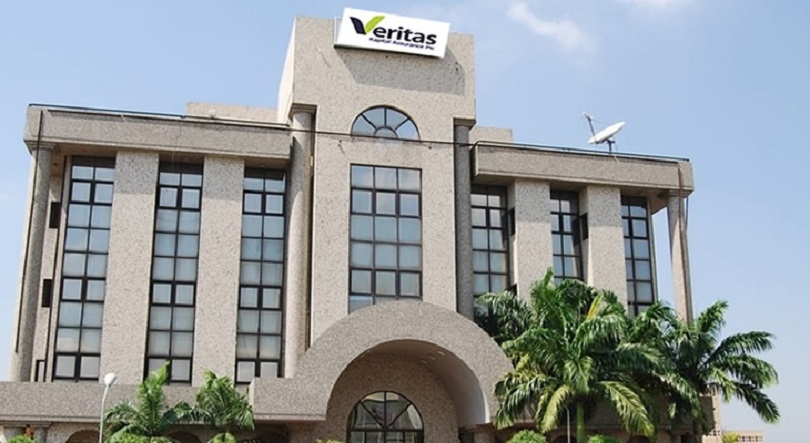
Last week, on the floor of the Nigerian Exchange (NGX) Limited, the trio of Veritas Kapital Assurance, Sterling Bank, and Guaranty Trust Holding Company (GTCO) dominated the activity chart, trading 605.879 million shares worth N2.120 billion in 1,631 deals, accounting for 48.82 per cent and 13.53 per cent of the total trading volume and value, respectively.

In the week, investors bought and sold 1.241 billion shares worth N15.668 billion in 18,560 deals, in contrast to the 1.286 billion shares worth N29.634 billion transacted in 19,816 deals in the preceding week.

Shares in the financial services industry were the busiest, with 1.010 billion units valued at N5.924 billion traded in 9,165 deals, contributing 81.37 per cent and 37.81 per cent to the total trading volume and value, respectively.

Equities in the conglomerates sector followed with 46.761 million shares worth N112.918 million in 641 deals, while stocks in the consumer goods counter with a turnover of 42.121 million shares worth N2.134 billion in 2,886 deals.

A total of 39 equities appreciated in price during the week, lower than 51 equities in the previous week, while 30 equities depreciated in price, higher than 27 equities in the previous week, with 88 equities remaining unchanged, higher than 79 equities recorded in the previous week.

International Energy Insurance topped the gainers’ log last week after it grew by 28.95 per cent to 49 Kobo, MRS Oil Nigeria increased by 13.48 per cent to N16.00, NAHCO gained 12.86 per cent to sell at N7.90, Sunu Assurances chalked up 12.12 per cent to close at 37 Kobo, and Abbey Mortgage Bank appreciated by 9.80 per cent to N1.68.

On top of the losers’ table was Livestock Feeds, which lost 13.85 per cent to quote at N1.12, C&I Leasing depleted by 10.00 per cent to N3.15, UPDC shed 9.62 per cent to trade at 94 Kobo, Sovereign Trust Insurance went down by 7.14 per cent to 26 Kobo, and International Breweries decreased by 7.00 per cent to N4.65.

Data obtained by Business Post from the exchange showed that the All-Share Index (ASI) and the market capitalisation appreciated by 0.16 per cent to 52,594.68 points and N28.647 trillion, respectively.

Similarly, all other indices finished higher with the exception of NGX CG, premium, banking, pension, NGX AFR Bank Value, NGX AFR Div. Yield, NGX MERI Value, consumer goods, industrial goods, insurance and growth indices which depreciated by 1.17 per cent, 1.18 per cent, 2.60 per cent, 0.64 per cent, 2.66 per cent, 2.05 per cent, 2.34 per cent, 0.40 per cent and 1.06 per cent respectively, while the ASeM and sovereign bond indices closed flat.


Dipo Olowookere is a journalist based in Nigeria that has passion for reporting business news stories. At his leisure time, he watches football and supports 3SC of Ibadan. Mr Olowookere can be reached via [email protected]

Economy

Dangote’s Impact Visible in Our Economy, Communities—Ogun Governor

Published

on

Dangote 2026 Gateway Trade Fair

By Aduragbemi Omiyale

The Governor of Ogun State, Mr Dapo Abiodun, has praised Dangote Industries Limited for being an “exemplary strategic partner in our collective pursuit of industrial advancement and sustainable economic development.”

Speaking at the opening ceremony of the ongoing 15th Gateway International Trade Fair in Abeokuta, the Governor described the conglomerate as a strategic partner in the industrial and economic development of the state through investments.

Mr Abiodun, represented by the Commissioner for Trade, Industry and Investments, Mr Emmanuel Adebola Sofela, disclosed that, “Dangote’s legacy in Ogun State stands as a model of how meaningful collaboration between government and the private sector can deliver transformative results.”

According to him, the Dangote Group is no longer just an investor but a trusted ally—“one whose impact is visible in our economy, our communities, and the future we are building.”

He stated that over the years, the group’s unwavering commitment to excellence, innovation, and nation-building has not only strengthened Nigeria’s industrial backbone but has also contributed immensely to the prosperity and competitiveness of Ogun State.

“Through visionary investments, job creation, and consistent support for infrastructure and community growth, the Dangote Group has demonstrated what it means to be a responsible corporate citizen and a catalyst for broad-based development.

“Their partnership with Ogun State continues to open doors of opportunity for our people, energise local industries, and reinforce our reputation as a leading destination for productive enterprise,” he further noted.

Recall that Ibese, in the Yewa axis of Ogun State, is a host to the Dangote Cement Plc’s 12 million mtpa production capacity cement plant, while another 6 million mtpa cement plant is currently under construction at Itori, also in Ogun State.

Earlier, the president of Ogun State Chamber of Commerce, Industries, Mines and Agriculture (OGUNCCIMA), Mr Niyi Oshiyemi, in the same vein, commended the management of Dangote Group for always rising to be counted among the partners of the chamber in an effort to collaborate with the private sector for meaningful economic development.

“Today is not just the commencement of another trade fair but the celebration of collaborations, innovations, and shared prosperity.

“The trade fair in the last 15 years has served as a vital platform where ideas meet opportunity, where businesses connect with the market and where partnerships are formed to drive sustainable economic growth,” he said.

According to him, in an era defined by rapid technological advancement, global competitiveness and ever-evolving consumer needs, no business can thrive in isolation. The future belongs to those who build strong partnerships.

Mr Oshiyemi noted that OGUNCCIMA has been able to strengthen Ogun State’s position as a leading commercial and industrial hub in Nigeria and West Africa because it has been able to encourage investments, trade linkages and technology transfer by supporting policies and initiatives that enhance the ease of doing business in the state.

Continue Reading

Economy

Presidential Directives Boost Efforts to Unlock Owowo Deepwater Resources—Baxi

Published

on

Jagir Baxi

By Adedapo Adesanya

The Managing Director and Lead Country Manager of ExxonMobil’s affiliates in Nigeria, Mr Jagir Baxi, has noted that recent presidential directives have been instrumental in strengthening the company’s efforts to unlock deepwater resources.

Mr Baxi was appointed to the position in July 2025 to oversee ExxonMobil’s business in Nigeria, including Esso Exploration and Production Nigeria Limited and Esso Exploration and Production Nigeria (Offshore East) Limited.

In an interview with The Energy Year, he said the directives issued by President Bola Tinubu in May 2025 were specifically designed to eliminate rent-seeking, slash project timelines, reduce contracting costs, and restore investor confidence in the Nigerian upstream sector.

According to him, Esso Nigeria is now focusing on advancing deepwater oil and gas developments as part of ExxonMobil’s portfolio after its divestment from the joint venture with Nigerian National Petroleum Company (NNPC) Limited.

“The presidential directives have been instrumental in strengthening Nigeria’s competitiveness in the oil and gas sector. For Esso Nigeria and our shareholder, ExxonMobil, they’ve provided a meaningful platform to reassess our discovered but undeveloped resources – most notably Owowo.

“These directives signal a commitment from the highest levels of government to address long‑standing barriers to deepwater investment, and that’s an important catalyst for industry confidence,” he said.

The ExxonMobil executive noted that the directives have enabled the oil major to take tangible steps forward while working closely with the state oil company and other agencies in the sector.

“We are co‑developing a contracting strategy tailored specifically to the scale and complexity of a world‑class deepwater project,” he noted, adding, “In parallel, we’ve collaborated with the Nigerian Content Development and Monitoring Board to shape a project‑specific National Content Strategy – one designed to both enable the project and deliver sustained, impactful benefits to Nigerian businesses and the workforce. That alignment is critical if we want to create value that extends far beyond the life of a single development.”

“That said, one essential element is still outstanding: codified implementation guidance. For investors, particularly those making multi‑billion‑dollar commitments over 20 to 30‑year horizons, clarity and predictability are non‑negotiable. Our concern stems from recent experience – instances where progress delivered through certain government actions was later eroded by others. It underscores why stability in fiscal and regulatory frameworks is so vital.

“If Nigeria can translate these directives into consistent, durable rules of engagement, the country will be positioned to unlock deepwater investment at a scale that delivers long‑term value for the nation, its citizens, and its partners. And we believe that is absolutely achievable,” he explained.

Continue Reading

Economy

CAC Pushes for Harmonised National Register to Strengthen Anti-Crime Fight

Published

on

corporate affairs commission cac

By Adedapo Adesanya

The Corporate Affairs Commission (CAC) has called for the establishment of a single, harmonised national register for beneficial ownership to strengthen Nigeria’s anti-corruption framework and improve the fight against corporate and financial crimes.

The Registrar-General of CAC, Mr Hussaini Magaji, made the call during the commission’s 35th anniversary celebration, designated as Anti-Corruption Day on Tuesday in Abuja.

Mr Magaji said the current fragmented system of beneficial ownership disclosure, where some sectors maintained separate registers outside the CAC framework, created duplication, inconsistencies and regulatory loopholes that could be exploited for illicit activities.

According to him, CAC is legally and institutionally positioned to serve as the central repository for beneficial ownership information in Nigeria.

He said that access to accurate corporate records was critical to the successful investigation and prosecution of financial crimes.

He said that the CAC remained the custodian of information on company ownership, control and management.

“No successful prosecution of corporate and financial crimes can be achieved without the support of the Corporate Affairs Commission,” Mr Magaji said.

He reaffirmed the commission’s commitment to sustained collaboration with anti-corruption and law enforcement agencies.

“These include the Economic and Financial Crimes Commission (EFCC), Independent Corrupt Practices and Other Related Offences Commission (ICPC), Nigerian Financial Intelligence Unit (NFIU) and the National Drug Law Enforcement Agency (NDLEA),” he said.

Mr Magaji called for deeper information sharing, joint investigations and real-time verification processes to enhance enforcement outcomes.

The CAC boss also urged stakeholders to support the passage of the Persons with Significant Control (PSC) Rules into an Act of the National Assembly, saying a stronger legal framework was required to address sophisticated abuses of corporate structures.

He disclosed that companies that failed to disclose their beneficial owners were flagged as inactive in CAC records, adding that such entities should not enjoy the privileges of legality.

Mr Magaji, however, expressed concern that some financial institutions continued to transact with non-compliant companies, describing the practice as a major weakness in the national compliance chain.

On internal reforms, he said, CAC had demonstrated zero tolerance for corruption by surrendering three staff members to the ICPC over alleged misconduct and submitting details of 248 fake company registrations to the EFCC for investigation.

According to him, the fight against corruption requires coordinated efforts across institutions and sustained commitment to transparency and accountability.

Continue Reading

Trending