Economy
We’ll Make Nigeria Attain Self-Sufficiency in Sugar—Dangote Sugar
By Dipo Olowookere
The Group Managing Director/CEO of Dangote Sugar Refinery, Mr Ravindra Singhvi, has assured that the company will lead Nigeria to self-sufficiency in sugar.
Mr Singhvi gave this assurance while commenting on the financial performance of the organisation in the first six months of 2021.
In the period under review, the sugar refiner grew its revenue by 27.8 per cent to N132.0 billion from N103.2 billion achieved in the same period of 2020.
Also, the gross profit rose by 37.3 per cent to N28.6 billion from N20.8 billion, while the group sales volume increased to 388,589 tonnes, with the production volume rising by 7.6 per cent to 403,846 tonnes driven by operations optimisation drive.
“We commenced the year on a strong footing with an impressive performance in the first half as the financial results have shown, with a stronger Q1 topline growth and a robust Q2 topline growth year on year.
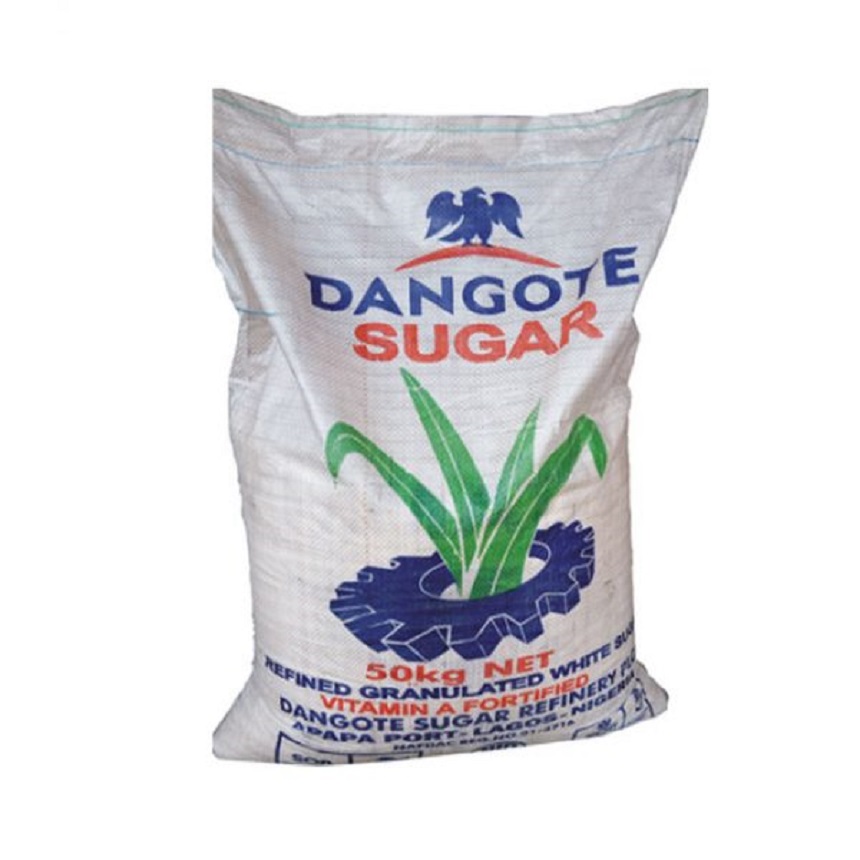
“During the period under review, we launched our new packaging designs for the 50kg fortified and non-fortified sugar bags with the theme Dangote Sugar has a new look…. Same Great Quality.
“The theme reaffirms the quality of our product and inspires a deeper connection to the Dangote Sugar brand among our valued customers and consumers, whilst refreshing our market presence as the leading sugar brand in Nigeria,” he added.
“As part of our supply chain management sustainability journey, we continued to enhance our outgrowers scheme. The technical and agriculture support provided for them over time has led to the improved yield from our outgrowers sugarcane farms at the Numan Sugar Estate.
“This effort will be sustained to ensure the socio-economic growth of our immediate communities and improved sugar cane supply for production,” he assured.
“The team is committed to navigating the second half of the year, keeping the health and safety of our people and partners as a top priority.
“Our refinery in Apapa and backward integration operations in Numan, Adamawa State and Tunga, Nasarawa State continue to operate in compliance with our health and safety protocols while ensuring our commitment to the environment and sustainable business practices are maintained,” Mr Singhvi further said.
He stated that the recurrent challenges with Apapa traffic gridlock persisted during the first half of the year but expressed optimism that the truck call up system will address the situation.
Achievement of the Dangote Sugar backward integration projects targets, he added “remains our focus. We are resolute and will continue in our quest to put Nigeria on the path of sugar self-sufficiency and on the world sugar map.”
Dangote Sugar Refinery is Nigeria’s largest producer of household and commercial sugar with a 1.44M MT refining capacity at the same location. The refinery located at Apapa Wharf Ports Complex, refines raw sugar imported from Brazil to white, Vitamin A fortified refined granulated white sugar suitable for household and industrial uses.
It has the Backward Integration goal of becoming a global force in sugar production, by producing 1.5M MT/PA of refined sugar from locally grown sugar cane for the domestic and export markets.
To achieve this, Dangote Sugar Refinery Plc acquired DSR Numan Operations (Savannah Sugar Company Limited), located in Numan, Adamawa State in December 2012, and embarked on the ongoing rehabilitation of its facilities and expansion of its 32,000 hectares’ sugarcane estate. In September 2020, the scheme of merger between DSR and Savannah Sugar Company Limited was completed which gave birth to a bigger and stronger business with considerable opportunity for growth and delivery of superior benefits to all stakeholders.
“The expansion of the sugar estate is still ongoing as well as the development of the greenfield site acquired at Tunga, Nasarawa State for the achievement of DSR’s sugar for Nigeria development master plan.
The Nasarawa Sugar Company Limited is the registered subsidiary of Dangote Sugar Refinery Plc. The 78,136 hectares Sugar Project Site is located at Tunga, Awe Local Government Area, of Nasarawa State.
Economy
Chiemeka Highlights Role of Non-Interest Finance in Enhancing Market Inclusion
By Aduragbemi Omiyale
The chief executive of the Nigerian Exchange (NGX) Limited, Mr Jude Chiemeka, has emphasised the importance of non-interest finance in the economy and the nation’s capital market.
Speaking at the 7th African International Conference on Islamic Finance (AICIF) in Lagos recently, he said non-interest finance drives sustainable economic transformation and enhances market inclusion.
According to him, this was why the stock exchange created a special board for the sub-market segment to attract ethical investors.
“At NGX, our Non-Interest Finance Board represents more than a platform, it embodies our commitment to unlocking ethical capital, diversifying investment opportunities, and driving sustainable development.
“By leveraging innovation and strategic partnerships, we are creating pathways for inclusive growth and positioning Nigeria at the forefront of Islamic finance in Africa,” Mr Chiemeka stated at the event organised by The Metropolitan Skills Limited in collaboration with the Securities and Exchange Commission (SEC).
Business Post reports that Nigeria’s non-interest capital market has recorded significant expansion in recent years, with sovereign Sukuk issuances at over N1.4 trillion for multiple projects nationwide.
It was gathered that the two-day AICIF attracted policymakers, regulators, development partners, and market participants, who explored policy reforms, product innovation, and strategies to unlock liquidity across Africa’s Islamic finance markets.
Also speaking, the chairman of NGX Group Plc, Mr Umaru Kwairanga, said NGX’s Non-Interest Finance Board has become a central platform for expanding access to Sharia-compliant financial instruments and attracting investors seeking transparency, inclusivity, and sustainability.
“Through the Non-Interest Finance Board, NGX is building a dedicated platform for Sukuk, Islamic collective investment schemes, and non-interest exchange-traded funds. Our goal is to broaden market participation while channelling capital towards productive sectors of the economy,” he said.
On his part, the Vice President of Nigeria, Mr Kashim Shettima, represented by the Special Adviser to the President on Economic Matters, Mr Tope Fasua, described Islamic finance as a credible mechanism for fostering equitable prosperity and sustainable development, urging broader adoption across African economies.
Economy
NECA Backs Tinubu’s 15% Fuel Import Levy
By Adedapo Adesanya
The Nigeria Employers’ Consultative Association (NECA) has backed the proposed 15 per cent fuel import tariff introduced by the President Bola Tinubu-led government.
According to NECA Director General, Mr Wale Smatt Oyerinde, the move will enhance local production of the commodity.
“We support the policy of a 15 per cent tariff on imported petroleum products — not on locally produced ones.
“If the 15 per cent tariff is the ‘punishment’ we must bear collectively for our recklessness in allowing our four refineries to collapse, then so be it,” he said when he was interviewed on Channels Television on Friday.
“Even developed nations like the US are introducing protectionist policies to protect their local industries. We don’t have much excuse not to do the same,” the NECA boss said.
Recall that President Tinubu had approved the 15 percent tariff increase in a letter sent to the Federal Inland Revenue Service (FIRS) and the Nigerian Midstream and Downstream Petroleum Regulatory Authority, mandating its enforcement.
Critics have faulted the move, arguing it will lead to an increase in the landing cost of the product, with petrol and diesel expected to see further increment.
However, support for the programme has come from many quarters including energy businessman, Mr Femi Otedola, who backed move recently.
The NECA chief also believes the policy is a step in the right direction, adding that a similar actions should be extended to other areas.
“The president gave approval about two weeks ago, and the OPS has done its analysis. We’re also looking beyond petrol and diesel.
“To ramp up production in the manufacturing and real sectors, this kind of policy should extend there too. Why do we import things we can produce locally? It affects forex and other aspects of the economy,” Mr Oyerinde said.
“We’ve said that everything we can produce locally should attract import duties, provided we have made sufficient arrangements for local production to meet our needs. If we have to give businesses a one- or two-year moratorium to integrate backward, then fine, but let’s reduce the tendency to import,” he added.
Economy
Shell Gives Nigerian Offshore Gas Deal to Halliburton
By Adedapo Adesanya
Shell Nigeria Exploration and Production Company has given US-based Halliburton an integrated drilling contract to work on the oil major’s $2 billion shallow-water HI offshore gas project in Nigeria.
According to reports, the financial terms of the deal, awarded by Shell, were not disclosed.
Halliburton, based in Houston, said it will deploy remote operations and automated technologies for the work.
In October, Shell announced HI, located in Nigeria’s Oil Mining Licence (OML) 144. The UK major operates the HI project with a 40 per cent working interest alongside its local partner, Sunlink Energies and Resources, which owns a 60 per cent stake.
The project, when completed, will supply 350 million standard cubic feet (approximately 60 thousand barrels of oil equivalent) of gas per day at peak production to Nigeria LNG (NLNG; Shell interest 25.6 per cent), which produces and exports liquefied natural gas (LNG) to global markets.
According to a statement, production is expected to begin before the end of this decade.
At the time of the announcement, Mr Peter Costello, Shell’s Upstream President, said that “This Upstream project will help Shell grow our leading Integrated Gas portfolio, while supporting Nigeria’s plans to become a more significant player in the global LNG market.”
The gas will be sent to the delayed Train 7 of the Nigeria Liquefied Natural Gas (NLNG) plant, currently being built by a Saipem-led consortium.
The increase in feedstock to NLNG, via the Train 7 project that aims to expand the Bonny Island terminal’s production capacity, is in line with Shell’s plans to grow its global LNG volumes by an average of 4-5 per cent per year until 2030.
-
Feature/OPED6 years agoDavos was Different this year
-
Travel/Tourism9 years ago
Lagos Seals Western Lodge Hotel In Ikorodu
-
Showbiz3 years agoEstranged Lover Releases Videos of Empress Njamah Bathing
-
Banking7 years agoSort Codes of GTBank Branches in Nigeria
-
Economy2 years agoSubsidy Removal: CNG at N130 Per Litre Cheaper Than Petrol—IPMAN
-
Banking3 years agoFirst Bank Announces Planned Downtime
-
Sports3 years agoHighest Paid Nigerian Footballer – How Much Do Nigerian Footballers Earn
-
Banking3 years agoSort Codes of UBA Branches in Nigeria