Connect with us

Economy

Why It’s Impossible to Sell Petrol Below N800 per Litre—NNPC

Published

on

Lubricants-For-Petrol

By Dipo Olowookere

The hope of Nigerians getting premium motor spirit (PMS), commonly known as petrol, below N800 per litre, at least for now when the price of crude oil is less than $80 per barrel and the official exchange rate of the Naira to the Dollar is above N1,600/$1 at the currency market, may have been dashed.

This is because the Chief Financial Officer (CFO) of the Nigerian National Petroleum Company (NNPC) Limited, Mr Adedapo Segun, has said the price of the commodity from unrefined crude oil is about N800 per litre.

He made this revelation while speaking on Channels Television’s Sunrise Daily on Wednesday, monitored by Business Post.

According to him, this reality might make it impossible for the company to sell PMS to Nigerians at that price because the cost of getting the final product must be added to arrive at the actual price of petrol.

“This pricing conversation is an interesting one. What are the components of the price? I just told you that the crude [oil] unrefined is N800 per litre, a barrel of crude is about $80 (actually at $72 per barrel as of Wednesday), give or take, you have about 159 litres [of PMS) in a barrel of crude, let’s approximate it to 160 litres, that gives you 50 cents per litre [and] at N1,600 per Dollar, that’s N800 per litre.

“So, the crude itself, unrefined, is N800 per litre. Then you talk about the refiner’s margin, he has to make some money and has costs like operating the plant and other overhead costs. When you are done with these costs, you move to the wholesalers.

“[The product] is transported either by vessel or trucks. The transporter also has his margin as well as the retailer. There are also costs for the regulators and other statutory fees to be paid.

“When you look at all of these costs, what will the Port Harcourt refinery do differently than what Dangote Refinery for example is doing today?

“The only difference would be that it is closer to the people of Port Harcourt and reduces the cost of transporting things like PMS from Dangote Refinery in Lagos to Port Harcourt. That is where the savings would come, but that is very marginal. The cost of transportation is very marginal in the cost-build-up for PMS,” he said.

However, he noted that what the refineries will do to Nigeria is to create competition based on market conditions.

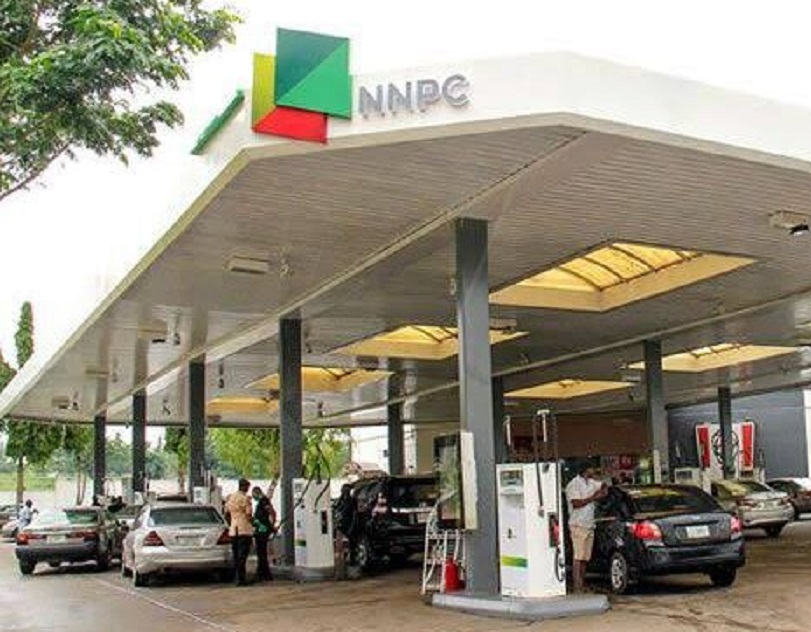
At the moment, the price of PMS at NNPC retail stations is N1,025 per litre in Lagos, while independent marketers sell between N1,040 per litre and N1,060 per litre.

Last week, Dangote Refinery announced a slash in its ex-depot price to N970 per litre from N990 per litre.


Dipo Olowookere is a journalist based in Nigeria that has passion for reporting business news stories. At his leisure time, he watches football and supports 3SC of Ibadan. Mr Olowookere can be reached via [email protected]

Click to comment

Leave a Reply

Your email address will not be published. Required fields are marked *

Economy

Nigeria Customs Seeks Slash in N34trn Import Duty Waivers

Published

on

import duty waiver

By Adedapo Adesanya

The Nigeria Customs Service (NCS) is seeking a reduction in import duty exemptions, which rose to N34 trillion, limiting its ability to increase its revenue generation threshold.

The Comptroller-General of the Customs Service, Mr Adewale Adeniyi, disclosed that the value of import duty exemption certificate approvals increased to that level in 2025, describing the policy as one of the major factors restricting its revenue generation.

At an investigative session of the Senate Committee on Finance with revenue-generating agencies in Abuja on Monday, Mr Adeniyi explained that government fiscal policies have continued to impact the revenue-generating capacity of the Customs Service, both positively and negatively.

“The NCS would have generated significantly higher revenue over the years if not for government-approved import duty waivers and other external factors affecting collections,” he said.

He added that the Import Duty Exemption Certificate scheme, introduced in March 2020, accounted for about N34 trillion in approvals in 2025, with nearly 60 per cent covering duty-free importation of military hardware due to Nigeria’s prevailing security challenges.

Other government-backed duty waivers, he noted, covered the importation of Compressed Natural Gas (CNG), electric and hybrid vehicles, healthcare equipment and medical supplies, industrial machinery and manufacturing inputs, as well as food import intervention programmes.

While acknowledging the impact of the waivers on Customs revenue, Mr Adeniyi argued that fiscal policy should not be assessed solely on the basis of revenue generation but also on its broader economic and social objectives.

He, however, urged the federal government to establish stronger monitoring mechanisms to ensure beneficiaries of duty waivers deliver the intended economic outcomes, including lower consumer prices, increased local production and improved healthcare access.

The committee also expressed displeasure over the absence of several heads of government agencies invited to the hearing, including the Nigerian Civil Aviation Authority (NCAA), Small and Medium Enterprises Development Agency of Nigeria (SMEDAN), Industrial Training Fund (ITF), and the Federal Medical Centre (FMC), Jabi.

The Chairman of the Senate Committee on Finance, Mr Sani Musa, warned that the affected chief executives must appear at the committee’s next sitting or face severe sanctions under the Senate’s rules.

Continue Reading

Economy

Is Headway Broker Safe and Legit? A Detailed Look at Regulation and Trust

Published

on

headway broker Demo Account

In the competitive world of online trading, finding a trading brokerage partner that balances reliability, technological innovation, and accessible conditions is essential. Headway broker has emerged as a significant player, currently serving over 4 million users globally.

In this article, we take a detailed look at what makes this broker for trading a notable option for both novice and experienced traders.

Headway Regulatory Foundation and Safety

Safety is the cornerstone of any trading relationship. Headway broker operates under the regulation and licensing of the Financial Sector Conduct Authority (FSCA). This regulatory oversight ensures that the broker adheres to strictly defined standards for transparency and operational conduct, providing traders with an added layer of security and confidence when managing their portfolios.

Trading Platforms and Instruments

Efficiency in trading Forex and other markets is driven by the tools at your disposal. Headway provides a robust technological trading ecosystem:

Industry-Standard Platforms: The broker fully supports MetaTrader 4 (MT4) and MetaTrader 5 (MT5), the most widely used platforms for technical analysis and automated trading.

Proprietary Mobile App: For traders who prioritize mobility, Headway offers its own custom-built trading app. It is readily available for download on both Google Play and the App Store, allowing for seamless account management and trading on the go.

Diverse Market Access: Traders have a wide range of opportunities with access to over 300 trading instruments, ensuring plenty of choice for different strategies and asset classes.

Trading Account Types Offered by Headway

Headway broker understands that every trader enters the market with a different level of experience:

Three Account Tiers: To ensure inclusivity, the broker offers three distinct types of accounts (Cent, Standard and Pro), tailored to suit different levels of expertise and capital requirements.

Demo Account: For those looking to refine their skills without financial risk, Headway provides a comprehensive demo trading account. This is the perfect environment to practice strategies, understand how the platform works, and gain confidence before transitioning to live trading.

Customer Support and Incentives

Headway supports its user base with comprehensive resources and financial incentives:

24/7 Technical Support: Market fluctuations happen at any time. Headway provides round-the-clock technical support for the traders, ensuring that help is always available whenever a question or issue arises.

150$ No Deposit Bonus: To help new traders get started, Headway offers a $150 no deposit bonus. This is an excellent way to test the broker’s execution speed and trading environment with zero initial risk.

IB Partnership Program: Beyond individual trading, Headway fosters growth through its Introducing Broker (IB) partnership program. This allows partners to build their business and earn commissions by referring new traders to the platform.

Conclusion

With its combination of FSCA regulation, a vast range of instruments, and modern platforms like MT4, MT5, and its own proprietary app, Headway FX broker provides a comprehensive environment for modern traders. Whether you are using the demo account to hone your skills or taking advantage of the 150 no deposit welcome bonus, this broker offers the stability and tools needed for your trading journey.

Continue Reading

Economy

Buying Interest Lifts NASD OTC Exchange by 0.40%

Published

on

NASD OTC exchange

By Adedapo Adesanya

The NASD Over-the-Counter (OTC) Securities Exchange rose by 0.40 per cent on Monday, July 13, buoyed by buying interest in 11 Plc, Central Securities Clearing System (CSCS) Plc and UBN Property Plc, which offset the profit-taking in Food Concepts Plc, the parent company of Chicken Republic.

11 Plc gained N20.69 to end at N227.64 per share compared with last Friday’s price of N206.95 per share, CSCS Plc grew by N1.83 to N91.48 per unit from N89.65 per unit, and UBN Property Plc added 1 Kobo to sell at N1.81 per share versus N1.80 per share.

On the flip side, Food Concepts Plc depreciated by 24 Kobo to close at N2.45 per unit, in contrast to the preceding session’s N2.69 per unit.

As a result, the market capitalisation increased by N9.2 billion to N2.587 trillion from N2.578 trillion, and the NASD Security Index (NSI) improved by 15.33 points to 4,311.67 points from 4,296.34 points.

Yesterday, the volume of securities traded by investors surged by 615.9 per cent to 9.1 million units from the previous 1.3 million units, and the value of securities rose by 997.1 per cent to N320.4 million from the preceding session’s N29.2 million, while the number of deals decreased by 12.5 per cent to 28 deals from last Friday’s 32 deals.

At the close of trades, Great Nigeria Insurance (GNI) Plc remained the most active stock by value on a year-to-date basis, with 3.4 billion units valued at N8.4 billion, followed by Infrastructure Credit Guarantee (Infracredit) Plc with 2.3 billion units worth N6.5 billion, and CSCS Plc with 73.9 million units exchanged for N5.2 billion.

GNI Plc also closed the session as the most traded stock by volume on a year-to-date basis, with 3.4 billion units sold for N8.4 billion, followed by Infracredit Plc with 2.3 billion units traded for N6.5 billion, and Resourcery Plc with 1.1 billion units transacted for N415.7 million.

Continue Reading