
Economy
Why Nigeria’s Payment Culture Crisis Has Worsened—OnePipe CEO


Across Nigeria, thousands of hardworking entrepreneurs—from small school owners to gig economy riders—face a recurring challenge that’s as old as the hustle itself: chasing payments. Despite delivering services on time and at scale, they are often left waiting days, sometimes weeks, to get paid. This delay isn’t just frustrating—it’s costly, demoralizing, and systemically harmful.
In a business environment already strained by inflation, fuel price volatility, and limited access to credit, late payments can break even the most resilient businesses. It affects not just cash flow, but trust, planning, and the ability to grow. The stakes are especially high for cooperatives and service-based SMEs, many of whom rely on informal, manual systems to manage their finances.
Ope Adeoye, CEO of Nigerian fintech firm OnePipe, believes the solution lies in structure. Through their flagship product PaywithAccount, OnePipe is pioneering a payment system that gives Nigerian businesses more control, transparency, and dignity. In this conversation, Ope talks about the roots of Nigeria’s payment culture crisis, its emotional and economic toll, and how businesses can take back control.
Let’s start with the everyday experience. Why is late payment such a big issue in Nigeria?
It’s partly cultural and partly systemic. In Nigeria, business often happens through relationships—verbal commitments, trust, informal records. That’s a beautiful thing in some ways. But when it comes to payments, it creates a lot of gray areas. People think they’re doing you a favor by paying. There’s no urgency. And the problem is, you’ve already done the work—you’ve delivered the service, paid your staff, bought fuel, and now you’re waiting endlessly for the money.
This creates a vicious cycle. Small businesses start avoiding riskier customers or stop offering credit entirely. That affects their customer base and revenue. It becomes harder to grow. It also makes the business ecosystem more hostile—less trust, more micromanagement, more stress.
And that waiting comes with real cost, right?
Absolutely, every hour spent chasing a payment is an hour lost from doing productive work. You’re calling, texting, sending WhatsApp reminders, following up again. It’s exhausting. It affects your cash flow, your energy, and even your relationships.
We’ve seen school administrators chasing parents, cooperative treasurers begging members, and artisans refusing new jobs because they haven’t been paid for the last one. That’s lost economic value right there. And it’s not just money—it’s morale. When you can’t plan your finances, it affects your confidence in taking on new opportunities.
Is this a new problem or has it worsened in recent years?
It’s not new, but the impact has gotten worse because of economic pressures. Inflation, rising fuel costs, and business uncertainty mean that small delays can have cascading effects. If someone doesn’t pay you on time, you might not be able to pay your own supplier or staff. It becomes a ripple effect.
Also, we’re in a more digital world now. Expectations are higher. People want things faster, but the backend systems for collecting payment haven’t kept up. That disconnect creates real operational tension for many small businesses.
What’s driving the shift toward structured payment tools like PaywithAccount?
We’re seeing a real hunger for order. People are tired of chaos. PaywithAccount is built to bring structure to these informal interactions. It lets businesses or cooperatives set up a payment mandate—essentially a permission from the customer to deduct funds directly from their account at a specific time or frequency.
It works like a standing order but is simpler and designed for our local context. You don’t need complex bank setups or expensive tech. A cooperative or small business can set it up with basic onboarding and immediately start seeing the benefits in how they operate and relate with customers.
What’s the adoption been like?
It’s been encouraging. We’ve seen cooperatives that used to spend days every month chasing dues now collecting 90% of their contributions on schedule. We’ve seen service providers—like caterers—who now set up mandates with their clients for milestone payments. They report better cash flow, less tension, and more respect from customers.
More importantly, they regain time—time to focus on the actual work of building their business. We’ve also seen that clients take them more seriously. There’s a perception shift when you introduce structure. It builds credibility.
But some people might see mandates as risky or intrusive. How do you address that?
That’s a fair concern. Trust is central. We make sure every mandate is user-authorized, clear, and revocable. The idea isn’t to trap anyone—it’s to protect both sides.
In fact, many clients actually prefer it. It takes away the need for awkward reminders or renegotiations. Everyone knows what’s coming. It reduces friction. And when there’s friction, people hesitate. So having a clear system builds peace of mind.
Why do you think this is resonating now?
It is because people are tired. The hustle mentality is strong in Nigeria, but it comes at a cost. If you’re constantly working, chasing clients, borrowing short-term cash, you never get ahead.
Nigerians want to grow. They want to operate with dignity. Tools like PaywithAccount help with that—not by changing how we do business but by giving it more structure. It enables people to take themselves more seriously—and when that happens, others take them seriously too.
You mentioned cooperatives earlier. Why is this tool especially useful in that space?
Cooperatives are lifelines in this country. They’re how people save, access loans, or fund children’s school fees. But many of them still operate manually. We’ve worked with cooperatives where the treasurer keeps handwritten books and uses their personal account. That’s not scalable, and it’s open to error or fraud.
With PaywithAccount, they can collect dues digitally, get notified in real-time, and operate more like a micro-financial institution. It empowers them to formalize without losing their community feel. And that’s important—because the human connection is part of why cooperatives work.
What’s your vision for how this changes Nigerian business culture?
I want us to stop normalizing late payment. I want it to be seen as a business risk—because that’s what it is. If you can’t pay on time, you’re not being professional.
My hope is that more people start to use tools that introduce structure, whether it’s PaywithAccount or something else. The more we normalize timely payment, the more we enable SMEs to grow, plan, and hire. That’s how you build an economy from the ground up.
We often say we’re a nation of entrepreneurs. Let’s start behaving like one—serious, structured, and scalable.
Final thought—what would you say to a small business owner still unsure about all this?
I’d say: try it with just one client. Set up a mandate, see how it feels. Most times, the client even appreciates the structure. It shows you’re serious. You deserve to be paid on time. It’s not too much to ask.
Also, don’t think you have to be a big business to operate professionally. Start small, but build systems. That’s what sustains you when things get tough.














By Adedapo Adesanya
The NASD Over-the-Counter (OTC) Securities Exchange extended its stay in the south territory with a decline of 0.56 per cent on Wednesday, April 2.
This brought down the market capitalisation by N13 billion to N2.417 trillion from N2.430 trillion, and downed the NASD Unlisted Security Index (NSI) by 22.57 points to 4,062.87 points from the previous session’s 4,062.87 points.
It was observed that the NASD exchange ended with three price gainers and three price losers during the trading day.
MRS Oil Plc depreciated by N19.00 to close at N171.00 per unit compared with the previous price of N190.00 per unit, NASD Plc lost N4.14 to trade at N37.36 per share compared with Wednesday’s N41.50 per share, and Central Securities Clearing System (CSCS) Plc gave up N2.00 to sell at N78.00 per unit versus N80.00 per unit.
On the flip side, FrieslandCampina Wamco Nigeria Plc appreciated by 19 Kobo to N93.00 per share from N92.81 per share, Food Concepts Plc expanded by 15 Kobo to N2.87 per unit from N2.72 per unit, and Great Nigeria Insurance (GNI) Plc improved by 2 Kobo to 52 Kobo per share from 50 Kobo per share.
Yesterday, the volume of securities dipped by 91.8 per cent to 260.2 million units from 3.2 billion units, the value of securities went down by 98.1 per cent to N154.2 million from N8.3 billion, while the number of deals soared by 53.3 per cent to 46 deals from 30 deals.
GNI Plc was the most active stock by value on a year-to-date basis with 3.4 billion units worth N8.4 billion, followed by CSCS Plc with 56.9 million units valued at N3.9 billion, and Okitipupa Plc with 27.5 million units traded for N1.8 billion.
The most traded stock by volume on a year-to-date basis was also GNI Plc with 3.4 billion units sold for N8.2 billion, trailed by Resourcery Plc with 1.1 billion units exchanged for N415.7 million, and Infrastructure Guarantee Credit Plc with 400 million units transacted for N1.2 billion.

By Adedapo Adesanya
The Naira dropped N2.09 or 0.15 per cent against the United States Dollar in the Nigerian Autonomous Foreign Exchange Market (NAFEX) on Thursday, April 2, to trade at N1,380.79/$1 compared with Wednesday’s rate of N1,378.70/$1.
However, it appreciated against the Pound Sterling in the official market by N2.77 to quote at N1,824.86/£1 versus the N1,836.57/£1 it was traded at midweek, and improved its value against the Euro by N10.54 to N1,591.92/€1 from N1,602.46/€1.
Yesterday was the last trading session of the week for the local currency in the spot market, as the market will be closed on Friday and Monday for the Easter Holiday.
At the black market, the Nigerian Naira maintained stability against the greenback yesterday at N1,405/$1, but gained N8 at the GTBank FX counter to settle at N1,388/$1, in contrast to the previous session’s N1,396/$1.
Pressure eased on the domestic currency as strong policy indicators have helped calm the majority of worries within the financial systems. Particularly in the remittance segment, the apex bank has directed all International Money Transfer Operators (IMTOs) to route remittance transactions through designated Naira settlement accounts in banks, a move aimed at boosting transparency and channelling more foreign exchange into the formal market.
This helps take off pressure from the foreign reserves, which have fallen below the $50 billion mark as they are gradually decreasing rather than falling sharply.
Meanwhile, the cryptocurrency market was bullish on Thursday, as macro sentiment shifted against recent optimism after reports that Iran is drafting a protocol with Oman to manage traffic through the Strait of Hormuz, easing concerns about disruptions to a key global oil route.
The remarks came after U.S. President Trump on Wednesday night vowed to hit Iran “extremely hard” in the coming weeks and that the Strait of Hormuz would “open naturally” once the war ends.
Cardano (ADA) chalked up 1.9 per cent to trade at $0.2435, Dogecoin (DOGE) grew by 1.2 per cent to $0.0912, Ethereum (ETH) appreciated by 0.8 per cent to $2,066.37, Bitcoin (BTC) added 0.5 per cent to sell at $67,080.53, Solana (SOL) increased by 0.5 per cent to $79.91, and Ripple (XRP) jumped 0.2 per cent to $1.31.
Conversely, Binance Coin (BNB) dipped 0.7 per cent to $586.90, and TRON (TRX) depreciated by 0.3 per cent to $0.3147, while the US Dollar Tether (USDT) and the US Dollar Coin (USDC) closed flat at $1.00 each.

By Dipo Olowookere
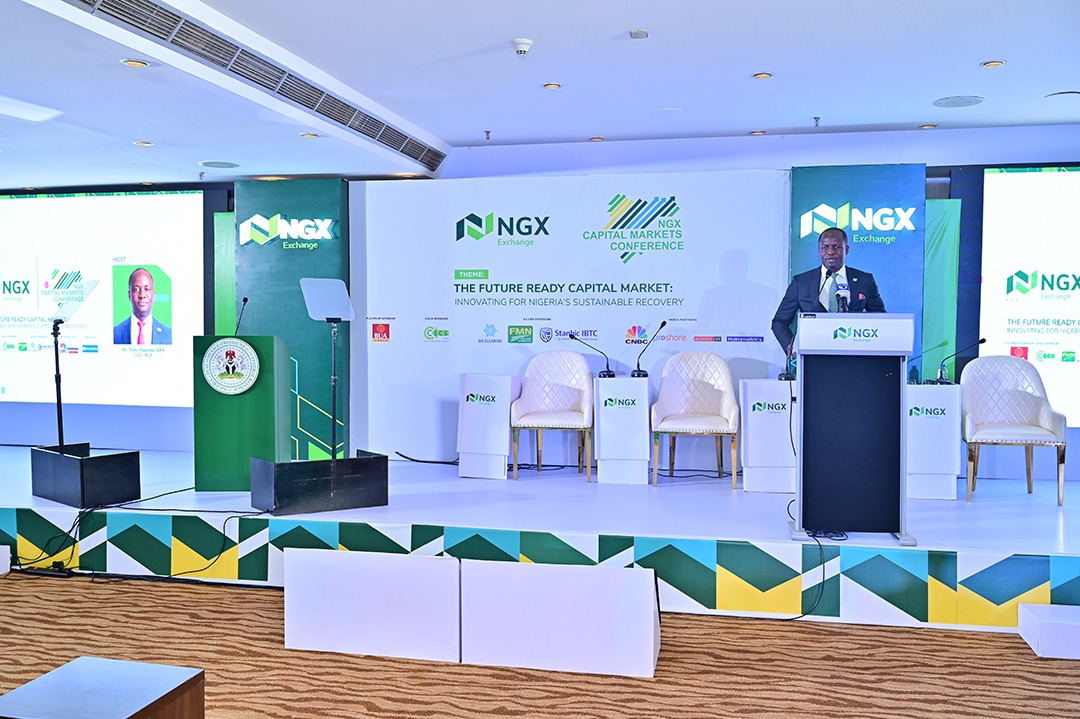
The local stock market was relatively flat on Friday, as the bears and the bulls shared the spoils of war, though investor sentiment turned bullish compared with the preceding session’s bearish posture.
Data from the Nigerian Exchange (NGX) Limited showed that the All-Share Index (ASI) was marginally down by 4.66 points as it ended at 201,698.89 points versus Wednesday’s 201,703.55 points, and the market capitalisation slightly contracted by N3 billion to N129.806 trillion from N129.809 trillion.
Customs Street was shut on Friday because of the public holidays declared by the federal government today and next Monday.
Business Post reports that John Holt declined by 9.91 per cent to N15.45, Abbey Mortgage Bank shed 9.60 per cent to trade at N8.95, International Energy Insurance slipped by 6.48 per cent to N3.32, Chams shrank by 5.30 per cent to N3.75, and Tantalizers depreciated by 5.18 per cent to N4.03.
On the flip side, Unilever Nigeria improved by 10.00 per cent to N103.40, Fortis Global Insurance gained 9.82 per cent to trade at N1.23, Multiverse appreciated 9.81 per cent to N20.15, Legend Internet advanced by 9.38 per cent to N6.30, and Zichis grew by 9.02 per cent to N14.14.
The market breadth index was positive during the trading session, as there were 35 appreciating stocks and 24 depreciating stocks.
Yesterday, investors traded 560.0 million equities valued at N19.3 billion in 49,676 deals, in contrast to the 815.5 million equities worth N33.3 billion transacted in 52,641 deals in the preceding day, representing a drop in the trading volume, value, and number of deals by 31.33 per cent, 42.04 per cent, and 5.63 per cent, respectively.
Secure Electronic Technology dominated the activity log with 59.7 million shares valued at N61.1 million, Wema Bank exchanged 52.0 million equities worth N1.4 billion, VFD Group transacted 36.0 million stocks for N410.5 million, Access Holdings sold 35.3 million shares valued at N914.8 million, and Chams traded 31.0 million equities worth N115.0 million.
-
 Feature/OPED6 years ago
Davos was Different this year
-
Travel/Tourism10 years ago
Lagos Seals Western Lodge Hotel In Ikorodu
-

 Showbiz3 years ago
Estranged Lover Releases Videos of Empress Njamah Bathing
-
 Banking8 years ago
Sort Codes of GTBank Branches in Nigeria
-

 Economy3 years ago
Subsidy Removal: CNG at N130 Per Litre Cheaper Than Petrol—IPMAN
-

 Banking3 years ago
Sort Codes of UBA Branches in Nigeria
-

 Banking3 years ago
First Bank Announces Planned Downtime
-

 Sports3 years ago
Highest Paid Nigerian Footballer – How Much Do Nigerian Footballers Earn