
Education
Architecture Students Advocate EDGE Green Building Certification


Three talented architecture students from the Central University in Accra have urged stakeholders in the building industry to adopt EDGE (Excellence in Design for Greater Efficiencies) to design and certify more sustainable buildings. According to them, EDGE is easy to use and guides the best ways to improve the energy and water efficiency of buildings.
David Gifat Ampiaw, Olufemi Abodunrin and Cheryl Omani-Baah were the talented young architects selected and fully sponsored by the International Finance Corporation (IFC), a member of the World Bank Group, to attend the 2019 GBCSA green building convention in Capetown earlier this month.
Having navigated the EDGE Green Building tool to design sustainable housing projects the students had the opportunity to hear from world-class green building experts during the event in South Africa. The project was funded by the State Secretariat for Economic Affairs (SECO) with technical support provided by SGS and thinkstep in the UK.
In an interview with the Daily Graphic, the students reflected upon their experiences and learning during the competition and event. They gained greater understanding of the need for the building industry to act urgently to design better buildings in Ghana that are resource efficient.
Ninnette Quao Fio, a lecturer at the Architecture Department of the Central University, accompanied her students to the conference to experience first-hand how professionals using EDGE to certify their buildings will help achieve a better built environment.
An innovation of IFC, EDGE is an online platform and certification system, which helps building professionals to determine the most cost-effective options for designing green within a local climate context. EDGE can be used for new construction, existing buildings and major retrofits.
EDGE requires 20 percent less energy and water use, as well as 20 percent less embodied energy in materials compared to a base case building. Builders who certify with EDGE gain a promotional advantage, with customers benefiting from lower utility bills.
The Importance of Green Buildings
Mr Ampiaw urged stakeholders in the building industry to design green to ensure that the existence of unborn generations are not jeopardised.
“We need to think about the future. If you look at what’s happening in the housing sector, most professionals are not focused on green design. The question must be asked: ‘is what you are designing actually going to help the environment?’”
Mr Ampiaw recounted that one of the topics at the conference focused on consistency. “What I learned is that being sustainable is not enough. We have to give back to the environment by designing positive buildings that contribute through harvesting what nature has provided while restricting the materials needed for structures.”
Mr Ampiaw added that the effect of not designing sustainably will be seen by the next generation as incompatible with best business practice.
Creating a Dialogue on Green Buildings
Mr Abodunrin urged Ghanaian students and stakeholders in the building industry to join the global trend towards a more sustainable future. Ghanaian architecture students needed to connect to the conversation on green buildings, he said.
“Green technology products are heading to Africa at cheaper rates and without the knowledge of their harmful effects. Africa is still asleep on this topic,” Mr Abodunrin said.
EDGE as the Future
The built environment is expected to double by 2050 due to high population growth and urbanisation trends. This has serious implications for global warming, as buildings already generate 19 percent of energy-related greenhouse gas (GHG) emissions and consume 40 percent of electricity.
To address the opportunity for green buildings, Switzerland, through its State Secretariat for Economic Affairs (SECO), provided funding for IFC’s EDGE program in Ghana.
The intention is to have a generational impact by increasing the use of EDGE to encourage greener building practices.
The first EDGE-certified buildings in Ghana include the Atlantic Tower by Wahhab Estate Co. Ltd in the Airport City enclave of Accra, as well as the new Tema Port Expansion Project and the Terminal 3 at the harbor.





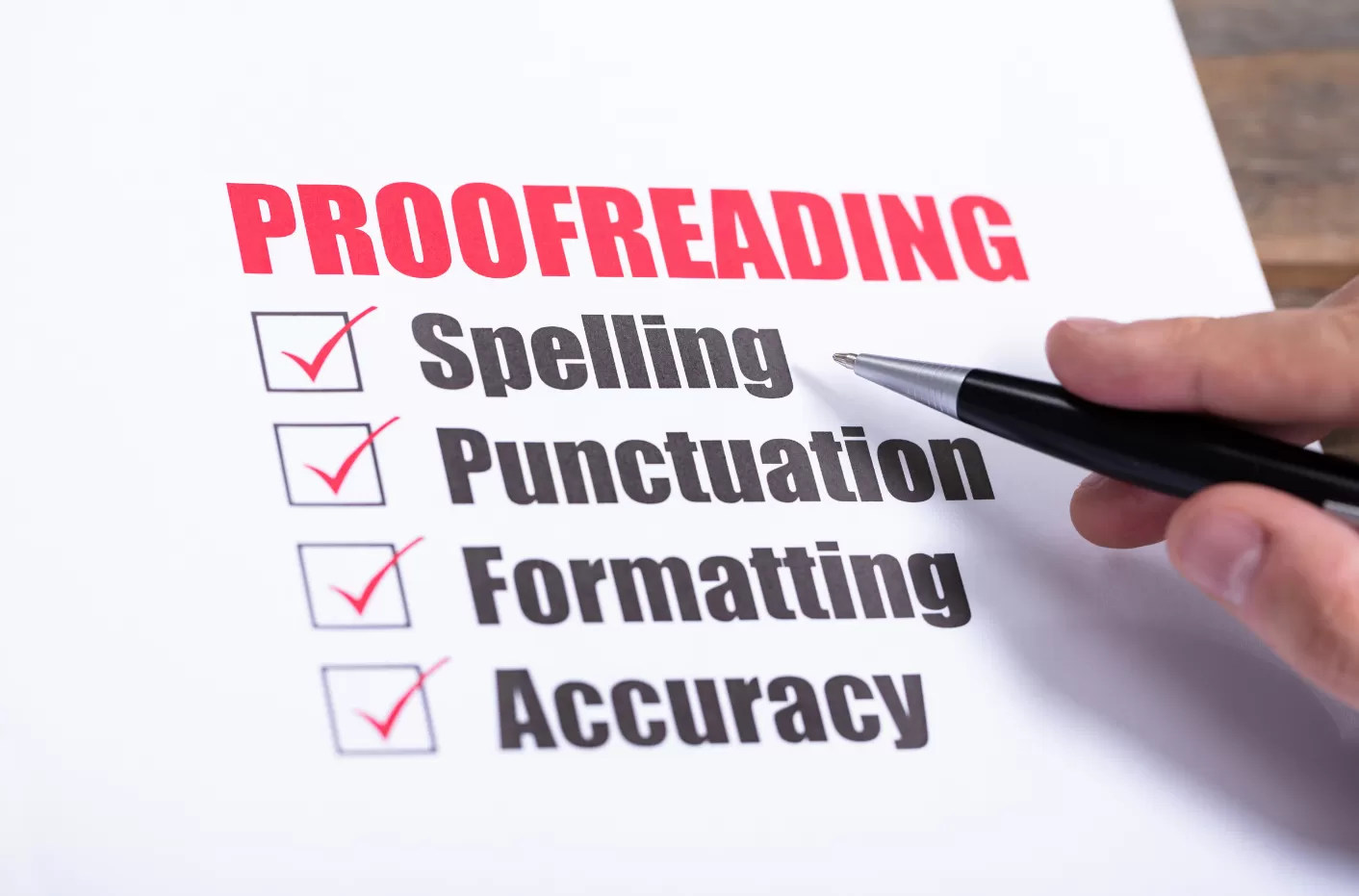
The top editing services for academic researchers in 2026 include Editage, Wiley Editing Services, Taylor & Francis Editing Services, Sage Author Services, and Scribbr. In this article, we’ll look at the key features of each of these, and some others, to help you choose the best proofreading service for your own research paper. We’ll also share the 4 key aspects you must consider when choosing a proofreading service.
Top 8 Editing & Proofreading Services for Academic Researchers
1. Editage
With over 23 years of experience in academic publishing, Editage has edited over 2 million research papers and is trusted by 40+ publishers, 500+ universities, and 1000+ research societies. Editage employs over 3,000 subject matter experts as editors. It offers comprehensive publication support, including services such as journal selection, statistical review, and figure preparation. Most service packages include free journal formatting. Editage also provides a specialized service designed to help prevent the desk rejection of your paper.
2. Wiley Editing Services
Wiley Editing Services has edited over 25,000 manuscripts in the past 3 years, with an acceptance rate of 62% (the acceptance rate of Wiley journals in general is around 28%). Wiley Editing Services offers authors slab-based pricing with clear turnaround times. Another feature of their editing service is free word count reduction by 10-20% depending on service package. It has a specialized academic translation team and offers authors design support in creating graphical abstracts and infographics.
3. Taylor & Francis Editing Services
Designed to support Taylor & Francis authors, Taylor & Francis Editing Services has a no-questions-asked quality guarantee and commits to re-working your manuscript until you are satisfied. Clients can choose from three levels of English language editing, and the company also offers you a free language scorer tool to help you choose the right level of editing for your manuscript. After your paper is accepted for publication, you can also avail of services to help you create lay summaries, video abstracts, etc. to promote it. Taylor & Francis also offers a range of live webinars for researchers to acquire new skills.
4. Sage Author Services
Realizing that 76% of authors find writing a paper for publication most difficult of all the research stages, Sage Author Services offers clients a range of editing services with easy tools to compare them and select the one suited for your paper. There is also a combination translation + editing service geared towards ESL authors, and a plagiarism check support service. You can get unlimited Q&A with your editor after your paper is edited. Their website also has an easy-to-use calculator for you to choose pricing and delivery speed.
5. Cambridge University Press Author Services
Cambridge University Press, a part of Cambridge University, has a long-standing commitment to advancing research and human knowledge. Their author services offers 24/7 support and a certificate guaranteeing the quality of English in the edited manuscript. Besides offering three levels of editing service, Cambridge University Press also has translation support available for Chinese, Japanese, Korean, Portuguese, and Spanish. There is a separate manuscript formatting service and a specialized “video shorts” service to make your published paper easy to share on social media.
6. Scribbr
Scribbr, a trusted brand in edtech, has a network of over 700 editors and writing coaches for students. All editors have passed through an in-house training program called Scribbr Academy. Scribbr offers clients access to free AI-powered tools and an extensive Knowledge Base for university students (especially undergraduates). Scribber also has a rapid turnaround time of just 5 minutes for AI-powered proofreading. The company offers specialized proofreading services for capstone projects and essays.
7. Scribendi
Established in 1997, Scribendi has processed over 800,000 manuscripts and has a team of over 400 native English-speaking freelance editors. The company is highly rated on Google Reviews and offers specialized services for ESL students, including dissertation proofreading with a 10% student discount. Another specialty of Scribbr is field-aware editing for humanities and social sciences researchers.
8. PaperTrue
PaperTrue works with students, authors, and businesses around the world to create error-free documents. New customers get a free 300-word sample. The company follows a rigorous 3-step checking process for every assignment. PaperTrue is rated 4.6 on Reviews.io and offers specialized editing services for college assignments, admissions essays, and personal statements. The company also has a large bouquet of solutions for book authors: typesetting, cover page design, etc.
How to Choose a Proofreading Service for Your Research Paper
Here are 4 things that you need to consider when you are choosing a proofreading service:
Quality:
Everyone will claim to be the best. How can you tell which proofreading services are really good? Look for services that have many subject matter experts, those backed by scholarly publishers, and those that transparently disclose whether their services are powered by AI or not.
Turnaround time:
A rapid-fire editing service isn’t always better. You need to budget time even after your paper is edited to check the editor’s changes and respond to any queries. Look for a service provider with a reasonable turnaround time, and one that is flexible with turnaround time if you have budget constraints.
Price:
Instead of thinking that cheap equals good, look for proofreading services that have transparent pricing that is easy to follow. Check what is included in your service package, especially re-editing support and manuscript formatting.
Additional support:
Look for a provider who can assist you at every stage of your publication journey and even with post-publication promotion. Such providers will care more deeply about your article and your publication success. Also, such providers will likely have editors who are experienced in academic research and who understand the challenges authors face during the publication process.


By Adedapo Adesanya
The Nigerian Education Loan Fund (NELFUND) has granted another extension for its Student Loan Application Portal to accommodate institutions that requested additional time for the 2025/2026 academic session.
According to the statement signed by NELFUND’s Director of Strategic Communications, Ms Oseyemi Oluwatuyi, on Thursday, the extension applies only to institutions that submitted formal requests, allowing eligible students extra time to complete their applications.
“The Nigerian Education Loan Fund has approved an extension of its Student Loan Application Portal for institutions that have formally requested additional time for the 2025/2026 academic session,” the statement read.
Business Post reports that at the beginning of March, NELFUND announced an extension to the deadline by a week for its student loan application portal following a notable rise in nationwide interest driven by ongoing awareness campaigns.
Speaking on the development, NELFUND Managing Director and Chief Executive Officer, Mr Akintunde Sawyerr, reiterated the Fund’s commitment to ensuring that eligible students at participating institutions can access the student loan programme.
“NELFUND remains committed to ensuring that eligible students across participating institutions have the opportunity to access the student loan programme,” he said.
The Fund urges students in affected institutions to take advantage of the extension and submit their applications through the official portal.
It also emphasised its dedication to transparency, accountability, and providing sustainable financing solutions to remove financial barriers to higher education in Nigeria.
Established to administer the Nigeria Student Loan Scheme, NELFUND was enacted into law by President Bola Tinubu in April 2024.
The initiative provides interest-free loans to students in public tertiary institutions to cover tuition and living expenses.
Beneficiaries are required to repay the loans after completing their education and securing employment, aiming to increase access to higher education for students from low-income backgrounds.

By Adedapo Adesanya
The Nigeria Revenue Service (NRS) has inaugurated a Curriculum Review Committee aimed at strengthening taxation education in Nigerian academic institutions and improving the country’s tax administration system.
According to a statement, the committee was inaugurated on February 24, at the NRS Academy in Durumi as part of the agency’s broader efforts to modernise tax education and align academic training with the evolving demands of contemporary tax administration.
Speaking during the inauguration, the Director of the NRS Academy, Mr Adeolu Akinyemi, said the review exercise would involve collaboration with the Chartered Institute of Taxation of Nigeria (CITN) to develop a more structured and relevant curriculum for the academy.
He emphasised that the initiative seeks to ensure that taxation programmes taught in Nigerian institutions reflect current developments in tax policy and practice, while also equipping students with the practical knowledge required in today’s tax administration environment.
The committee has been tasked with examining existing taxation curricula across Nigerian institutions and proposing updates that incorporate modern tax policies, recent legislative changes, and emerging areas such as digital taxation and global tax practices.
Officials say the review is also designed to close the gap between theoretical classroom instruction and the practical realities of tax administration.
By strengthening the link between academic learning and professional practice, the revised curriculum is expected to better prepare graduates for careers in the tax sector.
The effort is further expected to enhance tax awareness among citizens, encourage voluntary tax compliance, and support the development of skilled tax professionals who can contribute to national revenue generation and economic growth.
The committee is chaired by Mrs Aisha Hamman Mahmoud, Special Adviser to the Executive Chairman of the NRS on Research and Statistics. Its membership includes representatives from the service as well as academic experts in taxation and fiscal policy, alongside professionals with experience in tax administration, policy formulation, and tax education.
The committee will work with relevant educational regulatory agencies and professional bodies to ensure that the proposed curriculum aligns with national academic standards while addressing the practical needs of Nigeria’s tax system.
The NRS stated that the initiative forms part of its ongoing commitment to expanding tax knowledge, strengthening professional capacity, and promoting responsible tax practices across the country.
The curriculum review exercise is expected to be completed within 60 days, after which the Service plans to provide further updates on the implementation of the revised programme.











-
 Feature/OPED6 years ago
Davos was Different this year
-
Travel/Tourism10 years ago
Lagos Seals Western Lodge Hotel In Ikorodu
-

 Showbiz3 years ago
Estranged Lover Releases Videos of Empress Njamah Bathing
-
 Banking8 years ago
Sort Codes of GTBank Branches in Nigeria
-

 Economy3 years ago
Subsidy Removal: CNG at N130 Per Litre Cheaper Than Petrol—IPMAN
-

 Banking3 years ago
Sort Codes of UBA Branches in Nigeria
-

 Banking3 years ago
First Bank Announces Planned Downtime
-

 Sports3 years ago
Highest Paid Nigerian Footballer – How Much Do Nigerian Footballers Earn