

Education
DELSU, Egwunyenga and Leadership

By Jerome-Mario Chijioke Utomi
It is a pedestrian knowledge that the Delta State University, Abraka, Delta State, on Saturday, April 29, 3023, held its 15th convocation that produced 58 first-class graduands with Obuseh Emmanuel Ewere of Electrical/Electronic Engineering emerging the Overall Best Graduating Student with a C.G.P.A of 4.91.
What is, however, newsy is that the week-long event, which was held with varying activities, has, more than anything else, revealed two separate but similar developments within the institution.
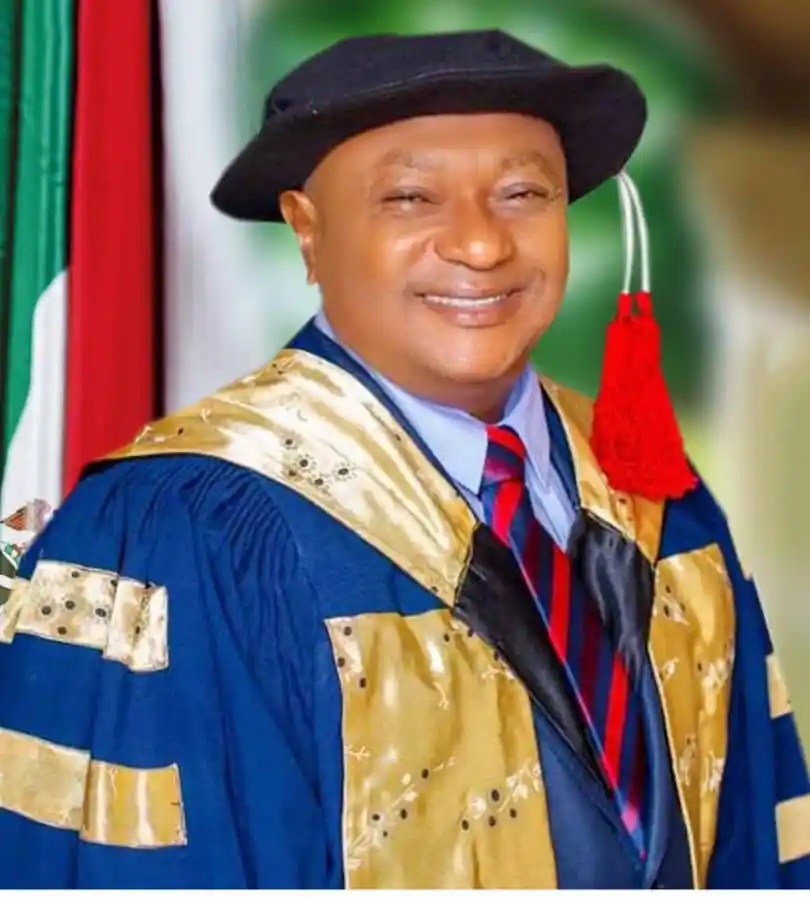
First, the convocation ceremony provided guests made up of parents, media professionals, development professionals and critical stakeholders the opportunity to come in contact with Professor Andy Ogochukwu Egwunyenga, the self-contained, result-oriented and quietly influential Vice Chancellor of the university.
Secondly and very key, through the celebration, guests got new awareness of how DELSU has through democratized academic and infrastructural provisions backed by transformative and visionary leadership, become the fourth-ranked best state-owned university in the country.
This particular claim is further evident in the institution’s permanent site (Campus Three), which is visibly dotted with world-class infrastructures and state-of-the-art learning facilities, with so many ongoing constructions nearing completion.
While it will not be characterized as an overstatement if a first-time visitor to the school describes DELSU as an institution that is headed for the top, one undiluted fact stands out; the sustainable development and the effects of the leadership Professor Egwunyenga has brought to the school will definitely live beyond him and his administration.
This particular understanding came into view recently after listening with rapt attention to his use of vivid evidence and carefully carved emotional match to demonstrate how humility, cordial relationship with staff (teaching and non-teaching staff) and support from the Ifeanyi Okowa-led administration in the state has assisted DELSU to achieve its national recognition and earned its pride of place in the comity of state universities in the country.
Let’s consider the particulars of these claims.
While addressing a press conference as part of programmes to mark the university’s 15th convocation ceremony at the institution’s conference hall, Egwunyenga, among other remarks, said DELSU recently recorded a significant breakthrough when all the 40 programmes presented to National Universities Commission (NUC) in the November/December 2022 accreditation exercise secured full accreditation.
He pointed out that accreditation of the programmes presented by the university to NUC happens to be the first time since the 31 years of existence of DELSU that full accreditation would be returned for such programmes in one fell swoop.
He stressed that all 80 programmes in the university have full NUC accreditation status, no interim accreditation, and no denial for any programme. This, again, is unprecedented in the history of the school and has only been made possible by the unwavering determination of the university administration and the entire staff to advance and reposition the institution for national and global recognition.
Going further, he announced that most recently, approval was sought and obtained from the Medical and Dental Council of Nigeria (MDCN) to raise the university’s admission quota for the Bachelor of Medicine & Bachelor of Surgery (MBBS) Programme from 75 to 120.
This was targeted at reducing the admission pressure that qualified students from Delta State and neighbouring states go through in getting admitted to study Medicine and Surgery at Delta State University, Abraka, noting that his administration met the admission quota for the MBBS Programme at 50 upon assumption of duty in December 2019.
Even as he stated that the first increase was from 50 to 75, Egunyenga said that obtaining approval from the NUC for the commencement of some new Degree Awarding Programmes, namely: Entrepreneurship Studies, Office & Information Management, Biotechnology, Public Administration and Medical Laboratory Science.
“Currently awaiting the report of NUC’s Resource Verification Exercise for the commencement of the Agriculture Business Management Programme and the Doctor of Pharmacy Programme, the University hitherto only ran the Bachelor of Pharmacy Programme,” he said, adding that Delta State University is pleased to announce to the Nigeria Scientific Community and the general public the approval of Benneth’s Joint Canada- Israel Research Program to be conducted in Delta State University.
The research team, according to him, is led by Dr Ben-Azu, Head of the Department of Pharmacology, Faculty of Basic Medical Sciences. His research interest spans the study of Neuropsychiatry (neurodevelopmental and neurodegenerative disorders) and Neuropharmacology, brain diseases, including schizophrenia, depression, Alzheimer’s disease, Parkinson’s disease and stress-related neuropathological conditions.
As part of efforts to further meet the institution’s research goal to help make the university the epicentre of multidisciplinary research to provide solutions to the problems of society, the Vice Chancellor said that DELSU is the development of aquafeed for sustainable aquaculture.:
“DELSU decided to use innovative and transformative aquaculture to bridge the huge gap between fish demand and domestic production as well as the non-readily availability of tilapia feed by signing two MoUs with the National Taiwan Ocean University (NTOU), Keelung and also with the Nigerian Institute of Oceanography and Marine Research (NIOMR) to actuate a tripartite partnership between DELSU, NTOU and NIOMR’.
Prof. Egunyenga, who themed his press conference speech as Another bountiful harvest, said in the latest global ranking of Universities by Alper-Doger Scientific Index, DELSU was ranked as the 27th best University in Nigeria among the over 200 universities in the country and the 4th best among state-owned universities. Further analysis of the ranking he observed showed the school to be the best State University in the South-South and South Eastern part of Nigeria.
“Furthermore, another highly recognized global university ranking body, Webometrics, in their own latest ranking, placed the University as 194th out of 2087 Universities in Africa and 24th out of over 200 universities in Nigeria, based on verified Google Scholar Citations. According to the ranking, Delta State University recorded 56,443 citations, beating some highly rated Universities in the United States of America, United Kingdom, France, Sweden, Turkey, Portugal, Canada, and some other more advanced countries. This again is consistent with the Alper-Doger Scientific Index ranking that earlier placed the University as the 27th best in the country and 4th best state-owned university,” the VC said.
On capacity building and innovation in the university, Prof. Egwunyenga said that in order to ensure compliance with the university’s global best practices and competitiveness over two years ago developed four policy documents to guide the conduct of staff, students and other stakeholders.
“These include Environment Policy, Security Policy, Plagiarism Policy and Sexual Harassment Policy. Two new policy documents have been developed this year. First is the Gender Policy initiated by the Centre for Gender and Development Studies (CGDS). The policy was the outcome of a summit on Women in Leadership and development hosted by CGDS in October 2021,” he said.
According to him, the policy aims at creating a clear framework to drive the development of practice and procedures that will ensure equal rights and opportunities for men and women in all areas and structures of the university, including students and staff.
It will promote and ensure gender equity, establish structures, programmes and mechanisms to empower men and women and transform gender relations within the university.
“Delta State University is committed to eliminating barriers to women’s development and shall declare its position boldly on gender issues within its community, nationally and internally,” Egwunyenga said.
He also pointed out that this year, the Senate also approved the Copyright Policy, which is consistent with the Nigerian Copyright Act,2022 to protect writer’s rights to secure fair compensation and acknowledgement for their creative labours while also establishing restrictions and exceptions to facilitate public access to works of arts. The Delta State University Copyright Policy deals with the issue of Ownership, Publication, External Use and Payment for an academic’s Intellectual Property.
Prof. Egwunyenga expressed the gratitude of the institution to the Visitor and Governor, Ifeanyi Okowa, for his unwavering support in funding the school and the Pro-Chancellor and Chairman of the Governing Council, Professor Sam Oyovbaire, for his inspiring leadership and for creating an enabling environment for the university administration to discharge its responsibilities in line with its statue, while also acknowledging the contributions of other distinguished members of the council.
Utomi is the Program Coordinator (Media and Politics), Advocacy for Social and Economic Justice (SEJA), Lagos. He can be reached via 08032725374




By Adedapo Adesanya
The federal government has announced the reopening of the 47 unity schools earlier shut down due to security concerns on November 21.
This was disclosed in a statement by the Federal Ministry of Education on Thursday.
It said that the decision to reopen the affected colleges across the country reaffirmed its unwavering commitment to safeguarding students and ensuring the continuity of education.
On November 18, 2025, over 20 schoolgirls were kidnapped by unidentified armed men from the Government Girls Comprehensive Secondary School in Maga, Kebbi state.
Just three days later, on November 21, about 303 students and 12 teachers were kidnapped at St. Mary’s Catholic Primary and Secondary School in Papiri, Niger state.
In response, the federal government shut down 47 Federal Unity Colleges, and some states including Katsina, Taraba, and Niger also closed schools or restricted school activities, particularly boarding institutions.
Rights group including Human Rights Watch lamented that while these measures were aimed at protecting students, they disrupted learning for thousands of children, denied them access to education, and the social and psychological support schools provide.
FULL LIST OF AFFECTED UNITY COLLEGES
North-West:
FGGC Minjibir, FTC Ganduje, FGGC Zaria, FTC Kafanchan, FGGC Bakori, FTC Dayi, FGC Daura, FGGC Tambuwal, FSC Sokoto, FTC Wurno, FGC Gusau, FGC Anka, FGGC Gwandu, FGC Birnin Yauri, FTC Zuru, FGGC Kazaure, FGC Kiyawa, FTC Hadejia.
North-East:
FGGC Potiskum, FGC Buni Yadi, FTC Gashua, FTC Michika, FGC Ganye, FGC Azare, FTC Misau, FGGC Bajoga, FGC Billiri, FTC Zambuk.
North-Central:
FGGC Bida, FGC New-Bussa, FTC Kuta-Shiroro, FGA Suleja, FGC Ilorin, FGGC Omu-Aran, FTC Gwanara, FGC Ugwolawo, FGGC Kabba, FGGC Bwari, FGC Rubochi, FGGC Abaji.
South-West:
FTC Ikare Akoko, FTC Ijebu-Imusin, FTC Ushi-Ekiti, FTC Ogugu.
By Adedapo Adesanya
Online learning platforms, Coursera and Udemy, have reached an agreement to merge in an all-stock transaction, with the combined company’s implied equity value estimated at approximately $2.5 billion.
The agreement, unanimously approved by both companies’ boards of directors, stipulates that Udemy shareholders will receive 0.8 shares of Coursera common stock for each Udemy share held.
Upon completion of the merger, Coursera shareholders are expected to own about 59 per cent and Udemy shareholders approximately 41 per cent of the new entity on a fully diluted basis.
The combined company will continue under the Coursera name, and maintain its headquarters in Mountain View, California.
Coursera, founded in 2012 by Mr Andrew Ng and Ms Daphne Koller, is an online learning platform with 191 million registered users as of September 30, 2025. It collaborates with over 375 universities and industry partners to offer courses, specialisations, professional certificates, and degrees.
The platform includes features such as generative AI (gen AI) tools (Coach, Role Play, Course Builder) and role-based solutions (Skills Tracks) to support scalable and personalised learning. Coursera is used by institutions for workforce development in fields such as gen AI, data science, technology, and business.
Udemy is a platform that provides on-demand, multi-language courses to help companies and individuals develop technical, business, and soft skills. It uses AI to offer personalised learning experiences and supports workforce development in a changing workplace.
Mr Greg Hart, currently CEO of Coursera, is set to lead the enlarged organisation as CEO after the merger.
The board will consist of nine members. Six from Coursera’s board, including chairman Mr Ng and CEO Mr Hart, and three from Udemy’s board.
“We’re at a pivotal moment in which AI is rapidly redefining the skills required for every job across every industry.
“Organisations and individuals around the world need a platform that is as agile as the new and emerging skills learners must master,” Mr Hart said.
The combination is said to create a complete ecosystem of top instructors supported by AI tools, data-driven insights, and broader distribution, enabling more engaging, personalised, and dynamic learning at scale.
Projected operational efficiencies include anticipated annual run-rate cost synergies of $115m within two years after closing.
Udemy CEO, Mr Hugo Sarrazin said: “For more than 15 years, Udemy has helped millions of people master in-demand skills at the speed of innovation.
“Through this combination with Coursera, we will create meaningful benefits for our learners, enterprise customers, and instructors, while delivering significant value to our shareholders, who will participate in the substantial upside potential of the combined company.”
The merger is anticipated to close in the second half of 2026, pending regulatory clearances, approval by both companies’ shareholders, and other customary closing conditions.

By Adedapo Adesanya
Global cryptocurrency platform, Luno and AltSchool Africa, an accredited online learning platform, have announced a strategic partnership aimed at demystifiing crypto to 15,000 Nigerians.
The initiative at that scale makes it Africa’s largest crypto education programme.
According to a joint statement on Wednesday, this is a significant step in Luno’s continued efforts to strengthen trust in digital assets and support safer participation in the digital economy.
This is hinged on Africa’s fast-growing digital finance landscape where 33 per cent of the country’s population already engage with digital assets, and a rapidly growing youth population are eager to participate in the digital economy.
According to the statement, the partnership aims to bridge the knowledge gap by providing structured, practical, and safe crypto education.
This will be done by combining Luno’s experience in promoting safe crypto participation with AltSchool Africa’s capability in delivering accessible digital skills training.
“The course directly addresses the misinformation and financial risks associated with unregulated digital assets, while demonstrating real-world applications tailored to African contexts,” the joint statement added.
The initiative will be implemented in three cohorts of 5,000 learners each. Applications for Cohort 1 will be open from January to February 2026, with the course commencing in March 2026. Cohort 2 participants will gain access to the course in July 2026, while Cohort 3 participants will begin the programme in November 2026.
The programme will be led by Web3 expert Mr Abdulsamad Tiamiyu, who will provide a practical, Africa-focused introduction to cryptocurrency, showing how it can be used for saving, remittances, global trading, and entrepreneurship.
The curriculum consists of five core modules and is designed to be completed within three to four weeks.
Learners benefit from up to one year of access to all course materials, including online, self-paced video lessons, slides, quizzes, and case studies. The course combines theory with hands-on experience, where learners interact with wallets, exchanges, stablecoins, and research tools like CoinGecko and Etherscan.
According to the organisers, this approach gives learners the tools to confidently use digital currencies in everyday financial activities. Successful learners, upon passing the assessments, earn an AltSchool Africa Certificate of Completion.
Speaking on the partnership, Mr Ayotunde Alabi, CEO of Luno Nigeria, said: “This initiative is a crucial intervention in Africa’s digital ecosystem. As crypto adoption accelerates, formal literacy must grow alongside it, so individuals can benefit safely and meaningfully,”
“Our partnership with AltSchool Africa is a deliberate step toward that goal and a foundational investment in the integrity of the industry. By delivering structured, high-quality education, Luno is helping ensure that Africans can participate confidently, securely, and sustainably – turning what is often seen as risk into real economic opportunity,” he added.
Adding his input, Mr Adewale Yusuf, Co-founder and CEO of AltSchool Africa, said “This partnership between AltSchool and Luno is a major step toward financial education that truly serves Africans and helps people gain the knowledge and tools they need to understand crypto with confidence and use it in practical, life-changing ways.”
The programme is open to Nigerian residents aged 18 and above who are able to commit to completing it within four weeks. Applicants must have a Luno account or create one before enrolling.
Starting January, Interested participants are encouraged to submit application through the AltSchool Africa portal, with scholarship decisions communicated within one week.









-
 Feature/OPED6 years ago
Davos was Different this year
-
Travel/Tourism9 years ago
Lagos Seals Western Lodge Hotel In Ikorodu
-

 Showbiz3 years ago
Estranged Lover Releases Videos of Empress Njamah Bathing
-
 Banking7 years ago
Sort Codes of GTBank Branches in Nigeria
-

 Economy3 years ago
Subsidy Removal: CNG at N130 Per Litre Cheaper Than Petrol—IPMAN
-

 Banking3 years ago
First Bank Announces Planned Downtime
-

 Banking3 years ago
Sort Codes of UBA Branches in Nigeria
-

 Sports3 years ago
Highest Paid Nigerian Footballer – How Much Do Nigerian Footballers Earn