Connect with us

Education

Enetsud Laments Poor State of Education in Kwara

Published

on

By Dipo Olowookere

A Civil Society Organisation (CSO) in Kwara State, Elites Network for Sustainable Development (ENetSuD), has called on the state government to prioritize funding of the state-owned schools and declare a state of emergency in the educational sector.

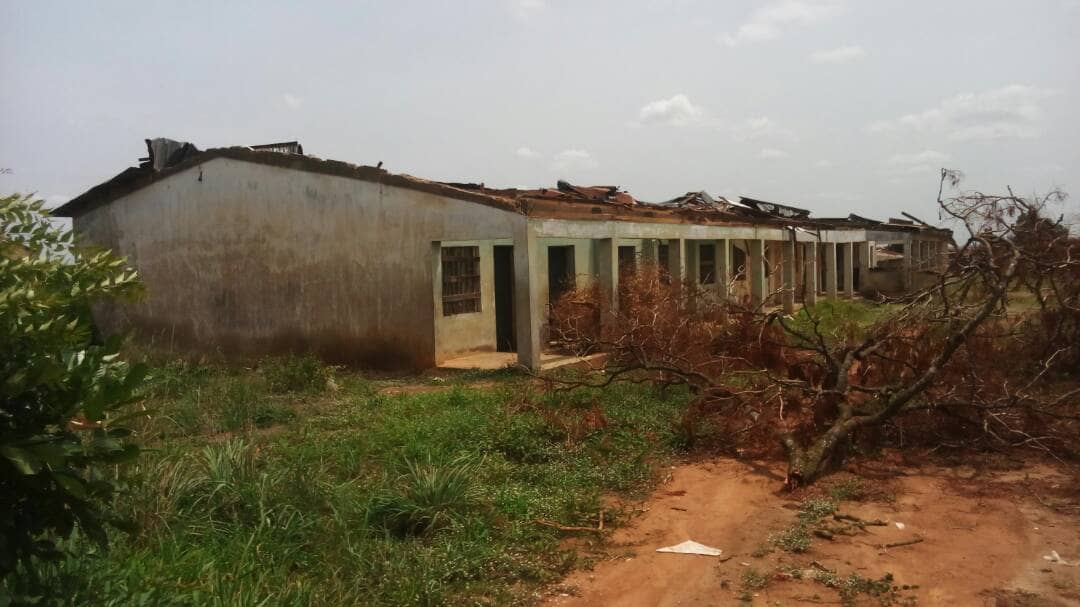
The group described most of the public schools in the state as a caricature of their old setting.

In a press statement signed by its Coordinator, Dr Alagbonsi Abdullateef, and made available to journalists, ENetSuD noted that funding of education across the state has been grossly inadequate.

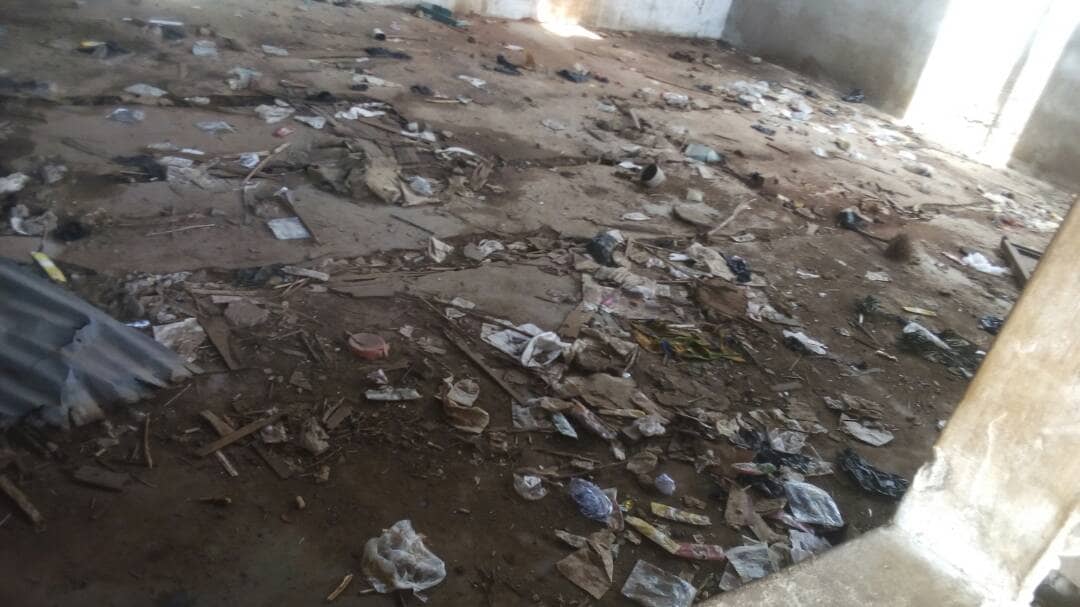
As part of ENetSuD obligation to bringing the state government’s attention to areas of public interest that need immediate government’s intervention, the group’s Directorate of Investigation and Public Petition visited some schools across Kwara state, including Ilorin Grammar School (IGS) Ilorin, Government High School (GHS) Ilorin, Government Secondary School (GSS) Ilorin, Mount Carmel College (MCC) Ilorin, Government Technical College (GTC) Patigi, Islamiyyah College Patigi, Taoheed LGEA Primary School Offa, and over 30 other schools across Kwara state where the 2017 Federal Government Zonal Intervention Projects were located. Our investigation showed that the public schools across Kwara state are in a state of shame.

The deplorable conditions of the schools with dilapidated structures make them unhealthy for effective teaching and learning. This could have been one of the reasons for low patronage of public schools, thereby making privates schools the next option for people who want a befitting school for their children and wards. Due to the negligence by Kwara state government, it is regrettable that the reputable schools in the past that produced virtually all the important personalities in Kwara state are now the options for only the poorest and vulnerable Kwarans who cannot afford to pay the fees of Private schools.

A great scholar once said “If you want to destroy any community, you don’t need weapons. All you have to do is to reduce the quality of education. In addition to infrastructural decay, ENetSuD also learnt that staffing is another major problem facing public schools in most communities of Kwara state outside Ilorin. Taking Patigi Local Government as a case study, our investigation revealed that the following schools have only 5 teaching staff as at January 2018: L.G.E.A Matokun, L.G.E.A Esun Dari, J.S.S Edogi Chapa and J.S.S Kpada; while the following schools have only 4 teaching staff Ragada/Likofu L.G.E.A Primary School, Siratal Mustaqim, L.G.E.A Gbaradogi, L.G.E.A Gudugi, L.G.E.A Chitta, L.G.E.A Ekati, L.G.E.A Wodata, L.G.E.A Edogi Chapa, L.G.E.A Ndanaku, L.G.E.A Bongi, LGEA Sakpefu, L.G.E.A Fey and L.G.E.A Echi Ewada. Also, these schools have only 3 teaching staff, Idris Gana Primary School, Patigi, Tswatagi, L.G.E.A Sunkuso, L.G.E.A Gbadokin, L.G.E.A Gbodu, Islamic Sunkuso, L.G.E.A Rifun, L.G.E.A Sheshi Tasha, L.G.E.A Mawogi, L.G.E.A Gada Woro, L.G.E.A Gada Bozuwa, L.G.E.A Mari, L.G.E.A Kpevun, L.G.E.A Chenu, L.G.E.A Kanworo, L.G.E.A Dakani, L.G.E.A Sanchita, L.G.E.A Rani Ndako, L.G.E.A Gbodonji, L.G.E.A Chenegi, L.G.E.A Dzako, L.G.E.A Sakpefu Islamic, L.G.E.A Egwa Mama, L.G.E.A Rogun, J.S.S Rogun and J.S.S Jahada-Deen. Furthermore, there were schools found to have only two (2) teaching staff: Edogi Kpansanako, L.G.E.A Ellah Edozhigi, L.G.E.A Gada Maaji Ndako, L.G.E.A Dina, L.G.E.A Gbangede, L.G.E.A Rani Woro, L.G.E.A Edogi Kpetia, L.G.E.A Dzwajiwo, L.G.E.A Kusogi, L.G.E.A Kokparagi, L.G.E.A Ebu, L.G.E.A Reshe, L.G.E.A Guluka, L.G.E.A Dobo, L.G.E.A Maagi, L.G.E.A Zhitswala, L.G.E.A Wako, L.G.E.A Latayi, L.G.E.A Mamba, L.G.E.A Koro and J.S.S Gada Woro. In fact, many schools are with only 1 teaching staff: Nomadic Kparumagi, Nomadic Rifun, L.G.E.A Agboro, L.G.E.A Lile, L.G.E.A Kakafu, L.G.E.A Gunji Sachi, L.G.E.A Gbafu, L.G.E.A Emiworogi, L.G.E.A Ezhigiko, L.G.E.A Eka, L.G.E.A Pati Wodata, L.G.E.A Duro, L.G.E.A Darulsalam Kpada, L.G.E.A Babogi, L.G.E.A Tsanban, L.G.E.A Sokingi, L.G.E.A Kpatagban, L.G.E.A Jida, L.G.E.A Gakpan, L.G.E.A Kajita, L.G.E.A Lusama, L.G.E.A Nomadic Latayi, L.G.E.A Nomadic Rogun, L.G.E.A Yagbagi, L.G.E.A Suku, J.S.S Kusogi, and J.S.S Sunkuso.

How then, is effective teaching and learning expected to take place in these schools considering the grossly insufficient number of teaching staff. It is also quite worrisome that despite the large number of certified & qualified Kwaran graduates who are yet to be gainfully employed and who could fill up the shortage of staff in these schools so as to promote the standard of education in the state and reduce unemployment, majority of public schools in the state still remained highly understaffed.

ENetSuD had earlier issued statements to call the attention of the state government to the pitiable conditions of Islamiyyah College and Government Technical College, both in Patigi LGA of the state. Responding to the statement of ENetSuD, Governor of Kwara State, Mr Abdulfatah Ahmed, explained through his official Twitter handle on June 29, 2018 that: “the state of this school is one of the reasons I have severally called for emergency reforms in the education sector. A country’s development trajectory is firmly subject to the range and quality of its educational system. As it stands, ours require reform urgently. States are expected to fund school infrastructure through matching grants from Universal Basic Education Commission (UBEC). Currently, most States are unable to afford the counterpart funds to access the grants. Also, UBEC grants only cover primary schools and Junior Secondary Schools (JSS). How can we rehabilitate JSS and ignore Senior Secondary School classrooms? We need to reform UBEC to ease States’ access to the funds and expand its remit. That is a key way to address education infrastructure at pre-tertiary levels”. The governor also claimed to have rehabilitated 400 blocks of classrooms at primary and secondary school levels across the state and promised to do more.

The ENetSuD said it was aware of and commended the construction of classrooms in various schools across Kwara state by federal government as part of the Zonal Intervention (Constituency) Projects nominated by the federal legislators from Kwara state.

“We also commend the state government for the creation of IVTEC Ajase-Ipo, which will definitely promote vocational and technical education in Kwara state.

“However, we totally condemn the consistent lack of maintenance culture by the state government on the already existing schools and their classrooms. Based on the pitiable level of negligence of various schools, we do not have confidence that the state government will also maintain the classrooms recently built with tax-payers money.

“Quality basic education is one of the things that must be provided by any responsible government, which will have direct impact on the lives of all Kwarans. We strongly recommend that the state government provide adequate budgetary provisions for the counterpart funds that will enable it secure the UBEC grants, so as to address the infrastructural needs of our schools.

“Moreover, the state government should totally take charge of the infrastructural needs of the Senior Secondary School, since the Primary and the Junior Secondary Schools have been covered by UBEC grants.

“Overall, we are calling on the Kwara State government to urgently declare a state of emergency in the educational system of the state,” the group said.
Dipo Olowookere is a journalist based in Nigeria that has passion for reporting business news stories. At his leisure time, he watches football and supports 3SC of Ibadan. Mr Olowookere can be reached via [email protected]

Click to comment

Leave a Reply

Your email address will not be published. Required fields are marked *

Education

FG Slashes Textbook Ranking Fees to Support Publishers, Policy Rollout

Published

on

Textbook Ranking System

By Adedapo Adesanya

The federal government has slashed the fees for the assessment and ranking of textbooks ahead of the implementation of the National Textbook Ranking Policy scheduled to commence in September 2026.

The reduction, approved through the Nigerian Educational Research and Development Council (NERDC), was aimed at easing the financial burden on publishers and authors while facilitating compliance with the new national textbook quality assurance framework.

The decision comes ahead of the implementation of the National Textbook Ranking Policy introduced by the Minister of Education, Mr Tunji Alausa, to improve the quality and standardisation of instructional materials used in schools across the country.

Announcing the development in a statement on Wednesday, the Executive Secretary of NERDC, Mr Salisu Shehu, said the assessment fee had been reduced from N2,000 to N1,500 per page, while the ranking fee for each textbook title had been cut from N1 million to N750,000.

He said the revised fees take immediate effect and apply to all publishers and authors submitting textbooks for assessment and ranking.

Mr Shehu also disclosed that publishers who had already paid the previous assessment fee of N2,000 per page would receive refunds of the excess payments, adding that details of the refund process would be announced in due course.

He urged all stakeholders in the publishing industry to comply with the new fee regime.

“Under the policy, only textbooks that have been assessed, approved and ranked by NERDC will be approved for use in Nigerian classrooms from September 2026, while unranked textbooks will no longer be permitted,” he said.

Meanwhile, the minister explained that the initiative was designed to tackle the proliferation of textbooks in schools and ensure that teachers and learners have access to high-quality, curriculum-compliant instructional materials.

The minister restated that NERDC will continue to exercise its statutory responsibility of approving textbooks for use in schools, but that approval alone would no longer be sufficient under the new policy.

“Instead, every approved textbook will undergo a structured national evaluation and ranking process by expert committees to determine the most suitable and highest-quality books for each subject and level of education,” he said.

The minister was optimistic that the National Textbook Ranking Policy will strengthen quality assurance in education by providing schools, teachers and parents with reliable guidance on the best instructional materials for teaching and learning.

Continue Reading

Education

Firm, Bank Organise Free Innovators’ Camp for Children in Lagos

Published

on

STEM subjects

By Aduragbemi Omiyale

A free educational initiative to equip children with practical Science, Technology, Engineering and Mathematics (STEM) skills needed to grow, thrive and prosper in a rapidly evolving world has been put together in Lagos.

The programme, Young Innovators Camp, commenced on Monday in the Lekki area of Lagos State. It is organised by MONAT, with Fidelity Bank as the sponsor.

Participating children, who must be between 4 and 10 years, will have a hands-on learning experience focused on creativity, innovation, problem-solving and critical thinking. They will be introduced to age-appropriate STEM concepts, guided build sessions and other engaging activities designed to stimulate curiosity and encourage practical learning.

The camp will also feature small group learning with facilitators, financial literacy sessions, creative activities, and other interactive experiences that support confidence-building among participants.

Every participant will also receive a specially curated gift pack filled with educational resources and STEM learning materials to encourage continued exploration and learning at home, making the camp both a memorable and transformative experience.

The Young Innovators Camp reinforces Fidelity Bank’s ongoing investment in initiatives that prepare children and young people for the future. It builds on the bank’s education-focused interventions, including initiatives such as SWEETA, which supports children, and the lender’s broader CSR agenda, which prioritises youth empowerment, education, skills development and access to opportunities that can improve long-term outcomes for individuals and communities.

“The future will be shaped by those who can solve problems, think creatively, and harness technology to improve lives.

“At Fidelity Bank, we believe these abilities should be nurtured from an early age.

“Through the Young Innovators Camp, we are giving children the opportunity to explore science, technology, engineering and mathematics in a fun, practical and engaging way that inspires curiosity, builds confidence, and encourages innovation.

“We want every child who participates to leave believing that they have the potential not just to succeed in the future, but to help create it,” the Divisional Head of Brand and Communications at Fidelity Bank, Mr Meksley Nwagboh, said.

“As a bank committed to helping people grow, thrive and prosper, we see education, particularly STEM education, as a strategic investment in Nigeria’s future.

“Today’s young innovators will become tomorrow’s engineers, scientists, entrepreneurs, inventors and technology leaders.

“By partnering with Monat, we are investing in a generation equipped with the skills, mindset and confidence to solve real-world challenges, create opportunities, and contribute meaningfully to national development.

“This is more than a summer camp; it is about unlocking potential and inspiring the next generation of innovators,” he added.

Continue Reading

Education

81 Students for Next Stage of 2026 InterswitchSPAK National Science Competition

Published

on

InterswitchSPAK 4.0

By Modupe Gbadeyanka

The top 81 students of the flagship Science, Technology, Engineering and Mathematics (STEM) competition for senior secondary school students in Nigeria, InterswitchSPAK, have emerged.

They were chosen from the national pre-qualifying examinations, which attracted over 21,700 participants from secondary schools nationwide.

The chosen candidates distinguished themselves through exceptional performance in the examination, earning places in the next stage of the competition.

The organisers of the programme, Interswitch, one of Africa’s leading integrated payments and digital commerce companies, disclosed in a statement that the successful young scholars will now proceed to the next phase of the contest, where they will undergo further assessments at the highly anticipated televised stages airing from November 2026 to January 2027, gaining the opportunity to compete for tertiary education scholarships and prizes worth over N40 million.

“The emergence of these 81 exceptional students is a testament to the incredible talent, resilience and promise that exists among young Nigerians.

“At Interswitch, we believe that investing in STEM education is critical to building the innovators, problem-solvers and technology leaders who will shape Africa’s future.

“While we celebrate those advancing to the next stage, we are equally proud of every student who participated and demonstrated the courage to challenge themselves and pursue excellence,” the Divisional Head for Brands Communications, Content and CSR at Interswitch, Tomi Ogunlesi, stated.

Business Post reports that this year’s participation represents an approximated 19.7 per cent increase over the 18,200 students who registered for Season 7, further underscoring the growing national interest in STEM education and reinforcing InterswitchSPAK’s position as one of Nigeria’s foremost platforms for identifying, nurturing and rewarding exceptional young scientific talent.

Now in its eighth season, InterswitchSPAK continues to provide a national platform that rewards academic excellence while equipping outstanding students with opportunities for mentorship, exposure and life-changing educational support. Beyond the competition itself, the initiative reflects Interswitch’s long-standing commitment to advancing education, promoting innovation and developing the human capital required to drive Africa’s digital future.

Continue Reading