Connect with us

Education

FG Approves Agric Institute in Nasarawa

Published

on

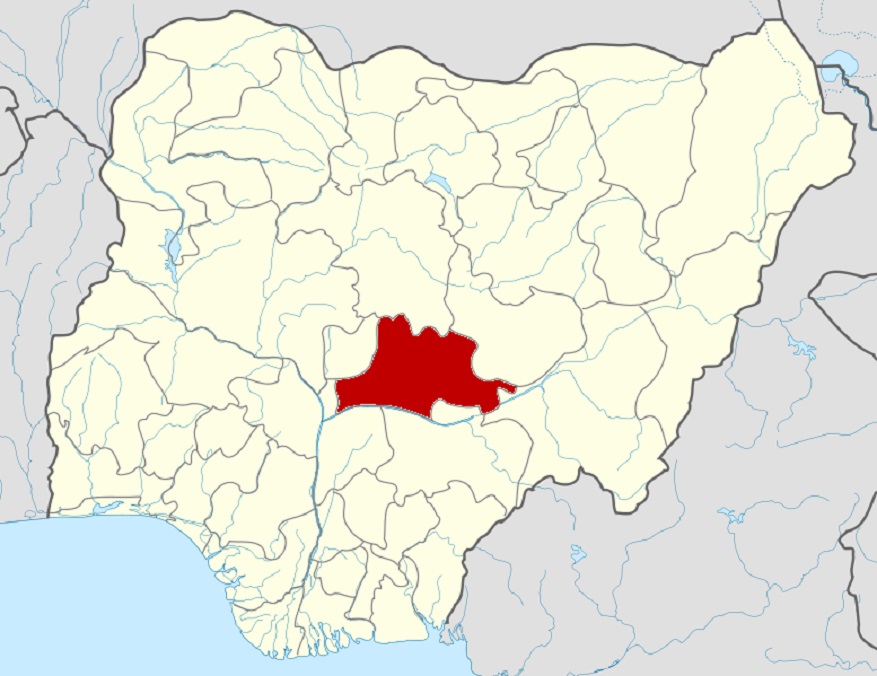
Nasarawa State map

By Adedapo Adesanya

The federal government has approved the establishment of the Agricultural Machinery and Equipment Development Institute in Nasarawa State to boost industrialisation in the Northern state.

This disclosure was made by Governor Abdullahi Sule in Lafia on Saturday at the opening ceremony of the Lafia City Mall, a subsidiary of Wave Mart Group of Companies.

Mr Sule said the agric institute would be located in Lafia as a step forward in terms of industrialising the state, adding that it also indicated the readiness of the state to maximize the diverse opportunities in the agriculture sector especially agriculture mechanization.

“We are ready here in Lafia. Lafia is attracting a lot in the area of agriculture industrialization. I am very happy.

“In fact, I woke up this morning extremely happy because last night, I receive the approval from Mr President for the setting up of the Agricultural Machinery and Equipment Development Institute right here in Lafia.

“I want to use this opportunity to extend my greatest appreciation to President Muhammadu Buhari. Just a few weeks ago, we realized that there are going to be about three or four institutes that are about to be established.

“I now wrote for the establishment of the institute in the state and just yesterday, Mr President approved it and we are going to establish that institute right here in Lafia,” he said.

Mr Sule added that aside from the institute, the state government had also recently signed an agreement with the Gurku-Kabusu community in the Karu local government area of the state for the commencement of an industrial zone on 13,000 hectares of land in the area.

He explained that the choice of the area was due to its close proximity to the Federal Capital Territory (FCT) Abuja, which thereby offers a huge market potential to the investor in the zone.

He said that it also made the business initiative beneficial to the state, the industrialists and the host community.

“Today, we concluded by signing with the people. Gurku-Kabusu is just five kilometres from Maitama. With that type of opportunity that we have, that will be mutually beneficial to the state, the community and the industrialists, we are ready now for industrialization in that area,” he said.

The governor also revealed that in line with his policy to engage youths in skills acquisition, an institute for skill acquisition has been completed with equipment being procured for the various skill offices in the centre.

He then thanked Wave Mart Group of Companies for setting up the mall, adding that other investors who indicate interest to invest in the state would have no regrets.

“I want to thank you, the CEO of Wave Mart Group for your continuous belief and trust in Nasarawa state and I want to thank you also for giving us the opportunity to prove to the world that Nasarawa state is set for investment.

“Any investor that is interested, that is coming to Nasarawa state, there is no better time to come than now,” he said.

In his address, Mr Emmanuel Umoru, Chairman of Wave Mart Group of Companies, said the Lafia City Mall was not the first but the third investment of the group in the state.

He said given the investments and the years spent investing in the state, he has been able to convince other investors to come for themselves and inspect the security situation with the option of also investing in the state.

Mr Umoru then disclosed that the Lafia City Mall which so far has gulped about N678 million would employ more than a hundred staff with most of the staff been indigenes of the state.

“The reason for establishing this kind of facility is not just for making money but to give employment to our teeming youths.

“This is a state we have invested in for almost about seven years now and to the glory of God, we have no reason to regret. On this note, I make bold to say that we shall come again. We appreciate your drive for investment in the state,” he said.

On his part, the Emir of Lafia, Sidi Bage appreciated the private sector drive of the governor and also lauded the Wave Mart Group of Companies for choosing Lafia to locate their investment.


Adedapo Adesanya is a journalist, polymath, and connoisseur of everything art. When he is not writing, he has his nose buried in one of the many books or articles he has bookmarked or simply listening to good music with a bottle of beer or wine. He supports the greatest club in the world, Manchester United F.C.

Click to comment

Leave a Reply

Your email address will not be published. Required fields are marked *

Education

Bunmi Adedayo Foundation Unveils N1bn Plan for Teachers, Students

Published

on

Bunmi Adedayo Foundation

By Modupe Gbadeyanka

For the next 10 years, a Nigerian non-profit organisation focused on public education reform, The Bunmi Adedayo Foundation (BAF), intends to train 10,000 additional teachers and 500 school leaders, reach at least 1 million more learners through accelerated foundational literacy and numeracy programmes, expand digital learning access to 25,000 teachers, embed education reforms into government policy, and amplify its national advocacy voice.

At an event held in Lagos to mark its 10th anniversary on May 6, the organisation noted that it hopes to raise more than N1 billion in diversified funding to sustain and scale operations.

At the landmark Education Futures Conference themed Building Nigeria’s Education Future: One Teacher, One School, One Child at a Time, BAF said it was impressed with the progress made so far.

BAF was established in January 2016 in honour of Oluwabunmi Omotayo Adedayo. Since its inception, it has reached more than 550,000 learners, empowered over 7,800 teachers and supported more than 1,300 public primary schools across Lagos, Ogun, Osun and Rivers states.

Its interventions span teacher capacity development, school infrastructure renovation, digital learning through ICT hubs, and direct pupil support through scholarships and learning materials.

At the conference, Executive Director Odedeyi Oluwakemi said, “What began as a response to a critical gap has evolved into a movement of measurable impact. The first 10 years have proven what is possible. The next 10 years will define what is transformational.”

The gathering last week convened educators, policymakers, development partners, and private-sector leaders to reflect on a decade of measurable impact and chart an ambitious course for the decade ahead.

It spotlighted Nigeria’s deepening education crisis. An estimated 10.5 million primary school-age children, representing 25 per cent of that population, are currently out of school, a figure that rises to more than 20 million when secondary school-age youth are included. Among Nigerian children aged 7 to 14, 73 per cent lack basic reading skills, while 75 per cent lack basic numeracy skills. Only 44 per cent of primary school teachers hold the required qualifications, while teacher absenteeism in public schools averages 24 per cent.

Chairman of the foundation’s Executive Council, Professor Oluwole Ayoola Atoyebi, commended the group’s decade of progress while acknowledging the scale of the challenge ahead.

“Many children still lack access to quality foundational learning, and many educators require continuous support to deliver effectively,” he said. “Education is not merely a social good; it is a strategic investment in the future of our nation.”

BAF’s programmes are delivered through an integrated model combining teacher development, school infrastructure renovation and digital learning. The foundation’s train-the-trainer approach, implemented through initiatives such as the Continuous In-Service Training Programme (CISTPST) and the Subject Enhancement Programme (SEP-M), has enabled its impact to cascade across schools and communities. Its two ICT centres in Surulere and Ketu have equipped more than 11,000 students with hands-on digital learning skills.

The organisation’s school transformation projects, including the full renovation of Yaba Model Nursery & Primary School and Nathan Nursery & Primary School, have been made possible through partnerships with organisations including Tastee Fried Chicken, the Adepoju Foundation and Phoenix Global Foundation.

Continue Reading

Education

FG Exempts Colleges of Education, Agric Candidates from UTME

Published

on

Olatunji Alausa

By Modupe Gbadeyanka

Candidates seeking to gain admission into Colleges of Education in Nigeria will no longer need to write the Unified Tertiary Matriculation Examination (UTME) organised by the Joint Admissions and Matriculation Board (JAMB).

This information was disclosed by the Minister of Education, Mr Tunji Alausa, during an annual admission policy meeting of JAMB in Abuja on Monday.

He revealed that the new policy would become effective in the 2026.2027 admission cycle, stating that it was to make tertiary education admission easier for would-be teachers in the country.

The Minister also said candidates seeking admission to agriculture programmes outside engineering disciplines would not be required to sit for UTME, though they must register with JAMB.

“Candidates seeking admission into Education Programs and Agriculture non-Engineering Courses are now exempted from UTME,” he declared.

However, they are mandated to have at least four credit passes in relevant subjects in the Senior Secondary School Examination (SSCE) conducted by either the West African Examinations Council (WAEC) or the National Examinations Council (NECO), he stated.

Mr Alausa noted that after these academic credentials are screened, verified and certified, the admission letters would be issued through the Central Admissions Processing System (CAPS), in line with existing regulations.

Continue Reading

Education

AI is Changing the World: Are Nigerian Universities Ready?

Published

on

timi olubiyi PhD

By Timi Olubiyi, PhD

The gap between what many universities teach and what the real world currently demands is widening daily, particularly in Nigeria. Truly, the university education system is gradually losing alignment with the realities of today’s expectations. While industries across the world are rapidly evolving through Artificial Intelligence (AI), automation, and digital transformation, many universities still operate with outdated curricula designed many decades ago and without strong connections to current economic realities. Across industries today, employers increasingly seek graduates with digital competence, problem-solving ability, adaptability, creativity, communication skills, and technological literacy. Unfortunately, many higher institutions still emphasise theoretical memorisation rather than practical competence and future readiness. This growing disconnect partly explains why graduate unemployment and unemployability remain serious national concerns despite thousands of graduates entering the labour market every year.

Artificial Intelligence is no longer a futuristic concept; it is already transforming banking, healthcare, media, agriculture, education, law, manufacturing, logistics, finance, and public administration. More so, intelligent systems can now automate repetitive tasks, analyse large volumes of data, generate reports, support decision-making, and improve operational efficiency faster than humans in many instances. In fact, I was recently in a bank to request an ATM card and was attended to by a machine and the card was issued without human contact or need. This reality has profound implications for jobs, skills, productivity, and the future of higher education globally. Recently, the Managing Director of a company in Nigeria reportedly disclosed publicly that over 500 vacancies existed within the organisation, yet the company struggled to find suitably qualified Nigerians for the available roles. That statement may sound alarming, but it reflects a growing structural problem that should concern policymakers, universities, parents, and students alike. The issue is not a lack of intelligence or potential among Nigerian youths. Nigerian youths remain among the most resilient, innovative, and entrepreneurial globally. The real problem is that many educational institutions are still preparing students for yesterday’s economy instead of tomorrow’s economy.

Globally, universities are aggressively redesigning their curricula to align with emerging realities. New programmes in Artificial Intelligence, Robotics, Data Science, Cybersecurity, Automation, Renewable Energy Technology, Machine Learning, Biotechnology, and Digital Systems are rapidly expanding because nations understand that future economic competitiveness will depend heavily on technological capability, innovation, and human capital development. Nigeria cannot afford to lag behind in this global transition. The National Universities Commission (NUC), policymakers, university administrators, and other stakeholders must urgently recognise the implications of AI on higher education and labour markets. Curriculum redesign should no longer be treated as a routine academic exercise but as an urgent national economic priority. One important conversation Nigeria must begin to have honestly is whether some university programmes in their current structures can remain economically competitive in the future. This conversation may be uncomfortable, but avoiding it will not solve the problem. The world is changing rapidly, and universities must evolve accordingly.

Traditional disciplines such as History, Philosophy, Sociology, and related fields remain important for national identity, ethics, critical thinking, and cultural preservation. However, these disciplines may require modernisation and stronger integration with digital and employability skills. For example, History students today should also be exposed to digital archiving, strategic communication, international relations, policy analysis, data interpretation, media intelligence, and AI-assisted research methods. The issue is not necessarily the existence of the discipline itself, but whether graduates possess transferable skills that remain valuable in a modern economy. Importantly, AI literacy should now become compulsory across all university disciplines regardless of specialisation. Whether a student studies medicine, law, accounting, engineering, agriculture, communication, philosophy, or education, a foundational understanding of AI systems, digital tools, cybersecurity awareness, technology ethics, and data analysis is increasingly becoming essential.

The future workplace will reward people who can effectively work with technology, not those who ignore it. AI literacy is gradually becoming as important as computer literacy was years ago. Universities must therefore prepare students to adapt, collaborate with intelligent systems, and solve emerging problems creatively. Another major issue is faculty development. Curriculum reform alone may achieve little if lecturers themselves are not adequately prepared for the realities of modern education. Many academic staff members require continuous learning, digital retraining, and professional development to effectively teach contemporary skills and emerging technologies. The reality is simple: lecturers can only effectively teach what they sufficiently understand. In the AI era, educators must also embrace unlearning, relearning, and continuous improvement. Teaching methods designed decades ago may no longer prepare students adequately for a highly digital and innovation-driven economy. Faculty development programmes should therefore become continuous and mandatory within Nigerian universities.

Beyond curriculum and faculty reform, universities must strengthen industry collaboration and practical learning. Students should graduate with exposure to internships, digital projects, innovation hubs, entrepreneurial development, and real workplace experiences. Entrepreneurship education should move beyond writing theoretical business plans merely to pass examinations. Students should instead be encouraged to solve real societal problems and develop practical solutions. Stronger collaboration between academia, government, and the private sector is essential if Nigerian graduates are to become globally competitive. The long-term danger is that Nigeria may continue producing graduates who are academically qualified but economically unprepared. This weakens productivity, discourages investment, increases unemployment, and limits national competitiveness in a technology-driven global economy. The time to act is now. Artificial Intelligence is evolving faster than many institutions anticipated, and its impact on education and employment will continue to deepen. Universities that fail to modernise risk producing graduates who may struggle to remain relevant in future labour markets. The future belongs to nations that equip their young people with adaptable skills, technological competence, creativity, and innovation capacity. Nigerian universities must therefore evolve quickly enough to meet the demands of the AI era before the gap between education and economic reality becomes even wider. Good luck!

How may you obtain advice or further information on the article? 

Dr Timi Olubiyi is an expert in Entrepreneurship and Business Management, holding a PhD in Business Administration from Babcock University in Nigeria. He is a prolific investment coach, author, columnist, and seasoned scholar. Additionally, he is a Chartered Member of the Chartered Institute for Securities and Investment (CISI) and a registered capital market operator with the Securities and Exchange Commission (SEC). He can be reached through his Twitter handle @drtimiolubiyi and via email at [email protected] for any questions, feedback, or comments. The opinions expressed in this article are solely those of the author, Dr Timi Olubiyi, and do not necessarily reflect the views of others.

Continue Reading

Trending