
Education
GOMYCODE Offers Master’s Degree in Software Engineering in Nigeria


By Aduragbemi Omiyale
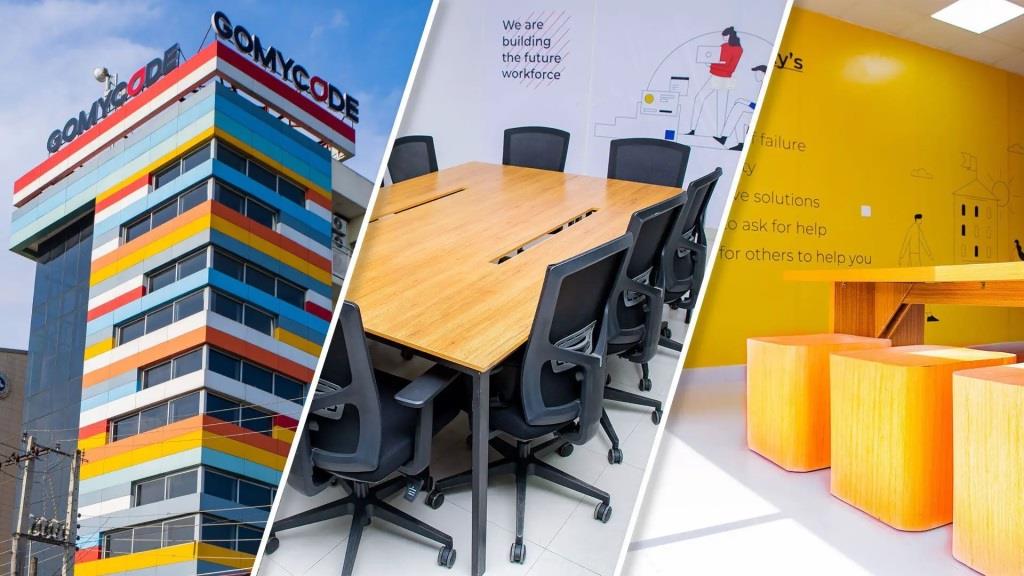
A leading technology education provider, GOMYCODE, has partnered with a global collegiate higher education institution, Woolf University, to offer a Master of Science in Computer Science with a Specialization in Software Engineering.
This provides an opportunity for aspiring and established tech professionals in Nigeria to hone their skills at GOMYCODE, with a globally recognised certificate to show for it.
The institution disclosed that the program’s online and flexible structure caters to the demands of working professionals, enabling them to balance their studies with existing commitments.
Students will benefit from Woolf University’s rigorous academic standards and GOMYCODE’s practical, industry-relevant approach to learning.
This is because the Master’s program is designed to empower busy professionals and ambitious individuals with advanced skills and qualifications, opening doors to global job opportunities and facilitating potential emigration for those seeking international careers.
This Master of Science in Computer Science with Specialization in Software Engineering program is ideal for tech professionals seeking to enhance their qualifications, individuals aiming for global job opportunities, those considering emigration and requiring advanced degrees, and ambitious individuals looking to accelerate their career growth.
“In today’s competitive tech landscape, advanced degrees are increasingly essential. This partnership allows us to provide a flexible, world-class education that empowers our students to achieve their career aspirations, whether they seek to excel locally or on a global stage,” the co-founder of GOMYCODE, Yahya Bouhlel, stated.
Also commenting, the Head of Strategy and Growth at Woolf University, Naveen Jangir, said, “Our mission is to democratize education, and this partnership aligns perfectly with our goal of providing accessible, accredited degrees to learners worldwide. We believe this program will equip Nigerian tech professionals with the skills and credentials they need to thrive in the global economy.”
On his part, the Country Head of GOMYCODE in Nigeria, Mr Babatunde Olaifa, said, “By offering a globally recognized Master’s degree, we are empowering our professionals to compete on a global scale, giving people an opportunity to level up their careers, and to open doors that they previously thought were closed. We are very excited to see the impact that this program will have on the lives of our students and the broader Nigerian tech community.”







By Adedapo Adesanya
The Nigeria Revenue Service (NRS) has inaugurated a Curriculum Review Committee aimed at strengthening taxation education in Nigerian academic institutions and improving the country’s tax administration system.
According to a statement, the committee was inaugurated on February 24, at the NRS Academy in Durumi as part of the agency’s broader efforts to modernise tax education and align academic training with the evolving demands of contemporary tax administration.
Speaking during the inauguration, the Director of the NRS Academy, Mr Adeolu Akinyemi, said the review exercise would involve collaboration with the Chartered Institute of Taxation of Nigeria (CITN) to develop a more structured and relevant curriculum for the academy.
He emphasised that the initiative seeks to ensure that taxation programmes taught in Nigerian institutions reflect current developments in tax policy and practice, while also equipping students with the practical knowledge required in today’s tax administration environment.
The committee has been tasked with examining existing taxation curricula across Nigerian institutions and proposing updates that incorporate modern tax policies, recent legislative changes, and emerging areas such as digital taxation and global tax practices.
Officials say the review is also designed to close the gap between theoretical classroom instruction and the practical realities of tax administration.
By strengthening the link between academic learning and professional practice, the revised curriculum is expected to better prepare graduates for careers in the tax sector.
The effort is further expected to enhance tax awareness among citizens, encourage voluntary tax compliance, and support the development of skilled tax professionals who can contribute to national revenue generation and economic growth.
The committee is chaired by Mrs Aisha Hamman Mahmoud, Special Adviser to the Executive Chairman of the NRS on Research and Statistics. Its membership includes representatives from the service as well as academic experts in taxation and fiscal policy, alongside professionals with experience in tax administration, policy formulation, and tax education.
The committee will work with relevant educational regulatory agencies and professional bodies to ensure that the proposed curriculum aligns with national academic standards while addressing the practical needs of Nigeria’s tax system.
The NRS stated that the initiative forms part of its ongoing commitment to expanding tax knowledge, strengthening professional capacity, and promoting responsible tax practices across the country.
The curriculum review exercise is expected to be completed within 60 days, after which the Service plans to provide further updates on the implementation of the revised programme.

By Modupe Gbadeyanka
The first batch of Nigerian undergraduates to enjoy fully paid scholarships for studying science, technology, engineering and mathematics (STEM) courses across the continent has been chosen by Airtel Africa Foundation.
Business Post gathered that 70 students from universities across Nigeria were selected from thousands of applicants through an independently managed process, which took nearly six months.
It was learned that most of the undergraduates were from the University of Lagos (UNILAG), Obafemi Awolowo University (OAU) Ile-Ife, the University of Benin (UNIBEN), Tai Solarin University of Education (TASUED), the University of Ilorin, Ahmadu Bello University (ABU Zaria), and the University of Nigeria (UNN).
The scholarship covers tuition, laptop computers, living expenses, and essential learning resources, a statement from Airtel Africa Foundation disclosed.
The chairman of the foundation, Mr Segun Ogunsanya, speaking at the presentation of the scholarships to the beneficiaries at the Lagos headquarters of Airtel Nigeria, emphasised the need for initiatives such as the Airtel Africa Foundation’s undergraduate tech scholarship for the future of the continent.
“True legacy is not measured by the awards we win or the volume of SIM cards we sell; it is measured by the lives we save, the people we feed, and the students we support when the line between success and failure is at its thinnest.
“At the Airtel Africa Foundation, we believe that lifting people out of poverty is the ultimate benchmark of a great company. Today, we are writing that legacy by tilting the balance in favour of the brilliant but underserved, ensuring that the fourth industrial revolution, driven by AI and Data Science, is built by African talent for the African continent,” he stated.
Mr Ogunsanya further revealed that this fellowship, executed through Airtel Nigeria, is designed to bridge the gap where funding, skills, and opportunity often fail to meet.
In addition to the N500,000 yearly budget for the fellows’ four-year or five-year courses, each fellow would be integrated into a structured support system for academic guidance and career mentorship, intended to ultimately transition students from the classroom to the global tech workforce.
Addressing the students, the chief executive of Airtel Nigeria, Mr Dinesh Balsingh, stressed that youth development is a strategic imperative for Airtel.
“At Airtel Nigeria, we view youth development as essential nation-building. When young people succeed, innovation accelerates, and social stability improves.
“By connecting these brilliant scholars to knowledge, skills, and confidence, we are fulfilling our core mission to connect people to opportunity. To our recipients: you earned your place here through merit and discipline. You are now ambassadors of excellence, and we expect your leadership to be defined by your conduct as you help shape a more inclusive digital future for Nigeria,” the Airtel Nigeria chief said.
The Nigerian cohort joins a prestigious network of Airtel Africa Foundation fellows currently studying in Tanzania, the Democratic Republic of Congo (DRC), Uganda, and India.
The initiative underscores a broader commitment to technology education, youth development, and Nigeria’s digital economy.

By Dr Austin Orette
I am in receipt of a letter that asked parents to pay for an excursion to England. I was very perturbed because this goes beyond the mandate of the school. These kids barely know the geography of Nigeria, and you want to export them to another culture for indoctrination and cultural imperialism.
What is London for the Nigerian child? Are we still under colonialism? This program has nothing to improve the child except to give them a false sense of elitism, which has destroyed Nigeria.
In these tough economic times, you are asking parents to cough up so much money for the vanity project of indulgent children and nouveaux rich parents who want a vicarious existence through their children. I weep for my country.
Nigeria used to be a place where children of the rich and poor went to the same school without anyone being subjected to any form of alienation. It is becoming very clear that the Nigerian educational system has been bastardised by actions like these.
We send our children to learn and have a better understanding of themselves and the world, but you are teaching them a sense of entitlement. As someone who has travelled around the world, there is nothing any of those kids will gain from this stupid enterprise other than egotism that alienates them from their mates. Even if I can afford it, it does not make any economic sense. I will never participate in this hubris you mistake for education. It appears your school has substituted foreign cultures for education.
Teach the Nigerian child how to be Nigerian. Education is supposed to start at home. It appears a large percentage of the parents are people who came into so much money without a modicum of common sense. This is the reason why they consider it a thing of dignity when their child is being culturally miseducated. This trend, where everything foreign is romanticized must stop. We should never raise our children to feel inferior to anyone.
The moral decadence that has become prevalent in Nigeria is due to the wrong education of the Nigerian child and his parents. They employ maids for their children; drive them to school in expensive limousines. At the end, the child grows up entitled and does not have any sense of service or allegiance to his community, as he is trained from childhood that the world owes him a living.
We must teach our children how to serve. Service to others is the rent we pay for the space we occupy. If parents must take their children overseas, that should be done in their private time, not under the pretext of education.
A good education will be an excursion to the numerous slums in Lagos, and let the children produce an assignment about creating sustainable neighbourhoods that are livable.
If you don’t stop this practice, I will make a formal protest to the Ministry of Education and your school and other schools that are introducing this odious culture should be sanctioned.
The Nigerian child must be trained to think instead of making him a consumer of foreign cultures that have disdain for our way of life.
I used to complain about wayward parents who have destroyed Nigeria until I found out that the Nigerian schools are becoming incubating chambers for producing wayward and dysfunctional children who will perpetuate the vicious cycle in the Nigerian decay.
Dr Austin Orette Writes from Houston, Texas












-
 Feature/OPED6 years ago
Davos was Different this year
-
Travel/Tourism10 years ago
Lagos Seals Western Lodge Hotel In Ikorodu
-

 Showbiz3 years ago
Estranged Lover Releases Videos of Empress Njamah Bathing
-
 Banking8 years ago
Sort Codes of GTBank Branches in Nigeria
-

 Economy3 years ago
Subsidy Removal: CNG at N130 Per Litre Cheaper Than Petrol—IPMAN
-

 Banking3 years ago
Sort Codes of UBA Branches in Nigeria
-

 Banking3 years ago
First Bank Announces Planned Downtime
-

 Sports3 years ago
Highest Paid Nigerian Footballer – How Much Do Nigerian Footballers Earn