Education
Nigeria’s Top 500 Academics: Breaking Barriers, Timi Olubiyi Gains Academic Spotlight
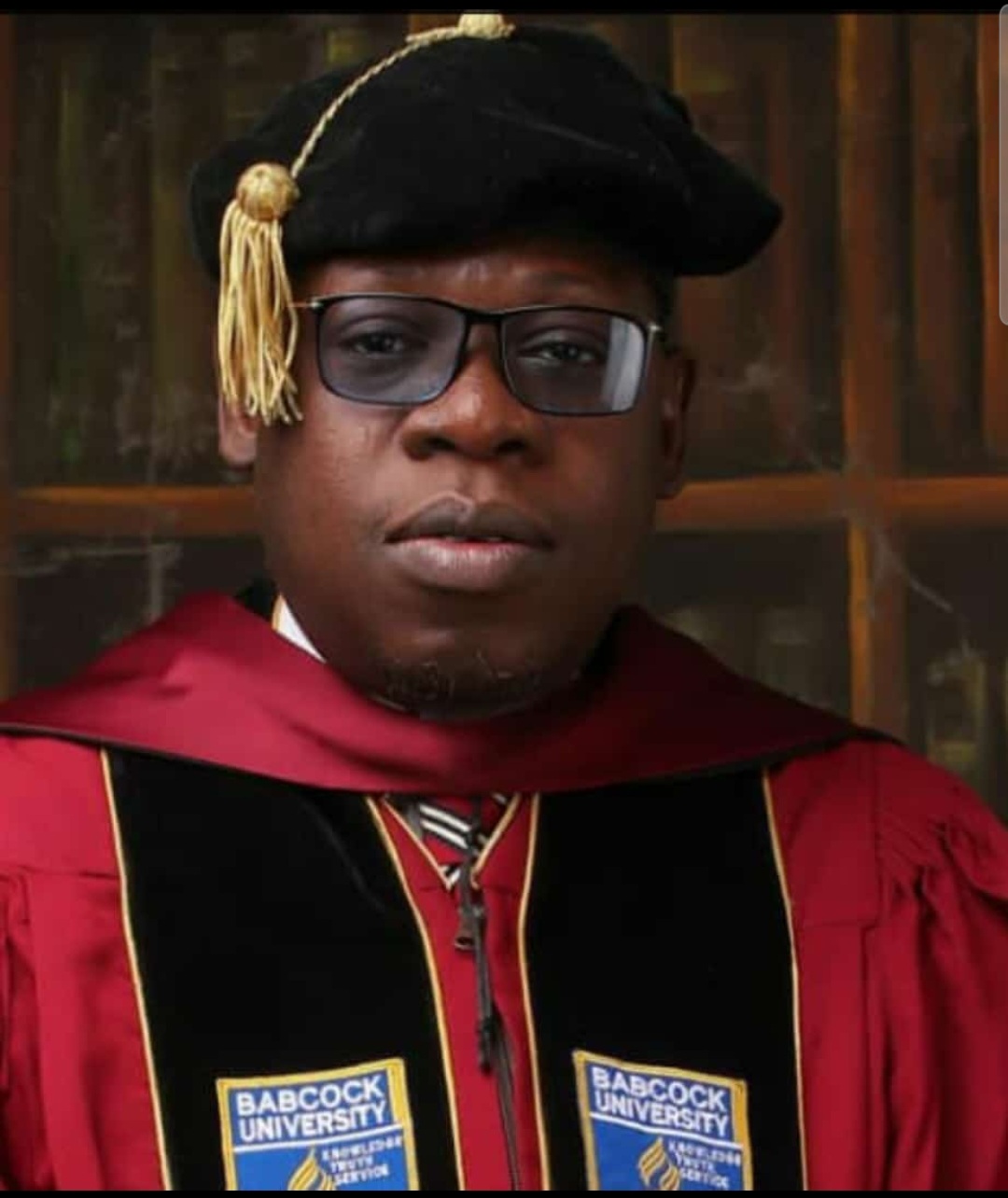
By Timi Olubiyi, PhD
In today’s world, nations no longer compete only with natural resources or population size; they compete with ideas, knowledge, and innovation. In the last few days, I have received many messages following my inclusion as number 102 among the Top 500 academics in Nigeria, according to SciVal’s scholarly output ranking for 2023–2026. A stunning display of scholarly excellence that has captured attention both within and beyond Nigeria.
It is important to mention thatSciVal is a respected global research analytics platform developed by Elsevier, one of the world’s leading academic publishing and information companies. It is widely used by universities, governments, and research institutions across more than 230 countries to assess research performance and track global influence.
While such recognition is noteworthy, it should not be viewed merely through the lens of individual achievement. Rather, it presents an important opportunity to reflect on what this ranking truly means for Nigeria’s development, the future of its universities, and the country’s place in the global knowledge economy, which is the central motivation for this discussion.
Nigeria is home to over 270 public and private universities, with an estimated 75,000 to 80,000 lecturers, if not more. From this vast academic community, only 500 scholars were identified by SciVal as the most productive and globally visible researchers. Recognition on SciVal therefore, signals that a scholar’s work is not only prolific but also trusted, visible, and impactful internationally, making the ranking a credible benchmark of global academic relevance rather than a local or ceremonial listing. In essence, the ranking is not about popularity or titles; it is about impact.
The importance of the Top 500 list goes far beyond academic pride. These scholars contribute to shaping public policy, influencing business practices, supporting innovation, and addressing real societal challenges. Nations that achieve sustained economic and social progress invest deliberately in research because effective policies and successful enterprises are built on strong, evidence-based ideas.
SciVal evaluates research performance across more than 230 countries and over 20,000 institutions worldwide, tracking publications, citations, collaborations, and research influence through internationally recognised databases such as Scopus. Simply put, it measures whose work is shaping conversations globally. For Nigeria to have 500 scholars represented on this platform is significant. It signals to the world that Nigerian academics are not merely participants in global discourse, but active contributors to it.
Being ranked 102nd on this list reflects years of consistent research output, collaboration, and engagement across key areas such as entrepreneurship, small and medium-sized enterprises (SMEs), sustainability, innovation, leadership, and business continuity. These areas are far from abstract academic interests; they are central to Nigeria’s economic survival and growth. SMEs, in particular, form the backbone of the Nigerian economy, yet many struggle due to weak structures, limited access to finance, and inadequate strategic planning. Research that addresses these challenges has direct implications for employment, livelihoods, and national stability.
One of the strongest lessons from the Top 500 ranking is the importance of global collaboration. Collaboration with scholars across different regions of the world enriches research quality and ensures that Nigerian realities are represented within global knowledge conversations. International partnerships improve visibility, strengthen credibility, and ensure that local perspectives are not excluded from global solutions. Each Nigerian scholar engaged in meaningful global collaboration strengthens the country’s intellectual presence.
Global relevance increasingly matters in today’s research ecosystem. Rankings influence who attracts funding, who participates in policy discussions, and who helps shape international best practices. Scholars whose work appears in well-indexed journals are trusted because their research meets global standards. That trust opens doors to partnerships, joint projects, and policy engagement. When Nigerian scholars are globally visible, the nation benefits collectively. Yet academic impact should not be confined to journals alone. Research achieves its highest value when it speaks to society.
Public engagement through opinion writing, policy dialogue, and accessible communication ensures that complex ideas reach everyday readers and decision-makers. When research informs public debate, it becomes a powerful tool for national progress. Some scholarly insights have also reached international audiences through syndicated platforms, allowing global readers to engage with Nigerian perspectives on business, sustainability, and economic development.
What also stands out about this ranking is consistency. Inclusion over multiple years is not accidental. It reflects discipline, intellectual curiosity, and sustained effort. For Nigeria, such consistency among its leading scholars is reassuring. It demonstrates that despite the challenges facing the education sector, academic excellence remains achievable.
The broader message of the Top 500 ranking is clear: Nigeria possesses significant intellectual capital, and it must be taken seriously. Development in the modern world is no longer driven solely by physical infrastructure or natural resources. It is driven by ideas by research that informs policy, strengthens institutions, and fuels innovation. Countries that invest in knowledge thrive; those that neglect it fall behind. As a nation, there is a need to do more to support scholars through better funding, stronger research environments, and policies that reward excellence and collaboration. Equally important is encouraging academics to engage with society, industry, and government. Research should not exist in isolation; it should be integrated into national planning and development strategies.
Recognition on platforms such as SciVal should therefore be seen not as a personal milestone, but as part of a broader Nigerian story, one of resilience, intellect, and growing global relevance. Across the country, many scholars are doing impactful work, often quietly and without recognition. This ranking, therefore, shines a light on our painstaking research contributions, which can shape Nigeria’s future.
The Top 500 academics represent a foundation upon which sustainable development can be built, and considering them for consultations and advice is not out of place. Because they are selected across all academic disciplines. If this intellectual resource is recognised, supported, and effectively utilised, Nigeria’s voice in the global knowledge economy will continue to grow stronger. Ultimately, rankings and recognition only matter if they lead to meaningful action.
The real question before Nigeria is not how many scholars appear on global lists, but how effectively the nation listens to, supports, and engages its best minds. Across universities and research centres are scholars generating ideas capable of shaping policy, strengthening institutions, and driving innovation, yet too often these voices remain at the margins of national decision-making.
If Nigeria is serious about sustainable development, it must move beyond celebrating excellence to actively integrating research into governance, industry, and public discourse. The future will belong to nations that recognise knowledge as a strategic asset and deliberately harness the insights of their finest thinkers. Engaging the best among us is no longer optional; it is essential to building a resilient, competitive, and forward-looking Nigeria.Good luck!
How may you obtain advice or further information on the article?
Dr Timi Olubiyi is an expert in Entrepreneurship and Business Management, holding a PhD in Business Administration from Babcock University in Nigeria. He is a prolific investment coach, author, columnist, and seasoned scholar. Additionally, he is a Chartered Member of the Chartered Institute for Securities and Investment (CISI) and a registered capital market operator with the Securities and Exchange Commission (SEC). He can be reached through his Twitter handle @drtimiolubiyi and via email at [email protected] for any questions, feedback, or comments.
The opinions expressed in this article are solely those of the author, Dr Timi Olubiyi, and do not necessarily reflect the views of others.
Education
British High Commission Lauds 99 Chevening, Commonwealth Scholarship Beneficiaries
By Adedapo Adesanya
The British High Commission has celebrated 99 Nigerians who have recently completed their studies in the United Kingdom through the prestigious Chevening and Commonwealth scholarships, pursuing a wide range of master’s degree, PhD, and fellowship programmes.
In Abuja and Lagos, the commission held Welcome Home ceremonies for the 30 Chevening scholars who have completed their studies, as well as the 69 beneficiaries who make up the Commonwealth scholars and fellows.
Chevening Scholarships are the UK Government’s global scholarship programme, funded by the Foreign, Commonwealth and Development Office (FCDO), partner organisations, and partner universities, while Commonwealth Scholarships are managed by the Commonwealth Scholarship Commission (CSC) in the UK.
At both events, the scholars and fellows shared their academic journeys and experiences, and their preparedness to use the skills and knowledge developed during their studies to contribute to Nigeria’s development. Additionally, they were celebrated for their exceptional academic achievements, received their completion certificates, and were officially inducted into the Chevening and Commonwealth alumni community in Nigeria.
Speaking at the reception, the British Deputy High Commissioner, Mrs Gill Lever (OBE), said, “We take great pride in welcoming back our Commonwealth and Chevening Scholars. Congratulations to every one of them for completing their studies, many with distinctions. I’m so happy that talented Nigerians have had the opportunity to study in the UK, returning with additional knowledge and skills to make a positive difference in their home country. I encourage them to aim for excellence in their future endeavours. I know they will be great ambassadors for the UK in Nigeria and make the most of the networking and knowledge sharing that being a Commonwealth or Chevening scholar presents. Keep in touch, everyone!”
British Council was represented at the welcome event by Mr Chikodi Onyemerela, Director of Programmes, British Council Nigeria. During his remarks, Chikodi congratulated the scholars for completing their master’s and PhD programmes in the UK.
He urged the scholars to be good Ambassadors of their institutions in Nigeria and urged them to apply the knowledge, skills and network that they have acquired in the UK to address challenges facing Nigeria in various sectors while maintaining ties with their UK institutions.
A Chevening Scholar, Nankur Pontip Ramdur, who studied Terrorism, International Crime and Global Security at Coventry University, UK, said, “I understand that peace and security are at the heart of every nation’s development and success; hence, I look forward to contributing to a safer Nigeria. I plan to continue outreach to schools and communities with my team, teaching responses and safe practices regarding sexual and gender-based violence. I am also currently writing a book to broaden the impact of this initiative in Nigeria and subsequently across the globe. I have so much more to meaningfully contribute to my country, and I am glad Chevening has propelled me towards achieving my dreams!”
A Commonwealth Scholar, Chimdi Ekwueme, who studied Health Policy, Planning and Finance at the London School of Hygiene and Tropical Medicine, UK, said, “Studying in the UK has deepened my Nigerian perspective by allowing me to situate my local experience within wider international conversations and gaining practical insights I can apply at home.”
Education
Edtech Platform Aahbibi Rebrands as Hallos, Unveils New Self-Paced Courses
By Adedapo Adesanya
An education technology-based platform known as Aahbibi has officially rebranded as Hallos, also launching more than 5,000 self-paced courses aimed at strengthening knowledge transfer, accelerating skill acquisition, and improving literacy among everyday learners across Africa and beyond.
According to a statement on Thursday, the new identity signals a renewed commitment to building an inclusive, creator-driven learning ecosystem that equips individuals with practical, relevant skills for today’s economy.
Positioned as a creator-economy engine, Hallos brings together education, entertainment, and commerce within a single digital platform. It integrates live classes hosted by creators, social commerce and merchandising, podcast-driven learning, and quiz-based gamification. This blended approach is designed to deepen understanding, boost engagement, and promote fast, practical learning experiences for users at every level.
With creators already active on the platform from Kenya, Ghana, Côte d’Ivoire, Lagos, the United States, and Dubai, Hallos is cultivating a truly global community rooted in African creativity and innovation. Its expanding international network offers diverse perspectives, practical insights, and culturally relevant content that resonates with learners across regions.
Beyond online learning, Hallos is also emerging as a creative economy powerhouse, driving engagement through physical and hybrid experiences.
Upcoming initiatives include the Learning247 Creator Summit at the University of Nigeria, Enugu Campus (UNEC), and a major exhibition at the Enugu Technology Festival. These events are designed to connect creators, learners, and industry stakeholders, fostering collaboration, showcasing innovation, and expanding opportunities in the creative and digital sectors.
At the heart of Hallos’ mission is a four-pillar strategy focused on long-term social and economic impact. The platform is dedicated to supporting women in technology, advancing massive open connected education, and positioning Africa as a global production hub through market-ready skills development. By empowering individuals with practical knowledge, Hallos aims to strengthen the labour market and unlock new economic opportunities across the continent.
Hallos is also introducing a social impact course that encourages collective participation in Africa’s transformation. The initiative invites individuals, creators, and organisations to help reshape narratives, broaden opportunities, and drive the continent toward greater prosperity.
With its new brand identity and expanded course catalogue, Hallos says it is charting a bold future for learning — one where creators lead, communities thrive, and practical knowledge is accessible to all.
Education
Fidelity Bank Renovates Anambra Community Secondary School
By Aduragbemi Omiyale
An administrative building at the Community Secondary School, Enugwuabo Ufuma, in Orumba North Local Government Area of Anambra State has been renovated by Fidelity Bank Plc.
The project underscores the bank’s long-standing commitment to investing in education as a catalyst for sustainable development, according to the Regional Bank Head for Fidelity Bank, Mr Nosa Orumwense, at a ceremony to officially hand over the building to the school’s leadership.
It was gathered that the leading financial institution comprehensively renovated the one-storey administrative block to address infrastructural challenges faced by the school.
“For us at Fidelity Bank, this project represents more than a building. It represents opportunity, progress, and a shared commitment to building a better future for our youths here in Enugwuabo Ufuma and beyond.
“By improving the educational infrastructure of this community, we are providing students and teachers with an environment that promotes learning, discipline, and pride,” Mr Orumwense stated.
On her part, the Commissioner for Education, Professor Ngozi Chuma-Udeh, who represented the Governor of Anambra State, Professor Chukwuma Soludo, described the project as a true demonstration of corporate social responsibility.
“Corporate social responsibility is what gives an organisation its human nature. What Fidelity Bank has done reflects compassion and a genuine commitment to touching lives,” she said.
“This school was earlier placed on an emergency list due to the deplorable condition of its buildings. During my last visit, I was genuinely concerned about the safety of both students and teachers. Today, the school wears a new look, thanks to Fidelity Bank’s support,” she added.
The Commissioner also expressed the state government’s appreciation to Fidelity Bank, saying, “We thank Fidelity Bank for this intervention, which clearly demonstrates the true meaning of corporate social responsibility – making tangible impacts that improve lives and strengthen communities.”
-
Feature/OPED6 years agoDavos was Different this year
-
Travel/Tourism9 years ago
Lagos Seals Western Lodge Hotel In Ikorodu
-
Showbiz3 years agoEstranged Lover Releases Videos of Empress Njamah Bathing
-
Banking8 years agoSort Codes of GTBank Branches in Nigeria
-
Economy3 years agoSubsidy Removal: CNG at N130 Per Litre Cheaper Than Petrol—IPMAN
-
Banking3 years agoSort Codes of UBA Branches in Nigeria
-
Banking3 years agoFirst Bank Announces Planned Downtime
-
Sports3 years agoHighest Paid Nigerian Footballer – How Much Do Nigerian Footballers Earn