
Education
Universities to Receive N30bn Revitalisation Fund


By Sodeinde Temidayo David
The federal government has released N30 billion as a revitalisation fund to universities across the nation.
This followed a meeting with the leadership of the Academic Staff Union of Universities (ASUU), in which the FG said was aimed at evaluating whether the implementation of the Memorandum of Action entered into by the parties was successful.
The revitalisation fund was one of the seven key issues evaluated yesterday at a federal government’s meeting with the leadership of ASSU.
The Minister of Labour and Employment, Mr Chris Ngige, the Permanent Secretary of the Ministry of Labour and Employment, Mr Peter Tarfa and the immediate Executive Secretary of Nigerian Universities Commission (NUC), Mr Rasheed Abubakar were present at the gathering.
Mr Ngige disclosed that the federal government deposited the N30 billion with the Central Bank of Nigeria (CBN) as contained in the deal signed in January 2021.
He further explained that the fund was not immediately distributed because the Federal Ministry of Education and the NUC committee needed to evaluate the audit reports of the universities.
In addition, he said that each university must present an audit report on how it utilised previous disbursements.
The Minister said that the monies would be paid to successful universities based on the evaluation report of the committee, while those with shortcomings would be made to make up before accessing the fund.
Mr Ngige stated that the meeting evaluated seven key issues with both parties expressing satisfaction with the implementation stages, adding that “work is in progress”.
He added that some of the items in the MoA were nearly done 100 per cent within the timeline.
He explained the National Information Technology Development Agency (NITDA) was directed to expedite action on the integrity test on the University Transparency Accountability Solution (UTAS) which if successful, will eliminate the challenges posed by the peculiarities of the university system to the current payment platform.
“The report has been turned in, deliberated upon and both the Education Ministry and the NUC have promised to write to the Accountant General of the Federation next week for the release of the money to the needs special account for onward disbursement to universities shortly”, Mr Ngige said.
He further disclosed that apart from the N40 billion Earned Allowance, which the federal government has already paid, the Budget Office of the Federation showed evidence that N22 billion Earned Allowances for the year 2021, is already captured in the 2021 supplementary budget of the federation and would soon be accessed.
“On the proliferation of state universities, a bill has been sent to the National Assembly by the NUC to strengthen its arms in terms of delisting universities where funding and other parameters are inadequate.
“This effort was commended as all the parties agreed that mushrooming and proliferation of state universities, some of which mock the ideals of an ivory tower, should stop,” he said.
On his part, ASUU President, Mr Emmanuel Osodeke, expressed satisfaction with the outcome of the meeting and promised that the union would reach out to its members.



By Adedapo Adesanya
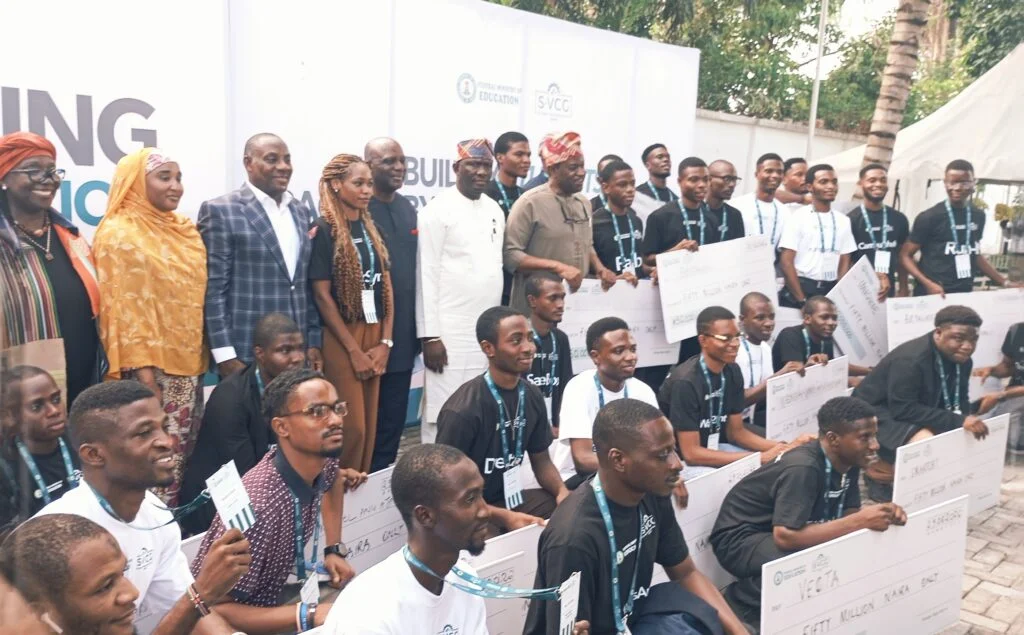
Forty-five student-led ventures emerged as beneficiaries of a total pool of N2.2 billion in grants at the 2026 Student Venture Capital Grant (S-VCG) Finalist Bootcamp.
The programme of the federal government marks a significant boost to youth innovation under its entrepreneurship drive, announced earlier this year.
At the bootcamp’s closing ceremony and awards presentation held at the United Nations Development Programme (UNDP) office in Ikoyi, Lagos, the winners emerged after a rigorous selection process involving 65 finalists and assessment by a 12-member expert panel.
Speaking at the event, the Minister of Education, Mr Tunji Alausa, said the initiative underscores the government’s commitment to transforming tertiary institutions into centres of innovation, entrepreneurship and practical problem-solving.
He described the S-VCG programme as a key pillar of President Bola Tinubu’s Renewed Hope Agenda, aimed at enabling students to convert ideas into viable businesses.
Mr Alausa noted that each beneficiary can access up to N50 million in equity-free funding, alongside mentorship, incubation support and digital tools.
He added that the programme attracted more than 30,000 applications from 404 tertiary institutions nationwide, reflecting the growing culture of innovation among Nigerian youth.
Also speaking, the Minister of Communications and Digital Economy, Mr Bosun Tijani, commended participants for leveraging technology to develop solutions to real-world challenges.
He urged them to build scalable, tech-driven ventures capable of contributing to national development.
Also speaking, Minister of State for Education, Mrs Suwaiba Sa’id Ahmad, praised the finalists’ resilience and creativity, noting that initiatives like S-VCG are critical to nurturing problem-solving skills and fostering an entrepreneurial mindset among students.
Chairman of the Senate Committee on Tertiary Education and TETFund, Mr Muntari Dandutse, called for sustained investment in youth innovation to strengthen Nigeria’s knowledge-based economy.
On his part, the National Project Coordinator of the Special Programmes Operations and Implementation Unit, Mr Adebayo Onigbanjo, outlined the structure and long-term objectives of the programme, stating that it is designed to equip students with the resources and confidence needed to build sustainable ventures.

By Adedapo Adesanya
The University of Jos has suspended all examinations scheduled for Monday and Tuesday following growing tension in Jos, after a deadly attack in Anguwan Rukuba, Jos North Local Government Area of Plateau State.
The management of the institution also advised students and staff to remain indoors and stay vigilant.
According to reports, the attackers, who rode on motorcycles, stormed the community at about 7:30 pm while residents were going about their normal activities, firing indiscriminately and causing panic.
Many people were killed, while several others sustained injuries in the attack.
“The attackers just rode past and started shooting sporadically. People were running in different directions,” a source told Channels Television.
The broadcaster also reported that in the aftermath of the attack, angry youths reportedly blocked major roads within the community, raising fears of escalating tension.
UniJos, in a statement issued on Sunday by the Deputy Registrar, Information and Public Relations, Mr Emmanuel Madugu, said the incident had heightened tension, necessitating the decision.
“In view of the late evening fatal attacks by unknown gunmen on residents of Angwan Rukuba (an area that hosts many staff and students of the University), and the consequential tensions it has generated in and around the area and environs.
“The Vice Chancellor has directed that all examinations scheduled to hold on Monday, March 30, and Tuesday, March 31, 2026, are postponed, and will be rescheduled accordingly. That members of the University community be advised to be very vigilant and extra careful with their movements (On and off Campus) with IMMEDIATE EFFECT.
“For emphasis, members are strongly advised to AVOID COMING OUT VERY EARLY IN THE MORNING, and should REPORT IMMEDIATELY any sign or shadow of breach of the public peace to the University Security Division on 08035895323.
“University Management is actively liaising with the relevant Security agencies and monitoring the situation to ensure the safety of the lives of members of the University community. Further relevant updates will be communicated in due course,” the deputy registrar added.

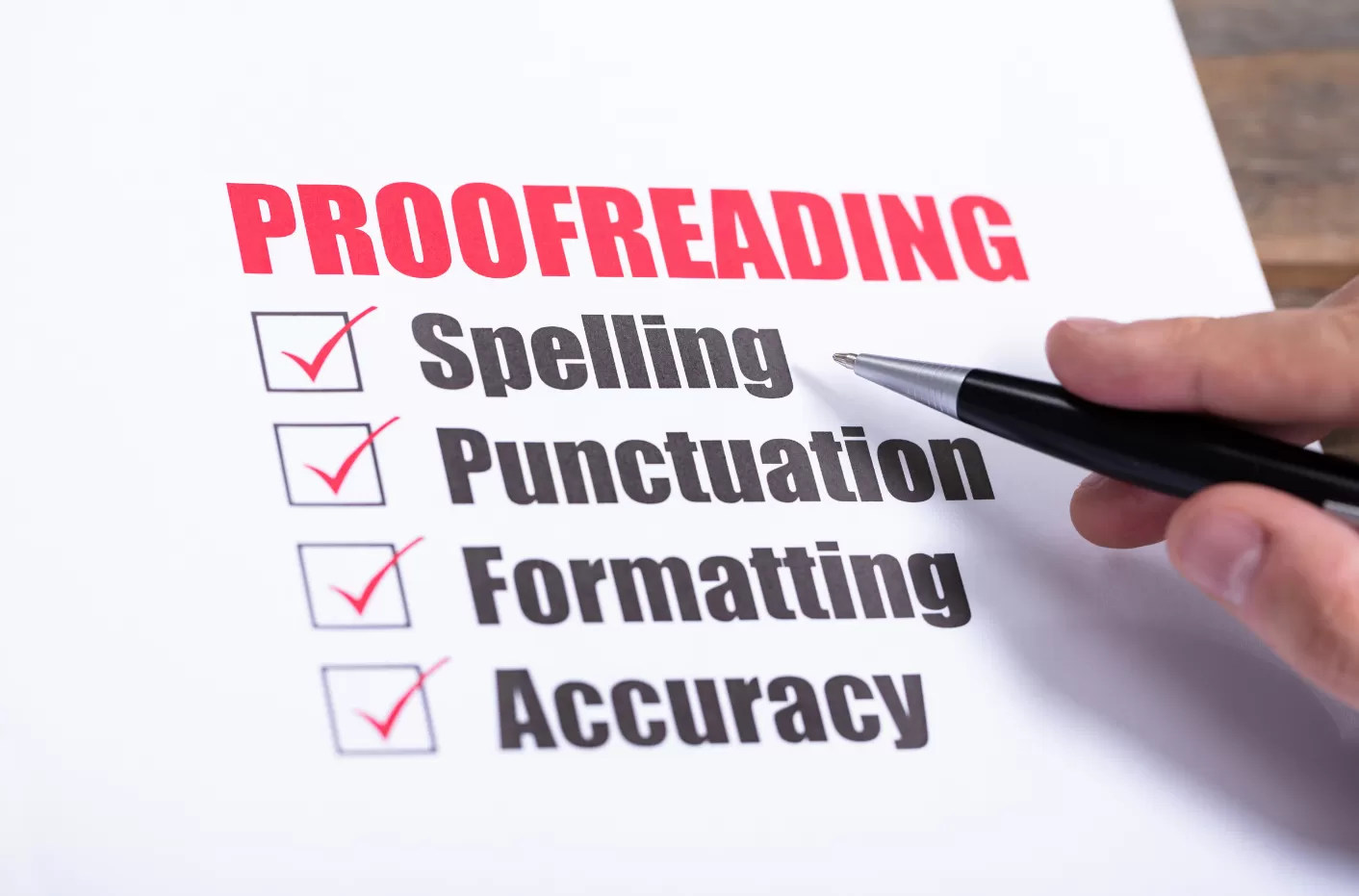
The top editing services for academic researchers in 2026 include Editage, Wiley Editing Services, Taylor & Francis Editing Services, Sage Author Services, and Scribbr. In this article, we’ll look at the key features of each of these, and some others, to help you choose the best proofreading service for your own research paper. We’ll also share the 4 key aspects you must consider when choosing a proofreading service.
Top 8 Editing & Proofreading Services for Academic Researchers
1. Editage
With over 23 years of experience in academic publishing, Editage has edited over 2 million research papers and is trusted by 40+ publishers, 500+ universities, and 1000+ research societies. Editage employs over 3,000 subject matter experts as editors. It offers comprehensive publication support, including services such as journal selection, statistical review, and figure preparation. Most service packages include free journal formatting. Editage also provides a specialized service designed to help prevent the desk rejection of your paper.
2. Wiley Editing Services
Wiley Editing Services has edited over 25,000 manuscripts in the past 3 years, with an acceptance rate of 62% (the acceptance rate of Wiley journals in general is around 28%). Wiley Editing Services offers authors slab-based pricing with clear turnaround times. Another feature of their editing service is free word count reduction by 10-20% depending on service package. It has a specialized academic translation team and offers authors design support in creating graphical abstracts and infographics.
3. Taylor & Francis Editing Services
Designed to support Taylor & Francis authors, Taylor & Francis Editing Services has a no-questions-asked quality guarantee and commits to re-working your manuscript until you are satisfied. Clients can choose from three levels of English language editing, and the company also offers you a free language scorer tool to help you choose the right level of editing for your manuscript. After your paper is accepted for publication, you can also avail of services to help you create lay summaries, video abstracts, etc. to promote it. Taylor & Francis also offers a range of live webinars for researchers to acquire new skills.
4. Sage Author Services
Realizing that 76% of authors find writing a paper for publication most difficult of all the research stages, Sage Author Services offers clients a range of editing services with easy tools to compare them and select the one suited for your paper. There is also a combination translation + editing service geared towards ESL authors, and a plagiarism check support service. You can get unlimited Q&A with your editor after your paper is edited. Their website also has an easy-to-use calculator for you to choose pricing and delivery speed.
5. Cambridge University Press Author Services
Cambridge University Press, a part of Cambridge University, has a long-standing commitment to advancing research and human knowledge. Their author services offers 24/7 support and a certificate guaranteeing the quality of English in the edited manuscript. Besides offering three levels of editing service, Cambridge University Press also has translation support available for Chinese, Japanese, Korean, Portuguese, and Spanish. There is a separate manuscript formatting service and a specialized “video shorts” service to make your published paper easy to share on social media.
6. Scribbr
Scribbr, a trusted brand in edtech, has a network of over 700 editors and writing coaches for students. All editors have passed through an in-house training program called Scribbr Academy. Scribbr offers clients access to free AI-powered tools and an extensive Knowledge Base for university students (especially undergraduates). Scribber also has a rapid turnaround time of just 5 minutes for AI-powered proofreading. The company offers specialized proofreading services for capstone projects and essays.
7. Scribendi
Established in 1997, Scribendi has processed over 800,000 manuscripts and has a team of over 400 native English-speaking freelance editors. The company is highly rated on Google Reviews and offers specialized services for ESL students, including dissertation proofreading with a 10% student discount. Another specialty of Scribbr is field-aware editing for humanities and social sciences researchers.
8. PaperTrue
PaperTrue works with students, authors, and businesses around the world to create error-free documents. New customers get a free 300-word sample. The company follows a rigorous 3-step checking process for every assignment. PaperTrue is rated 4.6 on Reviews.io and offers specialized editing services for college assignments, admissions essays, and personal statements. The company also has a large bouquet of solutions for book authors: typesetting, cover page design, etc.
How to Choose a Proofreading Service for Your Research Paper
Here are 4 things that you need to consider when you are choosing a proofreading service:
Quality:
Everyone will claim to be the best. How can you tell which proofreading services are really good? Look for services that have many subject matter experts, those backed by scholarly publishers, and those that transparently disclose whether their services are powered by AI or not.
Turnaround time:
A rapid-fire editing service isn’t always better. You need to budget time even after your paper is edited to check the editor’s changes and respond to any queries. Look for a service provider with a reasonable turnaround time, and one that is flexible with turnaround time if you have budget constraints.
Price:
Instead of thinking that cheap equals good, look for proofreading services that have transparent pricing that is easy to follow. Check what is included in your service package, especially re-editing support and manuscript formatting.
Additional support:
Look for a provider who can assist you at every stage of your publication journey and even with post-publication promotion. Such providers will care more deeply about your article and your publication success. Also, such providers will likely have editors who are experienced in academic research and who understand the challenges authors face during the publication process.
-
 Feature/OPED6 years ago
Davos was Different this year
-
Travel/Tourism10 years ago
Lagos Seals Western Lodge Hotel In Ikorodu
-

 Showbiz3 years ago
Estranged Lover Releases Videos of Empress Njamah Bathing
-
 Banking8 years ago
Sort Codes of GTBank Branches in Nigeria
-

 Economy3 years ago
Subsidy Removal: CNG at N130 Per Litre Cheaper Than Petrol—IPMAN
-

 Banking3 years ago
Sort Codes of UBA Branches in Nigeria
-

 Banking3 years ago
First Bank Announces Planned Downtime
-

 Sports3 years ago
Highest Paid Nigerian Footballer – How Much Do Nigerian Footballers Earn