Connect with us

Feature/OPED

Banks’ Funding Failure: The Shocking Rot In Nigeria’s Intervention Programmes

Published

on

Banks Funding Failure NDIC, CBN

By Blaise Udunze

For over a decade, the Nigerian government and its financial institutions have launched a flurry of intervention funds, all with the promise to empower industries, revive the manufacturing sector, and lift millions of micro, small, and medium enterprises (MSMEs) out of financial drought. From agriculture to aviation, from creative industries to export promotion, these funds were designed as catalysts for inclusive growth and job creation.

But today, the story reads like a tragic irony. Trillions of naira later, there is little impact to show. Factories remain underutilized, MSMEs struggle to survive, and unemployment continues to soar. The rot runs deeply entrenched corruption, politicization, poor monitoring, and widespread loan defaults have turned what should have been Nigeria’s economic lifeline into a cautionary tale of mismanagement and missed opportunities.

The Central Bank of Nigeria (CBN) and the Bank of Industry (BOI) have, over the years, spearheaded multiple intervention programmes. In 2013, the N220 billion MSME Development Fund (MSMEDF) was launched to empower small businesses, with a special 60 percent allocation for women. Yet, more than a decade later, thousands of genuine entrepreneurs say they never accessed the fund, while others question the transparency of disbursement. The Anchor Borrowers’ Programme (ABP), launched in 2015, aimed to link smallholder farmers to processors and was hailed as a masterstroke for agricultural self-sufficiency. Over N1 trillion reportedly flowed into the scheme. But the dream soon dimmed with ghost beneficiaries, political interference, and poor loan recovery exposed a programme riddled with abuse.

Similarly, the Agri-Business/Small and Medium Enterprises Investment Scheme (AGSMEIS), a CBN-backed initiative pooling five percent of banks’ profit after tax, began as a noble effort to stimulate SMEs. However, its later years were marred by disbursement bottlenecks and allegations of insider favoritism. Commercial banks and some designated financial institutions, instead of acting as facilitators, became gatekeepers of corruption. Bribes, favoritism, and endless paperwork became the norm. Funds meant for productive ventures were sometimes redirected to political allies or misapplied by the very institutions entrusted with disbursement.

Rather than empowering Nigeria’s real economy, intervention loans too often empowered a network of insiders who saw the programmes as avenues for rent-seeking. The impenetrability of these schemes made them convenient channels for political reward and institutional looting. Once the funds leave government coffers, tracking them becomes an exercise in futility. There are no reliable public databases showing who got what, how much was repaid, or what impact was achieved.

The rot is not confined to agriculture. The Creative Industry Financing Initiative (CIFI), launched in 2019 to nurture Nigeria’s entertainment and digital sectors, became mired in controversy over opaque selection and limited reach. The Real Sector Support Facility (RSSF) and the Textile Sector Intervention Fund, meant to boost manufacturing and revive the textile industry, also suffered from weak monitoring and low repayment discipline. During the pandemic, the N400 billion COVID-19 Targeted Credit Facility (TCF) was touted as a lifeline for households and small firms. Administered by NIRSAL Microfinance Bank, it sparked hope among struggling entrepreneurs, but soon, the familiar patterns emerged as connected elites got the funds, while genuine applicants were locked out.

Official data reveals that the CBN has disbursed over N10.3 trillion across various interventions in less than a decade with an unprecedented scale of funding. When combined with BOI-managed programmes such as the Government Enterprise and Empowerment Programme (GEEP) and the Export Expansion Facility Programme (EEFP), total earmarked intervention funds likely exceed N12 trillion. Yet, Nigeria’s industrial contribution to GDP remains below 10 percent, and MSMEs with the supposed beneficiaries continue to struggle with high costs, poor infrastructure, and limited credit access.

Over the years, numerous intervention funds have been launched to support industries and MSMEs from the N220 billion MSME Development Fund and N300 billion Real Sector Support Facility to the N200 billion SME Restructuring and Refinancing Fund. However, poor administration, corruption, and diversion have undermined these initiatives. A 2023 report by the Auditor-General revealed that billions of naira from these schemes were either unaccounted for or misapplied, with funds channeled through commercial banks that prioritized profit over impact.

For instance, the CBN’s N220 billion MSME Development Fund has only seen about N83 billion disbursed over seven years. The Survival Fund, though lauded in principle, has delivered roughly N67.5 billion to over 1.25 million beneficiaries, including cases where mobilisation fees were collected but goods or services never followed. An N5 billion SME loan fund through SMEDAN and Sterling Bank saw only N250 million actually reach business owners. Even in interventions like BOI’s N75 billion Manufacturing Sector Fund, less than a third had been disbursed to manufacturers, with many applications still awaiting approval. These examples speak not to scarcity of funds, but to failures in administration, accountability, and access.

The cost of Nigeria’s failed intervention programmes goes beyond wasted billions; it has crippled the very sectors they were designed to rescue. Thousands of promising small businesses are left stranded without access to affordable credit, while manufacturers continue to struggle with obsolete equipment, erratic power supply, and prohibitive interest rates. Instead of catalyzing growth, these funds have deepened dependency, encouraged corruption, and distorted the credit market.

The result is a stunted industrial base, where innovation and expansion are sacrificed on the altar of bureaucracy and greed. Many entrepreneurs who could have scaled production or entered export markets have shut down under the weight of unmet promises. Jobs that could have been created remain mere statistics in policy documents, while Nigeria’s ambition to diversify its economy beyond oil continues to falter.

In the ongoing investigation into the Central Bank of Nigeria’s activities, news reports have uncovered that scrutiny may extend to Chief Executive Officers and senior management personnel of various banks. The investigation seeks to examine potential discrepancies related to the management of intervention funds by deposit money banks. This revelation follows reports that the CBN might be compelled to withdraw its released audited annual financial reports after investigators uncovered irregularities and inconsistencies.

This unfolding probe, led by Special Investigator Jim Obazee, who was appointed by President Bola Tinubu in July 2023 as this mark one of the most comprehensive financial examinations in Nigeria’s history. Obazee’s mandate extends beyond the CBN to include other Government Business Entities (GBEs), with the goal of plugging financial leaks and holding corrupt individuals accountable. According to the Secretary to the Government of the Federation, George Akume, the forthcoming audit report will shed light on governance failures that have long crippled Nigeria’s financial system.

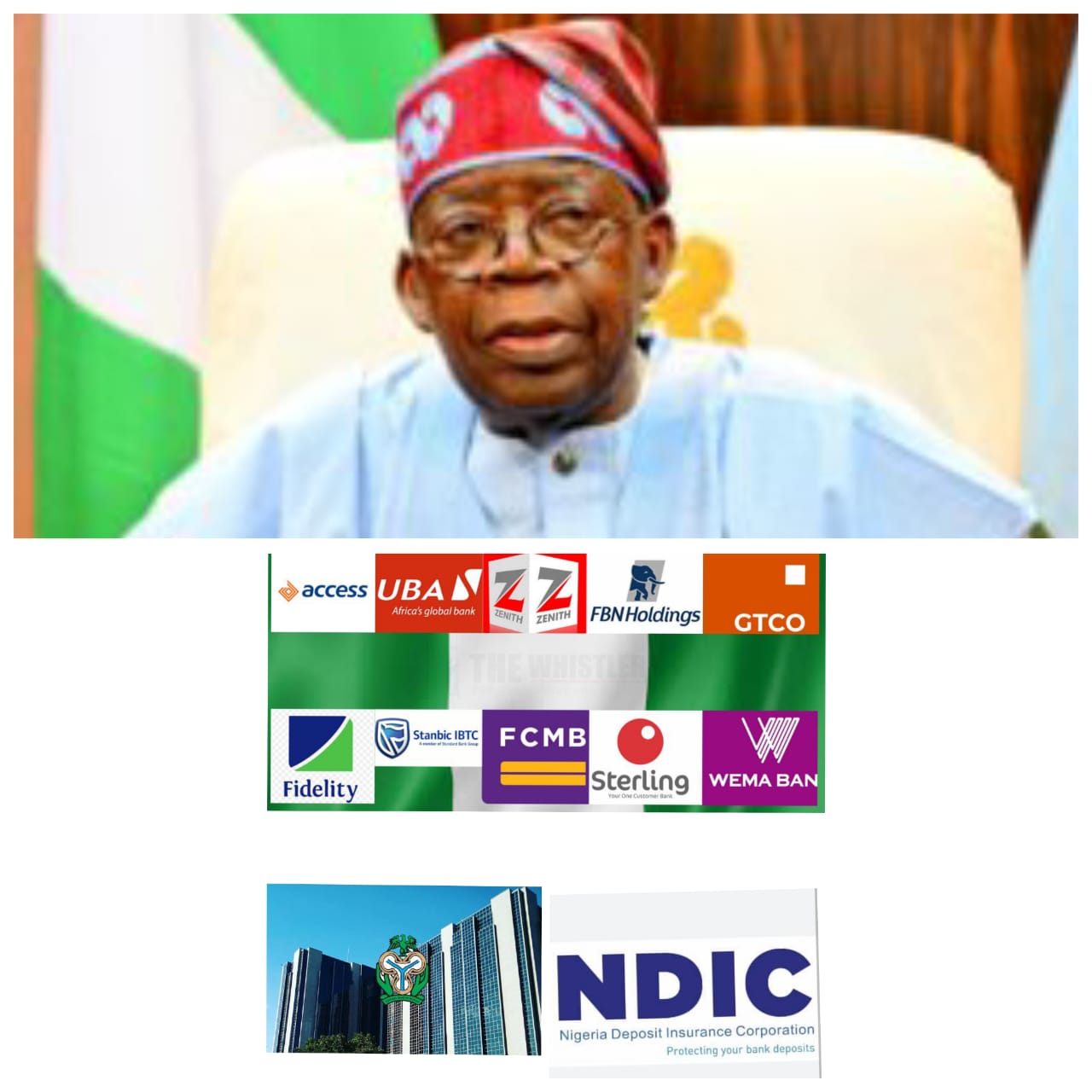
One key revelation involves intervention funds totaling N1.27 trillion reportedly held in the accounts of five major banks: Access Bank, Fidelity Bank, Guaranty Trust Bank, United Bank for Africa, and Zenith Bank. These funds cover various CBN lending schemes, including the Commercial Agriculture Credit Scheme, Real Sector Support Facility, and state bailouts. Access Bank alone held about N530 billion in intervention funds, while Fidelity Bank retained roughly N310 billion.

Several banks have also been found to hold undisbursed funds from the CBN earmarked for programmes like the Anchor Borrowers’ Scheme and the Commercial Agriculture Credit Scheme. As of June 2023, Guaranty Trust Holding Company, Wema Bank, and Sterling Financial Holdings collectively held N114 billion in Anchor Borrowers’ funds, while seven banks, including UBA, Access, Zenith, and Fidelity, retained N94 billion from the agriculture credit scheme.

As the investigation progresses, bank executives were expected to be summoned for questioning. The revelations underscore the depth of systemic dysfunction, where funds meant for development sit idle or are diverted, while small businesses gasp for credit.

Amid the turbulence, the newly appointed CBN Governor Olayemi Cardoso called for a radical shift in the bank’s role. During his Senate screening, he emphasized the need to refocus the CBN on its core mandate of monetary stability rather than direct development finance. Cardoso warned that the CBN’s historical foray into fiscal interventions had blurred institutional boundaries and undermined credibility. His plan is to transition the bank toward a more limited advisory role, one that supports economic growth without entangling itself in politically driven lending.

This reorientation is timely. As of October 2022, nearly 10 trillion had already been disbursed as intervention funds, much of it tied to agriculture and small business support. Yet controversies over beneficiary selection, repayment defaults, and limited impact persist. Experts have urged a full-scale audit and restructuring of these programmes, recommending that future interventions be channeled through relevant ministries and agencies, not the CBN to ensure proper oversight and impact measurement.

Before the next bailout or recovery initiative is launched, both the CBN and BOI must clean house. This means full public disclosure of all beneficiaries, proper audits of past disbursements, and the recovery of misapplied or stolen funds. The impenetrability that has shielded corruption for years must give way to transparency, backed by digital tracking systems and citizen oversight.

Beyond cleansing their books, these institutions must also rethink their approach. Development finance should no longer be routed through rent-seeking commercial banks that profit without producing impact. Instead, direct digital lending platforms, strict eligibility verification, and measurable impact tracking should define the new model.

Nigeria’s intervention programmes must undergo radical reform anchored on transparency, technology, and traceability. Every fund should have a publicly accessible portal listing disbursements, beneficiaries, and repayment status. Periodic audits that are independently verified must be mandatory, not optional. Beyond financial engineering, Nigeria must fix the enabling environment for consistent power supply, logistics, security, and regulatory stability that makes business growth possible.

The shocking rot in Nigeria’s intervention programmes is not just a financial scandal; it is a betrayal of national trust. Trillions have been poured into schemes that promised jobs and prosperity, yet delivered little beyond paperwork and propaganda. Unless Nigeria cleans up the system, enforcing accountability and rewarding genuine productivity, its intervention funds will continue to fund failure, not progress.

Blaise, a journalist and PR professional writes from Lagos, can be reached via: [email protected]

Feature/OPED

In Praise of Nigeria’s Elite Memory Loss Clinic

Published

on

memory loss clinic Busayo Cole

By Busayo Cole

There’s an unacknowledged marvel in Nigeria, a national institution so revered and influential that its very mention invokes awe; and not a small dose of amnesia. I’m speaking, of course, about the glorious Memory Loss Clinic for the Elite, a facility where unsolved corruption cases go to receive a lifetime membership in our collective oblivion.

Take a walk down the memory lane of scandals past, and you’ll encounter a magical fog. Who remembers the details of the N2.5 billion pension fund scam? Anyone? No? Good. That’s exactly how the clinic works. Through a combination of political gymnastics, endless court adjournments, and public desensitisation, these cases are carefully wrapped in a blanket of vagueness. Brilliant, isn’t it?

The beauty of this clinic lies in its inclusivity. From the infamous Dasukigate, which popularised the phrase “arms deal” in Nigeria without actually arming anything, to the less publicised but equally mystifying NDDC palliative fund saga, the clinic accepts all cases with the same efficiency. Once enrolled, each scandal receives a standard treatment: strategic denial, temporary outrage, and finally, oblivion.

Not to be overlooked are the esteemed practitioners at this clinic: our very own politicians and public officials. Their commitment to forgetting is nothing short of Nobel-worthy. Have you noticed how effortlessly some officials transition from answering allegations one week to delivering keynote speeches on accountability the next? It’s an art form.

Then there’s the media, always ready to lend a hand. Investigative journalists dig up cases, splash them across headlines for a week or two, and then move on to the next crisis, leaving the current scandal to the skilled hands of the clinic’s erasure team. No one does closure better than us. Or rather, the lack thereof.

And let’s not forget the loyal citizens, the true heroes of this operation. We rant on social media, organise a protest or two, and then poof! Our collective short attention span is the lifeblood of the Memory Loss Clinic. Why insist on justice when you can unlook?

Take, for example, the Halliburton Scandal. In 2009, a Board of Inquiry was established under the leadership of Inspector-General of Police, Mike Okiro, to investigate allegations of a $182 million bribery scheme involving the American company Halliburton and some former Nigerian Heads of State. Despite Halliburton admitting to paying the bribes to secure a $6 billion contract for a natural gas plant, the case remains unresolved. The United States fined the companies involved, but in Nigeria, the victims of the corruption: ordinary citizens, received no compensation, and no one was brought to justice. The investigation, it seems, was yet another patient admitted to the clinic.

Or consider the Petroleum Trust Fund Probe, which unraveled in the late 1990s. Established during General Sani Abacha’s regime and managed by Major-General Muhammadu Buhari, the PTF’s operations were scrutinised when Chief Olusegun Obasanjo assumed office in 1999. The winding-down process uncovered allegations of mismanagement, dubious dealings, and a sudden, dramatic death of a key figure, Salihijo Ahmad, the head of the PTF’s sole management consultant. Despite the drama and the revelations, the case quietly faded into obscurity, leaving Nigerians with more questions than answers.

Then there is the colossal case of under-remittance of oil and gas royalties and taxes. The Federal Government, through the Special Presidential Investigatory Panel (SPIP), accused oil giants like Shell, Agip, and the NNPC of diverting billions of dollars meant for public coffers. Allegations ranged from falsified production figures to outright embezzlement. Despite detailed accusations and court proceedings, the cases were abandoned after the SPIP’s disbandment in 2019. As usual, the trail of accountability disappeared into thin air, leaving the funds unaccounted for and the public betrayed yet again.

Of course, this institution isn’t without its critics. Some stubborn Nigerians still insist on remembering. Creating spreadsheets, tracking cases, and daring to demand accountability. To these radicals, I say: why fight the tide? Embrace the convenience of selective amnesia. Life is easier when you don’t worry about where billions disappeared to or why someone’s cousin’s uncle’s housemaid’s driver has an oil block.

As World Anti-Corruption Day comes and goes, let us celebrate the true innovation of our time. While other nations are busy prosecuting offenders and recovering stolen funds, we have mastered the fine art of forgetting. Who needs convictions when you have a clinic this efficient? Oh, I almost forgot the anti-corruption day as I sent my draft to a correspondent very late. Don’t blame me, I am just a regular at the clinic.

So, here’s to Nigeria’s Memory Loss Clinic, a shining beacon of how to “move on” without actually moving forward. May it continue to thrive, because let’s face it: without it, what would we do with all these unsolved corruption cases? Demand justice? That’s asking a lot. Better to forget and focus on the next election season. Who knows? We might even re-elect a client of the clinic. Wouldn’t that be poetic?

Now, if you’ll excuse me, I have a new scandal to ignore.

Busayo Cole is a Branding and Communications Manager who transforms abstract corporate goals into actionable, sparkling messaging. It’s rumored that 90% of his strategic clarity is powered by triple-shot espresso, and the remaining 10% is sheer panic. He can be reached via busayo@busayocole.com. 

Continue Reading

Feature/OPED

How Nigerian Companies are Leading More Responsible Digital Transformation

Published

on

Kehinde Ogundare 2025

By Kehinde Ogundare

Artificial intelligence is everywhere–in polished social media posts, in the recommendations that guide our viewing habits, and in the bots that handle customer queries before a human agent steps in. On LinkedIn, AI-assisted writing has become standard practice.

A year ago, more than half of English long-form posts that went viral were estimated to have been written by or assisted by AI. If that’s the norm on the world’s biggest business network, it’s no surprise that AI is driving conversations in Nigerian boardrooms as companies move from experimentation to embedding AI into their daily operations.

Part of the package

The Nigeria Data Protection Act (NDPA), modelled on the European Union’s General Data Protection Regulation, together with the Nigeria Data Protection Commission, requires companies to build privacy into their systems from the outset rather than adding it later. This clear regulatory framework has evolved alongside a rapid rise in AI adoption.

New research from Zoho on responsible AI adoption highlights the impact of the regulations. As per the report, 93% of Nigerian companies have already started using AI in their daily operations; 84% have tightened their privacy controls after adoption, and 94% now have a dedicated privacy officer or team, which is well above global averages.

The survey, conducted by Arion Research LLC among 386 senior executives, shows just how deeply embedded AI has become in Nigeria. One in four companies already uses it across several departments, and nearly a third report advanced integration. Financial services firms are pioneers in this sector, using AI to automate client interactions, streamline operations and sharpen their marketing, while staying compliant with data protection rules.

The NDPA has helped make privacy part of business planning. Four in ten companies now spend more than 30% of their IT budgets on privacy. Regular audits, privacy impact assessments and explainability checks are becoming standard practice.

Skills, compliance and capacity

Rapid adoption brings challenges. More than a third of businesses say that their biggest obstacle is a lack of technical skills, and another 35% cite privacy and security risks. Instead of outsourcing, most are building capacity in-house: nearly 70% of companies are training staff in data analysis, more than half are improving general AI literacy, and 40% are investing in prompt engineering for generative tools.

The understanding of the NDPA regulation, which came into force in 2023, has also improved. 65% of organisations see compliance as essential. Many voluntarily apply data-minimisation and transparency standards even when not required to do so, aligning more closely with international norms and easing collaboration with global partners.

Privacy is increasingly influencing business decisions — from investment priorities to system design. Companies are asking tougher questions: is specific data essential? How can exposure be limited? How can fairness and transparency be proven?

Trusted systems

As privacy becomes part of how technology is built, companies are being more cautious about the tools they use because they now want systems that protect customer data, with clear boundaries between data and model training, straightforward controls, and reliable records for compliance teams.

Demand for business software that balances productivity with privacy is also growing. Zoho, among others, has seen strong customer growth as more organisations are looking for platforms that support responsible data handling.

The study identifies three main reasons behind AI adoption: to make work more efficient by automating routine tasks, to support better decision-making by identifying patterns sooner, and to improve customer engagement through faster, more relevant interactions. But none of this can succeed without trust. Nigeria’s experience shows that privacy and innovation can reinforce each other when they’re built together.

There’s still work to do because some industries are moving faster than others, and smaller businesses often face the biggest hurdles in time, cost and skills. Enforcement is also patchy; while the law is clear, application across sectors and geographies is a work in progress.

The next steps are more practical, requiring investment in skills – from data analysis and AI literacy to sector-specific training – and for governance to be put in place, with clear responsibilities, written policies, and a plan for managing errors or breaches. Privacy impact assessments should become part of every new system rollout, enabled by technology.

As AI becomes fundamental to doing business, Nigerian companies that build it carefully and responsibly will be better able to compete at home and abroad.

Kehinde Ogundare is the Country Head for Zoho Nigeria

Continue Reading

Feature/OPED

Nigeria’s Schools Closure and the Disease of Rhotacism

Published

on

school closure

By Prince Charles Dickson, PhD

The inability to pronounce the letter r is called rhotacism—a quiet irony in speech pathology, where sufferers lack the tongue to name their condition. Nigeria today appears afflicted by a similar policy disorder: an incapacity to articulate the real threats to learning, safety, and development, while endlessly announcing their symptoms. The reflexive closure of schools across states, often with the Federal Government’s blessing, is not merely a security response; it is a linguistic failure of governance. We cannot pronounce the problem, so we silence the classroom.

At surface level, school closures masquerade as prudence. No leader wants abducted children, grieving parents, viral outrage. But development practice teaches us to distrust surface logic. If classrooms are unsafe, what calculus deems campuses secure? If primary schools are closed in the name of vulnerability, why do lecture halls hum, convocation grounds fill, churches and mosques swell, markets bustle, and political rallies roar? The policy geometry is incoherent. Risk does not dissolve with age brackets or academic levels; it migrates along opportunity lines. Violence, like water, flows where barriers are weakest—not where regulations are loudest.

The headline figures tell a damning story. Over 42,000 schools categorized as vulnerable. A $30 million Safe School Initiative announced, lauded, and then largely evaporated into PowerPoint memory. What exactly has closure achieved in this arithmetic? If risk prompted closure, closure must prompt mitigation. Yet what we witness is substitution, not solution. Strategy is replaced by symbolism. Doors are shut to demonstrate action while the engines of threat, the logistics, financing, intelligence gaps, and ungoverned spaces remain scandalously intact.

The first ethical question is not poetic distrust; it is arithmetic ethics. How many days of learning are lost per closure? How many children drift permanently out of school into child labor, early marriage, recruitment pipelines, or migration traps? Empirical evidence across fragile contexts, from the Sahel to Northeast Nigeria, shows that prolonged closures fracture educational trajectories irreversibly. A classroom shut today becomes a livelihood foreclosed tomorrow. When education systems stall, insecurity does not retreat; it recruits.

Development is not administered by press statements. It is built through boring, relentless infrastructure—data infrastructure, trust infrastructure, and response infrastructure. Consider Community Early Warning Systems (CEWS). Where they exist and function, attacks are anticipated, routes mapped, and escalation interrupted. Where they are absent, closure becomes the blunt instrument of last resort. Yet how many states have meaningfully integrated CEWS into school security architecture? How many have empowered bodies to convene multi-actor protection coalitions that include women, youth, traditional leaders, transport unions, and faith networks? The chalk does not hold risk; the cheque does. And the cheque has been shamefully mute.

Security is not the absence of pupils; it is the presence of intelligence. Closing schools without opening data is policy rhotacism. We cannot pronounce “threat mapping,” so we mouth “shutdown.” We cannot say “transport node vulnerability,” so we say “holiday.” We cannot articulate “perimeter hardening and community interception routes,” so we declare “postponement.” The oxygen of risk—enrolment points, travel corridors, marketplaces abutting school fences requires monitoring in real time. If threat mapping did not intensify the moment schools closed, then the threat merely changed address, not behavior.

The contradiction deepens when worship spaces remain open. Christian Association of Nigeria congregations gather. Nigeria Supreme Council for Islamic Affairs convenes faithful. If the doctrine is crowd risk, the exemptions are indefensible. If the doctrine is youth vulnerability, then universities must not be exempt. If the doctrine is intelligence deficit, then closure is an admission of systemic failure. You cannot claim safety by relocating learning into chaos. Faith spaces recognize a truth policy forgets: protection flows from relationship density. The congregation knows its strangers. Does the school gate?

Globally, contexts plagued by school-related violence have moved in the opposite direction—not toward retreat, but toward smart hardening. Drone reconnaissance over school corridors. AI-assisted risk scoring that fuses incident data, weather, market days, and movement patterns. Platforms to defuse land, grazing, and community disputes before they metastasize into school-adjacent violence. Psychosocial resilience units embedded in schools. Community rangers trained, insured, and supervised, not as vigilantes but as guardians accountable to law. Transparent pilots with public dashboards. Sanctions for local leaders who ignore warning signals. None of this is theoretical.

Because closure is administratively convenient. It transfers responsibility from execution to explanation. Once schools are shut, failure becomes abstract. Metrics blur. When exactly did the risk reduce? Who measures it? At what threshold does reopening occur? Without benchmarks, closure becomes the chief KPI of insecurity governance. That is not security architecture; it is security bureaucracy—forms without force, memos without muscle.

Local Government Areas on volatile frontiers—whether in Niger State or Kogi are living laboratories of conciliation culture. Traditional dispute resolution, faith mediation, women-led early warning, youth intelligence networks; these are not weaknesses to be ignored until Abuja’s biro approves boots on the ground. They are strengths to be funded, trained, and supervised. Development practice demands co-design. Are LGA leaders co-authoring protection protocols, or passively awaiting circulars? Centralization kills time; time kills children’s futures.

The opportunity costs of closure are staggering and gendered. Girls pay first and longest. Distance learning fantasies collapse where electricity, devices, and safety at home are uneven. Boys drift into non-state labor or armed networks promising income and belonging. Teachers disengage. Trust between communities and state frays further. When schools finally reopen—if they do—the damage is cumulative. Closure does not pause risk; it compounds it.

There is also a moral hazard. Normalizing closure teaches adversaries what works. Disrupt learning to extract concessions. Threaten the symbol to paralyze the system. Deterrence requires resilience. A state that keeps schools open while hardening them sends a different signal: intimidation will not erase futures.

To be clear, this is not romantic defiance. There are moments when temporary closure is warranted. But temporary requires temporality: timelines, triggers, alternatives. Closure without an accompanying surge in intelligence, infrastructure, and accountability is futility dressed as care. It is rhotacism—the inability to name and thus cure the disease.

So, the unperfumed questions must persist. What exactly is being done differently today that was not urgent yesterday? Where are the transparent pilots funded by the Safe School Initiative? Who owns the dashboards? Which perimeters were hardened, which routes monitored, which sanctions enforced? Who measures risk reduction, and when is bureaucracy upgraded into architecture?

Shutting schools may shelter minds briefly. But without strategy that attacks the root—financing of violence, data blindness, local exclusion, and accountability gaps—it only shelters the conscience of policy. Until answers arrive with evidence of execution, Nigeria’s schools are not closed for safety. They are closed for convenience. And convenience, like rhotacism, leaves us unable to pronounce the truth. May Nigeria win.

Continue Reading

Trending