Feature/OPED
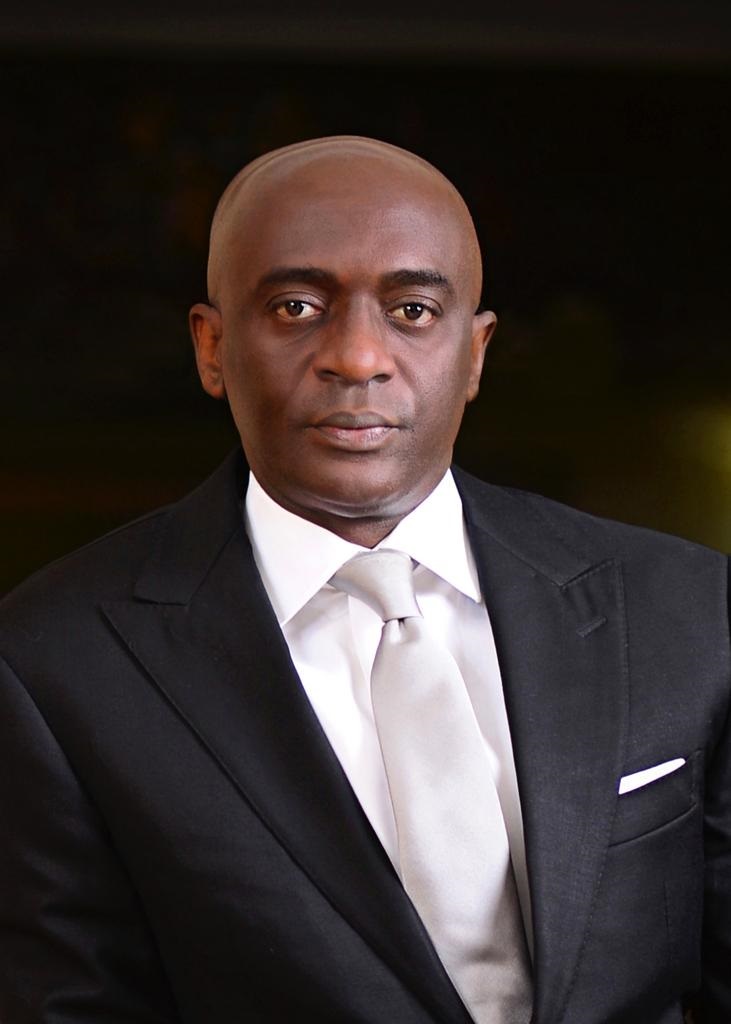
Ebie Highlights Key Achievements of NDCC in 2024
By Jerome-Mario Utomi
The Chairman of the board of the Niger Delta Development Commission (NDDC), Mr Chiedu Ebie has said the commission recorded impressive achievements in 2024.
Speaking on Monday on a radio programme where he featured as a guest, Mr Ebie assured of the agency’s continued socio-economic and infrastructural strides in the Niger Delta.
The chairman, a former Secretary to Delta State Government, listed peaceful coexistence among members of the board and management, infrastructural provision, stakeholders’ engagement, and human capital development, among others as the commission’s key achievements in 2024.
“For us, our key achievement, first and foremost, which is what many people will take for granted, is peace and stability within the board and the commission.
“In the past, you know, NDDC was always in the news for the wrong reasons. But I’m proud and confident to say that in the one year that we’ve been there, it has been very peaceful, coexisting within the board and then, for everybody that has to do with the commission.
“Another achievement also is that we have created a very harmonious working relationship,” Mr Ebie said.
On seamless interface with critical Niger Delta stakeholders, Mr Ebie said pragmatic leadership made it easier, noting, “Have we been able to achieve that? We sat amongst ourselves and said ‘you must engage the stakeholders, periodically.
“So, about six months into our tenure, we conveyed a Niger Delta Stakeholder Summit which was held in two days in Port Harcourt. In July, we had critical stakeholder engagement ranging from the private sector to top government officials, to ethnic nationalities, and so on. We keep those engagements going.
“We’ve also engaged with the youth groups as well. I think we’ve had two such engagements with the youth group. So, in terms of stakeholder management, the day-to-day administration of the commission is led by the Managing Director/Chief Executive, Sam Ogbuku who I will say, has done an excellent job.
“We on the board, as a non-executive chairman, we superintend over the board and by extension, we supervise over the activities of management.
“So, we’ve worked to create that harmonious working relationship and at the same time, engage the stakeholders. So, that’s in terms of management and administration,” the NDDC chairman stated.
On infrastructural and human capital development, he said, “Other achievements would have to do with infrastructural development and capacity building in various areas, which I can highlight as we go along. But I will pause for now.
“There are a whole load of programs by the commission, which as we all know, is an interventionist agency. Sometimes, people tend to mistake NDDC for a tier of government. They make it seem as if NDDC is a tier of government but it’s an interventionist agency. In doing that, one of the things we will seek to achieve is to also make sure that we conduct empowerment.
“Now, the main one which we sat down and put together is Project Hope, which stands for holistic opportunities, programs and engagements. This is built around meticulously crafted programmes which include agriculture, entrepreneurship, internship, music and arts.
“Now, one of the things we realized is that over time, over the 24 years of its existence, NDDC has empowered many people.
“They’ve trained a lot of people. But you find that it is very difficult for you to sit down and determine the exact numbers. Or even the evaluation. What has been the impact of these empowerment programmes? So, it is a bit hazardous, and a bit unified. We sat down and said we need to rejig this thing.
“We need to create something that over time, as we go along, we will be able to measure the impact and know what each person has achieved and how it has impacted their lives. Has it taken them out of the poverty bracket and thrust them up the ladder? So, we came up with Project Hope which is in three phases.”
According to Mr Ebie, the first phase of the programme has to do with mapping and paper gathering which has so far seen about 3.2million youths registered on the platform. Phase Two, he disclosed is on the offing.
“We also have the youth internship scheme which we sort of made public towards the second or third quarter of last year where we tried to empower 10,000 youths across the nine NDDC states.
“Of course, based on their different skills, where they would earn a monthly allowance of N50,000. The world is advancing, there is technological advancement. Even your radio station here, as you can see, has benefitted from technological advancement.
“So, anything we’re doing, we have to base it along those lines. Everything is online. We register online. So, even for the youth internship scheme which would kick off in earnest, in January, we’ve now been able to gather all the data and categorise all the people into the different vocations or skill settings. These are two major empowerment programmes,” Mr Ebie added.
Speaking on NDDC’s intervention in the education sector in the Niger Delta, he informed that “educationally, we recently launched the U-lesson tabs, which is also another initiative of the commission. We had the launch to signify the partnership between the commission and the First Lady.”
“Yet again, this borders on technology, where we will be distributing tabs to schools across the region. And we’re very particular this time around. We don’t want to give out these things to students, parents or teachers who would toss them in one corner or use them for other things.
“Now, these are tabs that have a curriculum loaded onto them. And they aid learning and teaching as well. A pilot programme was run by the manufacturers. In over one year, they were able to measure the impact it has had on the children and the fact that it significantly improved their cognitive skills and their learning abilities.
“So, the outcomes were pretty impressive, which is what we’re trying to replicate across the nine states. Of course, we have the foreign scholarship programme which is postgraduate, where we offer scholarships to 200 hundred indigenes of the region who go through a rigorous process in determining those that are becoming eligible.
“I remember, when the board just got inaugurated in November of last year, one of the very first complaints I received was from people who said we should halt the scholarship scheme and review it. But when we sat down, and we spoke with the directorate responsible for it, we reviewed the process. We found that it was indeed very detailed, very transparent and it was given to those that were deserving of it.
“Out of two hundred students, that went abroad for this postgraduate scholarship program, eleven of them graduated with a distinction. It goes to show that it’s a good thing. What it does is that apart from the fact that you’re getting a postgraduate degree from a good foreign university, It also puts you on a different pedestal,” he added.
Continuing, the NDDC boss pointed out, “The effect is that it improves you and enables you to get a good job. When you return, you come and contribute your quarter to the improvement of the region. And then, eventually, we’re improving the knowledge base and empowering our people with good quality education.”
Feature/OPED
Stocks vs Forex: Which is Better for Beginners in 2026?
By Onah Ishioma Adaeze
As a beginner, choosing between stocks and forex for your investment goals in 2026 can feel overwhelming. Before investing your hard-earned money, it is important to understand how both markets work.
While both markets present investors with opportunities to grow their wealth, they also differ in terms of volatility, liquidity, market hours, and leverage. Stocks involve owning portions of a company, while forex has to do with trading a base currency against a quote currency.
In this article, we will be going through the basics of stocks and forex, pointing out their differences, and helping you decide which asset better suits your investment journey in 2026.
What is Stock Trading?
When it comes to stock trading, you are buying shares of a company, which makes you a shareholder of that company. As a shareholder, you may be entitled to receive dividends whenever the company decides to pay dividends.
As for those companies that do not pay dividends, there are other benefits a shareholder may enjoy, like being called upon to attend shareholder meetings and having voting rights on certain company matters.
On a global scale, over $100 trillion worth of shares are traded annually. Also, the rising popularity of AI companies and technological innovations continues to drive investor participation and market growth.
If you’re an investor looking to buy and hold capital assets, then stock trading is definitely for you, as it allows for short-term, medium-term and long-term investment goals.
When you buy shares of a company and the company performs well, your shares increase in value. Another benefit of stock trading is access to index funds and ETFs.
These funds consist of companies that are grouped under an index. They are carefully selected and monitored under the fund, sparing the investor the stress of actively tracking the fund.
They can be a way of building a long-term, diversified portfolio, and some of these funds may pay dividends.
What is Forex Trading?
Forex trading has to do with buying one currency and selling another. With a pair like USD/JPY, USD is the base currency being bought against JPY, which is the quote currency.
In order to execute a trade in the forex market, you have to analyse and make predictions based on price movement, as well as pay attention to what’s going on in the global news scene.
The forex market runs twenty-four hours every weekday, with over $9 trillion traded in the market every day. Being the largest financial market in the world, there is very high liquidity.
Forex trading involves buying one currency against another, making predictions based on price movements on the forex charts. Price moves based on the activities of large institutions like hedge funds, big banks, the government, etc.
The forex market runs 24 hours a day, every weekday, with global forex turnover reaching $9 trillion per day in the BIS 2025 survey. Being the largest financial market in the world, there is very high volatility and price fluctuations.
At the same time, there is high liquidity in the market, which means that currency pairs can easily be bought and sold without hassle. Highly liquid instruments that are traded regularly include: EUR/USD, USD/JPY, GBP/USD, and gold (XAU/USD).
As a retail trader, knowing when to enter and exit the market is important. As easy as it is to make profits from price fluctuations, it is also very easy to lose money if the market moves against you. This is why it is important to set stop losses and take profits. This helps manage your trading capital.
Major Differences Between Stocks and Forex
While investing in stocks and forex can yield great capital gains, there are lots of ways in which they differ.
As a beginner, stock trading provides opportunities for long-term investments, ensuring slow but consistent returns for wealth building. But if you are looking for an active, short-term style of investment, then forex trading is for you, as it allows you to enter and exit the market within a shorter time frame.
Which is Better in 2026?
Choosing an asset to invest in all boils down to personal preference. At the same time, if you are not averse to risk, nor opposed to asset diversification, then it’s okay to invest in both.
For beginner investors in 2026, stock trading is easier to understand and get into, especially because of mutual funds, index funds and ETFs. With those funds, you don’t have to be an expert to start investing. You can just buy a fund that suits your needs and hold it over a long period of time.
If you are an investor who enjoys technical analysis, highly volatile and liquid markets, as well as trading under short time frames, then forex trading is the right pick for you.
Conclusion
You do not need to put all your eggs in one basket. There are investors who invest in both stocks and forex simultaneously. When starting out, you can start investing in stocks while learning forex. Take calculated risks and do not invest above your means. Diversify your investments and remember, when starting out, you should prioritise acquiring knowledge over profits.
Onah Ishioma Adaeze is a finance writer who is passionate about simplifying complex concepts into easily digestible pieces. Her hobbies are reading and watching anime
Feature/OPED
Building 234 Solutions: A Response to Everyday Workforce Challenges
By Owoloye Emmanuel
Every business starts with a problem. For us, that problem was hiding in plain sight.
Across organisations, we kept seeing HR professionals, payroll teams, and business leaders spend significant time navigating processes that should be simpler. Employee records sat across multiple systems, payroll processes required manual intervention, and routine workforce tasks often became more complicated than they needed to be.
As businesses grow, workforce operations naturally become more complex. Yet many organisations still rely on disconnected tools and workflows that create unnecessary friction for both employers and employees.
The consequence is more than operational inefficiency. HR teams spend valuable time managing systems instead of supporting people. Business leaders struggle to access timely workforce insights, while employees experience delays in processes that should be seamless.
These weren’t isolated challenges. They were recurring realities across workplaces, regardless of industry or size.
That observation led us to a simple question: what if workforce management could be easier?
What if HR, payroll, and workforce operations could work together within a single, connected experience?
That question became the foundation for 234 Solutions.
We are building 234 Solutions with a clear belief that workplace technology should reduce complexity, not add to it. Our goal is to help organisations spend less time navigating processes and more time focusing on productivity, growth, and people.
As we prepare for launch, our focus remains simple: building practical solutions for real workplace challenges and helping organisations create better experiences for the people who power them every day.
Owoloye Emmanuel is the founder of 234 Solutions
Feature/OPED
The Role of TV in Preserving African Stories and Identity
Scroll through social media today, and you will notice something interesting: everyone is either reacting to a series, quoting a movie line, or debating a character as though they personally know them. Beneath the memes and binge-watch culture, however, lies something deeper. Television remains one of the most powerful tools shaping how Africans see themselves, remember their history, and tell their own stories. In a continent as diverse and expressive as Africa, that matters more than ever.
TV as a Cultural Archive, Not Just Entertainment
Long before streaming algorithms began shaping our viewing habits, television was already preserving African identity. From Nollywood dramas that capture the rhythm of everyday Lagos life to documentaries exploring Maasai traditions and Ghanaian folklore, TV has served as a living archive of the continent’s stories.
It preserves more than entertainment; it preserves language, culture, humour, values, and shared experiences. Unlike fleeting social media content, television allows stories to unfold with depth, exploring the realities of family, tradition, ambition, and modern African life without reducing them to stereotypes. That is the power of TV: preserving not just stories, but perspective.
Why Representation on TV Still Matters
There is a subtle but important truth: if people do not see themselves on screen, they may begin to believe their stories are not worth telling. This is why African TV content is more than entertainment; it is affirmation.
Seeing a character who speaks like you, struggles like you, or celebrates like your community does something powerful. It validates identity and challenges outdated narratives that have historically defined Africa through external lenses.
This is where MultiChoice Group, through platforms such as DStv and GOtv, plays an important role. They do not simply broadcast content; they help distribute cultural memory at scale.
GOtv, DStv, and the Everyday African Viewer
Think about a typical evening in many African homes: the TV is on in the background, someone is laughing at a comedy show, another person is watching a local series, and someone else is catching up on the news. That shared viewing experience remains very real.
Through platforms such as DStv and GOtv, African households are exposed to a blend of local storytelling and global content. More importantly, they have helped amplify African-produced content by bringing Nollywood films, African reality shows, talk shows, and documentaries into mainstream rotation.
It is not just about access. It is about visibility.
A young filmmaker in Lagos today is more likely to believe their story matters because they have seen similar stories broadcast widely. A child in Accra grows up hearing familiar accents and seeing environments that look like their own on screen, not as exceptions, but as the norm.
TV Is Also Shaping Modern African Identity
African identity is not static; it is evolving. Television reflects that evolution in real time.
Today, audiences see:
-
Young Africans balancing tradition and modern dating culture
-
Stories tackling mental health in African households
-
Fashion and music influences spreading through TV series
-
Political satire shaping public conversation
Conversations that were once confined to homes are now being explored on screen, giving audiences the language to discuss issues that were previously unspoken.
In many ways, television is doing what oral tradition has always done: passing stories, values, humour, warnings, and history from one generation to the next. The difference is that today’s griots are writers, directors, and broadcasters.
The Future: From Watching to Owning Our Narratives
The next stage of African storytelling is not just about being seen; it is about ownership.
As more African creators produce content and platforms continue to invest in regional storytelling, television becomes more than a mirror. It becomes a tool for shaping how Africa is represented to itself and to the world.
While streaming continues to grow, television, particularly accessible platforms such as GOtv, remains one of the most effective ways to reach everyday audiences across different income levels and regions. After all, storytelling only matters if people can access it.
African stories are not new. They have always existed in families, on streets, in markets, in history books, and through oral traditions. What television has done, and continues to do, is give those stories a stage wide enough for millions to experience them at once.
The next time you watch a local series or documentary on DStv or GOtv, remember that you are not just being entertained. You are participating in the preservation of African identity itself.
-
Feature/OPED6 years agoDavos was Different this year
-
Travel/Tourism10 years ago
Lagos Seals Western Lodge Hotel In Ikorodu
-
Showbiz3 years agoEstranged Lover Releases Videos of Empress Njamah Bathing
-
Banking8 years agoSort Codes of GTBank Branches in Nigeria
-
Economy3 years agoSubsidy Removal: CNG at N130 Per Litre Cheaper Than Petrol—IPMAN
-
Banking3 years agoSort Codes of UBA Branches in Nigeria
-
Banking3 years agoFirst Bank Announces Planned Downtime
-
Sports3 years agoHighest Paid Nigerian Footballer – How Much Do Nigerian Footballers Earn