Connect with us

Feature/OPED

Frustration as the New National Minimum Wage Lingers

Published

on

New National Minimum Wage

By Kenechukwu Aguolu

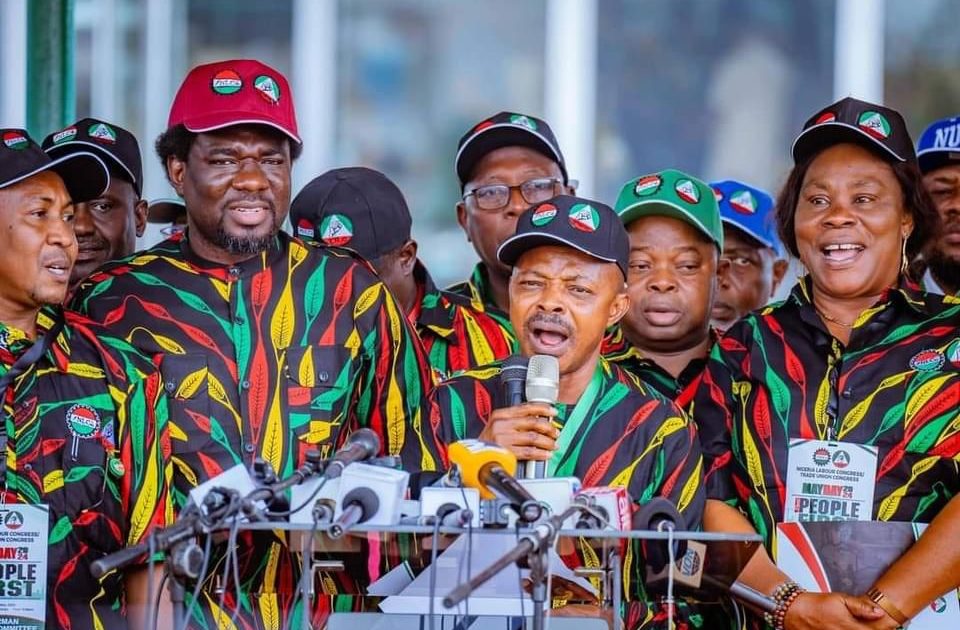
President Bola Ahmed Tinubu, during his speech on Democracy Day, June 12, 2024, mentioned that the bill on the new national minimum wage would soon be forwarded to the National Assembly One would have thought that by now it would have been resolved.

However, to the dismay and frustration of many, the matter still lingers. The matter was stepped down at the Federal Executive Council to allow the government further consult with stakeholders. Critics have begun to question the Federal Government’s commitment.

State governors have requested to be allowed to negotiate minimum wages with labour unions in their states using the cost of living in each state and the financial capacity of each state as parameters. This approach is used in some countries as financial strengths vary across states.

This request was not well-received by the organised labour; who argued that the governors don’t have the power to negotiate the minimum wage. It is public knowledge that some state governments did not pay the N30,000 minimum wage for years; citing an inability to pay.

The Internally Generated Revenue (IGR) of many states is low; a situation worsened by the increasing insecurity. Nonetheless, while the Federal Government continues to tackle the country’s security challenges, state governments should work on improving their IGR, eliminating, waste, and prioritizing workers’ welfare.

One would wonder when Nigerian workers will begin to receive the new national minimum wage, given that an amount has yet to be agreed upon. Any amount agreed still requires approval by the Federal Executive Council, passage of the New Minimum Wage Bill by the National Assembly, and finally, assent by the President.

Only then can the new minimum wage be implemented. Where adequate provision was not made in the Budget, a supplementary budget will be required The timeline for this process remains uncertain.

An increase in the National Minimum wage would be beneficial to the nation as it would boost workers reduce brain drain and stimulate economic activities. Many businesses are struggling as household consumption has dropped drastically due to the low purchasing power of workers.

Skilled professionals have left Nigeria in drones in search of greener pastures Better wages would also reduce financial pressure, which sometimes pushes people into criminal activities, and motivate workers to be more productive, which include our security agents. Therefore it will aid in reducing insecurity and increasing the Country’s Gross Domestic Product in the long run.

The organized private sector should also recognize that a wage hike would positively impact them by increasing innovation and productivity, reducing staff turnover, and decreasing the temptation for staff to commit fraud. Multinational companies understand the benefits of paying employees well.

To get the best from employees, they need to feel cared for, and there needs to be an alignment between the strategic goals of the organization and the personal goals/needs of the employees for organizational success.

Rhetoric is good, but it must be matched with deliberate action. The welfare of the citizens is one of the core responsibilities of the government.

Therefore, the federal government, which is in the driver’s seat in the minimum wage negotiation, should expedite the negotiation process as workers are frustrated and struggling to survive; unable to cater for their basic needs like food, rent, hospital bills, and school fees.

While striving for a living wage, organised labour should also be reasonable in its demands and acknowledge the financial capacity of the organized private sector and federal, state, and local governments. The Nigerian economy is not at its best, and thus government and business finances are constrained. The goal should be to achieve the best affordable and sustainable wage.

While wide consultation is critical, there is a need to expedite the process. A hike in the minimum wage will benefit workers, the government, the organized private sector, and the nation at large. The welfare of the citizens is a critical role of the government. The Federal Government should therefore match its words with action. The time is now.


Click to comment

Leave a Reply

Your email address will not be published. Required fields are marked *

Feature/OPED

The Future of AI in Nigerian SMEs: Overcoming Barriers to Implementation

Published

on

Kehinde Ogundare 2025

By Kehinde Ogundare

Ask a tech entrepreneur in San Francisco what AI means for their business, and they are likely to talk about competitive advantage, product differentiation, and scale. Ask a small business owner in Kano or Onitsha the same question, and the conversation shifts entirely.

For many Nigerian SMEs, the priority is keeping the lights on, managing costs, and finding sustainable ways to grow in a challenging economic environment. This difference in perspective explains why the global AI conversation, often shaped by assumptions about stable infrastructure, deep capital, and abundant technical talent, frequently fails to address the realities facing Nigerian SMEs.

This matters because Nigerian SMEs are not a peripheral concern. In 2024 alone, MSMEs contributed 46.32% to Nigeria’s GDP, accounting for 96.9% of businesses and 87.9% of employment. These businesses are the backbone of the Nigerian economy, and if AI is going to mean anything for Nigeria’s development, it has to work for them in the daily conditions they actually operate in.

However, research drawing on empirical data from 144 Nigerian SMEs found that inadequate infrastructure, low digital literacy, skills shortages, and regulatory gaps are collectively preventing them from meaningfully engaging with AI. Awareness of AI is high and growing. What is missing is a clear and honest conversation about what adoption actually requires in this specific context. The barriers are real, but none of them are insurmountable. The question is whether the tools, pricing models, and support structures being offered to Nigerian SMEs are designed with those barriers in mind, or whether they have been built for another market entirely.

Subscription models making AI affordable for small businesses

When most small business owners hear “AI,” they imagine expensive software, specialist consultants, and a hefty upfront bill.

That assumption is not entirely wrong, but it describes a particular way of buying technology, not AI itself. The shift that makes AI genuinely accessible at the SME level is the move away from large, one-time capital purchases towards tools that charge a predictable monthly subscription. Businesses can pay for what they use, scale back when necessary, and avoid the debt that a major technology investment can create.

The deeper opportunity here is consolidation. Many SMEs are already spending money across multiple disconnected tools—one for invoicing, another for customer records, another for stock tracking—none of which talk to each other. An integrated platform that handles several of these functions together, with AI built in, can actually cost less than the sum of those separate subscriptions while giving business owners a clearer picture of their operations.

With margins already under pressure, any technology a business adopts needs to visibly show an increase in productivity or bottom line. Subscription-based, integrated platforms, priced transparently and honestly, are the model that best fits this reality.

Infrastructure challenges demand a mobile-first approach

No conversation about technology in Nigeria is complete without confronting the infrastructure problem, and AI is no exception. Nigeria continues to face major infrastructure barriers, including limited broadband access, unreliable power supply, and high data costs, all of which constrain deeper AI adoption. These are structural features of the operating environment that any sensible technology strategy must account for today.

The electricity situation alone is significant. The World Bank estimates that the lack of stable electricity costs Nigeria’s economy approximately $26.2 billion annually, equivalent to about 2% of GDP, forcing many businesses to run on expensive diesel generators. That cost ripples outward.

In practical terms, AI tools built for Nigeria cannot assume a stable broadband connection or a computer that is always powered on. The tools that will actually get used are the ones that work on a smartphone, consume minimal data, and can function offline when connectivity drops, syncing back up when it returns. The mobile phone is already how many Nigerian SME owners run their businesses. AI that meets them there, rather than demanding infrastructure they do not have, is AI that has a genuine future in this market.

The direction is clear: build capability from within, using tools that make that possible. Recent AI performance research reveals that 64% of African workers are already actively using AI at work, signalling massive grassroots readiness and driving forward-thinking organisations across Nigeria, Kenya, and South Africa to aggressively prioritise internal upskilling frameworks to bridge the talent gap.

As the policy groundwork is being laid, the commercial ecosystem is beginning to respond. What remains is a clear-eyed acceptance that AI tools built for this market need to look different from those built for markets with different realities. Low cost, low bandwidth, and usability for non-technical people are not modest ambitions; they are the actual requirements. Build for those realities, and AI has a real future in Nigeria’s SME economy.

Continue Reading

Feature/OPED

When Leaders THRIVE: Yetunde B. Oni’s Candid Counsel to Lateef Jakande Leadership Academy

Published

on

When Leaders THRIVE Yetunde B. Oni

Union Bank’s Managing Director and Chief Executive Officer sat with 30 of Nigeria’s most promising young leaders for a frank conversation on character, relationships and the discipline of growth.

Out of 25,000 applicants, only 30 earned a place. That single figure tells you how rare the room was when Yetunde B. Oni, Managing Director and Chief Executive Officer of Union Bank of Nigeria, recently sat down with a cohort of the Lateef Jakande Leadership Academy.

The Academy, a Lagos State Government initiative established in honour of Alhaji Lateef Kayode Jakande, the state’s first civilian governor, exists to raise a generation of ethical and capable young leaders. Its fellows are drawn from across professions, sectors and ethnicities, and shaped through a fellowship facilitated by the Africa Leadership Initiative, West Africa (ALI WA), whose work on values and principled leadership has become a quiet engine behind some of the country’s most thoughtful emerging talent.

It was into this gathering that Mrs Oni brought not a corporate address, but a conversation. Honest, personal and at times disarming, she spoke about the philosophies that have carried her through a career spanning more than three decades, the setbacks she has had to surmount, and the values that opened doors she never expected to walk through.

She gave them a framework to hold on to. She called it THRIVE.

The six principles

T — Take ownership of your relationships. Leadership, she argued, begins with the deliberate stewardship of the people around you. Relationships are not incidental to a career. They are infrastructure.

H — Honour God. She spoke openly about faith as a steadying force, an anchor that keeps ambition tethered to something larger than the self.

R — Recharge and refresh. Mental and physical health, she insisted, are not luxuries to be deferred until the work is done. Leaders who neglect their well-being eventually have less to give.

I — Invest in your growth. Continuous and heavy investment in personal development is, in her telling, the price of staying relevant. The learning never ends.

V — Value your work. She pressed the fellows on identity and brand. What do you stand for? Do you create value? Who, in truth, are you? The questions were not rhetorical.

E — Embrace setbacks. Failure, she said, is not the opposite of progress but a part of it. The leaders who endure are the ones who learn to metabolise disappointment rather than be defeated by it.

The people behind the leader

If one theme threaded the entire conversation, it was relationships. Mrs Oni was candid that she did not arrive at the top of Nigerian banking alone. She credited the steady support of family, her parents and her husband, alongside the mentors, friends, coaches and sponsors who shaped her at different stages.

She drew a sharp and useful distinction between a mentor and a coach, two roles often conflated and rarely understood, and she traced much of her progress back to a foundation of Nigerian cultural values: hard work, honesty and integrity, courtesy and respect. These, she told the fellows, are not relics. They are the very qualities that have earned her trust and opened doors throughout her journey.

“You need people,” was the message, delivered without sentiment. Relationships, she explained, must be managed and nurtured with the same seriousness one brings to any other discipline. Time must be managed with equal care.

On believing, and risking

Perhaps the most resonant moment came when Mrs Oni spoke about self-belief. She admitted that becoming the MD/CEO of Standard Chartered Bank, Sierra Leone, did not cross her mind – not because she was unqualified, but because she didn’t think she would get it. Encouraged by her husband, she applied anyway, and she got it!

That appointment would later see her make history as the first woman to lead a Standard Chartered Bank operation in her market.

The Union Bank of Nigeria appointment told a similar story. She had not even known the position existed after the CBN’s intervention. It came to her through relationships; through the quiet networks of people who knew her work and recommended her name while she was unaware in faraway Sierra Leone.

The lesson she left with the fellows was unambiguous. Believe in yourself. Take the risk. Put in for the thing you are not yet certain you deserve, because the opportunity you are waiting for may be one you cannot see, reaching you through someone you have not yet met.

Why this matters

Engagements of this kind are easy to underestimate. They produce no headlines about balance sheets and no immediate line on a financial statement. Yet they speak to something Union Bank has long understood: that institutions endure when they invest in people, and that leadership is built one honest conversation at a time.

Credit is due to the Africa Leadership Initiative, West Africa, whose facilitation of the Lateef Jakande Leadership Academy continues to shape young Nigerians of real promise, and to the Academy itself for the rigour of a process that turned 25,000 hopefuls into 30 fellows ready to lead.

For Yetunde B. Oni, the afternoon was less about what she had achieved than about what she was willing to give: her time, her story and her counsel, offered freely to those coming after her. It is, in the end, what the best leaders do. They light the path for the next generation, and they THRIVE.

Continue Reading

Feature/OPED

Destination Ekiti: Two Elections, One Lesson in Vision

Published

on

welcome to Ekiti

By Oludayo Oludee Olorunfemi

A couple of months ago, my principal, Mrs Oyinkansola Badejo-Okusanya (SAN), was scheduled to travel from Lagos to Akure for an interactive meeting as part of her consultation process before contesting for the office of President of the Nigerian Bar Association (NBA). Today, she stands cleared to contest the election; the ban on campaigning has been lifted, with elections scheduled for 20 July 2026. However, this is not the central story. What stays with me from that trip is an unexpected lesson in leadership, vision, and the power of deliberate planning. It is a lesson that has become even more relevant as Ekiti State prepares for its governorship election on 20 June 2026, exactly one month before the NBA election. Two elections. Two different constituencies. Two different ballots. Yet remarkably similar questions before the voters.

Who has the vision? Who has done the work? Who has demonstrated the capacity to build for the future rather than merely campaign for the present? The journey began with a logistical challenge. The available flight from Lagos to Akure was scheduled for later in the day and would not get the team to Ondo State in time for a series of engagements planned across Akure, Owo, and Ondo Town.

During discussions on the best alternative, I suggested that we fly into Ekiti through the newly commissioned Ekiti Agro-Allied International Airport. The plan was simple: arrive early in Ado-Ekiti, make strategic visits to leaders of the Bar within the State, and then proceed by road to Akure for the scheduled meetings. What none of us anticipated was that Ekiti itself would become the story. Our first stop was a courtesy visit to Aare Afe Babalola, SAN, founder of Afe Babalola University, Ado-Ekiti. The purpose was straightforward: seek Baba’s blessings for the journey ahead. As always, a visit to Aare Afe Babalola became a masterclass. Drawing from over ninety years of experience, he spoke about governance, leadership, the legal profession, and nation-building. Listening to him, one could not help but reflect on the legacy. Across the South-West, the Aare Afe Babalola Bar Centres stand as visible reminders that impactful leadership is measured not by promises made but by institutions built.

As we continued our visits across Ekiti, someone suggested we stop by the Ekiti State Bureau of Tourism, headed by the energetic lawyer and tourism advocate, Mr Wale Ojo-Lanre. That unplanned detour became the highlight of the trip. The welcome was unmistakably Ekiti, warm, thoughtful, and rich in culture. Before we entered, we observed the symbolic knocking on the traditional drum suspended at the entrance. Then came the recitation of Mrs Badejo-Okusanya’s oriki as an Egba woman, evidence that our hosts had taken time to learn about their distinguished guest before our arrival. It was a small gesture, but one that reflected a larger truth about Ekiti, a people deeply connected to their culture, history, and identity. What followed was even more enlightening.

Officials of the Bureau took us through the various tourism assets of the state and presented the Ekiti State Tourism Development Master Plan (2025–2035). As a proud daughter of Ekiti, I listened with a sense of pride and optimism. The vision was clear. Tourism was no longer being treated as an afterthought but as a strategic economic pillar. Through public-private partnerships, destination governance, infrastructure development, cultural and eco-tourism innovation, enhanced security, asset development, and community empowerment, the state is seeking to position itself as a destination of choice. What impressed me most was the coherence of the plan. Too often, governments commission projects without building ecosystems. What we saw in Ekiti was different. It was a deliberate attempt to connect infrastructure, policy, investment, culture, and people into a sustainable tourism economy. It was the kind of long-term thinking that separates administration from leadership.

The next day, after completing our engagements in Ondo State, on our way back to catch our return flight, we stopped at Ikogosi Warm Springs Resort. Some places are beautiful. Others are transformative. Ikogosi belongs firmly in the second category. Listening to Madam Ruth, our tour guide, narrate the history of the springs, watching warm and cold waters continuously flow side by side, placing one foot in each stream, and observing the famous intertwined trees thriving together despite their differences, one could not help but marvel at nature’s wisdom. Different streams. One destination. Different identities. Shared purpose. The carefully curated pathways, the serenity of the environment, the chorus of birdsong, and the pristine landscape created a profound sense of peace. By the time we left, the verdict from everyone on the team was unanimous: we will be back. GO SEE IKOGOSI.

Ekiti is sitting on immense tourism potential. Not potential that exists only in policy documents or political speeches, but real, tangible, marketable potential. From Ikogosi to Arinta Waterfalls, to Mount of Clouds, to Olosunta Hills; from cultural festivals to ecotourism sites, from its rich history to its emerging infrastructure, Ekiti possesses many of the ingredients required to become one of Nigeria’s premier tourism destinations. What remains essential is sustained leadership and the courage to pursue a vision beyond electoral cycles. Perhaps that is why the coincidence of the election dates feels significant. On 20 June, the people of Ekiti will evaluate the leadership before them and determine the future direction of their state. One month later, on 20 July, lawyers across Nigeria will make a similar decision about the future of their association. The parallels are difficult to ignore.

In Ekiti, Governor Biodun Oyebanji has built a reputation for quiet but purposeful governance. Rather than chasing headlines, his administration appears focused on laying foundations in infrastructure, agriculture, education, and tourism that will yield benefits long after the politics of the moment have passed. In the NBA, Oyinkansola Badejo-Okusanya (SAN) presents a similar proposition. Her aspiration has been defined by consultation, engagement, bridge-building, and a vision of a bar that is inclusive, progressive, and institution-focused. Both represent a leadership philosophy that values preparation over performance. Both understand that sustainable progress requires patience. Both appear committed to building structures and a legacy of service that will outlive them.

As we departed Ekiti that evening, we left with more than memories of a successful consultation trip. We left with a renewed appreciation for what thoughtful leadership can accomplish. We left with fresh ideas. We left inspired by the possibilities that exist when vision is matched with execution. Most importantly, we left convinced that Ekiti’s tourism story is only beginning to be told. Destination Ekiti is more than a slogan. In the month that separates 20 June from 20 July, voters in Ekiti and lawyers across Nigeria will be asked essentially the same question: Do we reward those who merely speak about the future, or those who are deliberately building it? For Ekiti, for the NBA, and for all who believe in the power of institutions, the answer should be a BOLD Yes!

Oludayo Oludee Olorunfemi, a lawyer, writes from Ward 10, Idemo Quarters of Oke Aiyedun Ekiti, Ajoni LCDA.

Continue Reading

Trending