
Feature/OPED
N328.5bn Billing: How Political Patronage Built Lagos’ Agbero Shadow Tax Empire

By Blaise Udunze
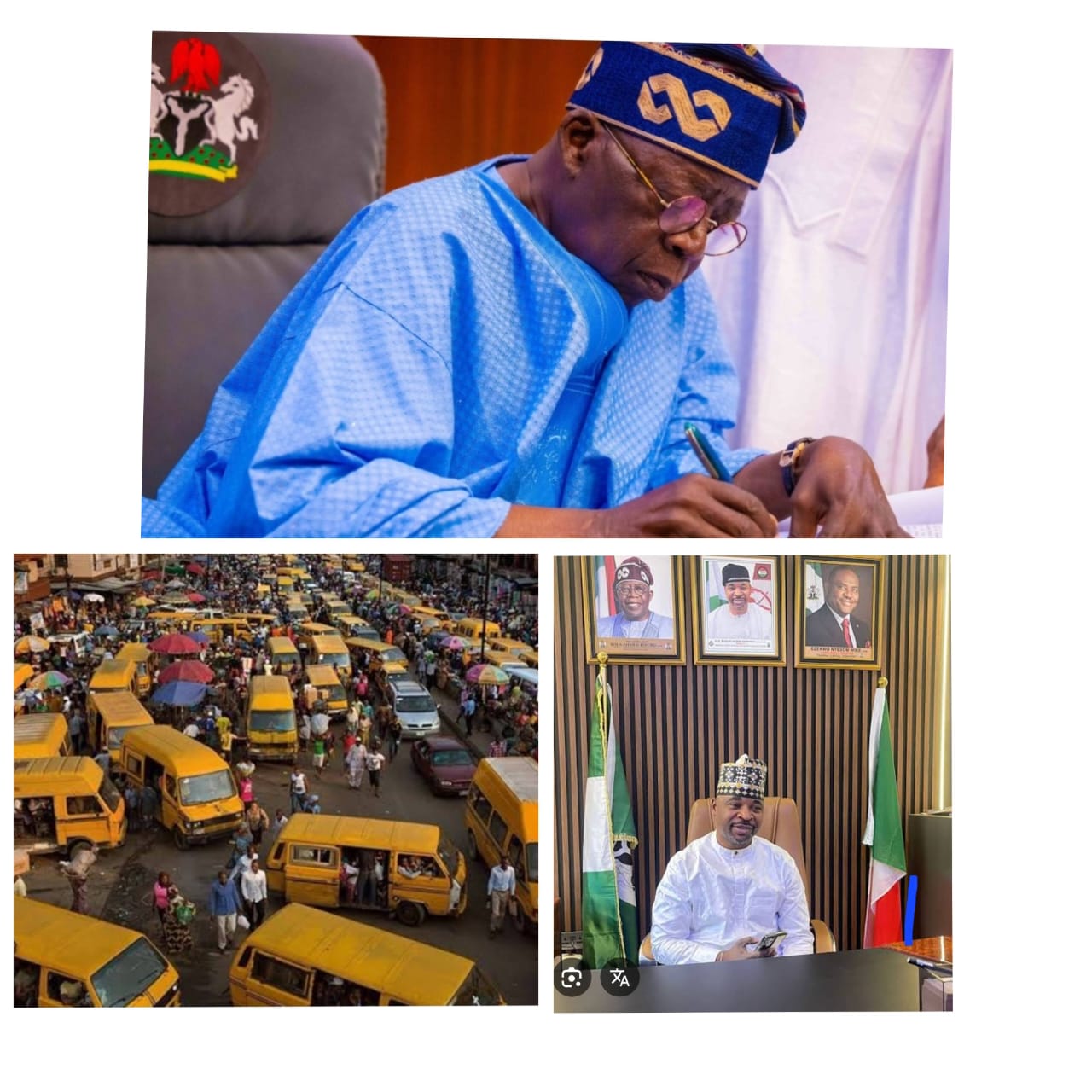
Lagos prides itself as Africa’s commercial nerve centre. It markets innovation, fintech unicorns, rail lines, blue-water ferries, and billion-dollar real estate. Though with the glittering skyline and megacity ambition lies a parallel state, a shadow taxation regime run not from Alausa, but from motor parks, bus stops, and highway shoulders. They are called “agberos.” And for decades, they have functioned as Lagos’ unofficial tax masters.
What began as loosely organised transport unionism mutated into a pervasive and often violent system of extortion. Today, tens of thousands of commercial buses, over 75,000 danfos according to estimates by the Lagos Metropolitan Area Transport Authority, ply Lagos roads daily. Each bus is a moving ATM. Each stop is a tollgate. Each route is a revenue corridor.
Looking at the daily estimate from their operations, at N7,000 to N12,000 per bus per day, conservative calculations show that between N525 million and N900 million is extracted daily from drivers. Annually, that balloons toward N192 billion to N328.5 billion or more, money collected in cash, unreceipted, unaudited, unaccounted for. This illicit taxation on an industrial scale did not emerge in a vacuum.
The reality today is that to understand the scale of the problem, one must confront its political history. It was during the administration of Bola Ahmed Tinubu as Lagos State governor from 1999 to 2007, who is now the President, that the entrenchment of transport union dominance and motor park patronage deepened.
Under his political machine, transport unions became not just labour associations but mobilisation structures, formidable grassroots networks capable of crowd control, voter turnout engineering, and territorial enforcement. In exchange for political loyalty, street influence translated into operational latitude.
Motor parks became power bases. “Area boys” became enforcers. Union leadership became politically connected. What should have been regulated associations morphed into revenue-generating franchises with muscle.
The system outlived his tenure. It institutionalised itself. It professionalised. It is embedded in Lagos’ political economy.
And today, it thrives in broad daylight. Endeavour to visit Ajah under bridge, Ikeja under bridge, or Mile-2 along Ojo at 6:00 a.m. Watch drivers clutching crumpled naira notes. Observe men in green trousers and caps marked NURTW weaving between buses, collecting what drivers call òwò àrò, or evening as òwò iròlè money taken from passengers.
A korope driver shouts, “Berger straight!” His bus fills. The engines rumble. But before he moves, he must pay. If he refuses? The side mirror may disappear. The windscreen may crack. The conductor may be assaulted. The vehicle may be blocked with planks, and if they resist, the conductor or driver may be beaten. Movement becomes impossible. It is not optional.
This is common across Lagos, especially amongst drivers in Oshodi, Obalende, Ojodu Berger, Mile 2, Iyana Iba, and Badagry, and describes a three-layered structure ranging from street collectors, area coordinators, and union executives at each location. Daily targets flow upward. Commissions remain below.
One conductor disclosed he budgets at N8,500 daily for louts alone, excluding fuel, delivery to vehicle owners, and official tickets. Another driver says he parts with nearly N15,000 in total daily levies across routes.
Of N40,000 collected on trips, barely N22,000 survives before fuel. Sometimes, drivers go home with N3,500. Working like elephants. Eating like ants. The impact extends far beyond drivers.
Every naira extorted is transferred to commuters. An N700 fare becomes N1,500. A N400 corridor becomes N1,200 in traffic, and this is maintained even after fuel prices fall; fares rarely decline. The hidden levy remains.
Retail traders reduce stock purchases because transport eats profits. Civil servants watch salaries stagnate while commuting costs climb. Market women complain that surviving Lagos costs more than living in it.
This is not just a transport disorder. It is inflation engineered by coercion. Economists call it financial leakage, money extracted from the productive economy that never enters the fiscal system. Billions circulate annually without appearing in government ledgers. No roads are built from it. No hospitals funded. No schools renovated.
It is taxation without development. Small and Medium Enterprises form nearly half of Nigeria’s GDP and employ the majority of its workforce. In Lagos, they are under assault from informal levies layered on top of official taxes. Goods delivered by bus carry hidden transport premiums. Commuting staff face higher daily costs. Inflation ripples through supply chains.
The strike by commercial drivers in 2022 exposed the depth of resentment. Under the Joint Drivers’ Welfare Association of Nigeria (JDWAN), drivers protested “unfettered and violent extortion.” Lagos stood still. Commuters trekked. Appointments were missed. Businesses stalled.
Drivers alleged that half of their daily income vanished into motor park collections.
Some who protested were attacked. Yet the collections continued.
Drivers insist daily collections at single corridors can exceed N5 million. Park chairmen allegedly control enormous cash flows. Uniformed collectors operate with visible confidence.
Meanwhile, the Lagos State Government denies sanctioning any roadside extortion. Officials describe the tax system as institutionalised and structured. They promise reforms through Bus Rapid Transit, rail expansion and corridor standardisation. Yet the shadow toll persists.
Contrast this with Enugu State, where Governor Peter Mbah introduced a Unified e-Ticket Scheme mandating digital payments directly into the state treasury. Paper tickets were banned. Cash collections outlawed. Revenue flows are traceable. Harassment criminalised.
Drivers in Lagos say openly that they should be given a single N5,000 daily ticket paid directly to the government, and end the chaos. Instead, they face multiple actors, agberos, task forces, and traffic officials, each demanding settlement.
The difference is in governance philosophy. One digitises and centralises revenue to eliminate leakages.
The other tolerates fragmentation that breeds shadow collectors. The uncomfortable truth is that the agbero structure is politically sensitive. Transport unions are not just labour bodies; they are political instruments. They mobilise during elections. They maintain territorial presence. They command street loyalty. In return, they are allegedly tolerated, protected, or absorbed into broader political structures as they turn into war instruments and a battle axe in the hands of the government of the day. The underlying reality is that the agbero who are the street-level power structures and the government authorities benefit from each other; the line between unofficial influence and official governance becomes unclear, making reform politically sensitive.
The issue is not merely about street disorder; it is about economic governance. Illicit taxation distorts pricing mechanisms, reduces productivity, discourages the formalisation of businesses, and weakens public trust. If citizens are compelled to pay both official taxes and unofficial levies, compliance morale declines. Why comply with statutory taxation when parallel systems operate unchecked?
Dismantling them is not merely administrative; it is political. Perhaps unbeknownst to the people, the cost of inaction is immense. Lagos aspires to be a 21st-century smart megacity under such an atmosphere. But investors notice informal roadblocks. Businesses factor in unpredictability. Commuters absorb unofficial taxes daily. Across Lagos roads, the script repeats “òwò mi dà,” meaning, give me my money.
Passengers plead with collectors to reduce levies so they can proceed. Conductors argue over dues before departure. Citizens feel hostage to a system they neither elected nor authorised.
Taxation, constitutionally, belongs to the state. It must be legislated, receipted, audited and deployed for the public good.
Agbero taxation is none of these. It is coercive. It is not transparent. It is extractive. Lagos has launched rail lines and BRT corridors. The Lagos Metropolitan Area Transport Authority continues transport reforms. Officials promise that bus reform initiatives will eliminate unregistered operators. But reform cannot be selective. You cannot modernise rail while medieval tolling persists on roads. You cannot preach digital governance while cash collectors flourish at bus stops. You cannot aspire to global city status while informal muscle dictates movement.
The solution is not episodic arrests. It is a structural overhaul: mandatory digital ticketing across all parks; a single harmonised levy payable electronically; an independent audit of union revenue; protection for drivers who resist illegal collections; and political decoupling of unions from patronage networks.
The agbero empire is not merely about bus fares. It is about how patronage systems, once empowered, metastasise into parallel authorities. What may have begun as strategic alliance-building two decades ago has matured into a shadow fiscal regime embedded in daily life.
The challenge is that Lagosians are left with no choice as they now pay twice, once to the government, once to the streets. And unlike official taxes, shadow taxes leave no developmental footprint. No bridge bears their name. No hospital wing testifies to their billions. No classroom is built from their collections. Only inflated fares. Broken windscreens. Frustrated commuters. And drivers who sweat under the sun, calculating how much will remain after everyone has taken their cut.
The agbero question is ultimately a governance question. Is Lagos governed by law, or by tolerated coercion? Is taxation a constitutional function, or a roadside negotiation? Is political convenience worth permanent economic distortion? What is absolutely known is that the structure has a political backing and what politics created, politics can dismantle.
Unless meaningful reform takes place, Lagos will continue to remain a megacity with a shadow treasury, where movement begins not with ignition, but with payment to men who answer to no ledger without any tangible returns. This is to say that every danfo that moves carries not just passengers, but the weight of a system that taxes without law, collects without accountability and punishes the very people who keep the city alive.
Blaise, a journalist and PR professional, writes from Lagos and can be reached via: bl***********@***il.com


Ever noticed how easy it is to get a movie in Nigeria, sometimes before or right after it hits cinemas? For decades, films, music, and series have circulated in ways that felt almost natural; roadside DVDs, download sites, and streaming hacks became part of how we consumed entertainment. It became the default way people experienced content.
But what many don’t realise is that what feels normal for audiences has real consequences for the people behind the screen. As Nigeria’s creative industry grows into a serious economic force, piracy isn’t just a “shortcut” anymore; it’s a drain on the very lifeblood of creativity.
The conversation hit the headlines again with the alleged arrest of the CEO of NetNaija, a platform widely known for downloadable entertainment content. Beyond the courtrooms, the story reopened an important question: how did piracy become so normalised, and why should we care now?
Filmmaker Jade Osiberu put it into perspective in a post that resonated across social media: for many Nigerians, pirated CDs and downloads were simply the most accessible way to watch films. Piracy didn’t just appear from nowhere. It grew because legal options were limited, streaming platforms scarce, and affordability a challenge. In other words, piracy is as much a story about opportunity and access as it is about legality.
The cost of this convenience is real. Every illegally downloaded or shared film chips away at revenue that sustains the people who create it. Producers risk their own capital to tell stories, actors and crew rely on fair compensation, and distributors and cinemas lose income when pirated copies hit screens first. Over time, this doesn’t just hurt profits; it erodes confidence in investing in new projects and threatens the ecosystem that allows Nigerian creativity to flourish.
Piracy is also about culture and necessity. Many audiences never intended harm; they simply wanted stories in a system that didn’t always make legal access easy. Streaming services were limited or expensive, internet access was spotty, and distribution was weak outside major cities. Piracy became the default, and generations grew up seeing it as normal. But what was once a practical workaround has now become a barrier to sustainable growth.
This is where enforcement comes in. Legal action, like the NCC’s intervention against NetNaija, isn’t about pointing fingers at audiences; it’s a reminder that creative work has value and that infringement carries consequences. It’s about sending the message that the people who write, produce, act, and edit these stories deserve protection. Enforcement alone isn’t enough, though. Without accessible, affordable legal alternatives, audiences will naturally gravitate back to piracy.
The bigger picture is this: Nollywood is no longer just a local industry. It’s a global player, employing thousands, creating cultural influence, and generating revenue across multiple sectors. Its growth depends not just on talent, but on a system that rewards creators, protects their work, and builds a sustainable ecosystem.
Piracy may have been normalised in the past, but its consequences today are impossible to ignore. It threatens livelihoods, investment, and the future of stories that define Nigeria culturally and economically. Understanding its impact isn’t about shaming audiences or vilifying platforms; it’s about valuing the people behind the content, the stories themselves, and the industry’s potential.
The real question isn’t just whether piracy is illegal. It’s whether Nigeria is willing to build an entertainment ecosystem where creators thrive, stories get told properly, and audiences can enjoy them without undermining the very people who made them possible. Until that happens, the cost of convenience will keep being paid by someone else, and it’s the people who create the magic.
By Timi Olubiyi, PhD
The ongoing tensions in the Middle East may seem geographically distant from Nigeria, but the economic effects are already being felt in very real and personal ways across many countries, including Nigeria, even though light at the moment. For ordinary Nigerians, the impact shows up in rising fuel prices, which are already happening. So, we may be experiencing increased transportation fares, higher food costs, and a volatile naira if the unrest continues. Remember, the electioneering and campaign season is almost here politicians may face a far more complex environment than in previous cycles. With the current reality, voters may have less patience, interest and may be more economically stressed, and more focused on immediate survival than long-term projections, which the elections stand for.
The first and most immediate effect of global tension anywhere is usually a spike in crude oil prices due to fears of supply disruption. Ordinarily, this should appear like a positive impact for Nigeria as an oil-exporting country because higher oil prices should increase government revenue, but the benefit is often limited by our production challenges, oil theft, pipeline vandalism, and largely the pegged Organisation of the Petroleum Exporting Countries (OPEC) output quotas. In reality, Nigeria may not produce enough oil to fully take advantage of the high prices that may arise. At the same time, higher global oil prices generally increase the cost of imported refined fuel, shipping, insurance, and manufactured goods. Since Nigeria still imports a dominant and significant portion of what we consume from abroad, these higher global costs may quickly translate into domestic inflation if the trend continues, and this can happen because it is an external force beyond control. The result will be painful, though small businesses will struggle even more with operating expenses, transport costs, and transaction costs will climb further. Already, many households are battling many challenges,s but the current reality will have their purchasing power shrinking even more. Inflation in Nigeria is not just a statistic; it is the daily reality of families and businesses who must continue to spend even more for the same needs and services. In an economy where food inflation is already high, any additional imported inflation would worsen hardship and deepen poverty levels.
Another major effect is on foreign exchange stability, and campaign financing itself could also be affected in the coming elections if the global tension is not tamed early enough. Whenever global tensions rise, investors move their funds to safer markets, and this often weakens emerging market currencies, and the Naira is not immune. A weaker naira makes imports even more expensive, which could further fuel inflation. It may also increase the cost of servicing Nigeria’s external debt, putting more pressure on government finances. The global uncertainty that we will experience in the coming weeks to months may likely reduce foreign portfolio investment in Nigerian equities and bonds. Investors may prefer to wait and see how things unfold. This cautious sentiment would slow capital inflows to the capital market and into our economy, and the outcome is better imagined. Companies that rely heavily on imported raw materials are especially vulnerable to exchange rate volatility that will come with the current reality.
If tensions in the Middle East escalate further, for instance, through a broader regional conflict involving major oil producers or a prolonged disruption of key shipping routes, oil prices may even surge further sharply, global inflation could intensify, and financial markets could become more volatile. In such a scenario, Nigeria might see temporary revenue gain,s but inflation could accelerate faster than income growth in my opinion. The naira could face renewed pressure, and interest rates might remain high as monetary authorities attempt to control inflation. Poverty levels could worsen in real time because, as real wages fail to keep pace with rising prices, the number of people living below the poverty line increases. Youth unemployment, already a concern, may increase if businesses cut back on hiring due to uncertainty or think of reducing staff numbers. In extreme cases, prolonged global instability could even disrupt remittance flows and compound domestic economic stress when expectations are not met.
However, within this difficult environment lies an opportunity. Global instability reinforces an important lesson: Nigeria must reduce its vulnerability to external shocks. Overdependence on crude oil exports leaves the country exposed to geopolitical events thousands of kilometres away. True resilience will come from diversification of the revenue base. The government must accelerate investment in local refining capacity to reduce dependence on imported petroleum products. Strengthening domestic agriculture is critical to reducing food imports and improving food security, but most important ensure security. Supporting small and medium enterprises as well, through access to credit, low-interest loans and infrastructure can stimulate local production and job creation. Fiscal discipline is also essential; any windfall gains from higher oil prices should be saved in stabilisation funds, invested in infrastructure, education, healthcare, and technology, rather than consumed through recurrent expenditure. Strengthening foreign exchange management through improved export diversification, including non-oil exports such as agro-processing, solid minerals, and services, will help stabilise the naira over time.
For businesses, the path forward requires adaptation and sourcing all required resources locally where possible, hedging against currency risks, investing in energy efficiency, and building financial buffers. The era of predictable global markets is over; volatility is becoming the norm rather than the exception.
Ultimately, the unfolding tensions in the Middle East serve as both a warning and a call to action for Nigeria. The warning is clear: as long as the economy remains heavily tied to crude oil exports and imports of essential goods, distant conflicts will continue to shape domestic hardship. The call to action is equally clear: build a more diversified, production-driven, and self-reliant economy. If tensions escalate, Nigeria will feel the shockwaves through higher inflation, higher cost of fuel pump price, currency pressure, and deeper poverty. But if reforms are sustained and strategic investments prioritised, Nigeria can transform global uncertainty into a catalyst for structural change. The future will depend not on whether oil prices rise or fall, but on whether Nigeria uses each episode of global tension as an opportunity to strengthen economic resilience, protect vulnerable citizens, and build a stable foundation for long-term growth and prosperity. Good luck!
How may you obtain advice or further information on the article?
Dr Timi Olubiyi is an expert in Entrepreneurship and Business Management, holding a PhD in Business Administration from Babcock University in Nigeria. He is a prolific investment coach, author, columnist, and seasoned scholar. Additionally, he is a Chartered Member of the Chartered Institute for Securities and Investment (CISI) and a registered capital market operator with the Securities and Exchange Commission (SEC). He can be reached through his Twitter handle @drtimiolubiyi and via email at dr***********@***il.com for any questions, feedback, or comments. The opinions expressed in this article are solely those of the author, Dr Timi Olubiyi, and do not necessarily reflect the views of others.
By Blaise Udunze
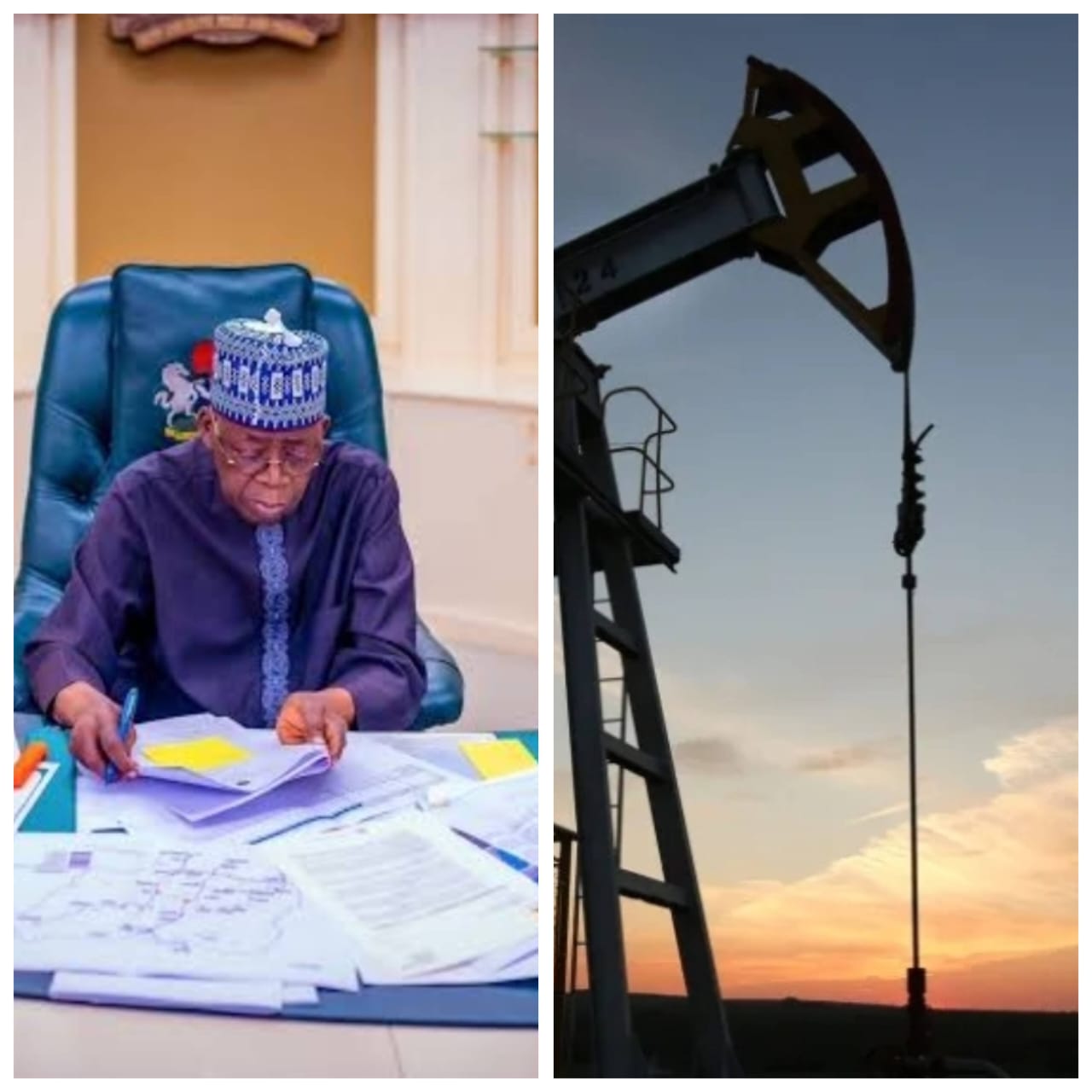
The past recurring conflicts on other continents and the current developments in the Middle East are a clear reminder to the world that energy markets are deeply linked to conflict and uncertainty, as experienced across the globe today. The rise in geopolitical tensions with Iran, Israel, and the United States has led to a sudden increase in global crude oil prices. Some individuals may question what business the war has with Nigeria. Economically, yes, as one of Africa’s major oil producers, Nigeria finds itself in a delicate position amid the current global situation. Since it can gain financially when global crude oil prices skyrocket and this is so because the same increase can create economic challenges locally. The price of Brent crude has jumped to $109.18 per barrel, crossing the $100 mark for the first time in more than five years.
The country is getting a temporary fiscal boost, knowing fully well that prices now surpass the benchmark used in the 2026 national budget. The high oil prices gain is further amplified by two major domestic policy shifts, as the first is the removal of fuel subsidy projected to free nearly $10 billion annually for public investment, and a new Executive Order by President Bola Tinubu aimed at boosting oil and gas revenues flowing into the Federation Account by eliminating wasteful deductions allowed under the Petroleum Industry Act. The combination of these developments could significantly increase government revenue over the next few years, but history shows that such windfalls, if not well managed, often go toward short-term spending rather than creating lasting national wealth.
Moreover, our lingering concern today is that Nigeria as a country has experienced this pattern before, and it often brings instability. One of such examples is the 2022 Ukraine conflict, when oil prices spiked above $100 per barrel.
Obviously, during such a period, countries that export oil will suddenly receive a large and sudden increase in revenue from the sale of crude oil. The truth is that if such a windfall is managed well, it can be used to build stronger and diversify their economies beyond oil. Unfortunately, Nigeria has always told a different story as these opportunities were frequently lost to weak fiscal discipline, rising recurrent expenditure, and limited investment in productive assets. The global conflict, in its real sense, could become an opportunity, even though there are risks inherent. Just like any prudent country, Nigeria can use any short-term benefits (like higher oil revenues) to strengthen its economy for the future.
At the heart of this opportunity lies the need for disciplined fiscal management, if the government will tread in line with this call. It is now time for the policymakers to understand that extra money from oil prices should not be wasted, as it has become a tradition to spend through the regular government expenditures. It is high time the government saved and invested the extra funds it gained wisely rather than spending them all immediately. Nigeria’s fiscal vulnerability has often been exposed whenever oil prices fall or global demand weakens. Establishing strong buffers through sovereign savings mechanisms can protect against such volatility. A significant portion of the windfall should therefore be directed into strengthening the country’s sovereign wealth structures and stabilisation funds. This resonates with our subject matter: Can Nigeria convert Oil Windfall into Economic Strength? This rhetorical question is directed to those at the helm of affairs because, by saving during periods of high prices, Nigeria can build reserves that help sustain public spending during downturns without excessive borrowing.
Closely linked to fiscal buffers is the issue of public debt. Nigeria’s debt servicing obligations have continued to rise in recent years, and the current development might be the answer. The debt has continued to place pressure on government revenues and limit fiscal flexibility. Alarming is the fact that the public debt is projected to have surpassed N177.14 trillion by the end of 2026, which is driven by the budget deficit in the 2026 Appropriation Bill.
The truth is that one sensible response to the current situation would be to use some of the unexpected revenue from higher oil prices to pay off loans (debts), especially those with high interest costs. This would reduce future financial burdens on the government and help it spend on development later. The fact is that debt reduction, if the government can quickly address it, also signals fiscal credibility to investors and international financial institutions, thereby strengthening the country’s macroeconomic reputation.
Beyond fiscal stability, Nigeria must recognise that oil windfalls provide a rare opportunity to accelerate strategic infrastructure investment. In today’s world, infrastructure remains one of the most critical constraints on Nigeria’s economic growth. The cost of doing business in Nigeria has been a serious palaver, and it has continued to discourage and scare investment. This is informed by various structural deficiencies, such as inadequate electricity supply and congested transport corridors, as well as weak logistics networks. The question again, can Nigeria convert Oil Windfall into Economic Strength? This is because the truth is not unknown to leaders, but they have continued to deliberately stay away from the fact that channelling windfall revenues into transformative infrastructure projects can therefore yield long-term economic dividends.
Power sector development should be a top priority. Reliable electricity remains the backbone of industrial productivity and economic expansion. Over the years, a well-known fact is that despite various reforms, Nigeria continues to struggle with an epileptic power supply that forces businesses to rely heavily on expensive diesel generators and has posed a double challenge that comes with noise and atmospheric pollution. The nation is tired of the regular audio investment, but strategic investment in power generation, transmission, and distribution infrastructure would significantly reduce operating costs for businesses that translate into manufacturing and encourage new investment across multiple sectors in the country.
Transportation infrastructure also deserves sustained attention, and if nothing is done, the mass commuters will reap nothing but pain. Nigeria’s highways, rail networks, and ports require large-scale modernisation to support efficient trade and mobility. The unexpected extra income from high oil prices, if used carefully for long-term national benefit, can be used to build transport networks that move food and goods from farms and factories to markets and ports. Businesses today are very much dependent on transportation; hence, improved logistics not only facilitates domestic commerce but also strengthens Nigeria’s position as a regional economic hub in West Africa.
Another critical area for deploying oil windfalls is economic diversification. The over-emphasised dependence of Nigeria on crude oil exports has long exposed the economy to external shocks.
Any rise or fall in global oil prices has an immediate impact on Nigeria’s government revenue since oil exports are a major source of government income, foreign exchange availability, and macroeconomic stability follow suit. To break this cycle, Nigeria must invest aggressively in sectors capable of generating sustainable non-oil income and abstain from the unyielding roundtable discussion of diversification without implementation.
With vast arable land and a large labour force, Nigeria has the capacity to become a global agricultural powerhouse; hence, this is to say that agriculture offers enormous potential in this regard. However, productivity remains constrained by limited mechanisation, inadequate irrigation, and poor storage facilities. If the government intentionally invests in modern agriculture and the systems that support it, the country can produce more food, create jobs via agricultural value chains (from production to processing, storage, transportation, and marketing), while earning more from agricultural exporting.
Manufacturing and industrial development represent another pathway to long-term economic resilience, but this sector has been starved of any tangible investment. Unlike Nigeria, countries that successfully convert natural resource wealth into sustainable prosperity typically invest heavily in industrial capacity. The government should be deliberate in using the extra revenues from the high oil prices to invest in building industrial zones, strengthening hubs, and encouraging the transfer of technologies that will fast-track the production of goods within Nigeria, instead of relying on imports. The unarguable point is that the moment Nigeria invests in industries and production of goods locally instead of buying them from other countries, it becomes better able to manufacture and export products that have higher economic value.
One critical aspect that calls for concern is that strengthening Nigeria’s foreign exchange reserves represents another important avenue for deploying excess oil revenues. The truth, which applies to every economy, is that adequate reserves enhance the country’s ability to stabilise its currency during external shocks and support the operations of the Central Bank of Nigeria in maintaining monetary stability, and this part must not be treated with kid gloves. Given Nigeria’s history of foreign exchange volatility, this is another opportunity to know that building strong reserves can significantly improve investor confidence and macroeconomic resilience.
Human capital development must also remain central to any long-term strategy for managing oil windfalls. A country’s greatest asset is not merely its natural resources but the productivity and innovation of its people, and in Nigeria, more attention has been placed on the former. For so long, Nigeria’s budget allocation has told this story, as the government has been glaringly complacent in investing in quality education, healthcare systems, technical training, and research institutions, which can unlock enormous economic potential. If the government aligns with the necessities, Nigeria’s youthful population represents a demographic advantage that can only be realised through sustained investment in human development.
Investment from the higher oil prices should be channelled to the educational sector, and more emphasis should be placed on science, technology, engineering, and vocational skills that align with the demands of a modern economy. Strengthening universities, technical institutes, and research centres can foster innovation, entrepreneurship, and technological advancement. Similarly, improving healthcare infrastructure enhances workforce productivity and reduces the economic burden of disease. Will the government ever shift reasonable investment to these sectors?
Another strategic use of all the categorised oil windfalls is the expansion of social protection systems that shield vulnerable populations during economic shocks. What is unbeknownst to the government is that while infrastructure and industrial investments drive long-term growth, social protection programs help ensure that economic gains are broadly shared. Helping the poor, creating jobs for young people, and supporting small businesses can make society more stable and grow the economy from the ground up.
Lack of transparency and accountability has been anathema that has hindered the progress of growth in Nigeria. The right implementation will ultimately determine whether Nigeria successfully transforms this oil windfall into lasting prosperity. Public trust in government fiscal management has often been undermined by corruption, waste, and non-transparent financial practices. Once there are clear frameworks for managing windfall revenues, this becomes essential. Also, if it is monitored by neutral institutions that are not controlled by politicians, while information about spending is made available to the populace, the media, and the National Assembly supervises how the funds are spent, it will translate to what benefits the country instead of short-term political interest.
A section of the economy that calls for action is the need to improve the efficiency of government institution capacity within agencies responsible for revenue management, budgeting, and project execution. It is a well-known fact that when government institutions are strong and effective, public money is less likely to be wasted, stolen, or misused, and investments produce measurable economic outcomes. This institutional strengthening should include digital financial systems, procurement transparency, and improved project monitoring mechanisms.
Nigeria’s policymakers must immediately put in place clear fiscal rules governing the use of oil windfalls. This will help define how excess revenues are distributed between savings, infrastructure investment, debt reduction, and social programs, and this will also help Nigeria prevent the politically driven spending patterns that have historically undermined effective resource management.
Another question confronting Nigeria is not whether oil prices will rise again in the future, but whether the country will finally break the cycle of squandered windfalls. It is to the country’s advantage that the current crisis has pushed oil prices above the budget benchmark, creating a temporary revenue advantage, but it must be noted that temporary advantages become transformative only when they are guided by deliberate policy choices and long-term vision.
Nigeria possesses immense economic potential. With a large domestic market, abundant natural resources, and a vibrant entrepreneurial population, the country is well-positioned to achieve sustained growth. This potential requires disciplined management of national wealth, particularly during periods of resource windfalls.
The common saying that a word is enough for the wise is directed to policymakers to understand that, if managed wisely, the current surge in oil revenues could strengthen fiscal buffers, modernise infrastructure, diversify the economy, and invest in human capital. The obvious here is that the investments would not only protect Nigeria against future oil price volatility but also lay the foundation for a more resilient and prosperous economy.
The lesson from global experience, as it has always been, is that resource windfalls do not automatically translate into national prosperity. Nigeria’s leaders must understand that, without exception, countries that succeed are those that convert temporary commodity gains into permanent economic assets. Nigeria now stands at such an intersection, which requires turning crisis-driven oil gains into strategic investments; the nation can transform a moment of geopolitical turbulence into an opportunity for lasting economic resilience and national wealth.
Blaise, a journalist and PR professional, writes from Lagos and can be reached via: bl***********@***il.com









-
 Feature/OPED6 years ago
Davos was Different this year
-
Travel/Tourism10 years ago
Lagos Seals Western Lodge Hotel In Ikorodu
-

 Showbiz3 years ago
Estranged Lover Releases Videos of Empress Njamah Bathing
-
 Banking8 years ago
Sort Codes of GTBank Branches in Nigeria
-

 Economy3 years ago
Subsidy Removal: CNG at N130 Per Litre Cheaper Than Petrol—IPMAN
-

 Banking3 years ago
Sort Codes of UBA Branches in Nigeria
-

 Banking3 years ago
First Bank Announces Planned Downtime
-

 Sports3 years ago
Highest Paid Nigerian Footballer – How Much Do Nigerian Footballers Earn