Feature/OPED
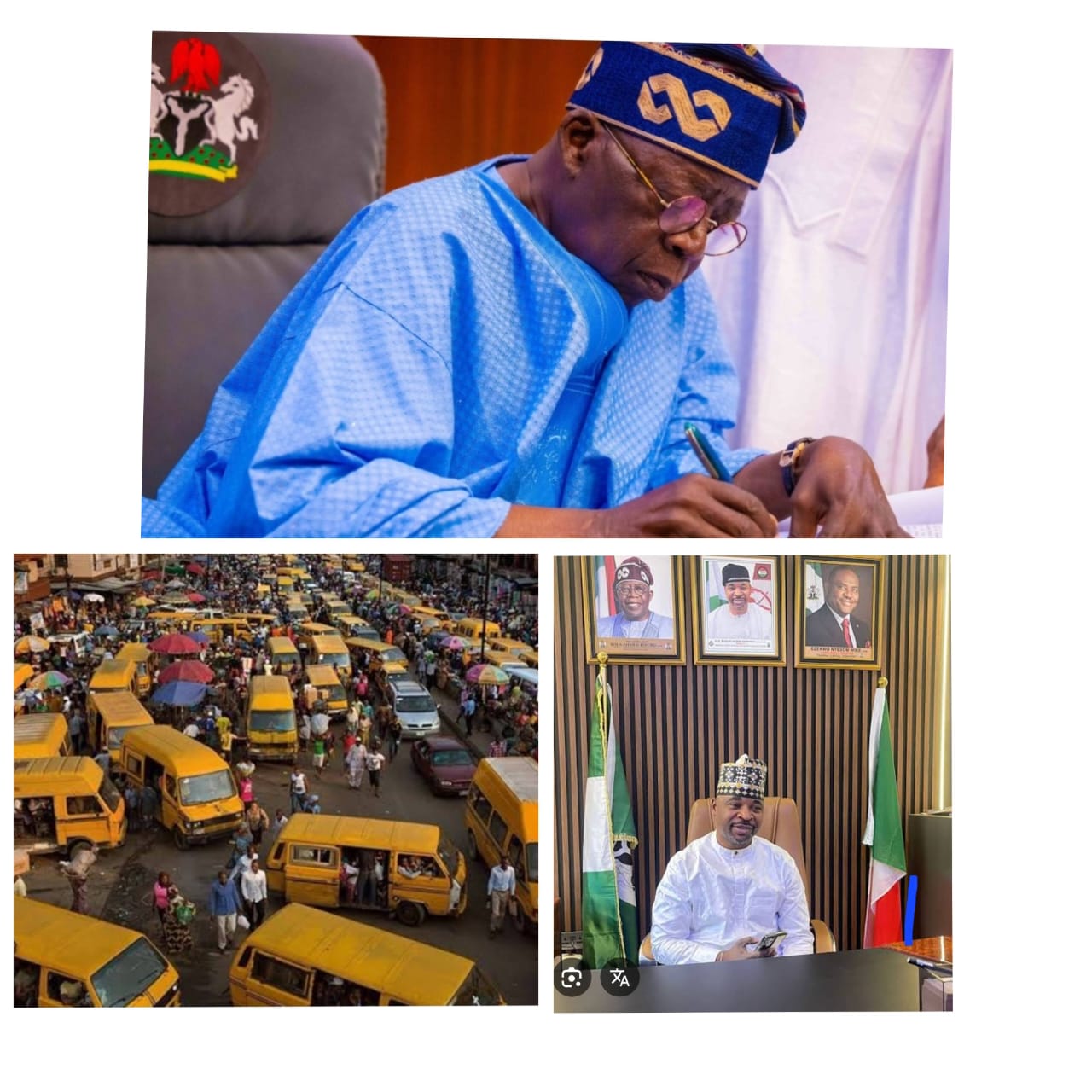
N328.5bn Billing: How Political Patronage Built Lagos’ Agbero Shadow Tax Empire
By Blaise Udunze
Lagos prides itself as Africa’s commercial nerve centre. It markets innovation, fintech unicorns, rail lines, blue-water ferries, and billion-dollar real estate. Though with the glittering skyline and megacity ambition lies a parallel state, a shadow taxation regime run not from Alausa, but from motor parks, bus stops, and highway shoulders. They are called “agberos.” And for decades, they have functioned as Lagos’ unofficial tax masters.
What began as loosely organised transport unionism mutated into a pervasive and often violent system of extortion. Today, tens of thousands of commercial buses, over 75,000 danfos according to estimates by the Lagos Metropolitan Area Transport Authority, ply Lagos roads daily. Each bus is a moving ATM. Each stop is a tollgate. Each route is a revenue corridor.
Looking at the daily estimate from their operations, at N7,000 to N12,000 per bus per day, conservative calculations show that between N525 million and N900 million is extracted daily from drivers. Annually, that balloons toward N192 billion to N328.5 billion or more, money collected in cash, unreceipted, unaudited, unaccounted for. This illicit taxation on an industrial scale did not emerge in a vacuum.
The reality today is that to understand the scale of the problem, one must confront its political history. It was during the administration of Bola Ahmed Tinubu as Lagos State governor from 1999 to 2007, who is now the President, that the entrenchment of transport union dominance and motor park patronage deepened.
Under his political machine, transport unions became not just labour associations but mobilisation structures, formidable grassroots networks capable of crowd control, voter turnout engineering, and territorial enforcement. In exchange for political loyalty, street influence translated into operational latitude.
Motor parks became power bases. “Area boys” became enforcers. Union leadership became politically connected. What should have been regulated associations morphed into revenue-generating franchises with muscle.
The system outlived his tenure. It institutionalised itself. It professionalised. It is embedded in Lagos’ political economy.
And today, it thrives in broad daylight. Endeavour to visit Ajah under bridge, Ikeja under bridge, or Mile-2 along Ojo at 6:00 a.m. Watch drivers clutching crumpled naira notes. Observe men in green trousers and caps marked NURTW weaving between buses, collecting what drivers call òwò àrò, or evening as òwò iròlè money taken from passengers.
A korope driver shouts, “Berger straight!” His bus fills. The engines rumble. But before he moves, he must pay. If he refuses? The side mirror may disappear. The windscreen may crack. The conductor may be assaulted. The vehicle may be blocked with planks, and if they resist, the conductor or driver may be beaten. Movement becomes impossible. It is not optional.
This is common across Lagos, especially amongst drivers in Oshodi, Obalende, Ojodu Berger, Mile 2, Iyana Iba, and Badagry, and describes a three-layered structure ranging from street collectors, area coordinators, and union executives at each location. Daily targets flow upward. Commissions remain below.
One conductor disclosed he budgets at N8,500 daily for louts alone, excluding fuel, delivery to vehicle owners, and official tickets. Another driver says he parts with nearly N15,000 in total daily levies across routes.
Of N40,000 collected on trips, barely N22,000 survives before fuel. Sometimes, drivers go home with N3,500. Working like elephants. Eating like ants. The impact extends far beyond drivers.
Every naira extorted is transferred to commuters. An N700 fare becomes N1,500. A N400 corridor becomes N1,200 in traffic, and this is maintained even after fuel prices fall; fares rarely decline. The hidden levy remains.
Retail traders reduce stock purchases because transport eats profits. Civil servants watch salaries stagnate while commuting costs climb. Market women complain that surviving Lagos costs more than living in it.
This is not just a transport disorder. It is inflation engineered by coercion. Economists call it financial leakage, money extracted from the productive economy that never enters the fiscal system. Billions circulate annually without appearing in government ledgers. No roads are built from it. No hospitals funded. No schools renovated.
It is taxation without development. Small and Medium Enterprises form nearly half of Nigeria’s GDP and employ the majority of its workforce. In Lagos, they are under assault from informal levies layered on top of official taxes. Goods delivered by bus carry hidden transport premiums. Commuting staff face higher daily costs. Inflation ripples through supply chains.
The strike by commercial drivers in 2022 exposed the depth of resentment. Under the Joint Drivers’ Welfare Association of Nigeria (JDWAN), drivers protested “unfettered and violent extortion.” Lagos stood still. Commuters trekked. Appointments were missed. Businesses stalled.
Drivers alleged that half of their daily income vanished into motor park collections.
Some who protested were attacked. Yet the collections continued.
Drivers insist daily collections at single corridors can exceed N5 million. Park chairmen allegedly control enormous cash flows. Uniformed collectors operate with visible confidence.
Meanwhile, the Lagos State Government denies sanctioning any roadside extortion. Officials describe the tax system as institutionalised and structured. They promise reforms through Bus Rapid Transit, rail expansion and corridor standardisation. Yet the shadow toll persists.
Contrast this with Enugu State, where Governor Peter Mbah introduced a Unified e-Ticket Scheme mandating digital payments directly into the state treasury. Paper tickets were banned. Cash collections outlawed. Revenue flows are traceable. Harassment criminalised.
Drivers in Lagos say openly that they should be given a single N5,000 daily ticket paid directly to the government, and end the chaos. Instead, they face multiple actors, agberos, task forces, and traffic officials, each demanding settlement.
The difference is in governance philosophy. One digitises and centralises revenue to eliminate leakages.
The other tolerates fragmentation that breeds shadow collectors. The uncomfortable truth is that the agbero structure is politically sensitive. Transport unions are not just labour bodies; they are political instruments. They mobilise during elections. They maintain territorial presence. They command street loyalty. In return, they are allegedly tolerated, protected, or absorbed into broader political structures as they turn into war instruments and a battle axe in the hands of the government of the day. The underlying reality is that the agbero who are the street-level power structures and the government authorities benefit from each other; the line between unofficial influence and official governance becomes unclear, making reform politically sensitive.
The issue is not merely about street disorder; it is about economic governance. Illicit taxation distorts pricing mechanisms, reduces productivity, discourages the formalisation of businesses, and weakens public trust. If citizens are compelled to pay both official taxes and unofficial levies, compliance morale declines. Why comply with statutory taxation when parallel systems operate unchecked?
Dismantling them is not merely administrative; it is political. Perhaps unbeknownst to the people, the cost of inaction is immense. Lagos aspires to be a 21st-century smart megacity under such an atmosphere. But investors notice informal roadblocks. Businesses factor in unpredictability. Commuters absorb unofficial taxes daily. Across Lagos roads, the script repeats “òwò mi dà,” meaning, give me my money.
Passengers plead with collectors to reduce levies so they can proceed. Conductors argue over dues before departure. Citizens feel hostage to a system they neither elected nor authorised.
Taxation, constitutionally, belongs to the state. It must be legislated, receipted, audited and deployed for the public good.
Agbero taxation is none of these. It is coercive. It is not transparent. It is extractive. Lagos has launched rail lines and BRT corridors. The Lagos Metropolitan Area Transport Authority continues transport reforms. Officials promise that bus reform initiatives will eliminate unregistered operators. But reform cannot be selective. You cannot modernise rail while medieval tolling persists on roads. You cannot preach digital governance while cash collectors flourish at bus stops. You cannot aspire to global city status while informal muscle dictates movement.
The solution is not episodic arrests. It is a structural overhaul: mandatory digital ticketing across all parks; a single harmonised levy payable electronically; an independent audit of union revenue; protection for drivers who resist illegal collections; and political decoupling of unions from patronage networks.
The agbero empire is not merely about bus fares. It is about how patronage systems, once empowered, metastasise into parallel authorities. What may have begun as strategic alliance-building two decades ago has matured into a shadow fiscal regime embedded in daily life.
The challenge is that Lagosians are left with no choice as they now pay twice, once to the government, once to the streets. And unlike official taxes, shadow taxes leave no developmental footprint. No bridge bears their name. No hospital wing testifies to their billions. No classroom is built from their collections. Only inflated fares. Broken windscreens. Frustrated commuters. And drivers who sweat under the sun, calculating how much will remain after everyone has taken their cut.
The agbero question is ultimately a governance question. Is Lagos governed by law, or by tolerated coercion? Is taxation a constitutional function, or a roadside negotiation? Is political convenience worth permanent economic distortion? What is absolutely known is that the structure has a political backing and what politics created, politics can dismantle.
Unless meaningful reform takes place, Lagos will continue to remain a megacity with a shadow treasury, where movement begins not with ignition, but with payment to men who answer to no ledger without any tangible returns. This is to say that every danfo that moves carries not just passengers, but the weight of a system that taxes without law, collects without accountability and punishes the very people who keep the city alive.
Blaise, a journalist and PR professional, writes from Lagos and can be reached via: bl***********@***il.com
Feature/OPED
If Dangote Must Start Somewhere, Let It Be Electricity
By Isah Kamisu Madachi
The news that the Nigerian businessman, Aliko Dangote, plans to expand his business interest into steel production, electricity generation, and port development as part of his broader ambition to accelerate industrialisation in Africa deserves a quick reflection on the promises it carries for Nigeria. It is coming from Dangote at a time when many African countries, including Nigeria, are still struggling with below-average industrial capacity. This move speaks to something important about how prosperity is actually built.
In their Influential book ‘The Prosperity Paradox: How Innovation Can Lift Nations Out of Poverty,’ Clayton Christensen, Efosa Ojomo, and Karen Dillon argue that countries rarely overcome poverty through aid, policy declarations or resource endowments alone. According to them, the effective engine of prosperity has always been market-creating innovations by private and public enterprises that build new industries, generate jobs, and expand economic opportunities for ordinary people.
Even though their theory focuses largely on creating something new or producing it exceptionally, Dangote’s new industrial ambition seems closer to the latter. It is about producing essential things at a scale and efficiency that the existing system has failed to achieve.
Take, for example, the electricity sector in Nigeria. Since the beginning of the current Fourth Republic, billions of dollars have been allocated to power sector reforms, yet electricity supply remains unstable, and many Nigerians still depend heavily on generators to power their homes and businesses. The situation has continued to deteriorate despite the enormous resources committed to the sector by the coming of every new administration.
This is not surprising. In The Prosperity Paradox, the authors explain how nations and even international organisations sometimes keep investing huge resources in certain activities only to realise much later that they were simply hitting the wrong target. The problem is not always the lack of funding; sometimes it is the absence of a functioning market system capable of producing and distributing essential services efficiently.
Seen from this perspective, Dangote’s move into electricity generation may mean more than just an investment. It could be an attempt to tackle one of the most critically lingering bottlenecks in Nigeria’s economic development. If I were to be asked to decide which sector Dangote should begin with in this new industrial plan, I would unhesitatingly choose electricity. It is the most embattled, deeply corrupted and seemingly jeopardised beyond repair, yet the most important sector for the everyday life of citizens.
Stable electricity has the power to transform productivity across every sector. When power supply becomes reliable, small businesses are created, productivity is boosted across all sectors, and households enjoy a better quality of life. Nigeria’s long-standing energy poverty has been strangulating the productive potential of millions of people for decades. Fixing that problem alone would unlock enormous economic possibilities more than expected.
Beyond the issue of productivity, Dangote’s entry into these sectors could also stimulate competition. Healthy competition is one of the most effective drivers of efficiency in any economy. The example of the refinery project already shows how a large-scale private investment can disrupt long-standing structural weaknesses within a sector. A similar dynamic in the proposed sectors could encourage other investors to participate and expand industrial capacity.
Nigeria, by 2030, is projected to need 30 to 40 million new jobs to absorb its rapidly growing population. The scale of this challenge means that the government alone, especially in the Nigerian context, cannot create the necessary opportunities to fill this gap. Private enterprises will have to play a major role in expanding productive sectors of the economy. If supported by the right policy environment, they could contribute significantly to narrowing Nigeria’s widening job gap.
Of course, no single business initiative can solve all structural challenges in the economy. But bold investments of this nature often serve as catalysts for broader economic transformation. With the right support and healthy competition from other investors, initiatives like these could help push Nigeria closer to the kind of industrial foundation that many developed economies built decades ago.
In the end, the lesson is simple: prosperity rarely emerges from policy debates alone. It often begins with large-scale productive ventures that reshape markets, unlock productivity at both small-scale and large-scale businesses, and create direct and indirect economic opportunities for millions of common men and women.
Isah Kamisu Madachi is a policy analyst and development practitioner. He writes via is***************@***il.com
Feature/OPED
Love, Culture, and the New Era of Televised Weddings
Weddings have always held a special place in African culture. They are more than ceremonies; they are declarations of love, family, identity, and tradition. From the vibrant colours of aso-ebi to the rhythmic sounds of live bands and the emotional exchange of vows, weddings represent a moment of cultural heritage.
In recent years, weddings have gone beyond physical venues. What was once an exclusive gathering for family and friends has transformed into a shared experience for wider audiences. Social media first opened the door, allowing guests and admirers to witness love stories in real time through Instagram posts, TikTok highlights, and YouTube recaps.
And now, television platforms are taking this even further, giving weddings a new kind of permanence and reach.
High-profile weddings, like the widely celebrated union of Adeyemi Idowu, popularly known as Yhemolee (Olowo Eko) and his wife Oyindamola, fondly known as ThayourB, captured massive public attention. Moments from their wedding became a live shared experience on television (GOtv & DStv).
From the high fashion statements to the emotional highlights, viewers were able to feel part of something bigger, a reminder that weddings inspire not just both families but entire communities.
This shift reflects a broader reality: weddings today are content. They inspire conversations about fashion, relationships, lifestyle, and aspiration. They preserve memories in ways previous generations could only imagine. For Gen Z couples, their wedding is no longer just a day; it becomes a story that can be revisited, celebrated, and even inspire others planning their own journey to forever.
Broadcast platforms like GOtv are playing a meaningful role in this transformation. By bringing wedding-related content directly into homes, GOtv is helping audiences experience these moments not just through social media snippets but in real time.
One of the most notable offerings is Channel 105, The Wedding Channel, Africa’s first 24-hour wedding channel, available on GOtv. The channel is fully dedicated to African weddings, lifestyle, and bridal fashion, showcasing everything from dream ceremonies to the realities of married life. Programs like Wedding Police and Wedding on a Budget, and shows like 5 Years Later, offer a deeper look into marriage itself, reminding viewers that weddings are just the beginning of a lifelong journey.
GOtv is preserving culture, celebrating love, and inspiring future couples with this channel. It allows viewers to witness traditions from different regions, discover new ideas, and feel connected to moments that might otherwise remain private.
With platforms like GOtv, stories continue to live on screens across Africa, where love, culture, and celebration can be experienced by all.
To upgrade, subscribe, or reconnect, download the MyGOtv App or dial *288#. For catch-up and on-the-go viewing, download the GOtv Stream App and enjoy your favourite shows anytime, anywhere.
Feature/OPED
Brent’s Jump Collides with CBN Easing, Exposes Policy-lag Arbitrage
Nigeria is entering a timing-sensitive macro set-up as the oil complex reprices disruption risk and the US dollar firms. Brent moved violently this week, settling at $77.74 on 02 March, up 6.68% on the day, after trading as high as $82.37 before settling around $78.07 on 3 March. For Nigeria, the immediate hook is the overlap with domestic policy: the Central Bank of Nigeria (CBN) has just cut its Monetary Policy Rate (MPR) by 50 basis points to 26.50%, whilst headline inflation is still 15.10% year on year in January.
“Investors often talk about Nigeria as an oil story, but the market response is frequently a timing story,” said David Barrett, Chief Executive Officer, EBC Financial Group (UK) Ltd. “When the pass-through clock runs ahead of the policy clock, inflation risk, and United States Dollar (USD) demand can show up before any oil benefit is felt in day-to-day liquidity.”
Policy and Pricing Regime Shift: One Shock, Different Clocks
EBC Financial Group (“EBC”) frames Nigeria’s current set-up as “policy-lag arbitrage”: the same external energy shock can hit domestic costs, FX liquidity, and monetary transmission on different timelines. A risk premium that begins in crude can quickly show up in delivered costs through freight and insurance, and EBC notes that downstream pressure has been visible in refined markets, with jet fuel and diesel cash premiums hitting multi-year highs.
Market Impact: Oil Support is Conditional, Pass-through is Not
EBC points out that higher crude is not automatically supportive of the naira in the short run because “oil buffer” depends on how quickly external receipts translate into market-clearing USD liquidity. Recent price action illustrates the sensitivity: the naira was quoted at 1,344 per dollar on the official market on 19 February, compared with 1,357 a week earlier, whilst street trading was cited around 1,385.
At the same time, Nigeria’s inflation channel can move quickly even during disinflation: headline inflation eased to 15.10% in January from 15.15% in December, and food inflation slowed to 8.89% from 10.84%, but energy-led transport and logistics costs can reintroduce pressure if the risk premium persists. EBC also points to a broader Nigeria-specific reality: the economy grew 4.07% year on year in 4Q25, with the oil sector expanding 6.79% and non-oil 3.99%, whilst average daily oil production slipped to 1.58 million bpd from 1.64 million bpd in 3Q25. That mix supports external-balance potential, but it also underscores why the domestic liquidity benefit can arrive with a lag.
Nigeria’s Buffer Looks Stronger, but It Does Not Eliminate Sequencing Risk
EBC sees that near-term external resilience is improving. The CBN Governor said gross external reserves rose to USD 50.45 billion as of 16 February 2026, equivalent to 9.68 months of import cover for goods and services. Even so, EBC views the market’s focus as pragmatic: in a risk-off tape, investors tend to price the order of transmission, not the eventual balance-of-payments benefit.
In the near term, EBC expects attention to rotate to scheduled energy and policy signposts that can confirm whether the current repricing is a short, violent adjustment or a more durable regime shift, including the U.S. Energy Information Administration (EIA) Short-Term Energy Outlook (10 March 2026), OPEC’s Monthly Oil Market Report (11 March 2026), and the U.S. Federal Reserve meeting (17 to 18 March 2026). On the domestic calendar, the CBN’s published schedule points to the next Monetary Policy Committee meeting on 19 to 20 May 2026.
Risk Frame: The Market Prices the Lag, Not the Headline
EBC cautions that outcomes are asymmetric. A rapid de-escalation could compress the crude risk premium quickly, but once freight, insurance, and hedging behaviour adjust, second-round effects can linger through inflation uncertainty and a more persistent USD bid.
“Oil can act as a shock absorber for Nigeria, but only when the liquidity channel is working,” Barrett added. “If USD conditions tighten first and domestic pass-through accelerates, the market prices the lag, not the headline oil price.”
Brent remains an anchor instrument for tracking this timing risk because it links energy-led inflation expectations, USD liquidity, and emerging-market risk appetite in one market. EBC Commodities offering provides access to Brent Crude Spot (XBRUSD) via its trading platform for following energy-driven macro volatility through a single instrument.
-
Feature/OPED6 years agoDavos was Different this year
-
Travel/Tourism10 years ago
Lagos Seals Western Lodge Hotel In Ikorodu
-
Showbiz3 years agoEstranged Lover Releases Videos of Empress Njamah Bathing
-
Banking8 years agoSort Codes of GTBank Branches in Nigeria
-
Economy3 years agoSubsidy Removal: CNG at N130 Per Litre Cheaper Than Petrol—IPMAN
-
Banking3 years agoSort Codes of UBA Branches in Nigeria
-
Banking3 years agoFirst Bank Announces Planned Downtime
-
Sports3 years agoHighest Paid Nigerian Footballer – How Much Do Nigerian Footballers Earn