
Feature/OPED
SMEs: Enhancing Access to Funding in a Pandemic

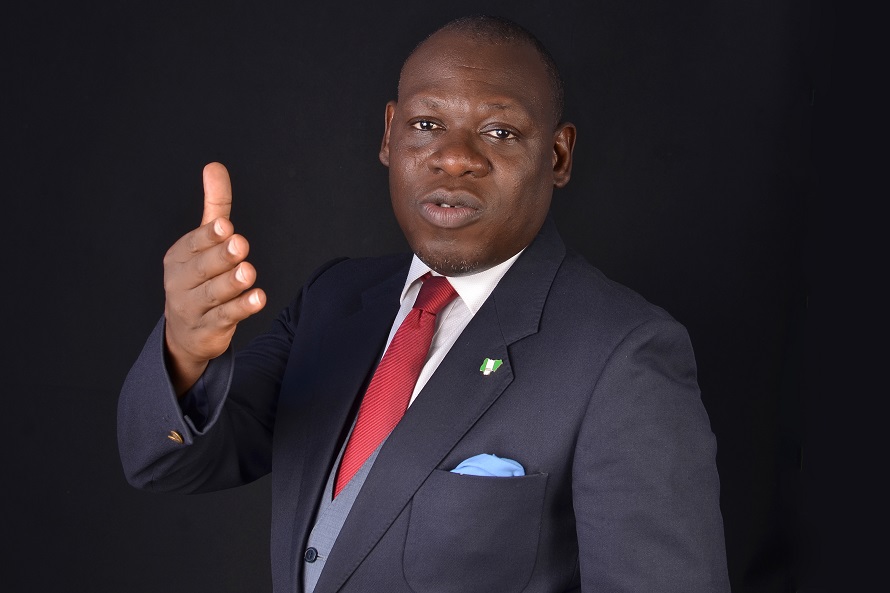
By Timi Olubiyi, Ph.D
Globally, Small and Medium Enterprises (SMEs) are critical to the development of any economy as they possess great potentials for reducing poverty through employment creation and income generation.
This sector also improves innovation, local technology, output diversification, development of indigenous entrepreneurship and forward integration with large-scale industries.
Further to this, in Nigeria, many people work for these SMEs for subsistence. Therefore, the importance of SMEs is well recognized and documented in Nigeria. Regardless of the significant contribution to the economy, SMEs’ survival rate is significantly lower than that of large corporations.
Unfortunately, SMEs in Nigeria have underperformed over the years. However, these SMEs in Nigeria constitute more than 90% of the businesses around, their contribution to the nation’s GDP is below 10% according to recent data.
Empirical evidence shows that finance contributes about 25% to the success of SMEs, and one of the key issues attributed to non-performance is lack of access to funds. Having access to fund gives SMEs the chance to develop their businesses and acquire better technologies for production, therefore, ensuring competitiveness.
However, funding has remained one of the key SME internal issues that confront most enterprises in Nigeria today. SMEs in Nigeria face this gap, and this restricts their economic prosperity.
Consequently, the lack of external funding available for small and medium enterprises (SMEs) is the focus of this article.
Recall, Small and Medium Development Agency of Nigeria (SMEDAN) is the Nigerian government’s institution to develop the SME sector. The agency provides insight into the definition of small businesses based on the number of employees.
The agency defined small and medium enterprises (SME) as a business employing 1 to 200 persons. Therefore, in the context of this article, this definition is relied upon.
Further to this, the SME sector in Nigeria is bedevilled with many challenges. Among these, shortage of finance occupies a very central position, even though the economic and funding importance of the small and medium enterprise (SME) sector is well recognized in academic and policy literature and also evident globally.
Access to funds and financing for these SMEs remains severely constrained, thereby restricting their business growth. For several reasons, large firms may have a comparative advantage over SMEs because of their business structure, credibility in the market and easy access to funding. The limited access to funding by SMEs usually impedes on their productivity and growth.
Evidently, SMEs face credit discrimination from banks because of the opacity of their business information, lack of structure and it is also quite common that these SMEs do not have in place necessary audited financial statements.
For these reasons and more, it is usually difficult for SMEs to show credit quality to banks and other financial institutions. So, SMEs are seen to constantly experience financial constraints, and they experience more stringent credit terms than the large companies, which are seen to be less risky in Nigeria.
Access to finance can give SMEs the chance to develop their businesses seamlessly and acquire better technologies for production, thereby ensuring their competitiveness. However, funding has remained one of the key SME internal issues that keep confronting most enterprises in Nigeria today.
To substantiate this perennial issue, an opinion poll was conducted SMEs in Lagos State- (computer village Ikeja, Alaba international market and some market associations (Auto Spare Parts and Machinery Dealers-ASPAMDA and Balogun Business Association) the findings also revealed one of the main constraints faced by SMEs to be lack of access to finance.
Typically, most of the respondents cited funding and access to finance is the most important constraint. About 79% of small firms cited a lack of finance and access to financing as the main constraint to their business growth. That means only 21% of them have access to required funding for the development of their businesses, and this crucial enabling factor is difficult for SMEs to access.
Consequently, the access to the necessary financing or credit required to expand and continues to perform the business operation, growth, innovation and employment will be affected greatly.
Banks and credit institutions perceive SMEs in Nigeria as risky structures: not very resilient, fragile in terms of activity, solvency and management. Context observation also revealed that many banks do not have specialized products targeted at SMEs, particularly startups and micro-businesses in Nigeria. The absence is due to the banks’ reluctance to lend funds to start-up firms, as it is found that these younger firms’ survival rates are lower than the established large firms.
The opinion poll conducted also indicated that constraints are larger for SMEs in relation to larger firms due to inadequate assets for use as security or collateral. From the opinion poll, it was further gathered that a very high-interest rate is one of the most significant barriers for small businesses to access funding in Nigeria.
SMEs are discouraged from taking loans from banks, as they cannot agree with the loans’ price. Because it will only increase their debt burden, and that can negatively affect the value of the businesses. Other factors discovered that affect the access to finance for SMEs are cumbersome application procedures, short loan maturities, collateral requirements and the novel coronavirus (COVID19), which has drastically changed the lender characteristics, among others.
The COVID-19 has had devastating economic effects on the world, and countries are experiencing a decline in economic output. Majorly, SMEs have been hard hit in Nigeria with their business continuity severely threatened.
The economic impact of the COVID-19 pandemic is very high, and perhaps the government might need to consider more pragmatic palliatives such as social and fiscal policy palliatives targeted at these SMEs for sustainability.
These include providing more low-interest credit facilities and tax breaks- particularly cutting taxes to increase disposable income. Most SMEs run their businesses on loan facilities, and the current situation has impeded their capacity to access or service current loans.
Nigeria’s government needs to continually support this significant sector, given its potential growth and poverty reduction opportunities. Consequently, interventions and policy responses to promote access to finance for these SMEs are recommended. The key recently released guidelines and requirements to access the Central Bank of Nigeria (CBN) announced COVID-19 palliative measures worth N3.5 trillion for businesses, should be relaxed to promote wider eligible participation of SMEs.
Those that truly and meaningfully require it might not be able to access it, especially the micro-businesses and Small firms if the current requirement is not reviewed. Besides, government and regulators may take initiatives to reduce the interest rate for SMEs, which can foster the growth of the SMEs and contribute to the economy and (net) employment creation.
From the aforementioned, it is also apparent that SME operators need to pay adequate attention to the structure of their businesses, adopt good corporate governance, prepare a financial statement when due and keep proper records.
The symmetry of information in the companies will strengthen the capacity to access finance for growth. Where necessary, the engagement of knowledgeable professionals can also make a substantial impact on your business operations and give advice on innovative SME financing.
For instance, the capital market can present opportunities and give alternatives to bank lending. Therefore, to achieve the right type of funding for your business, it might be necessary to seek advice or professional guidance. Good luck!
How may you obtain advice or further information on the article?
Dr Timi Olubiyi is an Entrepreneurship and Small Business Management expert. He is a prolific investment coach, Chartered Member of the Chartered Institute for Securities & Investment (CISI), and a financial literacy specialist. He can be reached on the twitter handle @drtimiolubiyi and via email: dr***********@***il.com, for any questions, reactions, and comments.



By Emma Kendrick Cox
This year, the eldest Gen Alpha turns 16.
That means they aren’t just the future of our work anymore. They are officially calling for a seat at the table, and they’ve brought their own chairs. And if you’re still calling this generation born between 2010 and 2025 the iPad generation, then I hate to break it to you, but you’re already obsolete. To the uninitiated, they look like a screen-addicted mystery. To those of us paying attention, they are the most sophisticated, commercially potent, and culturally fluent architects Africa has ever seen.
Why? Because Alphas were not born alongside the internet. They were born inside it. And by 2030, Africa will be home to one in every three Gen Alphas on the planet.
QWERTY the Dinosaur
We are witnessing the rise of a generation that writes via Siri and speech-to-text before they can even hold a pencil. With 63% of these kids navigating smartphones by age five, they don’t see a QWERTY keyboard as a tool. They see it as a speed bump, the long route, an inefficient use of their bandwidth. They don’t need to learn how to use tech because they were born with the ability to command their entire environment with a voice note or a swipe.
They are platform agnostic by instinct. They don’t see boundaries between devices. They’ll migrate from an Android phone to a Smart TV to an iPhone without breaking their stride. To them, the hardware is invisible…it’s the experience that matters.
They recognise brand identities long before they know the alphabet. I share a home with a peak Gen Alpha, age six and a half (don’t I dare forget that half). When she hears the ding-ding-ding-ding-ding of South Africa’s largest bank, Capitec’s POS machine, she calls it out instantly: “Mum! Someone just paid with Capitec!” It suddenly gives a whole new meaning to the theory of brand recall, in a case like this, extending it into a mental map of the financial world drawn long before Grade 2.
And it ultimately lands on this: This generation doesn’t want to just view your brand from behind a glass screen. They want to touch it, hear it, inhabit it, and remix it. If they can’t live inside your world, you’re literally just static.
The Uno Reverse card
Unlike any generation we’ve seen to date, households from Lagos to Joburg and beyond now see Alphas hold the ultimate Uno Reverse card on purchasing power. With 80% of parents admitting their kids dictate what the family buys, these Alphas are the unofficial CTOs and Procurement Officers of the home:
-
The hardware veto: Parents pay the bill, but Alphas pick the ISP based on Roblox latency and YouTube 4K buffers.
-
The Urban/Rural bridge: In the cities, they’re barking orders at Alexa. In rural areas, they are the ones translating tech for their families and narrowing the digital divide from the inside out.
-
The death of passive: I’ll fall on my sword when I say that with this generation, the word consumer is dead. It implies they just sit there and take what you give them, when, on the contrary, it is the total opposite. Alphas are Architectural. They are not going to buy your product unless they can co-author the experience from end to end.
As this generation creeps closer and closer to our bullseye, the team here at Irvine Partners has stopped looking at Gen Alpha as a demographic and started seeing them as the new infrastructure of the African market. They are mega-precise, fast, and surgically informed.
Believe me when I say they’ve already moved into your industry and started knocking down the walls. The only question is: are you building something they actually want to live in, or are you just a FaceTime call they are about to decline?
Pay attention. Big moves are coming. The architects are here.
Emma Kendrick Cox is an Executive Creative Director at Irvine Partners

By Kehinde Ogundare
For years, security for SMEs across sub-Saharan Africa meant metal grilles and alarm systems. Today, the most significant risks are invisible and growing faster than most businesses realise.
Artificial Intelligence has quietly embedded itself into everyday operations. The chatbot responding to customers at midnight, the system forecasting inventory requirements, and the software identifying unusual transactions are no longer experimental technologies. They are becoming standard features of modern business tools.
Last month’s observance of Safer Internet Day on February 10, themed ‘Smart tech, safe choices’, marked a pivotal moment. As AI adoption accelerates, the conversation must shift from whether businesses should use AI to how they deploy it responsibly. For SMEs across Africa, digital trust is no longer a technical consideration. It is a strategic business imperative.
The evolving threat landscape
Cybersecurity threats facing sub-Saharan African SMEs have moved well beyond basic phishing emails. Globally, cybercrime costs are projected to reach $10.5 trillion this year, fuelled by generative AI and increasingly sophisticated social engineering techniques. Ransomware attacks now paralyse entire operations, while other threats quietly extract sensitive customer data over extended periods.
The regional impact is equally significant. More than 70% of South African SMEs report experiencing at least one attempted cyberattack, and Nigeria faces an average of 3,759 cyberattacks per week on its businesses. Kenya recorded 2.54 billion cyber threat incidents in the first quarter of 2025 alone, whilst Africa loses approximately 10% of its GDP to cyberattacks annually.
The hidden risk of fragmentation
A common but often overlooked vulnerability lies in digital fragmentation.
In the early stages of growth, SMEs understandably prioritise affordability and agility. Over time, this can result in a patchwork of disconnected applications, each with separate logins, security standards, and privacy policies. What begins as flexibility can involve operational complexity.
According to IBM Security’s Cost of a Data Breach Report, companies with highly fragmented security environments experienced average breach costs of $4.88 million in 2024.
Fragmented systems create blind spots; each additional data transfer between applications increases exposure. Inconsistent security protocols make governance harder to enforce. Limited visibility reduces the ability to detect anomalies early. In practical terms, complexity increases risk.
Privacy-first AI as a competitive differentiator
As AI capabilities become embedded in business software, SMEs face a choice about how they approach these powerful tools. The risks are not merely theoretical.
Consumers across Africa are becoming more aware of data rights and are willing to walk away from businesses that cannot demonstrate trustworthiness. According to KPMG’s Trust in AI report, approximately 70% of adults do not trust companies to use AI responsibly, and 81% expect misuse. Meanwhile, studies also show that 71% of consumers would stop doing business with a company that mishandles information.
Trust, once lost, is difficult to rebuild. In the digital age, a single data leak can destroy a reputation that took ten years to build. When customers share their payment details or purchase history, they extend trust. How you handle that trust, particularly when AI processes their data, determines whether they return or take their business elsewhere.
Privacy-first, responsible AI design means building intelligence into business systems with data protection, transparency and ethical use embedded from the outset. It involves collecting only necessary information, storing it securely, being transparent about how AI makes decisions, and ensuring algorithms work without compromising customer privacy. For SMEs, this might mean choosing inventory software where predictive AI runs on your own data without sending it externally, or customer service platforms that analyse patterns without exposing individual records. When AI is built responsibly into unified platforms, it becomes a competitive advantage: you gain operational efficiency whilst demonstrating that customer data is protected, not exploited.
Unified platforms and operational resilience
The solution lies in rethinking digital infrastructure. Rather than accumulating disparate tools, businesses need unified platforms that integrate core functions whilst maintaining consistent security protocols.
A unified approach means choosing cloud-based platforms where functions share common security standards, and data flows seamlessly. For a manufacturing SME, this means inventory management, order processing and financial reporting operate within a single security framework.
When everything operates cohesively, security gaps diminish, and the attack surface shrinks. And the benefits extend beyond risk reduction: employees spend less time on administrative friction, customer data stays consistent, and platforms enable secure collaboration without traditional infrastructure costs.
Safer Internet Day reminds us that the digital world requires active stewardship. For SMEs across the African continent who are navigating complex threats whilst harnessing AI’s potential, digital trust is foundational to sustainable growth. Security, privacy and responsible AI are essential characteristics of any technology infrastructure worth building upon. Businesses that embrace unified, privacy-first platforms will be more resilient against cyber threats and better positioned to earn and maintain trust. In a market where trust is currency, that advantage is everything.
Kehinde Ogundare is the Country Head for Zoho Nigeria
Feature/OPED
Iran-Israel-US Conflict and CBN’s FX Gains: A Stress Test for Nigeria’s Monetary Stability

By Blaise Udunze
At the 304th policy meeting held on Wednesday, the 25th February, the Central Bank of Nigeria’s (CBN) Monetary Policy Committee cut the rate by 50 basis points to 26.5 per cent from 27 per cent, which has been widely described as a cautious transition from prolonged tightening to calibrated easing. The CBN stated that the decision followed 11 consecutive months of disinflation. The economy witnessed headline inflation easing to 15.10 per cent in January 2026, and food inflation falling sharply to 8.89 per cent. Foreign reserves are climbing to $50.45 billion, their highest level in 13 years. The Purchasing Managers’ Index is holding at an expansionary 55.7 points.
As reported in the paper, no doubt that the macroeconomic narrative appears encouraging. On a closer scrutiny, the sustainability of these gains is now being tested by forces far beyond the apex bank’s policy corridors. This is as a result of the clear, direct ripple effect of the escalating conflict between Iran and Israel, with direct military involvement from the United States, which has triggered one of the most significant geopolitical energy shocks in decades. For Nigeria, the timing is delicate. Just as the CBN signals confidence in disinflation and stability, global volatility threatens to complicate and possibly distort its monetary path.
The rate cut, though welcomed by many analysts, must be understood in context. Nigeria remains in an exceptionally high-rate environment. An MPR of 26.5 per cent is still restrictive by any standard. The Cash Reserve Ratio (CRR) remains elevated at 45 per cent for commercial banks, and this effectively sterilises nearly half of deposits, while liquidity ratios are tight, and lending rates to businesses often exceed 30 per cent once risk premiums are included. The adjustment is therefore incremental, not transformational.
The Director/CEO of the Centre for the Promotion of Private Enterprise (CPPE), Dr. Muda Yusuf, has repeatedly noted that Nigeria’s deeper challenge lies in weak monetary transmission. According to him, even when the benchmark rate falls, structural rigidities, high CRR, elevated deposit costs, macroeconomic uncertainty, and crowding-out from government borrowing prevent meaningful relief from reaching manufacturers, SMEs, agriculture, and other productive sectors. Monetary easing, without structural reform, risks becoming cosmetic. The point is that even before structural reforms take effect, the fact is that an external shock will first reshape the landscape.
The Iran-Israel conflict and US involvement have reignited fears in global energy markets. Joint U.S. and Israeli strikes on Iranian targets and retaliatory missile exchanges across the Gulf have unsettled oil traders. Brent crude, already rising in anticipation of escalation, surged toward $70-$75 per barrel and could climb higher if shipping through the Strait of Hormuz, through which nearly 20 per cent of global oil supplies pass, faces disruption. It is still an irony that a major crude exporter is also an importer of refined petroleum products.
Higher crude prices offer a theoretical windfall. For Nigeria’s economy, it is well known that oil remains its largest source of foreign exchange and accounts for roughly 50 per cent of government revenue. The good thing is that rising prices could boost reserves, improve forex liquidity, strengthen the naira, and ease fiscal pressures. In theory, this external cushion could support macroeconomic stability and reinforce the CBN’s easing posture.
However, the upside is constrained by structural weaknesses. Nigeria’s oil production remains below optimal capacity. A significant portion of crude exports is tied to long-term contracts, limiting immediate gains from spot price surges. As SB Morgen observed in its analysis, Nigeria’s “windfall” is volatile and limited by soft production performance.
More critically, Nigeria’s dependence on imported refined products exposes it to imported inflation. Rising global crude prices increase the cost of petrol, diesel, jet fuel and gas. With fuel subsidies removed, these increases are passed directly to consumers and businesses. Depot pump prices have already adjusted upward amid Middle East tensions.
Energy costs are a primary driver of Nigeria’s inflation, and this has remained sacrosanct. When fuel prices rise, transportation, logistics, food distribution, power generation, and manufacturing costs will definitely skyrocket, as well as the inflationary impulse spreads quickly through the economy. This will push households to face higher food and transportation costs. Businesses see shrinking margins. Real incomes erode.
Thus, the same oil shock that boosts government revenue may simultaneously reignite inflationary pressure, precisely at a moment when the CBN has begun cautiously easing policy.
This dynamic introduces a difficult policy dilemma, even as this could be for the fragile gains of the MPC. This is to say that if energy-driven inflation resurges, the CBN may be forced to pause or reverse its easing cycle. It is clearly spelt that high inflation typically compels tighter monetary conditions. As Yusuf warned, geopolitical headwinds that elevate inflation often push central banks toward higher interest rates. A renewed tightening would strain credit conditions further, undermining growth prospects.
There is also the risk of money supply expansion. Increased oil revenues, once monetised, can expand liquidity in the domestic system. Historically, surges in oil receipts have been associated with monetary growth, inflationary pressure, and exchange rate volatility. Without sterilisation discipline, a revenue boost could ironically destabilise macro fundamentals.
The exchange rate dimension compounds the complexity. Heightened geopolitical risk, just as it is currently playing out with the Iran-Israel conflict, often triggers global flight to safety. This will eventually lure investors to retreat to U.S. Treasuries and gold. Emerging markets face capital outflows. If it happens that foreign portfolio investors withdraw from Nigeria’s fixed-income market in response to global uncertainty, pressure on the naira could intensify.
Already, the CBN has demonstrated sensitivity to exchange rate dynamics by intervening to prevent excessive naira appreciation. A sharp rate cut in the midst of global volatility could destabilise carry trades and spur dollar demand. What should be known is that the 50-bps reduction reflects not just domestic disinflation, but global risk management such as geopolitical tensions, oil prices, and foreign investor sentiment.
Beyond macroeconomics, geopolitical implications carry security concerns. Analysts warn that a widening Middle East conflict could embolden extremist narratives across the Sahel and it directly has security consequences for Nigeria and the broader region. Groups such as Boko Haram and ISWAP may exploit anti-Western framing to recruit and mobilise more followers in the Sahel region, thereby giving the extremist groups new propaganda opportunities. The pebble fear is that a diversion of Western security resources away from West Africa could create regional vacuums. What the Nigerian economy will begin to experience is that security instability will disrupt agricultural output, logistics corridors, and investor confidence, feeding back into inflation and slow economic growth, and as ripple effects, the economy becomes weaker.
Nigeria’s diplomatic balancing act adds another layer of fragility because it is walking on a tactful tightrope. The country is trying not to upset anyone, but maintains cautious neutrality, urging restraint while preserving ties with Western allies and Middle Eastern partners. Yet rising tensions globally between major powers, including Russia and China, complicate the geopolitical chessboard. Invariably, this will have a direct impact as trade flows, remittances, and investment patterns may change unexpectedly, affecting Nigeria’s economy.
With the current conflict in the Middle East, the prospects for economic growth also face renewed strain or are under increased pressure. The stock markets in developed countries have been fluctuating a lot because people are worried that there will be problems with the energy supply. If the whole world does not grow fast, then people will use less oil over time. This means that the good things that happen to Nigeria because of oil prices will probably not last, and any extra money Nigeria gets from oil prices now will be lost. Nigeria will not get to keep the money from high oil prices for a long time. The oil prices will affect Nigeria. Then the effect will go away. One clear thing is that since Nigeria relies heavily on oil exports, this commodity dependence exposes the country to significant risk.
Meanwhile, Nigeria’s domestic fundamentals remain structurally challenged. The recapitalisation of banks, with 20 of 33 institutions meeting new capital thresholds, strengthens resilience, but does not guarantee credit expansion into productive sectors. Banks continue to prefer risk-free government securities over private lending in uncertain environments.
Fiscal discipline remains essential. Elevated debt service obligations absorb substantial revenue. Election-related spending poses upside inflation risks. This understanding must be adhered to, that without credible deficit reduction and revenue diversification, monetary easing may be undermined by fiscal expansion.
At the moment, given the current global and domestic uncertainties, the 50 per cent interest cut rate appears less like a pivot toward growth and more like a signal of cautious optimism under conditional stability. The policy decision is based on several key expectations with the assumptions that disinflation will persist, exchange rate stability will hold, and global conditions will not deteriorate dramatically.
But the Iran-Israel-U.S. conflict introduces uncertainty into all three assumptions, which is wrongly perceived as behind the rate cut that inflation will keep coming down, that the exchange rate will stay stable, and global conditions won’t worsen, are all undermined by the unfolding conflict.
If the global oil prices rise sharply and fuel becomes more expensive locally, overall prices in the economy could increase again, which means inflation could accelerate. Another dangerous trend is that if foreign investors pull capital out of Nigeria, exchange rate stability could weaken, seeing the naira coming under pressure. If global growth slows, export earnings could decline. Each of these scenarios would constrain the CBN’s flexibility.
This is not to dismiss potential upsides. Higher oil prices, if production improves, could bolster reserves and moderate fiscal deficits. Forex liquidity could strengthen the naira. Investment in upstream oil and gas could gain momentum. Historically, crude price increases have correlated with improved GDP performance and stock market optimism in Nigeria.
Yet history also warns of volatility. A good example is during the 2022 Ukraine conflict, oil prices spiked above $100 per barrel, which created a potential revenue windfall for oil-exporting countries, but Nigeria struggled to translate that temporary advantage into sustained economic improvement. Inflation persisted. In the case of Nigeria, the deep-rooted systemic or structural weaknesses and inefficiency diluted the benefits that should have been gained.
The lesson is clear because temporary external windfalls or short-term luck cannot substitute for structural and deep internal economic reforms.
The point is that sustainable development demands diversification beyond oil, to strengthening multiple parts of its economy at the same time, such as improved refining capacity, infrastructure investment, agricultural security, logistics efficiency, and fiscal consolidation. Monetary policy, as the action taken by the CBN at the MPC meeting by adjusting interest rates or attempting to control money supply, can anchor expectations and moderate volatility, but it cannot build productive capacity; it will only help to reduce short-term economic swings.
The CBN’s decision to cut the interest rate appears cautious. It is not a bold shift but rather a small adjustment. This shows that the bank is being careful and optimistic about the economy. It also knows that there are still problems. The trouble in the Middle East, like the fighting that affects the oil supply, reminds the people in charge that Nigeria’s economy is closely tied to what happens with energy around the world. This includes things like inflation, the value of money, and how fast the economy grows.
Until structural reforms reduce dependence on volatile oil cycles and imported fuel, Nigeria’s monetary policy will remain reactive to external crises. To really make the economy strong and stable, Nigeria needs to make some changes. It requires resilience against geopolitical storms.
The MPC has taken a step. Whether it marks a turning point depends less on 50 basis points and more on how Nigeria navigates a world increasingly defined by conflict-driven volatility.
Blaise, a journalist and PR professional, writes from Lagos and can be reached via: bl***********@***il.com











-
 Feature/OPED6 years ago
Davos was Different this year
-
Travel/Tourism10 years ago
Lagos Seals Western Lodge Hotel In Ikorodu
-

 Showbiz3 years ago
Estranged Lover Releases Videos of Empress Njamah Bathing
-
 Banking8 years ago
Sort Codes of GTBank Branches in Nigeria
-

 Economy3 years ago
Subsidy Removal: CNG at N130 Per Litre Cheaper Than Petrol—IPMAN
-

 Banking3 years ago
Sort Codes of UBA Branches in Nigeria
-

 Banking3 years ago
First Bank Announces Planned Downtime
-

 Sports3 years ago
Highest Paid Nigerian Footballer – How Much Do Nigerian Footballers Earn