Connect with us

Feature/OPED

SMEs: Understanding Risk

Published

on

understanding SMEs risk timi olubiyi

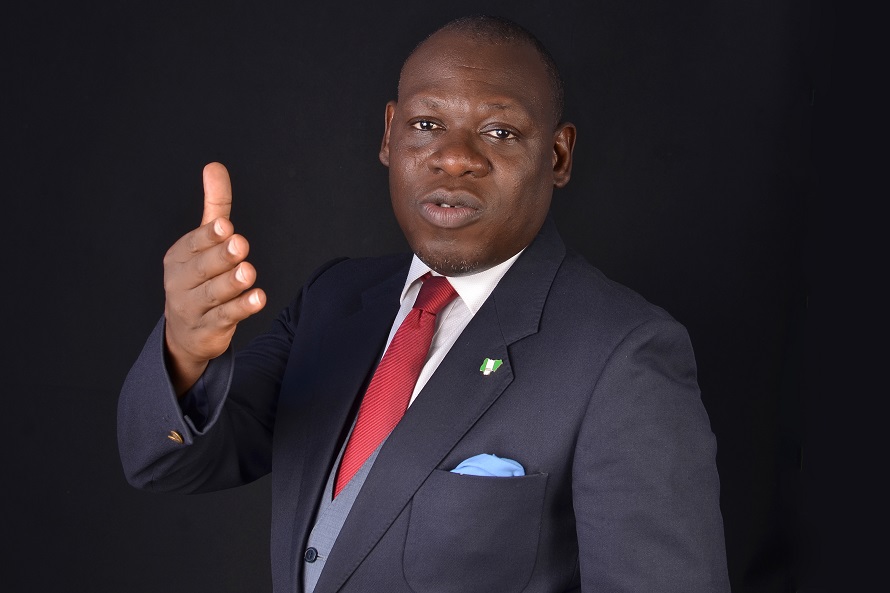
By Timi Olubiyi, Ph.D

In many of Africa’s developing nations, running a business or setting up a new one is a brave move for even the most qualified of entrepreneurs.

This is due to the prevailing harsh economic and business environment on the continent. However, irrespective of the form of investment or business consideration, there will always be some risks involved or obstacles to overcome to achieve success.

Starting up a new business or firm is a high-risk exercise in itself. All business enterprise faces a wide variety of risks, some of which come from within the company and others from outside.

Therefore, part of the true strength and courage of an entrepreneur is the ability to accept risks, and even when a setback is experienced, to have the nerve to come back and retry again.

Entrepreneurs are usually risk-takers, who often spot opportunities in the market and develop new ideas for products and services by combining resources available at disposal.

These steps typically come with associated risks because every business decision has an element of risk. This means that an entrepreneur cannot avoid risk in setting up a new venture or start-ups.

Available data and reports have shown that a large proportion of new businesses eventually fail in the incubation stage.

Consequently, there is no guarantee of success in business, particularly in start-ups. This means that any entrepreneur willing to set up a company runs the risk of failure, often involving financial loss. Business activity can expose an entrepreneur to different forms of risk, from financial loss to business failure, or lack of security.

Objectively, the main risks facing businesses revolve around internal factors such as customer and competitive behaviour, their current financial position, or external factors such as the economic climate, political stability, and regulation and compliance costs.

Other areas of risk to businesses are input costs, compliance costs, market manipulation by some players, competitor activity, cyber-crime, and debt. The current reality of the novel coronavirus (COVID19) pandemic is equally a risk to businesses. A contingent plan of a change of strategy might be essential for the progression of companies at this time.

Further to this, the government laws, policy responses to the pandemic and other forms of regulation invariably impose a wide and growing range of obligations on businesses, especially Small Medium Enterprises (SMEs). All these ordinarily will impact on business operations and its performance. It is imperative to state categorically that the biggest risks in business are taken in the first few years of business operations. The economy, and society as a whole, benefit when enterprises carry out their activities successfully.

From context observation, businesses run the risk of funding, which is crucial at the start-up stage, followed by a sound business model to get the start-up off the ground, and very vital, the unique selling point (USP).

Another significant position requires for a business to be successful is a strong workforce, who share the same values and goals for the future and progression of the business/organization.

A lack of cooperation or disagreements about these key business factors can create roadblocks for maintaining successful growth. If any of the area aforementioned fails, then it can have crucial implications for the future of the business. Risk is an inevitable part of every business venture, no matter the size or structure.

Furthermore, to make a decision where the outcome is uncertain, unpredictable, and uncontrollable, financial wealth can either be gained or lost on the outcome of such a decision.

Meaningfully, it is possible to be in business and have manageable risks. Nonetheless, to mitigate risk in business, it is safe to consider risk management, which is one of the most important components of a successful business and investment plan.

Some action to minimize risk in business operations, including having insurance, adequate planning, diversifying locations, having good processes and systems in place, conducting market intelligence, and having the right staff. Conventional risk management procedures can be adopted, which tends to focus on identifying, assessing and dealing with the risks associated with any of the business operations.

The relationship between risk and reward is one of the fundamentals of wealth creation globally and the focus of this article. Therefore, to create wealth, SME operators and entrepreneurs need to take calculative risks.

Risk is unavoidable, and every threat is also an opportunity to grow. So, entrepreneurs and SME operators need to recognize when the level of risk in any business operation is relatively too high.

More so, with careful planning, an entrepreneur can minimize the amount of risk they could face by considering information, such as market research data, that is available to them.

Furthermore, financial planning and an internal audit will be integral in effectively managing business operations and useful to mitigate unforeseen risks. Any accountable business, will exercise and have strict compliance on all the measures as mentioned above to stay aloft and also manage its affairs responsibly.

The rewards from business operations are a justification for risks taking, though, and these include both financial and non-financial rewards. The financial reward is the cash-based return and benefit accrued from taking risks. It can be said to be the return on investment or profits.

However, the potential non-financial benefits naturally depend on entrepreneurs’ values and business circumstances, particularly that of the shareholders and the business operators.

On the other hand, many non-financial rewards arise from motives achieved such as a sense of business satisfaction, independence, positive reputation, opening a new location, employing more staff, getting an industry award or good publicity/popularity and even, getting great positive feedback from customers.

Significantly, when making business decisions, entrepreneurs should consider the risks and rewards involved. Expectedly weighing risks and rewards should be the pivot of any investment or business decision.

However, in practice, businesses often disregard to consider risk against reward. In many SMEs, including large listed firms’ risks are ‘managed’ with little consideration of gain, and decisions are taken with scant regard to the risk involved.

As a professional, the accurate recommendation is for SME operators and entrepreneurs to consider weighing up the risks associated with business decisions against the expected rewards.

How should this be done is the big question? In practice, when taking a decision, there may be more than one gain and more than one loss, however, the ideal is to have the sum of the expected values of benefits to exceed the amount of expected values of losses.

Having a comprehensive business insurance policy in place can equally protect your business from many of the common risks faced in the day-to-day running, so entrepreneurs can have peace of mind and focus on the positive sides of the company. A successful business may always require a strategic plan, as well.

Putting proactive strategies in place for how to take advantage of these risks will be a business differentiator.

Part of a strategic business approach is to understand the market space in which one operates. Several surveys have suggested a culture of having and conforming to standard business ethics, rules, principles and sound corporate governance mechanism as helpful tools a business organization can adopt.

After all, money is a central factor in the motivation and operation of a business. However, it is not advisable to get into business if you do not have some appetite for risk and failure, especially with the current realities. On that note, the risk is part of life and part of the company. Understanding and managing the risks involved in your business are key to achieving business success. Good luck!

How may you obtain advice or further information on the article?

Dr Timi Olubiyi is an Entrepreneurship and Small Business Management expert. He is a prolific investment coach, business engineer, Chartered Member of the Chartered Institute for Securities & Investment (CISI) and a financial literacy specialist. He can be reached on the twitter handle @drtimiolubiyi and via email: [email protected] for any questions, reactions, and comments.

Click to comment

Leave a Reply

Your email address will not be published. Required fields are marked *

Feature/OPED

Debt is Dragging Nigeria’s Future Down

Published

on

more concessional debt

By Abba Dukawa 

A quiet fear is spreading across the hearts of Nigerians—one that grows heavier with every new headline about rising debt. It is no longer just numbers on paper; it feels like a shadow stretching over the nation’s future. The reality is stark and unsettling: nearly 50% of Nigeria’s revenue is now used to service debt. That is not just unsustainable—it is suffocating.

Behind these figures lies a deeper tragedy. Millions of Nigerians are trapped in what experts call “Multidimensional Poverty,” struggling daily for dignity and survival, while a privileged few continue to live in comfort, untouched by the hardship tightening around the nation. The contrast is painful, and the silence around it is even louder.

Since assuming office, Bola Ahmed Tinubu has embarked on an aggressive borrowing path, presenting it as a necessary step to revive the economy, rebuild infrastructure, and stabilise key sectors.

Between 2023 and 2026, billions of dollars have been secured or proposed in foreign loans. On paper, it is a strategy of hope. But in the hearts of many Nigerians, it feels like a gamble with consequences yet to unfold.

The numbers are staggering. A borrowing plan exceeding $21 billion, backed by the National Assembly, alongside additional billions in loans and grants, signals a government determined to keep spending and building. Another $6.9 billion facility follows closely behind. These are not just financial decisions; they are commitments that will echo into generations yet unborn.

And so, the questions refuse to go away. Who will bear this burden? Who will repay these debts when the time comes? Will it not fall on ordinary Nigerians already stretched thin to carry the weight of decisions they never made?

There is a growing fear that the nation may be walking into a future where its people become strangers in their own land, bound by obligations to distant creditors.

Even more troubling is the sense that something is not adding up. The removal of fuel subsidy was meant to free up resources, to create breathing room for meaningful development.

But where are the results? Why does it feel like sacrifice has not translated into relief? The silence surrounding these questions breeds suspicion, and suspicion slowly erodes trust.  As of December 31, 2025, Nigeria’s public debt has risen to N159.28 trillion, according to the Debt Management Office.

The numbers keep climbing, but for many citizens, life keeps declining. This disconnect is what hurts the most. Borrowing, in itself, is not the enemy. Nations borrow to grow, to build, to invest in their future. But borrowing without visible progress, without accountability, without compassion for the people, it begins to feel less like strategy and more like a slow descent.

If these borrowed funds are truly building roads, schools, hospitals, and opportunities, then Nigerians deserve to see it, to feel it, to live it. But if they are funding excess, waste, or luxury, then this path is not just dangerous—it is devastating.

Nigeria’s growing loan profile is a double-edged sword. It can either accelerate development or deepen economic challenges. The key issue is not just borrowing, but what the country does with the money. Strong governance, transparency, and investment in productive sectors will determine whether these loans become a foundation for growth or a long-term liability. Because in the end, debt is not just an economic issue. It is a moral one. And if care is not taken, the price Nigeria will pay may not just be financial—it may be the future of its people.

Dukawa writes from Kano and can be reached at [email protected]

Continue Reading

Feature/OPED

Nigeria’s Power Illusion: Why 6,000MW Is Not An Achievement

Published

on

Nigeria Electricity Act 2023

By Isah Kamisu Madachi

For decades, Nigeria has been called the Giant of Africa. The question no one in government wants to answer is why a giant cannot keep the lights on.

Nigeria sits on the largest proven oil reserves in Africa, holds the continent’s most populous nation at over 220 million people, and commands the fourth largest GDP on the continent at roughly $252 billion. It possesses vast deposits of solid minerals, a fintech ecosystem that accounts for 28% of all fintech companies on the African continent, and a diaspora that remits billions of dollars annually.

If potential were electricity, Nigeria would have been powering half the world. Instead, an immediate former minister is boasting about 6,000 megawatts.

Adebayo Adelabu resigned as Minister of Power on April 22, 2026, citing his ambition to contest the Oyo State governorship election. In his resignation letter, he listed among his achievements that peak generation had increased to over 6,000 megawatts during his tenure, supported by the integration of the Zungeru Hydropower Plant. It was presented as a great crowning legacy. The claim deserves scrutiny, and the numbers deserve context.

To begin with, the context. Ghana, Nigeria’s neighbour in West Africa, has a national electricity access rate of 85.9%, with 74% access in rural areas and 94% in urban areas. Kenya, with a 71.4% national electricity access rate, including 62.7% in rural areas, leads East Africa. Nigeria, by contrast, recorded an electricity access rate of just 61.2 per cent as of 2023, according to the World Bank. This is not a distant or poorer country outperforming Nigeria. Ghana’s GDP stands at approximately $113 billion, less than half of Nigeria’s. Kenya’s economy is around $141 billion. Ethiopia, which has invested massively in the Grand Ethiopian Renaissance Dam and is already exporting electricity to neighbouring countries, has a GDP of roughly $126 billion. All three are doing more with far less.

Now to examine the 6,000-megawatt, Daily Trust obtained electricity generation data from the Association of Power Generation Companies and the Nigerian Electricity Regulatory Commission, covering quarterly performance from 2023 to 2025 and monthly data from January to March 2026. The data shows that in 2023, peak generation was approximately 5,000 megawatts; in 2024, it reached approximately 5,528 megawatts; in 2025, it ranged between 5,300 and 5,801 megawatts; and by March 2026, available capacity had declined to approximately 4,089 megawatts. The grid never recorded a verified peak of 6,000 megawatts or higher. Adelabu had, in fact, set the 6,000-megawatt target publicly on at least three separate occasions, missing each deadline, and later admitted the target was not achieved, attributing the failure to vandalism of key transmission infrastructure.

In February 2026, Nigeria’s national grid produced an average available capacity of 4,384 megawatts, the lowest monthly average since June 2024. For a country with over 220 million people, this means electricity supply remains far below national demand, with the grid delivering only about 32 per cent of its theoretical installed capacity of approximately 13,000 megawatts. To put that in sharper comparison: in 2018, 48 sub-Saharan African countries, home to nearly one billion people, produced about the same amount of electricity as Spain, a country of 45 million. Nigeria, the continent’s most resource-rich large economy, is a significant part of that embarrassing equation.

The tragedy here is not just technical. It is a governance failure with compounding human costs. An economy that cannot provide reliable electricity cannot competitively manufacture goods, cannot industrialise at scale, cannot attract the volume of foreign direct investment its endowments warrant, and cannot build the digital infrastructure that would allow it to lead on artificial intelligence, data governance, and the emerging critical minerals economy where Africa’s next great opportunity lies. Countries with a fraction of Nigeria’s mineral wealth and human capital are already debating those frontiers. Nigeria is still campaigning on megawatts.

What a departing minister should be able to say, given Nigeria’s endowments, is not that peak generation touched 6,000 megawatts at some unverified moment. He should be saying that Nigeria now generates reliably above 15,000 megawatts, that rural electrification has crossed 70 per cent, and that the country is on a credible trajectory toward the kind of energy sufficiency that unlocks industrial growth. That is the standard Nigeria’s size and resources demand. Anything below it is not an achievement. It is an apology dressed in a press release.

The power sector has received billions of dollars in investment across multiple administrations. The 2013 privatisation exercise, the Presidential Power Initiative, the Electricity Act of 2023, and successive reform promises have produced a sector that still, in 2026, cannot guarantee eight hours of reliable supply to the average Nigerian household. That a minister exits that ministry citing a megawatt figure that fact-checkers have shown was never actually reached, and that even if reached would be unworthy of celebration given Nigeria’s potential, captures the full depth of the problem. The ambition is too small. The accountability is too thin. And the country deserves better from those who are privileged to manage its extraordinary, squandered potential.

Isah Kamisu Madachi is a policy analyst and development practitioner. He writes via [email protected]

Continue Reading

Feature/OPED

Systemically Weak Banks Put Nigeria’s $1 trillion Ambition at Risk

Published

on

Systemically Weak Banks

By Blaise Udunze

Nigeria’s banking sector has just undergone one of its most ambitious recapitalisation exercises in two decades, all thanks to the Central Bank of Nigeria under the leadership of Olayemi Cardoso.  About N4.65 trillion ($3.38) has been raised. Balance sheets have been strengthened, at least the improvement could be said to exist in reports or accounting figures. Regulators have drawn a new line in the sand, proposing N500 billion for international banks, N200 billion for national banks, and N50 billion for regional players. This is a bold reset.

Meanwhile, as the dust settles, an uncomfortable question refuses to go away, which has been in the minds of many asking, “Has Nigeria once again solved yesterday’s problem, while tomorrow’s risks gather quietly ahead?”

At a period when banks globally are being tested against tougher buffers, cross-border shocks, and higher regulatory expectations, Nigeria’s revised benchmarks risk falling short of what the global system demands.

In a world where scale, resilience, and competitiveness define banking credibility, capital is not measured in isolation; it is judged relative to peers, risks, and ambition.

Because when placed side by side with a far more unsettling reality, that a single South African bank, Standard Bank Group, rivals or even exceeds the valuation and asset strength of Nigeria’s entire banking sector, the celebration begins to feel premature.

The recapitalisation may be necessary. But is it sufficient? The numbers are not just striking, they are deeply revealing. Standard Bank Group, with a market valuation hovering around $21-22 billion and assets approaching $190 billion, stands as a continental giant. In contrast, the combined market capitalisation of Nigeria’s listed banks, even after recent capital raises, struggles to match that scale.

The combined value of the 13 listed Nigerian banks reached N16.14 trillion (11.9 billion) using N1.367/$1 in early April 2026, following the recapitalisation momentum.

Even more revealing is the contrast at the top. Zenith Bank is valued at N4.7 trillion ($3.44 billion), Guaranty Trust Holding Company, widely admired for efficiency and profitability, is valued at under N4.6 trillion ($3.37 billion), while Access Holdings, despite managing tens of billions in assets, carries a market value below the upper Tier’s N1.4 trillion ($1.02 billion).

This is not merely a gap. It is a structural disconnect. And it raises a critical point, revealing that recapitalisation is not just about meeting regulatory thresholds; it is about closing credibility gaps.

With accounting figures or reports, Nigeria’s new capital thresholds appear formidable. But paper strength is not the same as real strength.

The naira’s persistent depreciation has quietly undermined the meaning of these figures. What looks like N500 billion in nominal terms translates into a much smaller and shrinking figure in dollar terms.

This is the misapprehension at the heart of Nigeria’s banking reform, as we are measuring financial strength in a currency that has been losing strength.

In real terms, some Nigerian banks today may not be significantly stronger than they were years ago, despite meeting much higher nominal thresholds. So while regulators see progress, global investors see vulnerability. Markets are rarely sentimental. They price risk with ruthless clarity.

The valuation gap between Nigerian banks and their South African counterparts is not an accident; it must be made known that it is strategic intentionality. By this, it truly reflects a deeper judgment about currency stability, regulatory predictability, governance standards, and long-term growth prospects. Investors are not just asking how much capital Nigerian banks have. They are asking how durable that capital is.

Even when Nigerian banks post strong profits, much of it has been driven by foreign exchange revaluation gains rather than core lending or operational efficiency. The CBN’s decision to restrict dividend payments from such gains is telling; it acknowledges that not all profits are created equal. True strength lies not in accounting gains, but in economic impact.

Nigeria has travelled this road before. Under Charles Soludo, the 2004-2006 banking consolidation raised minimum capital from N2 billion to N25 billion, reducing the number of banks dramatically and producing industry champions like Zenith Bank and United Bank for Africa. For a time, Nigerian banks expanded across Africa and became formidable competitors.

But the momentum did not last, emanating with lots of economic headwinds. One amongst all that played out was that the global financial crisis exposed weaknesses in governance and risk management, leading to another wave of reforms under Sanusi Lamido Sanusi. The lesson from that era remains clear, which revealed that capital reforms can stabilise a system, but they do not automatically transform it. Without bigger structural changes, the gains fade.

The real weakness of Nigeria’s current approach is not the size of the thresholds; it is their rigidity. Fixed capital requirements do not adjust for inflation, reflect currency depreciation, scale with systemic risk, or capture the complexity of modern banking.

In contrast, global regulatory frameworks are increasingly dynamic and risk-based. This is where Nigeria risks falling behind again. Because while the numbers have changed, the philosophy has not.

Nigeria’s economic aspirations are bold. The country speaks confidently about building a $1 trillion economy, expanding infrastructure, and driving industrialisation, but in dollar terms, many Nigerian banks remain small, too small for the scale of ambition the country now proclaims. Albeit, it must be understood that ambition alone does not finance growth. Banks do.

And here lies the uncomfortable mismatch, which is contradictory in nature because the economy Nigeria wants to build is significantly larger than the banks it currently has.

In South Africa, what Nigerian stakeholders are yet to understand is that large, well-capitalised banks play a central role in financing infrastructure, corporate expansion, and consumer credit. Their scale allows them to absorb risk and deploy capital at levels Nigerian banks struggle to match. Without comparable financial depth, Nigeria’s development ambitions risk being constrained by its own banking system.

At its core, banking is about channelling capital into productive sectors, as this stands as one of its responsibilities if it truly wants to ever catch up to a $1 trillion economy. Yet Nigerian banks have increasingly, in their usual ways, leaned toward safer, short-term returns, particularly government securities. This is not irrational. It is a response to high credit risk, regulatory uncertainty, and macroeconomic instability.

But it comes at a cost. Yes! The fact is that when banks prioritise safety over lending, the real economy suffers. What this tells us is that manufacturing, agriculture, and small businesses remain underfunded, limiting growth and job creation.

Recapitalisation is meant to change this dynamic. Stronger capital buffers should enable banks to take on more risk and finance larger projects. But capital alone will not solve the problem. Confidence will.

One of the most persistent obstacles facing Nigerian banks is currency volatility. Each major devaluation of the naira erodes investor returns and reduces the dollar value of bank capital. This creates a contradiction whereby banks appear profitable in naira terms, but unattractive in global markets.

In contrast, South Africa benefits from a more stable currency environment and deeper capital markets. Without much ado, it is clear that this stability attracts long-term institutional investors that Nigeria struggles to retain. Until this macroeconomic challenge is addressed, recapitalisation alone cannot close the gap because, without making it a priority, even the strongest banks will remain constrained.

In a global competitive financial market, one would agree that capital is necessary, but not sufficient. Beyond the capital, one crucial lesson stakeholders in Nigeria’s banking space must understand is that investors’ confidence is heavily influenced by governance standards and operational efficiency, which mainly guarantee more success and capability. Also, another relevant trait to sustainable banking is transparency, regulatory consistency, and accountability, which matter as much as balance sheet strength.

While Nigerian banks have made progress, lingering concerns remain around insider lending, regulatory unpredictability, and complex ownership structures. If policymakers revisit and reflect on the episodes involving institutions like First Bank of Nigeria and the liquidation of Heritage Bank, this will reinforce the perceptions of systemic risk.

Recapitalisation offers an opportunity to reset governance standards, but only if it is accompanied by stricter enforcement and greater transparency, with the key stakeholders seeing beyond the capital growth.

As if traditional challenges were not enough, Nigerian banks are also facing increasing competition from fintech companies. Nigeria has emerged as a leading fintech hub in Africa, reshaping payments, lending, and digital banking.

To remain relevant, banks must invest heavily in technology, an area that requires not just capital, but smart capital, ensuring that digital innovation becomes a core strength rather than an external add-on. The recapitalisation exercise provides the financial capacity. Whether banks use it effectively is another matter entirely.

So, are Nigeria’s new capital thresholds already outdated? Not yet. But they are already under pressure, pressure from inflation, currency weakness, global competition, and Nigeria’s own economic ambitions.

The truth is that the reforms are a step in the right direction, but they may already be systemically weak in the face of global realities. Whilst the actors keep focusing heavily on capital thresholds without addressing deeper structural issues, the reforms risk creating a system that is compliant, but not competitive, stable but not strong.

The recapitalisation exercise has bought Nigeria time. That is its greatest achievement. But time is only valuable if it is used wisely.

If policymakers treat this reform as a destination, the thresholds will age faster than expected. If they treat it as a foundation, Nigeria has a chance to build a banking system capable of supporting its ambitions.

It can either strengthen its financial foundations to match its economic ambitions or continue to pursue growth on a fragile base.

The warning signs are already visible. Systemic weaknesses, if left unaddressed, will not remain contained; they will surface at the worst possible moment, undermining confidence and limiting progress.

Otherwise, the uncomfortable truth will persist; one well-capitalised bank elsewhere will continue to stand taller than an entire banking system at home. Whilst a $1 trillion economy cannot be built on a weak banking system. The sooner this reality is acknowledged, the better Nigeria’s chances of turning ambition into achievement.

Blaise, a journalist and PR professional, writes from Lagos and can be reached via: [email protected]

Continue Reading

Trending