Feature/OPED
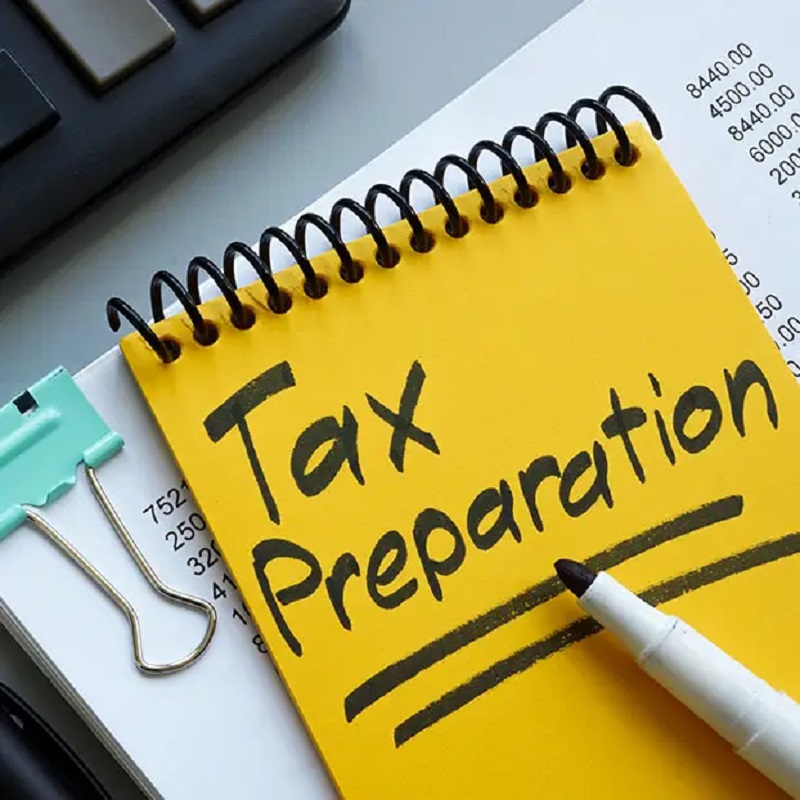
The Complete Guide to Tax Preparation for Small Businesses in Nigeria (2026 Edition)
Let’s be honest… tax preparation in Nigeria can feel like navigating a maze blindfolded. If you’re a small business owner, you’ve probably spent sleepless nights wondering if you’re doing everything right, or worse, overpaying just to stay on the safe side.
The truth is, tax preparation for small businesses in Nigeria doesn’t have to be this complicated. Whether you’re filing for the first time or you’ve been doing it for years, understanding the system, knowing what tools are available, and getting your processes right can save you time, money, and a whole lot of stress.
With Nigeria’s 2025 Tax Reform Acts coming into full effect by January 2026, this is the time to get your house in order. From how to file your company tax to calculating VAT and using technology to automate compliance, this guide walks you through everything you need to know as a Nigerian SME owner.
Understanding the Nigerian Tax Landscape (for SMEs)
Here’s the thing about taxes in Nigeria: the system wasn’t exactly designed with small businesses in mind. At least, that’s how it’s felt for a long time. But the new tax reforms are changing things—finally tilting the table a bit in favor of small and growing businesses.
The Main Taxes Your Small Business Needs to Know About
Company Income Tax (CIT)
This is the big one. Tax on your business profits, collected by the Federal Inland Revenue Service (FIRS).
Under the new tax classification:
- Small companies (turnover up to ₦100 million) are exempt from CIT.
- Medium companies (₦100 million to ₦500 million turnover) pay 20%.
- Large companies (above ₦500 million) pay the full 30%.
This 3-tier structure replaces the older “simplified tax regime” that was capped at ₦25 million. It’s more inclusive, giving more Nigerian SMEs breathing room.
Value Added Tax (VAT)Currently 7.5%, and yes, you’re required to collect it from your customers and remit it to FIRS. VAT applies to most goods and services, except for specific exempt categories (we’ll get into that shortly).
Withholding Tax (WHT)A portion deducted at source from payments like contracts, rent, or professional services. You or your clients remit this to FIRS, and it counts as advance tax credit.
Personal Income Tax (PAYE)If you have employees, you’re responsible for deducting PAYE monthly. Rates are progressive, up to 24%, but the new reform gives relief to low-income earners—anyone earning under ₦800,000 annually is exempt.
Development Levy (New)This is one of the new elements of the 2025 reform. Medium and large companies will now pay a 4% Development Levy on assessable profits. It replaces a mix of older levies like the Education Tax, IT Levy, and NASENI Levy, consolidating them into one cleaner charge.
Common Compliance Challenges
Even with all these changes, the real struggle for many Nigerian SMEs isn’t the tax rates—it’s compliance.
Here’s what still trips people up:
- Poor record-keeping that leads to inaccurate filings
- Missing legitimate deductions and allowances
- Navigating both FIRS and state tax authorities
- Keeping up with policy updates and new forms
- Losing productive time trying to manually reconcile tax data
If that list feels familiar, you’re not alone.
How to File Company Tax in Nigeria
Alright, let’s get practical. How do you actually file company tax in Nigeria?
Step 1: Get Your Tax Identification Number (TIN)
If you don’t already have one, start here. Your TIN is your business’s fingerprint in the tax system. You’ll need it for every transaction with FIRS.
You can register online via the FIRS website or walk into a local tax office. Required documents include:
- Certificate of Incorporation
- Memorandum and Articles of Association
- Valid IDs of company directors
- Proof of business address
Step 2: Keep Proper Financial Records
This one’s non-negotiable. Tossing receipts in a drawer isn’t record-keeping. You need:
- Income statement
- Balance sheet
- Cash flow statement
- Supporting documents (receipts, invoices, bank statements)
Many businesses now use accounting software to make this easier. Tools like TaxAnchor360 are built for Nigerian tax laws, automating calculations and record management.
Step 3: Prepare Your Tax Returns
Once your books are tidy, it’s time to compute your taxable income. You’ll need:
- Self-Assessment Form (for CIT)
- Audited Financial Statements (for turnover above ₦100 million)
- Computation of Tax Liability
- Evidence of any previous payments
Step 4: File Your Returns
You can do this manually at FIRS offices (brace yourself for long queues) or the smarter way e-filing.
Nigeria’s Integrated Tax Administration System (ITAS) lets you submit returns, upload documents, and track your filing status online. It’s faster, cleaner, and saves you at least a day of back-and-forth.
Step 5: Pay Your Taxes
Once you get your assessment notice, pay promptly via:
- Bank transfer to designated FIRS accounts
- Online payment on the FIRS portal
- Authorized remittance platforms
Keep proof of every payment—receipts, screenshots, bank alerts. They’re your best friend if FIRS ever comes knocking.
Important Deadlines You Can’t Miss
- CIT filing: Within 6 months after your financial year ends
- PAYE remittance: By the 10th of the following month
- VAT filing: Monthly, by the 21st of the following month
- WHT remittance: Within 21 days after deduction
Miss these and you’re looking at penalties—₦25,000 for the first month and ₦5,000 for each subsequent month, plus interest.
Why Small Businesses Overpay Taxes
Let’s talk about something painful.
Many Nigerian SMEs overpay taxes—not because they’re trying to be saints, but because they don’t know better.
Common mistakes include:
- Not claiming allowable deductions. Expenses like staff training, utilities, R&D, and depreciation are often ignored.
- Poor documentation. If you can’t prove an expense, FIRS won’t recognize it.
- Ignoring capital allowances. These can dramatically reduce your taxable income.
- Not applying small-company exemptions. Paying 30% CIT when you qualify for 0% is like throwing money away.
The solution isn’t to overpay “just to be safe.” It’s to stay informed and use tools that calculate accurately.
- E-filing integration. Submit directly to FIRS from within the platform.
- Smart record-keeping. Auto-store receipts, invoices, and proof of payments.Tax Preparation Tools for Small Businesses
Handling tax manually in 2025 is like using a typewriter when everyone else is on laptops.
Why You Need Tax Software
Every hour spent tinkering with spreadsheets is time you could spend growing your business. Beyond saving time, good tax software offers:
- Accuracy – Fewer errors, cleaner records
- Compliance – Automatically updated for new reforms
- Documentation – Digital trail for audits
- Insights – Real-time visibility into your tax position
What to Look For
- Local compliance. The software must handle Nigerian-specific taxes—CIT, VAT, PAYE, WHT—and integrate with FIRS.
- Automated calculations. No manual math.
The Best Options for Nigerian SMEs
TaxAnchor360 stands out as a Nigerian-built, AI-powered tax compliance tool designed specifically for local businesses. It automates CIT, VAT, and PAYE calculations, connects with FIRS for direct filing, and flags potential errors before they become penalties.
You could use global platforms like QuickBooks or Xero for accounting, but they often miss Nigerian-specific compliance features. That’s why a localized solution like TaxAnchor360 makes more sense for SMEs here.
How to Calculate VAT in Nigeria (with Example)
VAT tends to confuse people, but it’s simpler than it looks once you understand the logic.
What’s VAT?
Value Added Tax is a consumption tax. You collect it from your customers on behalf of FIRS.
Current rate: 7.5%
Threshold: Businesses with turnover above ₦25 million must register for VAT.
What’s Taxable and What’s Not
VAT applies to:
- Most goods and services
- Imported goods
- Digital services
VAT-exempt items include:
- Basic food items
- Educational materials
- Medical and pharmaceutical products
- Agricultural products and equipment
- Export goods and services
Example Calculation
Let’s say you invoice a client ₦500,000 for consulting.
- VAT = 7.5% of ₦500,000 = ₦37,500
- Total invoice = ₦537,500
If you also bought office equipment for ₦100,000 + ₦7,500 VAT, you can deduct that ₦7,500 input VAT from your ₦37,500 collected.
Your net VAT payable is ₦30,000.
Practical Example: Retail
Sales: ₦2,000,000
Output VAT: ₦150,000
Purchases VAT: ₦93,750
Net VAT Payable: ₦56,250
That ₦56,250 is due by the 21st of the following month.
Common VAT mistakes to avoid:
- Not registering for VAT when required
- Charging VAT on exempt items
- Missing filing deadlines
- Keeping incomplete VAT registers
How Software Helps
Modern tax tools like TaxAnchor360 automatically track your VAT, match input and output transactions, generate reports in FIRS-approved format, and remind you before deadlines.
The Rise of AI and Automation in Tax Compliance
Something big is happening in tax compliance, and AI is right at the center of it.
Traditional tax software is reactive. It waits for you to enter numbers. AI-powered tools actually think about your situation.
Here’s how AI changes the game:
- Predictive compliance: Flags potential errors before filing.
- Intelligent deduction recognition: Identifies deductions you might miss.
- Real-time updates: Automatically adjusts to new tax laws.
- Natural language queries: You can literally ask, “What’s my estimated tax if I hire two new staff?” and get an answer.
Real-world impact:
A Lagos-based logistics company reduced overpayment by 12% after switching to AI-powered tax automation. The system spotted misclassified transactions and unclaimed deductions. Savings in the first year? Over ₦600,000.
Modern tax automation features include:
- Continuous transaction monitoring
- Smart document management (just snap a receipt)
- Real-time tax dashboards
- Multi-tax integration (CIT, VAT, PAYE, WHT)
- Predictive cash flow analysis for tax planning
If you’re spending hours every month juggling tax tasks, or you’re unsure of your current compliance status, AI automation is your next step.
TaxAnchor360 uses AI to categorize transactions, track rule changes, and generate audit-ready reports automatically. Built for Nigerian businesses, it understands our tax environment down to the last form.
Ready to simplify your tax filing? Try TaxAnchor360 — Nigeria’s AI-powered tax compliance tool.
Conclusion: Taking Control of Your Tax Compliance in 2025
Let’s face it. You didn’t start a business to spend nights staring at spreadsheets. But tax compliance isn’t optional, and getting it wrong can cost you dearly.
The good news? It’s 2025, and things are changing. Online filing actually works. AI-powered compliance tools exist. And the 2025 Tax Reform Acts make life a little easier for small business owners—if you know how to use them.
Your Action Plan
- Get organized.
Keep your financial records clean and up to date. Every transaction matters. - Understand your obligations.
Learn what taxes apply, when they’re due, and what reliefs you qualify for. - Use the right tools.
Whether it’s TaxAnchor360 or another trusted platform, automation is your best ally for accuracy and peace of mind.
The Nigerian tax landscape isn’t getting simpler, but the tools to handle it? They’re getting smarter every day.
You’ve got this. And if you need help, that’s why TaxAnchor360 exists—to help Nigerian business owners simplify taxes, stay compliant, and avoid costly mistakes.
Save hours on tax preparation and compliance. Automate with TaxAnchor360. Your future self will thank you.
Demilade Tiwo is an SEO Strategist at TaxAnchor360
Feature/OPED
FG’s Suspension of 15% Fuel Import Duty: A Holistic Step Toward Economic Relief and Market Stability
By Blaise Udunze
In a welcome display of policy sensitivity and economic rationality, the Federal Government has suspended the planned 15 percent ad-valorem import duty on petrol and diesel. This move, announced by the Nigerian Midstream and Downstream Petroleum Regulatory Authority (NMDPRA), is more than a technical adjustment, it is a timely intervention that reflects empathy for the prevailing economic realities confronting citizens and businesses alike.
Just weeks ago, in my earlier article titled, Tinubu’s 15% Fuel Duty: Taxing Pain in a Broken Economy, I had argued that the proposed import duty, though designed with reformist intentions, was ill-timed and risked compounding Nigeria’s inflationary crisis. The central message was simple, which is reform must not inflict further hardship on already struggling citizens. It is therefore commendable that the Federal Government heeded that call, demonstrating a rare responsiveness to constructive public criticism. The decision to suspend the 15 percent duty shows that this administration is willing to listen, to adjust, and to prioritise the welfare of Nigerians above bureaucratic rigidity.
Nigeria’s economy is still recovering from the inflationary aftershocks of subsidy removal, exchange rate harmonization, and fiscal tightening. Against that backdrop, any additional import tariff on fuel which is the single most critical commodity in the nation’s cost structure would have triggered a cascade of price increases across transportation, food, manufacturing, and logistics. The government’s decision to halt the policy therefore represents a holistic step toward economic relief and market stability.
When the import duty was first approved in October 2025, it was presented as a forward-looking reform. The Federal Inland Revenue Service (FIRS), led by Zacch Adedeji, proposed the measure to align import costs with local refining realities and discourage importers from undercutting domestic producers. In principle, the idea had merit. It sought to strengthen local refining, promote crude oil transactions in the naira, and ensure a stable, affordable supply of petroleum products.
Yet, good intentions alone cannot override economic timing. The implementation, scheduled for late November, risked amplifying inflation at a time when Nigerians were already grappling with high transport fares, shrinking disposable incomes, and rising living costs. It would also have widened the gap between policy aspiration and market readiness, given that domestic refineries, including the Dangote Refinery and several modular plants, are still ramping up to full capacity.
By suspending the policy, the Tinubu administration has demonstrated that economic reform is not about rigid adherence to plans but about flexibility and responsiveness to market signals. This decision not only stabilizes prices but also strengthens public confidence that government is capable of balancing fiscal goals with social welfare.
The economic logic of this suspension is straightforward that in an energy-dependent economy like Nigeria’s, any increase in fuel import cost transmits directly into inflation. Transport fares go up. Food distribution costs rise. Manufacturing inputs become more expensive. Even small scale traders in the street feel the pinch as diesel prices affect electricity alternatives. Therefore, by preventing an artificial rise in fuel prices, the government has effectively averted another wave of inflationary pressure. It has also given room for other economic stabilisers such as improved power supply, localized production, and currency management to take effect.
Moreover, the NMDPRA’s assurance of a robust domestic fuel supply underscores the government’s effort to ensure market stability while preventing hoarding or profiteering. Its commitment to monitor distribution and discourage arbitrary price increases is a critical safeguard for consumers and businesses alike.
However, while the suspension offers immediate relief, it also presents an opportunity to rethink the broader framework for achieving energy security and local refining growth. If the ultimate goal is to strengthen local refining, stabilize fuel prices, and secure energy independence, there are smarter and more inclusive alternatives than import tariffs. The government should guarantee crude oil supply to modular refineries through transparent contracts and fair pricing mechanisms. Many smaller refineries struggle not because they lack capacity, but because they face erratic access to feedstock. Ensuring predictable crude allocation will allow them to operate profitably and contribute meaningfully to domestic supply.
Instead of penalizing importers through duties, the government can offer targeted tax incentives and financing support for smaller refineries to expand capacity. Access to credit at concessionary rates and tax holidays for equipment importation would accelerate output growth, create jobs, and foster competition. Regulatory fairness is equally essential. The downstream sector must remain open and competitive. The government must ensure regulatory equity so that no single player, whether public or private, dominates the market. Fair competition, not favoritism, will drive efficiency, innovation, and lower prices for consumers.
Nigeria must also address the hidden costs embedded in its energy logistics. The government should invest heavily in energy infrastructure like pipelines, depots, and transport networks to reduce non-tariff costs that inflate fuel prices. Currently, poor infrastructure adds unnecessary layers of cost to the final pump price. Reforming the power sector remains pivotal. Many industries and small businesses rely on diesel generators due to inadequate grid supply. A more reliable electricity system would ease demand for diesel, freeing up supplies for transport and export, while improving overall energy efficiency.
The government should also adopt a transparent pricing mechanism that allows market participants and consumers to understand how fuel prices are determined. Transparency discourages manipulation, hidden subsidies, and monopolistic practices. When prices reflect actual costs, trust grows, and market discipline follows. Such reforms will not only strengthen local capacity but also build a foundation for competition, accountability, and long-term sustainability, which are the true pillars of a resilient energy economy.
As the government nurtures the growth of local refining, it must also guard against a creeping danger of monopolistic capture. Protecting Dangote’s investment as the largest single-train refinery in the world is understandable. The refinery represents national pride and an enormous private commitment to Nigeria’s industrialization. However, promoting a monopoly, even unintentionally, would undermine the very goals of competition and consumer protection. No single operator, however efficient, should control access to crude supply, dictate market prices, or influence import policy. The Petroleum Industry Act (PIA) empowers the government to create fiscal measures that promote investment, but these must be implemented with fairness, transparency, and a clear focus on public interest.
A healthy downstream sector requires multiple active players involving modular refineries, state refineries under revitalization, and independent marketers, all operating on a level playing field. The government must therefore guarantee open access to crude oil, enforce transparent pricing of both feedstock and finished products, and prevent any operator from cornering market advantage through political influence. Monopoly breeds inefficiency, stifles innovation, and ultimately hurts consumers. What Nigeria needs is a competitive ecosystem that rewards efficiency, not proximity to power. A balanced and inclusive market structure is the surest path to sustainable self-sufficiency.
Beyond economics, this policy reversal underscores a deeper truth showing that reform must be humane. Citizens are not fiscal instruments but human beings whose welfare defines the legitimacy of policy. The suspension of the 15 percent import duty shows that the government can still listen, learn, and adapt, which is a welcome shift from the top-down approach that has often characterized Nigerian policymaking. But this responsiveness must become institutionalized. Policymaking should be driven by data and dialogue, not decrees. Stakeholders from refinery operators to transport unions and consumer groups must be part of the conversation before policies take effect. Reform, to succeed, must be sequenced with empathy, not arrogance.
Economic transformation is not measured merely by revenue gains or fiscal alignment, but by how it improves the quality of life of ordinary citizens. A humane reform process ensures that no policy, however noble, becomes a burden too heavy for its people to bear. The reversal of the 15 percent import duty on petrol and diesel is more than a temporary reprieve; it is a course correction toward sustainable and inclusive growth. It demonstrates that reform, when guided by compassion and common sense, can build confidence rather than resentment.
But government must go further to institutionalize competition, prevent monopolistic dominance, and pursue energy self-sufficiency without sacrificing fairness. Only by balancing protection with competition, efficiency with empathy, and ambition with accountability can Nigeria achieve the promise of the “Renewed Hope” Agenda. If this new direction is sustained, the suspension will not merely be remembered as a fiscal decision but as a moment when government rediscovered its moral compass, proving that in economic policy, the best outcomes are those that serve both the market and the people.
Blaise, a journalist and PR professional writes from Lagos, can be reached via: [email protected]
Feature/OPED
A Lesson in Political Civility from Kano
By Abu Fouad
Over the past decade, Kano’s political landscape has been sharply polarized by the rivalry between the Gandujiyya and Kwankwasiyya movements. This division has often fueled incivility, prioritizing blind loyalty over constructive dialogue.
The recent, unexpected encounter at the Kano airport between Governor Abba Kabir Yusuf and former Governor Abdullahi Umar Ganduje underscores the importance of respect and dignity in politics—both in Kano and across Nigeria.
Governor Yusuf’s gesture of stepping out of his vehicle to greet former Governor Ganduje reflects a remarkable level of humility and statesmanship.
This simple yet profound act of courtesy demonstrates that politicians can rise above their differences and extend mutual respect, regardless of contrasting views or party affiliations.
The unplanned meeting sets a positive precedent, promoting a culture of civility and respect in political life. The widespread commendation that followed serves as a reminder that politics need not be driven by divisiveness or hostility.
When leaders act with dignity and respect, they help bridge divides and foster a more united and harmonious society. Kudos to Governor Abba Kabir Yusuf and former Governor Abdullahi Umar Ganduje for showing that respect and kindness can have a profound impact even in the often-polarized kano politics.
Given the intense rivalry between Kano’s two dominant political blocs, few expected Governor Yusuf to extend such a gracious gesture toward his predecessor. Their actions offer a valuable lesson to politicians and supporters alike, especially those who resort to insults and hostility on social media.
The recent act of goodwill between Governor Yusuf and former Governor Ganduje serves as a powerful reminder to overzealous supporters who contribute to a toxic political climate by using disrespectful language—particularly toward elders—on social and traditional media platforms.
Today, many respected figures in Kano face online attacks from individuals emboldened by partisanship to insult anyone with differing views. Yet Governor Yusuf’s gesture embodies unity, compassion, and empathy—transcending political and ideological boundaries. By choosing this path, he evokes memories of a time when political differences did not undermine mutual respect or social cohesion. His action stands as a beacon of hope for restoring civility and respect in Kano’s political discourse.
Abu Fouad writes in from Kano
Feature/OPED
Taxing, Borrowing the Future Without Building: What Has Nigeria’s Fiscal Authority Done for the Real Sector?
By Blaise Udunze
In today’s Nigeria, one uncomfortable truth has become glaring that the fiscal authority collects, but it does not build. It borrows, but it does not produce. It taxes, but it does not empower. For years, the Nigerian government has pursued fiscal policies more obsessed with revenue than with results.
The removal of fuel subsidy in 2023 was supposed to mark a new dawn. It was sold to Nigerians as a path to fiscal freedom as a step that would redirect over $10 billion annually from consumption subsidies to capital investment, infrastructure, health care, education and job creation. Two years later, that promise has vanished into a fog of political spending and bureaucratic complacency.
The question now is not how much the government has collected, but what it has done with it. What tangible impact have these revenues from taxations and borrowings had on the real sector which is the part of the economy that actually produces goods, creates jobs, and drives development?
A Fiscal Authority Fixated on Taxation, Not Production
Nigeria’s fiscal policy in recent years has tilted dangerously toward aggressive revenue collection. Under immense pressure to grow non-oil income, the Federal Inland Revenue Service (FIRS) has expanded its reach to virtually every corner of the economy. From VAT on electricity and telecommunications (data usage) to call credits, bank transactions to stamp duties on bank transfers, to levies on postal deliveries for online purchases, almost nothing escapes the government’s tax net.
The average Nigerian entrepreneur now faces a labyrinth of taxes such as company income tax, education tax, signage fees, land use charges, and a myriad of local levies. Yet the same entrepreneur operates in an environment defined by power shortages, failing infrastructure, forex volatility, and regulatory uncertainty. These are not conditions for business growth; they are conditions for extinction.
Taxation, in principle, should be a partnership between the state and the productive class as a social contract that trades compliance for development. But in Nigeria, taxation has become punishment, not partnership. The fiscal authority appears to be taxing poverty to sustain bureaucracy. It has forgotten that the strength of any economy lies not in how much it extracts, but in how much it enables.
Taxing Without Building
For a government that collects billions of naira daily from taxes, surcharges, levies, and newly designed revenue streams, it is difficult to find any visible reflection of these revenues in the productive base of the economy.
Based on FIRS and government releases, tax collections amounted to about N34 trillion in 2023-2024, and non-oil receipts reached around N20.6 trillion in January to August 2025, indicating total government collections of at least N50-N55 trillion since mid-2023, depending on how partial-year and FAAC items are aggregated and without double counting.
The contradiction is glaring that Nigeria’s fiscal managers have become more efficient at collecting taxes but less effective at building the economy that sustains those taxes.
The reality is sobering. SMEs that stand as the true backbone of national productivity are closing shop in droves. The cost of diesel, transportation, and rent have tripled, while the naira’s freefall continues to eat away at margins. Rather than offer relief, fiscal agencies have tightened the noose with new charges and penalties. The result is a climate of exhaustion and economic fatigue.
Borrowing Without Building
If taxation is squeezing businesses dry, borrowing is suffocating the nation’s future. As if taxes were not enough, Nigeria’s fiscal authorities have doubled down on borrowing, amassing debts at an unprecedented rate. These have resulted to spiral of loans justified in the name of development but rarely seen in tangible outcomes.
As of mid-2025, Nigeria’s total public debt has ballooned to N152.4 trillion, a staggering 348.6 percent increase since President Bola Tinubu assumed office in June 2023, when the figure stood at N33.3 trillion. For a country already struggling to meet basic obligations, this is unsustainable.
Reflecting on the wider African context, the picture is equally alarming. The continent’s external debt now exceeds $1.3 trillion, with debt servicing costs hitting $89 billion this year alone. Nigeria is one of the hardest hits, not merely by the size of its debt, but by its lack of productive return.
Even as businesses groan under the weight of multiple taxation, the Federal Government has kept its foot firmly on the borrowing pedal. Between July and October 2025, Nigeria’s fiscal authorities secured over $24.79 billion (plus €4 billion, ¥15 billion, N757 billion, $500 million in Sukuk) in new borrowings and facilities, the bulk of which were justified as “development financing.” Yet the real sector still awaits to feel the promised impact.
Over 25 percent of Nigeria’s annual revenue now goes into debt servicing, leaving little fiscal space for investment in health, education, or industry. Experts warn that when over 90 percent of government revenue is consumed by old debts, governance becomes survival, not progress.
Uche Uwaleke, professor of finance and capital markets at Nasarawa State University, said the high cost of debt repayment continues to undermine the country’s economic potential.
“Nigeria’s debt service ratio is inimical to economic development, chiefly because what could have been used to build infrastructure and invest in human capital is used to service debt,” Uwaleke told BusinessDay. “The opportunity cost for the country is high. To ensure debt sustainability, the government should tie future borrowings to self-liquidating projects that can generate revenue to repay the loans.”
At the 2025 IMF and World Bank Annual Meetings in Washington D.C., global leaders again pledged to tackle developing countries’ debt burdens. But as Nigeria’s borrowing continues unchecked through Eurobonds, sukuk, and bilateral loans. The question Nigerians should be asking is simple, who benefits from all this borrowing?
What is more troubling is the government’s pattern of borrowing to service past debts and fund recurrent expenditures. Instead of financing projects that create value, loans are spent plugging budget holes. The chain of debt grows longer, and the productive economy remains static.
We are witnessing a fiscal irony as in a nation borrowing to survive, not to thrive.
The Missed Opportunity of Subsidy Savings
The removal of fuel subsidy was supposed to free up capital for productive investments. Instead, it has freed up more money for recurrent consumption. Subsidy funds are now shared monthly among the three tiers of government, with no visible developmental footprint.
Nigerians were told that the subsidy windfall would improve power supply, roads, and transport infrastructure. But more than a year later, there is little to show.
In one of the world’s largest oil producing nations, fuel prices quintupled, increasing more than 514 percent from N175 in May 2023 to N900. Across the country, small businesses are closing down; transport fares remain unbearable; and electricity supply remains erratic. The fiscal authority appears to have replaced subsidy waste with revenue waste.
Instead of using subsidy savings to ignite productivity, the funds have been channeled into the same unsustainable cycle of political spending, salary payments, and administrative overheads. This is not reform, it’s redistribution without responsibility.
Where Is the Fiscal Policy Coordination?
The disconnect between Nigeria’s fiscal and monetary authorities has become a fundamental barrier to progress. While the Central Bank of Nigeria (CBN) tightens liquidity to control inflation, the fiscal authority simultaneously floods the economy with new taxes and levies, inflating business costs and undermining the same stability the CBN is trying to achieve.
The contradictions are endless. The CBN preaches financial inclusion, yet fiscal agencies impose bank transfer duties that discourage banking usage. The CBN claims to promote SME credit schemes, yet fiscal authorities drain disposable income with new taxes.
This absence of policy synergy sends mixed signals to investors and citizens alike. Businesses cannot plan, investors cannot forecast, and even the government’s own intervention funds lose impact. Nigeria’s economic management, as it stands, resembles an orchestra without a conductor.
State Governments as the Silent Beneficiaries
While the federal government collects the bulk of taxes, state governments have become silent beneficiaries of the subsidy savings. Each month, they receive billions from FAAC allocations swollen by oil receipts, VAT, and subsidy removals.
Based on data from NEITI and OAGF/NBS monthly communiqués, the conservative FAAC disbursement total from June 2023 to June 2025 stands at approximately N25.65 trillion, covering only months with publicly available and verifiable reports.
Yet, few states have anything to show for it. Industries are dying, roads are deteriorating, and capital budgets are chronically underfunded. In many states, governance has been reduced to salary payments and political campaigns, not development.
Nigeria’s fiscal success cannot be measured by how much Abuja collects but by what states deliver. Development is a chain, if one link is weak, the entire system collapses. Yet, most states continue to depend on federal allocations as a feeding bottle rather than a development engine.
The federal fiscal authority cannot claim progress while sub-national governments squander shared revenues without accountability. Until FAAC allocations are tied to measurable developmental outcomes, Nigeria will keep sharing poverty, not prosperity.
The Real Sector being Neglected and Starved
Nigeria’s real sector, particularly SMEs continues to suffer neglect. Despite contributing about 48 percent of GDP, accounting for over 90 percent of businesses and employing over 80 percent of the workforce, SMEs receive less than 5 percent of total bank credit. Fiscal policy has done little to change that.
Rather than providing targeted tax reliefs, infrastructure subsidies, or credit guarantees, government policies have worsened the cost of doing business. The manufacturing sector’s growth rate remains sluggish, and capacity utilisation in many factories has dropped below 50 percent.
Manufacturers grapple with power cuts, forex scarcity, and multiple taxation. Many are forced to rely on expensive diesel generators, further eroding competitiveness. Import duties remain high, ports are congested, and logistics costs keep rising.
Ajayi Kadiri, Director-General of the Manufacturers Association of Nigeria (MAN), recently captured this frustration bluntly:
“We can’t plan under fiscal chaos. Manufacturing in my village is extremely expensive. Multiple levies, some without a legal basis, are suffocating businesses. You can wake up one day and see a 50 percent increase in port charges without prior consultation. That’s not policy that’s chaos.”
Kadiri’s statement is more than an industry complaint; it is a mirror of national dysfunction. When manufacturers cannot plan, the economy cannot grow. When fiscal policy becomes unpredictable, investment flees. The result is a landscape of abandoned factories, unemployed youth, and shrinking export potential.
In effect, the fiscal authority is extracting value without creating it. Government has become an expert in revenue collection but a failure in economic coordination.
The Human Cost of Fiscal Mismanagement
Behind the numbers lies a painful reality. Every percentage increase in tax or tariff translates into higher prices, lower wages, and fewer jobs. The removal of subsidy without a viable safety net pushed millions deeper into poverty. Despite the inflation claimed to have eased to 18.02 percent from 20.12 is still eroding purchasing power and diminished consumer demand, which is the lifeblood of production.
The market woman who pays for electricity she rarely gets, the manufacturer laying off workers due to diesel costs, the young entrepreneur crushed by levies, as these are not statistics. They are the casualties of a fiscal system that prioritises collection over compassion.
Instead of designing targeted support, energy rebates, SME tax credits, or rural infrastructure programs the fiscal authority has chosen the easier path by taking more from those already struggling. This short-term approach sacrifices long-term productivity for instant revenue gratification.
Need for Building, Not Just Taxing
To rescue the economy, Nigeria’s fiscal managers must adopt a production-first mindset. A nation cannot tax or borrow its way to prosperity. It must produce, build, and export its way there.
Rebalance fiscal priorities.
– Channel subsidy savings into infrastructure, agro-industrial hubs, and SME credit facilities not recurrent spending.
– Reward production, not compliance. Offer tax breaks for local manufacturers, exporters, and innovators.
– Enforce fiscal transparency. Every borrowed dollar should be tied to measurable outcomes, with clear public reporting.
– Align fiscal and monetary policy. End the contradiction between tax expansion and credit tightening.
– Demand state-level accountability. States must show what they are doing with FAAC allocations through verifiable projects, not political slogans.
The Urgency of a Fiscal Rethink
Nigeria’s fiscal policy has lost its moral and developmental compass. It has become a machine that extracts without empowering as a structure more focused on sustaining government than building an economy.
Taxation should create an environment where businesses thrive. Borrowing should build the future, not mortgage it. And subsidy savings should become the foundation of national renewal, not political redistribution.
Until Nigeria’s fiscal authorities understand that revenue collection is not development, and that loans are not progress, the economy will remain trapped in a vicious cycle of taxing without building, borrowing without producing, and spending without transforming.
Blaise, a journalist and PR professional writes from Lagos, can be reached via: [email protected]
-
Feature/OPED6 years agoDavos was Different this year
-
Travel/Tourism9 years ago
Lagos Seals Western Lodge Hotel In Ikorodu
-
Showbiz3 years agoEstranged Lover Releases Videos of Empress Njamah Bathing
-
Banking7 years agoSort Codes of GTBank Branches in Nigeria
-
Economy2 years agoSubsidy Removal: CNG at N130 Per Litre Cheaper Than Petrol—IPMAN
-
Banking3 years agoFirst Bank Announces Planned Downtime
-
Sports3 years agoHighest Paid Nigerian Footballer – How Much Do Nigerian Footballers Earn
-
Banking3 years agoSort Codes of UBA Branches in Nigeria