Connect with us

General

1,004 Graduate from Crown Flour Baking Academy

Published

on

Crown Flour Baking Academy

By Aduragbemi Omiyale

In three years, no fewer than 1,000 persons have graduated from the Crown Flour Angels (CFA) Baking Academy, a flagship programme of Olam Agri’s Seeds for the Future (SFTF) initiative.

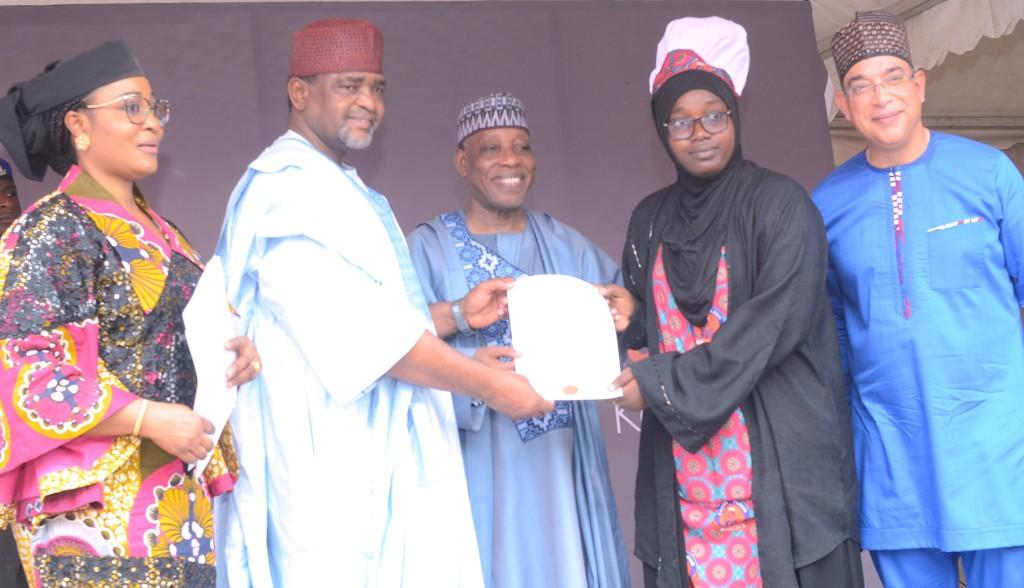
The latest people to complete the training scheme were 355 women, who learned baking and entrepreneurship through an intensive four-week course that includes professional certification from the National Business and Technical Examination Board (NABTEB). Graduates gain market-ready skills and the confidence to build sustainable businesses.

SFTF is Olam Agri’s signature value chain development platform in Nigeria, driving impact through focus areas: improving local wheat production, advancing education and skills for young people, empowering women, promoting health and nutrition nationwide and reducing carbon emission.

On behalf of the graduating women, Aisha Ahmad Abdullahi thanked the company for investing in her and her colleagues: “My colleagues and I have had an amazing time learning new things about baking. I didn’t believe I could bake the way I do now. The skills and insights I have acquired in the academy have raised my confidence in building a baking business. I am grateful to Olam Agri.”

Also speaking, the Kano State Coordinator for NABTEB, Talatu Muazu, said, “Helping the women acquire top baking skills and enrol for professional certification under the same programme is a testament to the Crown Flour Angels initiative’s commitment to excellence. These efforts will have a lasting impact on these young lives, and I am confident that they will go on to achieve great things.”

The Commissioner for Commerce and Investment in Kano State, Mr Shehu Wada Sagagi, who represented the state’s Deputy Governor at the event, said, What makes me happier is that the graduates of the baking academy are women.

“Considering the plight of women in our society and the economic situation, our women need to be empowered to raise their incomes. I am delighted with what Olam Agri is doing for these women. As a government, we need to identify with this great initiative as it supports and balances the state’s various empowerment agendas.”

The General Manager/Head of Marketing at Olam Agri, Ms Bola Adeniji, said, “We believe that real corporate success must go hand-in-hand with social impact. As part of our corporate social responsibility, we are deeply committed to empowering the communities where we operate – and among our most impactful initiatives is the Crown Flour Angels programme.”

The Senior Vice President and Managing Director of the wheat-milling unit, Olam Agri, Nitin Mehta, said, “The Crown Flour Angels programme was initiated to equip women with useful skills that will enable them to participate effectively in the economy, and provide support for households. By equipping women with baking and entrepreneurship skills, we are launching them into a growing market where their skills and experience are certain to yield rewards.”

The Country Head of Olam Agri, Anil Nair, said, “Olam Agri was founded here in 1989. As a business that originated from Nigeria, we reserve a special place for the country, as evidenced in our continuous investment in the improvement of the country’s food systems, the well-being of its citizens, and the attainment of the key federal and state economic growth agendas. The Crown Flour Angels initiative supports the government’s Renewed Hope Agenda, with a focus on women’s empowerment. Congratulations to the women who have benefited from this effort.”


Click to comment

Leave a Reply

Your email address will not be published. Required fields are marked *

General

NEC Approves $4.5bn Refinancing of NNPC Oil-Backed Loan

Published

on

bayo ojulari nnpc

By Adedapo Adesanya

The National Economic Council (NEC) has approved a $4.5 billion arrangement for the Nigerian National Petroleum Company (NNPC) Limited aimed at strengthening the country’s external reserves and freeing up funds for infrastructure.

This is part of the refinancing of the $3.3 billion Project Gazelle Pre-Export Finance Facility through a new $4.5 billion facility named “Project Gazelle 2”.

The approval allows NNPC Limited to refinance the outstanding balance of approximately $1.5 billion under the original 2023 facility, while unlocking an additional $3 billion in liquidity to strengthen the country’s external reserves and support ongoing fiscal and infrastructure priorities of the government.

NEC’s approval followed a presentation by the Minister of Finance, Mr Taiwo Oyedele, which was presented by the Chairman of the Council, Vice President Kashim Shettima, underscoring the importance of the project.

NEC observed the significance of unlocking additional liquidity to the federation, among other benefits, pledging its support for the actualisation of the initiative.

The Finance Minister explained that the refinancing has been structured on more favourable terms than the original facility, including a reduction in the volume of pledged crude oil from 90,000 barrels of oil per day to approximately 78,750 barrels of oil per day – a 12.5 per cent reduction.

He noted that under the new arrangement, an additional 11,250 barrels of oil per day for the federation will be released, while there will be a reduction in the pledged crude volumes by the state oil company.

Mr Oyedele added that while accessing additional liquidity on improved terms, the arrangement is freeing up resources for strategic national priorities while strengthening the country’s financing structures.

“The arrangement is freeing up resources for strategic national priorities while strengthening the country’s financing structures,” he said.

VP Shettima called for a responsive, scalable, and data-driven social protection policy to tackle multidimensional poverty in Nigeria.

According to Mr Shettima, government policies are often heard before they are seen, speak through the price of food, condition of hospitals, records in schools, strain on families, the confidence of those who invest their labour in the nation’s future, and, very importantly, the ambitions of state governments.

He implored members of Council to ensure that every decision they make assure the citizens “that their government is paying attention to the pulse of the nation and is resolved to respond with competence, compassion and purpose.”

Continue Reading

General

FG Seeks Public Input on National Policing Bill

Published

on

state police bill

By Modupe Gbadeyanka

Members of the public have been invited to submit memoranda and policy proposals on the proposed National Policing Bill.

The Chairman of the Working Group, Mr Femi Gbajabiamila, announced this on Monday after the team’s meeting at the State House in Abuja.

The group, headed by the Chief of Staff to President Bola Tinubu, is calling for input from Nigerians as part of efforts to establish a comprehensive legal and operational framework for state policing.

It is reviewing the Police Act 2020, the Police Service Commission framework, police regulations, and other relevant laws to support the development of an effective, modern policing system.

The proposed framework will set national minimum standards, define state readiness and grant certification, clarify jurisdictional responsibilities, ensure independent oversight, uphold human rights, and guarantee sustainable funding. It would also spell out an orderly transition to a dual-policing structure.

The call for memoranda will run for two weeks, allowing citizens, professionals, civil society, security agencies, state and local governments, academics, and other stakeholders to contribute. Submissions will be reviewed and integrated into the draft bill, which will then be subject to further national consultation before being finalised and sent to the National Assembly.

The Working Group has adopted a seven-week work programme running from July 27 to September 14, 2026. The draft Executive Bill is scheduled for presentation to President Bola Ahmed Tinubu on September 3, 2026, with national consultations to follow before the final approval.

The new National Policing Bill will set out requirements for recruitment, training, oversight, funding, and transition arrangements to ensure credible, effective, and accountable policing nationwide.

“A proposed State Police Service must demonstrate that it has credible arrangements for recruitment, vetting, training, pay, pensions, equipment, custody, complaints, discipline, data, firearms control, independent oversight and financial sustainability before it begins policing,” Mr Gbajabiamila said.

The representative of the Nigeria Governors’ Forum and Governor of Ogun State, Dapo Abiodun, who described State Police as a landmark reform, described the initiative as one of the defining reforms of President Tinubu’s administration.

Responding to concerns about federal overreach, he clarified that there is no Federal attempt to control State Police. He added that the proposed legislation is intended to provide an operational framework rather than centralise control.

Prince Lateef Fagbemi, the Attorney-General of the Federation and Minister of Justice, said the proposed National Policing Bill is designed to guarantee the security of lives and property while ensuring that the establishment of state police does not become a tool for political persecution.

The Attorney-General added that states not immediately ready to establish their own police services would continue to benefit from the presence of the Federal Police until they meet the required standards.

Other participants at the meeting included the Inspector General of Police, Tunji Disu; President of the Nigerian Bar Association, Afam Osigwe; Chairman, Policy Advisory Committee, Justice Abdullahi Liman (rtd); Professor Olu Ogunsakin, Head, Nigeria Police Reform Secretariat; Senior Special Assistant to the President on Planning and Research, Nnadubem Moghalu; and Brigadier General Olutayo Muyiwa Adesuyi, representing the National Security Adviser.

Continue Reading

General

NMDPRA Records 30% Drop in Gas Imbalance on Western Network

Published

on

NMDPRA fee regulations

By Adedapo Adesanya

The Nigerian Midstream and Downstream Petroleum Regulatory Authority (NMDPRA) says it recorded a 30 per cent reduction in gas imbalance on the country’s Western Network following the conclusion of its first-half 2026 Nigerian Gas Network Reconciliation (NGNR) Workshop.

The workshop brought together gas transporters, suppliers, shippers and off-takers to reconcile gas volumes traded between January and June 2026, while introducing a Network Entry/Exit Point Measurement Infrastructure Audit Template aimed at improving metering accuracy and accountability across the gas transmission network.

In a communiqué issued after the workshop, the authority said participants also reviewed the performance of the Nigerian Gas Transmission Network, assessed progress on major pipeline infrastructure projects, and received updates on the ELPS Gas Shrinkage Factor and Hydraulic Modelling Project.

Discussions focused on addressing metering gaps, improving network visibility through Supervisory Control and Data Acquisition (SCADA) integration, and enhancing system reliability ahead of the commissioning of the Ajaokuta-Kaduna-Kano (AKK) Pipeline System.

The workshop adopted key resolutions, including the execution of outstanding Network Exit Agreements, mandatory submission of measurement audit templates and closer collaboration among industry stakeholders to improve network pressure management.

Speaking at the closing session on behalf of the authority’s chief executive, Mr Rabiu A. Umar, the Director of Transportation Systems and Networks, Mr Joseph G. Musa, said the biannual reconciliation exercise had become critical to promoting equitable gas transactions, transparency, investor confidence and efficient network operations.

Mr Musa noted that since the NGNR process was introduced in 2023, it had significantly improved gas measurement, strengthened regulatory compliance through consequence management, reduced operational imbalances and contributed to a more reliable domestic gas supply.

The workshop concluded with participants adopting the reconciled H1 2026 gas volumes, reaffirming the authority’s commitment to a transparent, efficient and reliable domestic gas market.

Continue Reading