
General
18m People Risk Hunger in Nigeria, Horn of Africa

By Dipo Olowookere
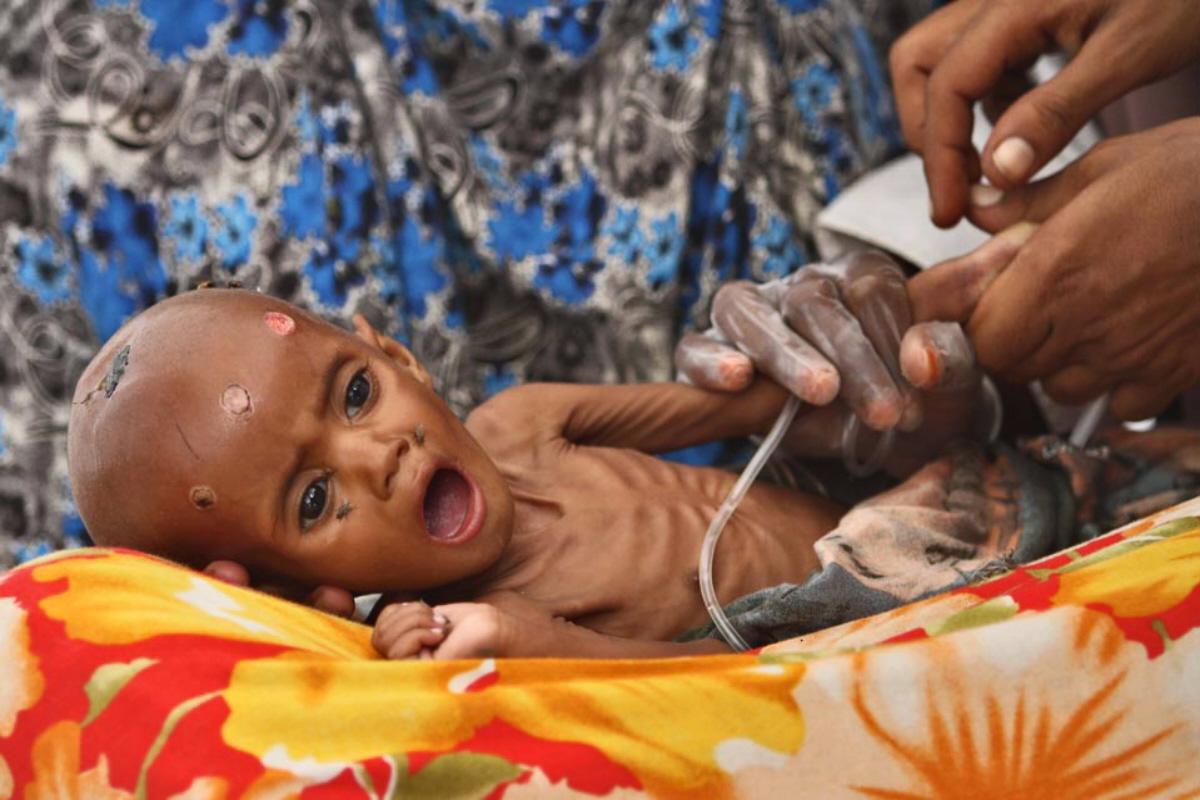
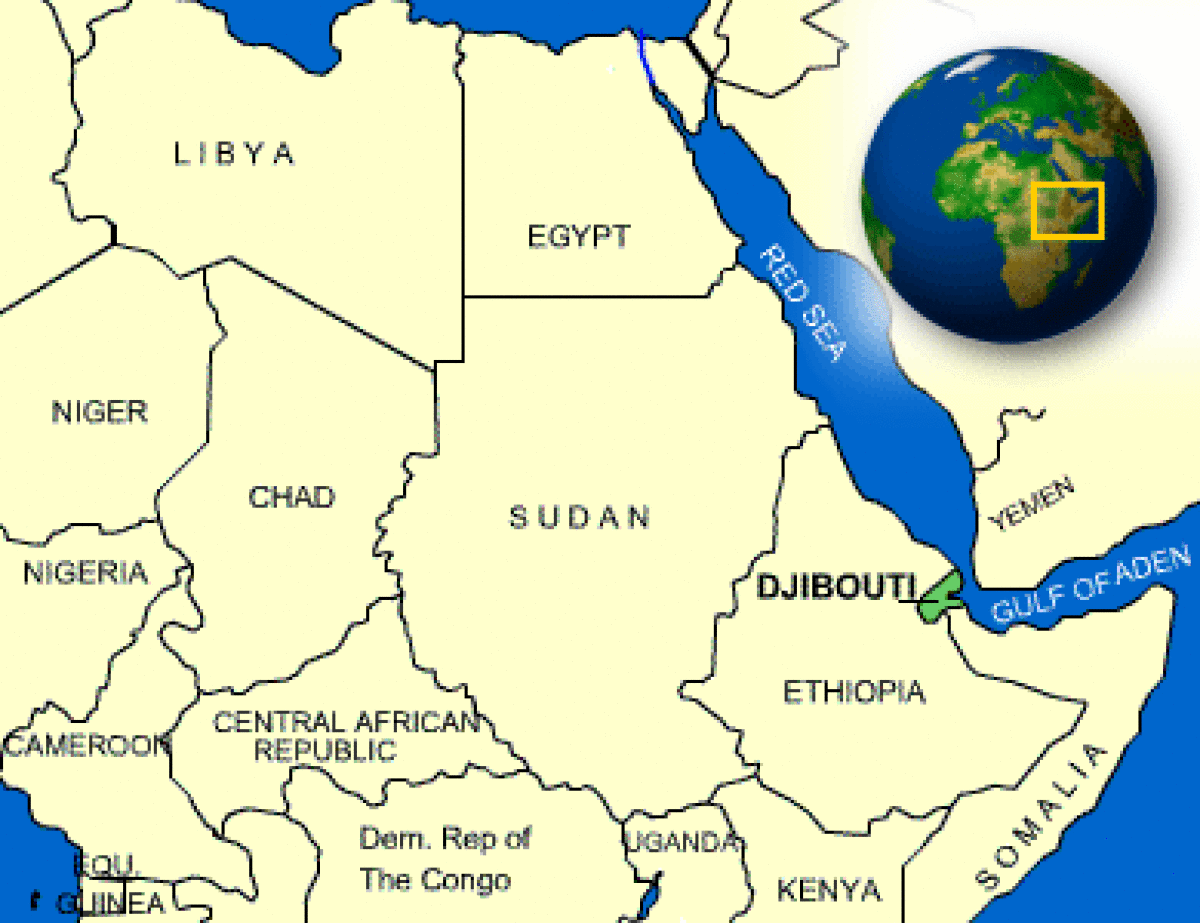
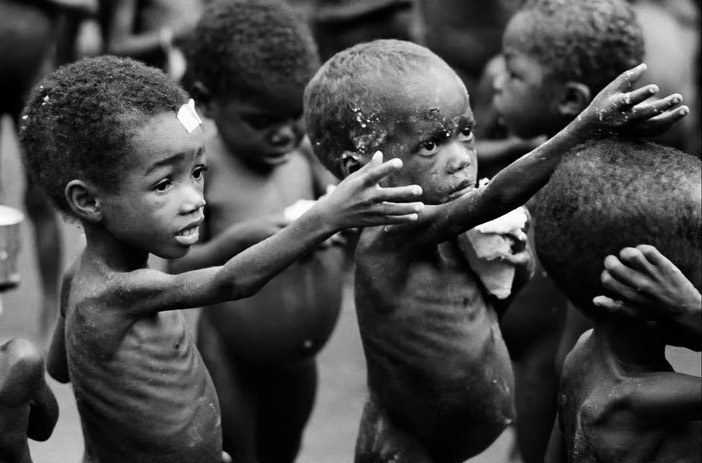
The lives and futures of more than 18 million people are at risk in the Greater Horn of Africa and in Nigeria, as a result of one of the worst hunger crisis in recent history.
This unfolding humanitarian crisis will be repeated again and again without concerted efforts to build resilience on the continent, the International Federation of Red Cross and Red Crescent Societies (IFRC) has warned.
“As long as we have conflicts and do not take strong measures to mitigate the effects of climate change, food insecurity will be with us,” said Dr Fatoumata Nafo-Traoré, IFRC’s Regional Director for Africa. “As we respond to the risk of imminent mass starvation in Africa, we also need to invest in community-level capacities and systems, so that local communities are prepared for any future shocks.”
This warning comes at the end of a continental conference of Red Cross and Red Crescent leaders, in Abidjan. The three-day meeting recommended a number of actions.
Other recommendations included strengthening domestic resource mobilization, increasing country-level policy dialogue with governments, fostering increased community ownership of programmes, and developing innovation centres in communities, while recognizing innovative community-level initiatives on disaster risks reduction.
“We need to take advantage of modern technologies in our response to current humanitarian challenges. Mobile applications and social media should be used to raise awareness on climate change and to share early warning information about disasters,” said Dr Abbas Gullet, IFRC’s Vice President. “We also need to improve data collection, through technology and capacity building at community level.”
The meeting also called on governments, donors and humanitarian partners to prioritize and invest in interventions that will finally help break the grim and destructive cycle of African hunger—by strengthening communities’ capacities and skills to better prepare for, and respond to disasters and food insecurity, among other crises.
“We’ve seen drought and hunger before: in Somalia in 2011 and 2012, in Niger in 2005, in Ethiopia in the 1980s. Not enough was done to prevent those crises from happening, and not enough is being done to prevent a similar disaster from happening in the future,” said Dr Gullet.
IFRC and member National Societies are providing long-term support to vulnerable communities throughout Africa. Local Red Cross and Red Crescent staff and volunteers are embedded in many of the most vulnerable and hardest-to-reach communities.
“How many people will die this year? How many will die in future years if we don’t build the resilience of communities alongside our provision of emergency aid?” added Dr Gullet. “We cannot keep saying ‘never again’ unless we are prepared to change the way we respond.”




By Adedapo Adesanya
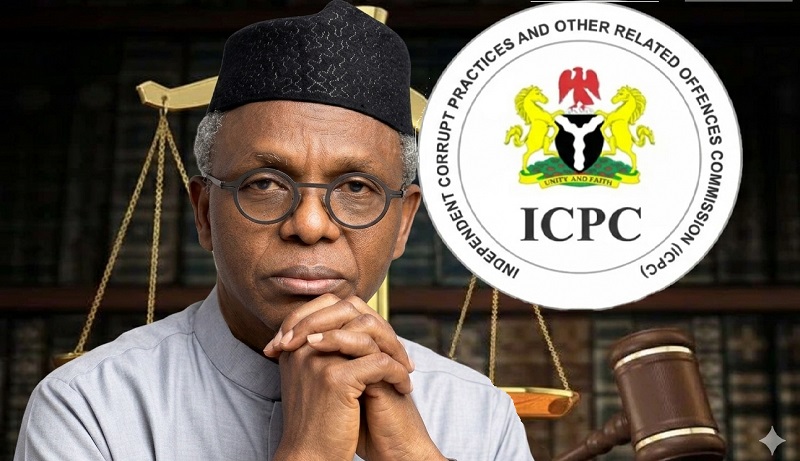
The Independent Corrupt Practices and Other Related Offences Commission (ICPC) has secured a court order to extend the detention of former Governor of Kaduna State, Mr Nasir El-Rufai.
This order gives the anti-graft agency ample time to finalise its investigation into allegations against the former governor, which has now deepened as a result of some new findings.
Subsequently, the new order, which was granted on Tuesday in the presence of Mr El-Rufai’s lawyer, will expire on Thursday, March 19.
However, Mr El-Rufai’s lawyer, whose application to quash the first remand order was declined by a Chief Magistrate Court in Bwari, has returned to the same court to nullify the latest order.
Justice Okechukwu John Akweke has fixed March 17 to decide whether or not he should set aside the latest detention order.
He said, “Upon hearing and listening to the prosecuting counsel, Dr Osuobeni Ekoi Akponimisingha Esq., praying this Honourable court for the following orders:
“An order of this Honourable Court issuing a remand warrant against the Respondent (NASIR AHMAD EL-RUFAI) in favour of the Applicant, i.e. Independent Corrupt Practices and other Related Offences Commission (ICPC), to detain the Respondent (NASIR AHMAD EL-RUFAI) in its custody for another fourteen (14) days pending conclusion of investigation activities on allegations of Money Laundering/abuse of office.
“And for such other or further order(s) as this Honourable court may deem fit to make in the circumstances. It is hereby ordered that: Application granted as prayed.
“That the Applicant, i.e. the Independent Corrupt Practices and other Related Offences Commission ICPC is hereby ordered to re-detain the Respondent (NASIR AHMAD EL-RUFAI) for an additional 14 days to enable the commission to conclude investigation activities.
“That the return date shall be the 19th day of March 2026, for the report of compliance.”
The scrutiny of Mr El-Rufai by the ICPC follows the report of the Kaduna State House of Assembly’s ad hoc committee constituted in 2024 to investigate finances, loans and contracts awarded between 2015 and 2023 under his eight-year administration of the state.
By Adedapo Adesanya
The federal government has begun evacuating willing Nigerians in Iran, escorting them across the Armenian border to ensure their safety amid escalating tensions in the Middle East.
The evacuation follows the growing crisis that began on February 28 after coordinated military strikes on Iran by the United States and Israel.
The attacks triggered retaliatory missile and drone strikes across parts of the region, raising fears of a wider conflict.
The chief executive of the Nigerians in Diaspora Commission (NiDCOM), Mrs Abike Dabiri-Erewa, disclosed this in a post on her X handle on Tuesday.
She said officials of the Nigerian Embassy in Tehran are coordinating the evacuation of Nigerians who wish to leave the country and are facilitating their safe passage into Armenia.
Mrs Dabiri-Erewa also reassured that no Nigerian in Iran has so far been affected by the ongoing tensions, noting that embassy officials remain stationed at the border to receive and assist evacuees.
Her post read, “Willing Nigerians [are] being escorted across the Armenian border by officials of the Nigerian embassy in Iran for safe passage. No Nigerian in Iran has been affected by the war as officials remain at the border to receive all who want to leave.”
The development comes as tensions in parts of the Middle East continue to raise concerns over the safety of foreign nationals residing in affected areas.
For repatriation flights, the NiDCOM chair said the airspace is currently unsafe but assured Nigerians in the Middle East that the Federal Government team is on standby to evacuate them.
“And as for repatriation flights, the skies are currently unsafe to fly. Luckily, a flight came in from the UAE to Lagos two days ago, just before another strike and the closure of the airspace.
“Once the airspace opens, the multi-agency FG team on crisis and evacuation is on standby. Our prayers are with you and all our people in affected countries,” she said.

By Modupe Gbadeyanka
All private transmission connected to the national grid must register and get authorisation to operate, the Nigerian Electricity Regulatory Commission (NERC) has declared.
In a statement, the electricity regulatory body in Nigeria directed owners of private transmission substations used by bulk electricity consumers to obtain an Independent Electricity Transmission Network Operator (IETNO) Permit before operating or connecting to the grid.
It was disclosed that this latest development, which became effective March 9, 2026, is to strengthen oversight of privately owned substations connected to Nigeria’s national grid.
NERC further said the directive was introduced to improve grid reliability, safety, and operational visibility following frequent transmission line trips reported by the Nigerian Independent System Operator (NISO).
Under the order, NISO must submit to NERC a comprehensive list of all existing Private Transmission Substation Owners (PTSOs) and notify them of the provisions of the order within five days.
Existing PTSOs must apply to NERC for an IETNO permit within 45 days, while new PTSOs must obtain the permit before connecting to the grid, as non-compliance attracts regulatory sanctions.
NISO will deploy IoT-based metering systems at substation interconnection points within 120 days.
Further, operators must submit monthly operational reports, while NISO will conduct inspections to ensure compliance.









-
 Feature/OPED6 years ago
Davos was Different this year
-
Travel/Tourism10 years ago
Lagos Seals Western Lodge Hotel In Ikorodu
-

 Showbiz3 years ago
Estranged Lover Releases Videos of Empress Njamah Bathing
-
 Banking8 years ago
Sort Codes of GTBank Branches in Nigeria
-

 Economy3 years ago
Subsidy Removal: CNG at N130 Per Litre Cheaper Than Petrol—IPMAN
-

 Banking3 years ago
Sort Codes of UBA Branches in Nigeria
-

 Banking3 years ago
First Bank Announces Planned Downtime
-

 Sports3 years ago
Highest Paid Nigerian Footballer – How Much Do Nigerian Footballers Earn
Pingback: Imagine. Información relacionada con el video en YouTube – El abrevadero de José Mario