Connect with us

General

18m People Risk Hunger in Nigeria, Horn of Africa

Published

on

By Dipo Olowookere

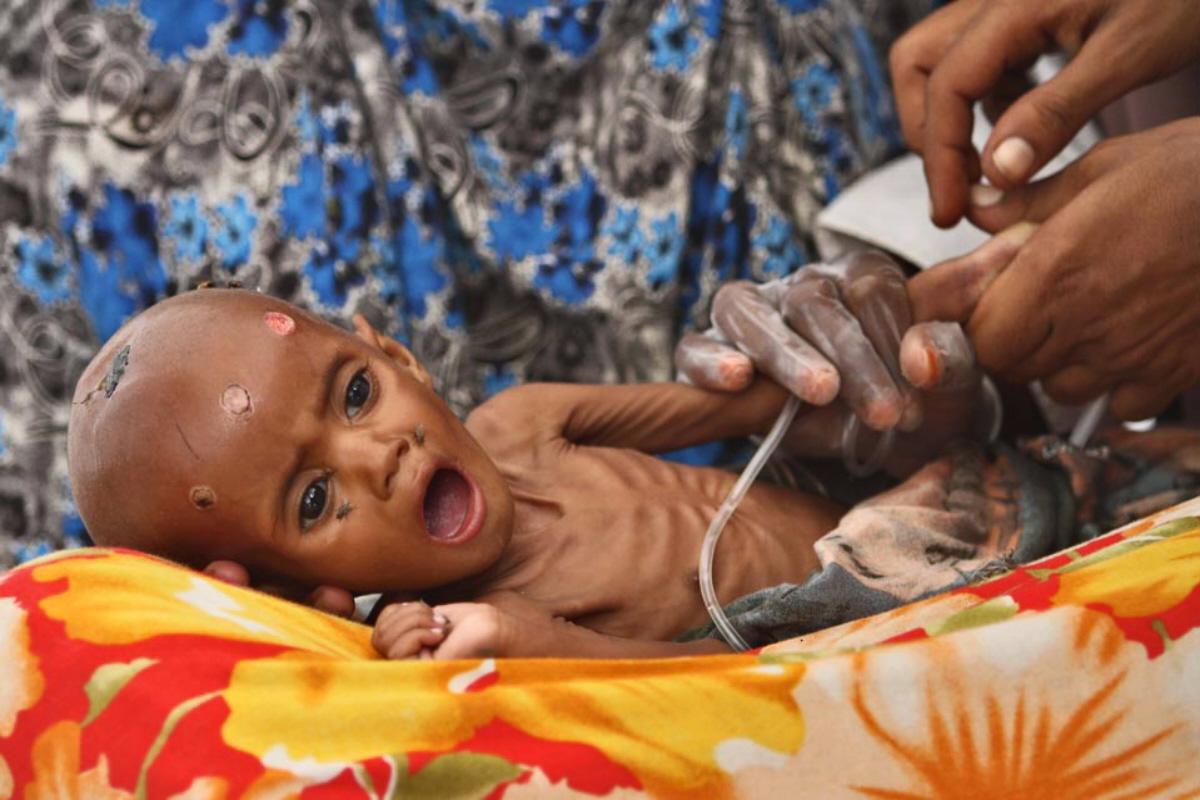
The lives and futures of more than 18 million people are at risk in the Greater Horn of Africa and in Nigeria, as a result of one of the worst hunger crisis in recent history.

This unfolding humanitarian crisis will be repeated again and again without concerted efforts to build resilience on the continent, the International Federation of Red Cross and Red Crescent Societies (IFRC) has warned.

“As long as we have conflicts and do not take strong measures to mitigate the effects of climate change, food insecurity will be with us,” said Dr Fatoumata Nafo-Traoré, IFRC’s Regional Director for Africa. “As we respond to the risk of imminent mass starvation in Africa, we also need to invest in community-level capacities and systems, so that local communities are prepared for any future shocks.”

This warning comes at the end of a continental conference of Red Cross and Red Crescent leaders, in Abidjan. The three-day meeting recommended a number of actions.

Other recommendations included strengthening domestic resource mobilization, increasing country-level policy dialogue with governments, fostering increased community ownership of programmes, and developing innovation centres in communities, while recognizing innovative community-level initiatives on disaster risks reduction.

“We need to take advantage of modern technologies in our response to current humanitarian challenges. Mobile applications and social media should be used to raise awareness on climate change and to share early warning information about disasters,” said Dr Abbas Gullet, IFRC’s Vice President. “We also need to improve data collection, through technology and capacity building at community level.”

The meeting also called on governments, donors and humanitarian partners to prioritize and invest in interventions that will finally help break the grim and destructive cycle of African hunger—by strengthening communities’ capacities and skills to better prepare for, and respond to disasters and food insecurity, among other crises.

“We’ve seen drought and hunger before: in Somalia in 2011 and 2012, in Niger in 2005, in Ethiopia in the 1980s. Not enough was done to prevent those crises from happening, and not enough is being done to prevent a similar disaster from happening in the future,” said Dr Gullet.

IFRC and member National Societies are providing long-term support to vulnerable communities throughout Africa. Local Red Cross and Red Crescent staff and volunteers are embedded in many of the most vulnerable and hardest-to-reach communities.

“How many people will die this year? How many will die in future years if we don’t build the resilience of communities alongside our provision of emergency aid?” added Dr Gullet. “We cannot keep saying ‘never again’ unless we are prepared to change the way we respond.”


Dipo Olowookere is a journalist based in Nigeria that has passion for reporting business news stories. At his leisure time, he watches football and supports 3SC of Ibadan. Mr Olowookere can be reached via [email protected]

1 Comment

1 Comment

  1. Pingback: Imagine. Información relacionada con el video en YouTube – El abrevadero de José Mario

Leave a Reply

Your email address will not be published. Required fields are marked *

General

Makinde Extends Curfew in 10 Local Governments by 24 Hours

Published

on

seyi makinde curfew extension

By Adedapo Adesanya

The Governor of Oyo State, Mr Seyi Makinde, has approved the extension of the curfew imposed on 10 local government areas bordering the Old Oyo National Park by an additional 24 hours.

The development was announced in a statement issued by the Secretary to the State Government, Mr Musibau Babatunde, and signed by the Special Adviser to the Governor on Media, Mr Suleiman Olanrewaju.

The state government had, on June 23, 2026, imposed a dusk-to-dawn curfew from 4:00 pm to 8:00 am on the affected local government areas as part of measures to address the prevailing security situation.

With the extension, the curfew, which was initially scheduled to last 48 hours, will now remain in force until Saturday, June 27, 2026.

The affected local government areas are Oriire, Orelope, Irepo, Saki West, Saki East, Atisbo, Itesiwaju, Iseyin, Olorunsogo and Atiba.

The government urged residents of the affected areas to continue cooperating with security agencies and to comply fully with the directive as efforts continue to safeguard lives and property.

This development follows the abduction of 39 students and seven ⁠teachers in an attack targeting several schools in Nigeria’s southwestern Oyo State in May.

The attack took place in ⁠Ahoro Esinele community in Oriire district, targeting a secondary school and two primary schools, according to officials. With over 40 days in captivity, all rescue efforts have so far not yielded results.

Mass ⁠kidnappings by armed groups have become a serious security challenge in Nigeria in recent years, with criminal gangs exploiting weak security to target travellers, students, and rural communities for cash payments. Schools are often targeted, although such ‌attacks ‌used to be rare in the southwest of the country.

Continue Reading

General

Dangote Cement Ibese Commissions Cassava Processing Plant in Ogun

Published

on

Cassava Processing Plant in Ogun

By Aduragbemi Omiyale

In order to aid alternative and sustainable means of livelihood amid rising food prices and growing concerns over food security in Nigeria, the Ibese Plant of Dangote Cement Plc has handed over a state-of-the-art garri and fufu processing plant to the Kajola host community in Ewekoro Local Government Area of Ogun State.

The facility is expected to support cassava farmers and processors by improving efficiency and expanding income-generating opportunities.

According to the organisation, the project, delivered under the Community Development Agreement (CDA) with its host communities signed in 2022, is a strategic intervention aimed at boosting agricultural value addition, reducing post-harvest losses and strengthening livelihoods for rural farmers and women.

The Ibese Plant Director, Mr Ayyagari Subbaraidu, at the commissioning, said, “This project is aimed at improving cassava processing, reducing losses and creating sustainable employment for women and farmers in the community.”

He disclosed that the facility features separate garri and fufu processing units equipped with modern machinery, including a five-tonne-per-day peeling machine, hydraulic presses, frying systems, fermentation basins, solar-powered boreholes and sanitation infrastructure, adding that it will serve as a catalyst for local economic growth by enhancing productivity and supporting small-scale agribusinesses across Kajola and neighbouring communities.

The Plant Director also urged the community and the Project Governance Committee to maintain transparency in the management of the facility to ensure long-term sustainability.

The Ogun State Commissioner for Agriculture and Food Security, Mr Bolu Owotomo, who was at the unveiling of the project, said it aligns with Governor Dapo Abiodun’s vision of making agriculture a key driver of economic growth through value addition and enterprise development.

The Commissioner disclosed that “over 166,000 farmers, including more than 90,000 cassava farmers, have been registered under the Ogun State Farmers Information Management System (OGFIMS) to benefit from government interventions.”

He urged the community to safeguard the facility and assured residents of the continued support of the state government towards agricultural development and food security.

“This processing plant will strengthen the cassava value chain, improve product quality, create jobs and enhance food security while boosting farmers’ incomes,” the Commissioner stated.

Continue Reading

General

FG Backs US Sanctions on Three BDC Operators Linked to Terror Financing

Published

on

bdc operator

By Adedapo Adesanya

The federal government has hailed the recent sanctioning of three Nigerian bureau de change (BDC) operators by the United States’ Office of Foreign Assets Control (OFAC) for alleged terrorism financing.

“The Nigeria Sanctions Committee welcomes the recent inclusion of Mukthar Muhammad Adamu, Nine to Nine BDC, and Generation BDC Limited by the United States Office of Foreign Assets Control (OFAC).

“These designations follow the inclusion of Adamu and his companies as part of a broader update to the Nigeria Sanctions List approved and published on 18th June 2026,” it disclosed in a statement.

It said that the naming of the three companies and six people followed extensive intelligence gathering, financial investigations, and inter-agency assessments, which established reasonable grounds to believe that the affected individuals and entities facilitated, financed, supported, or otherwise contributed to the activities of the Islamic State West Africa Province (ISWAP) and associated terrorist networks.

“The individuals and entities added to the Nigeria Sanctions List on 18th June 2026 are Ibrahim Yakubu Ogirima (NLISWi.19), Muktar Muhammad Adamu (NLISWi.20), Adamu Chiroma (NLISWi.21), Ibrahim Abubakar (NLISWi.22), Abdullahi Umar Usman (NLISWi.23), Babangida Muhammed Adamu Hammajam (NLISWi.24), Abbal Bako & Sons Bureau De Change Limited (NLISWe.25), Generation Currency BDC Limited (NLISWe.26), Nine to Nine BDC Limited (NLISWe.27),” the statement read in part.

The federal government reiterated its directive to all financial institutions and designated non-financial businesses and professions to continue to comply with all sanctions obligations, including asset-freezing requirements, the filing of suspicious transaction reports, and the reporting of all relevant matches to the appropriate authorities.

The sanctions committee commended the work of the Federal Ministry of Justice, Office of the National Security Adviser (ONSA), Central Bank of Nigeria (CBN), Department of State Services, Economic and Financial Crimes Commission, and the Nigerian Financial Intelligence Unit for their actions to ensure that terrorist groups are denied the resources that sustain their activities.

It stated that Nigeria remains resolute in its commitment to ensuring that terrorists and their financiers find no safe haven within the country’s financial system.

The committee also said that the Federal Government would continue to work closely with domestic stakeholders and international partners to protect national security, strengthen financial integrity, and contribute to global efforts to combat terrorism and its financing.

Continue Reading

Trending