Connect with us

General

33 million Nigerians Could Face Hunger 2025

Published

on

zero hunger Nigeria

By Modupe Gbadeyanka

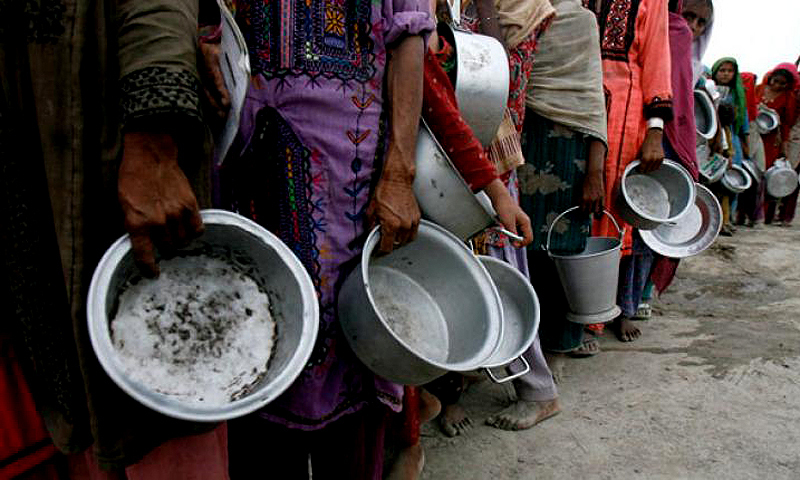
If urgent steps are not taken, about 33 million Nigerians could suffer hunger next year, the United Nations (UN) has warned.

In a joint statement on Tuesday, the World Food Programme (WFP), the Food and Agriculture Organisation (FAO), and the UN Children’s Fund (UNICEF) said that as of today, about 25 million people in the country are in need of food to eat.

The three UN agencies, therefore, appealed for lifesaving support for Nigeria, especially for 5.4 million children and 800,000 pregnant and breastfeeding women that face the threat of acute malnutrition or wasting.

“Never before have there been so many people in Nigeria without food,” Chi Lael, WFP spokesperson for the country, told journalists at the UN in Geneva.

She warned that of this number, an alarming 1.8 million children could suffer severe acute malnutrition and may require critical nutrition treatment.

“What worries us most is the speed of deterioration over the past year, the scale—in terms of the number of people at risk, the geographic scope of food insecurity, and the very real risk of a significant worsening in the coming months,” she said.

She stressed the need for an “immediate and massive” collective response that spans prevention, mitigation, and life-saving assistance.

This includes preventative action in rural areas to halt hunger from spreading, such as providing vulnerable farmers with cash, seeds, and fertilizer. Meanwhile, urgent assistance in areas such as nutrition, health support, food supply, and water and sanitation will reduce the depth of the crisis.

“We have it within our grasp to stem this crisis and avert catastrophe in Nigeria. If we respond now, it is manageable, at full stretch, but it can be done,” she said.

A recent assessment found that immediate support is needed to avert a potential food and nutrition disaster in the face of triple-digit increases in food prices, the aftermath of devastating floods, and 15 years of insurgency in the northeast.

Nigeria faces a monumental hunger crisis in the second half of 2025, particularly in the northeastern states of Borno, Adamawa, and Yobe, home to some five million people who are facing acute food insecurity.

Other areas, including emerging hunger hotspots in Zamfara, Katsina, and Sokoto states, are also at risk.


Modupe Gbadeyanka is a fast-rising journalist with Business Post Nigeria. Her passion for journalism is amazing. She is willing to learn more with a view to becoming one of the best pen-pushers in Nigeria. Her role models are the duo of CNN's Richard Quest and Christiane Amanpour.

Click to comment

Leave a Reply

Your email address will not be published. Required fields are marked *

General

Tinubu Orders EFCC to Lift Embargo on Osun Govt Account

Published

on

By Modupe Gbadeyanka

President Bola Tinubu on Thursday directed the Economic and Financial Crimes Commission (EFCC) to vacate the court ordering the freezing of the bank account of the Osun Srate government.

In a statement today by his Special Adviser on Information and Strategy,  Mr Bayo Onanuga, the President said he’s “deeply embarrassed not by the EFCC’s exercise of its mandate backed by a court order” because of its timing,  which is just a few days to the governorship election in the state next Saturday.

According to him, actions of an institution of State, especially at the Federal level, is always credited to me, as the President, even when I may not have had any prior knowledge of the action.

“Since assuming office, I have consistently maintained that anti-corruption and law enforcement agencies must be allowed to discharge their statutory responsibilities independently, professionally, without fear or favour, or political interference. I have therefore deliberately refrained from directing or interfering in the operational activities of the EFCC or any other investigative or prosecutorial agency because I firmly believe that strong democratic institutions, operating within the confines of the law, are indispensable to democratic good governance and the rule of law.

“As President, I am committed to allowing institutions of State to function and take any action they consider necessary in the interest of proper governance without the need for any prior approval.  Indeed, that is why institutions are set up by law with clearly defined powers.    While I am yet to be fully apprised of the facts which informed the action of EFCC in approaching the court to obtain the said order freezing the Osun State Government account, I am not in the slightest doubt that the timing of the action of EFCC is inauspicious, and therefore I feel compelled to intervene.

“Osun State is only a few days away from its gubernatorial election. Therefore, nothing ought to be done to give an impression that the EFCC or indeed any other agency of the federal government is being used to interfere with the election.

“Based on the foregoing premise, I am duty-bound to issue a directive on this issue in consonance with the overriding public interest in preserving public confidence and the integrity, credibility, and fairness of our democratic process.

“Accordingly, I have directed the EFCC to immediately proceed to the court to vacate the order and discontinue whatever action it has instituted against the Osun State Government in this regard,” the statement stated.

Continue Reading

General

EFCC Admits Freezing Osun Bank Account, Alleges N11bn Embezzlement

Published

on

EFCC Real Estate Agents

By Modupe Gbadeyanka

The Economic and Financial Crimes Commission (EFCC) has explained why it initiated a move to freeze the bank account of the Osun State government.

Earlier on Wednesday, the Governor of Osun State, Mr Ademola Adeleke, claimed that the anti-money laundering agency asked one of its bankers, First Bank, not to release funds to the state government.

According to the Governor, this was part of the strategies to frustrate his administration ahead of the August 15, 2026, governorship election in the state.

Reacting to the issue on Wednesday night, the EFCC, in a statement, said it has been investigating the state government since March 2026 over an alleged “fraudulent handling of Ecology Funds, Intervention Funds and Federal Account Allocation Committee (FAAC) account to the tune of N11.0 billion.

The organisation noted that some officials of the state government, especially the Accountant General of the State, have had interview sessions with investigators of the EFCC.

“These ongoing investigations of the state government would not have warranted any placement of Post No Debit order on its account but for the precipitate and unwarranted movement of funds from the accounts to different suspicious accounts since August 2, 2026.

“The commission noticed huge transfers of funds into different corporate entities and had to swiftly halt the trend by freezing the accounts from which such heavy funds are being moved,” parts of the statement said.

In the disclosure, the agency noted that its preventive mandate is a public-inclined framework of safeguarding public funds, assets and resources, stressing that it cannot “watch idly while a state government’s account is being pillaged.”

“While the commission is fully aware of the impending governorship election in Osun State, it has a responsibility to act in defence of the sanctity of the funds of the state. It will be uncharitable for the commission to allow an excuse of an upcoming election to fold its arms to perform its legally-assigned functions,” it pointed out.

The EFCC disclosed that it is “keeping watch over the finances of other states like Osun State. Many of these states are on the investigative radar of the commission to ensure accountability and probity. The commission has always pointed out that it is non-partisan and non-sectarian but always working in the overall interests of Nigerians. The Osun State government account was frozen to save public funds from being looted.”

The organisation urged the public “to ignore false narratives and deliberate demonisation of the works of the EFCC. The interests of all Nigerians are greater and will always be protected by the commission.”

Continue Reading

General

NMDPRA Launches App to Track Fuel Consumption Across Filling Stations

Published

on

fuel consumption

By Adedapo Adesanya

The Nigerian Midstream and Downstream Petroleum Regulatory Authority (NMDPRA) has launched a mobile application designed to monitor fuel consumption patterns in real time across retail outlets nationwide.

The NMDPRA, established under the Petroleum Industry Act (PIA) 2021, is responsible for the technical and commercial regulation of Nigeria’s midstream and downstream petroleum operations. The deployment of the mobile application aligns with the authority’s broader efforts to leverage technology to improve regulatory compliance and strengthen accountability.

The pilot phase of the project began on August 1 in Abuja and its six Area Councils, the authority said in a statement published on X.

As part of the rollout, the Executive Director for Distribution Systems, Storage and Retailing Infrastructure (DSSRI), Mr Ogbugo Ukoha, led a team alongside officials from the Abuja Regional Office to assess the readiness and operational performance of the digital platform at participating retail outlets.

According to the NMDPRA, the application captures inventory and compliance data in real time, enabling regulators to monitor fuel distribution more effectively while improving operational efficiency across the sector.

The authority said the platform would generate reliable, data-driven insights to support evidence-based decision-making, strengthen national energy security planning and enhance transparency in the downstream petroleum industry.

It added that the initiative is expected to provide significant value to government, investors, operators and other stakeholders by improving access to accurate fuel consumption and compliance data.

Nigeria’s downstream petroleum sector has undergone significant changes since the deregulation of the petrol market and the removal of fuel subsidies, with regulators placing greater emphasis on data-driven supervision to ensure product availability, prevent supply disruptions and discourage sharp regional disparities in distribution.

Continue Reading