General
2023 Presidency: Northern Youths Endorse Bala Mohammed
By Dipo Olowookere
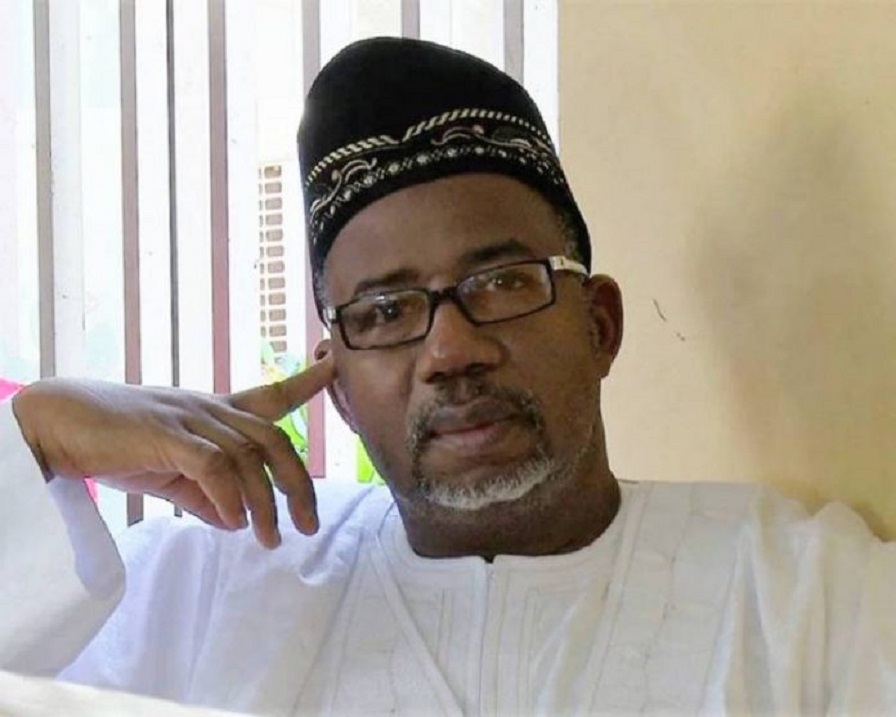
The Governor of Bauchi State, Mr Bala Mohammed, has been endorsed for the 2023 presidency by 42 northern groups under the umbrella of the Northern Youth Leaders Forum (NYLF).
The northern youths said they believe in the ability of the Governor, who is a member of the opposition Peoples Democratic Party (PDP), to steer the ship of the country to the Promised Land.
Nigeria, under the current ruling All Progressives Congress (APC)-led government of President Muhammadu Buhari, has witnessed a significant rise in insecurity and economic woes.
But NYLF emphasised that with Mr Mohammed as the President of the nation in 2023, Nigeria will be in a better place and take its position as the true giant of Africa.
Addressing newsmen on Wednesday in Yola, the Adamawa State capital, the group, through its National Chairman, Comrade Elliot Afiyo, said the choice of the Bauchi Governor came about through a democratic voting process, where 145 delegates from across the 19 northern states participated.
He explained that out of the 145 votes cast, Mr Mohammed got 116, while his opponent, Mr Raymond Dokoesi, scored 28 votes, with one turning out invalid.
“I hereby declare today, June 9, 2021, that the NYLF the umbrella body of the 42 northern youth groups has publicly endorsed Senator Bala Mohammed as our candidate of choice for the 2023 Presidential election under any political party.
“For the benefit of the doubt for some of you that may not identify Senator Bala Mohammed physically, we hereby unveil the different faces of [him] and we strongly believed and truly too, that he will surely fix our dear nation-Nigeria.
“To this end, I am hereby directing all our members in Nigeria and abroad to immediately commence consultations, lobbying and campaigning for the candidate even though we are yet to contact him,” he said.
Speaking further, he said by this directive, “all the 42 affiliated youth groups and other youth groups that their applications for affiliation are pending, who are observers today, have resolved and an equivocally too, to work assiduously and collectively to ensure the logical conclusion of our resolution.
“We want to reiterate our genuine commitment to the Nigerian project and ensure her corporate existence by putting the National interest above any other interest.
“We are aware of threats, intimations, blackmails and others, which always come after every one of our endorsement from Nigerians, we are also prepared for such.
“We are ever determined to ensure that justice and equity reign supreme in Nigeria in order to secure our future and the future of the generations yet unborn.
“We want to assure Nigerians that the problems of insecurity, poverty and unemployment bedevilling our country will soon be over, Therefore, Nigerians should continue to have faith in God and pray without ceasing.”
General
NERC Orders DisCos to Pay 20% Compensation to Affected Band A Customers
By Adedapo Adesanya
The Nigerian Electricity Regulatory Commission (NERC) has ordered electricity distribution companies (DisCos) to pay 20 per cent compensation to eligible Band A customers who were affected by power shortfalls between February and March 2026.
In Directive No. NERC/2026/002, the commission said, generation constraints, which were largely caused by inadequate gas supply and vandalism of gas and transmission infrastructure, prevented DisCos from meeting committed service levels for some Band A feeders.
NERC Mandated that for feeders that supplied less than 18 hours per day, affected Band A feeders will not be downgraded during the covered period, and eligible customers will receive special compensation equal to 20 per cent of approved energy figures for February 2026.
However, for Band A feeders that recorded an average daily supply of between 18 and 20 hours, the existing compensation framework under Addendum No. NERC/2024/003 applies to both Maximum Demand (MD) and Non-Maximum Demand (Non-MD) customers.
MD customers are high-consumption users who typically have their own dedicated transformer and operate with a load of 45 kVA and above; they include large residential estates, banks, hotels, supermarkets, industrial facilities and oil and gas complexes.
Non-MD customers do not have a dedicated transformer and instead share public transformers, and they generally consume less, often below 45–50 kVA.
For Non-MD customers, compensation is set at 20 per cent of the approved February 2026 energy cap applicable to the affected feeder.
For MD customers, compensation is 20 per cent of the average energy billed per MD customer in February 2026.
According to NERC, prepaid customers will receive their compensation as token credits, while postpaid customers will receive bill adjustments.
The commission said that compensation for February must be completed by 31 May 2026, while compensation for March must be completed by 30 June 2026.
The commission prohibited Distribution companies from using compensation credits to offset any existing customer debt, adding that customers must be clearly informed of the value and period of the compensation they receive.
NERC said it will monitor implementation and verify compliance to ensure all eligible customers receive what they are due.
The commission reaffirmed its commitment to protecting electricity consumers while ensuring the stability and sustainability of the electricity market.
General
TCN Confirms Destruction of Six Transmission Towers in Nasarawa
By Adedapo Adesanya
The Transmission Company of Nigeria (TCN) has confirmed the destruction of six transmission towers along the Apir–Lafia 330kV line in Nasarawa State, causing significant disruption to electricity supply in parts of the country.
In a statement issued on Wednesday, TCN spokesperson, Mrs Ndidi Mbah, said the incident occurred on May 30 at about 1:15 a.m. during a heavy downpour.
She explained that the transmission line initially tripped, prompting operators to attempt a trial reclosure of Line II at about 2:08 a.m., but the effort failed.
A subsequent inspection of the transmission corridor, however, revealed extensive damage to key components of towers T125 to T130, confirming that the infrastructure had been vandalised.
“The tripping of the lines prompted a physical line trace to determine the fault, which revealed damage to critical components of towers T125 to T130, confirming vandalism on the affected sections of the transmission corridor,” Mbah said.
The incident has forced both Apir–Lafia 330kV Transmission Lines I and II out of service pending the reconstruction of the damaged towers.
TCN said its engineers have been deployed to the site to assess the extent of the damage and determine the materials required to restore normal transmission along the corridor.
As an interim measure, the Lafia 330kV Transmission Station is being supplied through an alternative line to minimise the impact on electricity consumers within the franchise areas of Abuja Electricity Distribution Company (AEDC) and Jos Electricity Distribution Company (JEDC).
The company condemned the persistent vandalism of power infrastructure, warning that such acts undermine investments in the electricity sector and threaten the stability of the national grid.
It also urged residents and host communities to remain vigilant and report suspicious activities around transmission installations to security agencies or the nearest TCN office.
TCN stressed that safeguarding critical national infrastructure requires collective responsibility to ensure a reliable and uninterrupted electricity supply nationwide.
General
IFC, NGX Group, LCCI Unveil Nigeria Gender Country Programme
By Aduragbemi Omiyale
A Nigeria Gender Country Programme (NGCP) to advance private sector action on gender equality and inclusive economic growth has been unveiled at a high-level virtual CEO Roundtable convened by the International Finance Corporation (IFC), Nigerian Exchange (NGX) Group Plc, and the Lagos Chamber of Commerce and Industry (LCCI).
The NGCP builds on the momentum of Nigeria2Equal and other initiatives that have advanced workplace inclusion, women’s leadership, entrepreneurship, and sustainable finance across Nigeria’s private sector.
Designed as a more integrated and collaborative platform, the programme seeks to scale impact through coordinated action among development institutions, business leaders, regulators, and the organised private sector.
Anchored on three strategic priorities, the programme aims to increase women’s representation in leadership, improve access to quality employment, and expand access to productive assets—including finance, technology, and markets—for women and women-led businesses.
The partners are expected to formally launch the Nigeria Gender Country Program at a physical event scheduled for July 9, 2026, where stakeholders will further advance implementation of the programme’s strategic priorities.
At the virtual event, the Director General of the Securities and Exchange Commission (SEC), Mr Emomotimi Agama, said, “Gender inclusion is fundamentally an economic growth imperative. Closing gender gaps can unlock billions of dollars in value for Nigeria while strengthening business performance and national competitiveness. We must therefore move beyond viewing inclusion as a corporate social responsibility initiative or compliance exercise, and instead recognise it as a strategic driver of productivity, innovation, and sustainable economic growth.”
Commenting on the initiative, the chief executive of NGX Group, Mr Temi Popoola, said the initiative “presents a significant opportunity to deepen impact and accelerate progress across corporate Nigeria. By expanding women’s access to leadership opportunities, quality employment, finance, technology, and markets, we can unlock substantial economic value while building a more competitive, inclusive, and resilient private sector. At NGX Group, we believe the capital market has a critical role to play in advancing these outcomes through stronger governance, transparency, and stakeholder engagement.”
On his part, the IFC Head of Office in Lagos, Mr Christian Mulamula, said, “Closing the gender gap is one of the most significant opportunities to strengthen competitiveness and productivity. Across Africa, gender inequality is estimated to cost up to $2.5 trillion. Through the Nigeria Gender Country Program, IFC is working with the private sector to expand women’s leadership, improve access to better jobs, and increase opportunities for women-led businesses. Building on Nigeria2Equal, this initiative focuses on practical, measurable solutions that help businesses grow while advancing inclusive growth.”
In her remarks, the DG of LCCI, Ms Chinyere Almona, noted that the programme’s success would depend on leadership accountability and sustained commitment from business leaders, particularly in embedding gender inclusion into organisational strategy and execution.
-
Feature/OPED6 years agoDavos was Different this year
-
Travel/Tourism10 years ago
Lagos Seals Western Lodge Hotel In Ikorodu
-
Showbiz3 years agoEstranged Lover Releases Videos of Empress Njamah Bathing
-
Banking8 years agoSort Codes of GTBank Branches in Nigeria
-
Economy3 years agoSubsidy Removal: CNG at N130 Per Litre Cheaper Than Petrol—IPMAN
-
Banking3 years agoSort Codes of UBA Branches in Nigeria
-
Banking3 years agoFirst Bank Announces Planned Downtime
-
Sports3 years agoHighest Paid Nigerian Footballer – How Much Do Nigerian Footballers Earn