Connect with us

General

ACAEDF Seeks Funds to Rehabilitate Children, Young Adults

Published

on

ACAEDF

By Modupe Gbadeyanka

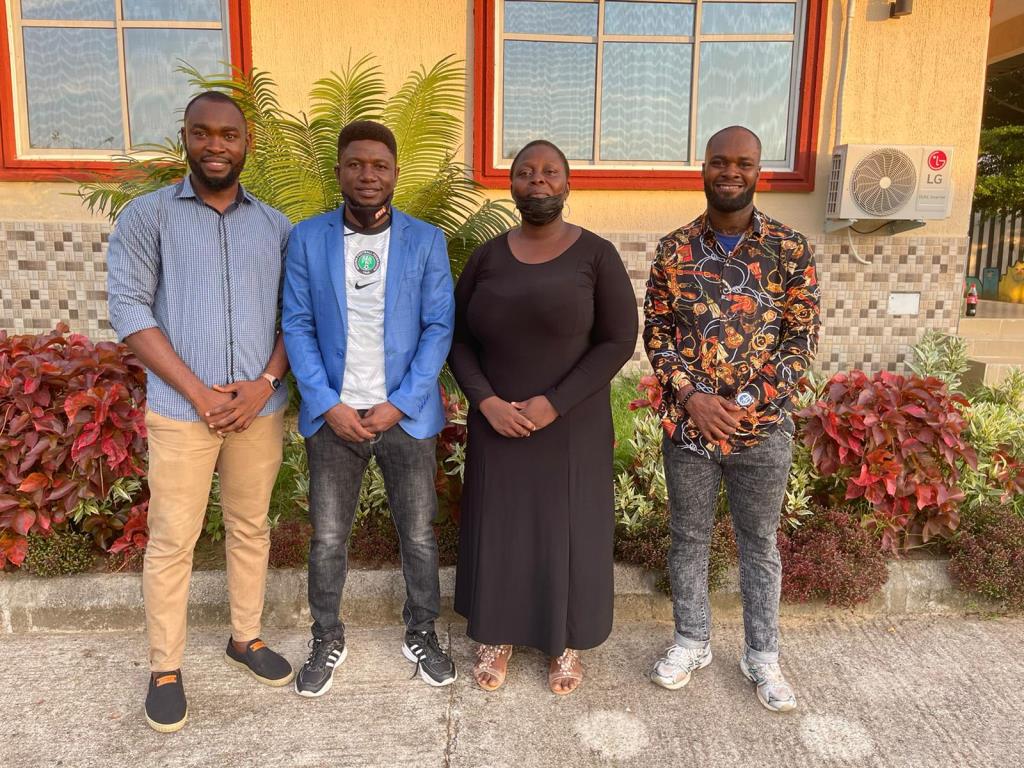
A leading child rights protection organisation in Africa known as the African Children’s Aid Education and Development Foundation (ACAEDF) is planning to raise funds for education development in riverine communities and rehabilitation of over 1,000 children and young adults through donations.

The group, which has been doing humanitarian works for the past seven years by protecting the rights of children across the continent, has rescued and transformed more than 234 children across Nigeria.

To mark its seven years of impactful existence in Nigeria and across Africa, an event has been fixed for Tuesday, May 25, 2021, at ACAEDF Crescent, Ikot Afaha, Eket, Akwa Ibom State.

A statement from the organisation said dignitaries, industry captains and notable child rights promoters across the continent would attend the programme themed Children for Change Celebration (CHICC).

Activities lined up in commemoration of the foundation’s seven years anniversary include raffle tickets for community development, fashion show, music performance and poetry, cocktail events and a novelty football match.

Since its inception in 2014, ACAEDF has been mobilising people and resources to advocate, protect and proactively provide interventions especially against child witch branding and other forms of abuses.

The foundation’s provable track records especially within its community of practice include rescue and sheltering homeless children accused of witchcraft, provision of quality education both to sheltered children and those on the Home Support Programme and reunification and reintegration of the rescued children into the society.

The foundation’s multi-purpose childcare centre called Land of Hope is equipped with an in-house hospital, skills/vocational training centre, library, children’s parliament, sporting/recreational facilities, residential areas, amongst others.

Speaking on the impacts made by the foundation since its inception, the founder and Executive Director of ACAEDF, Mr David Umem, stated that, “Our vision is to provide every child with the audacity to hope for a better life and an envisaged future.

“The foundation came into existence in the first place because we saw the ever-widening gap between child abuse and timely interventions by the authorities.

“The situations of child witch branding which is championed by adults and parents whose duty is to protect these children ignited in us the need to intervene and provide direct and immediate aid to these children whose rights have been greatly abused.

“Also, beyond our intervention programs, we have in place an established structure used to propagate the message of hope and build top of mind awareness on child right acts through community intervention programs.

“We enjoin every Nigerian to make an effort to help at least one child every day, that way, the message of hope would be extended to everyone across the continent.”

“It is vital to also state that in the actual sense, what we are celebrating are the people, our team of dedicated experts and over 1,000 children, young adults, parents and communities who have been impacted by our campaigns and interventions.

“In the coming future, we hope to create a sustainable and thriving environment free from all form of child abuse.

“My utmost gratitude also goes to my dedicated team who works tirelessly to ensure that the purpose of this organisation is actualized,” Mr Umem added.

Also, the Director for Child Development at ACAEDF, Mr Nsidibe Orok, reiterated the organisation’s commitment towards child-right protection in the continent.

“As a not-for-profit and non-governmental organization, we aspire for a society free of child witch branding and all forms of child abuse.

“This aspiration has informed our commitment. The team has shown their commitment through active and impactful contributions in putting an end to all forms of child abuse and witch-hunting.

“Currently, we are proactively collaborating with the riverine communities across the Niger Delta on methods to improve access to qualitative education.

“These communities have been completely forgotten in terms of the provision of basic amenities like clean water, schools, healthcare facilities, good roads, electricity amongst others and thus make children from these areas vulnerable to the adoption of criminal behaviours and other social anomalies.

“We seek partners particularly in using ICT for qualitative and sustainable education to improve the lives of a vast population of people especially children in Riverine communities,” Mr Orok stated.


Modupe Gbadeyanka is a fast-rising journalist with Business Post Nigeria. Her passion for journalism is amazing. She is willing to learn more with a view to becoming one of the best pen-pushers in Nigeria. Her role models are the duo of CNN's Richard Quest and Christiane Amanpour.

Click to comment

Leave a Reply

Your email address will not be published. Required fields are marked *

General

NAQS Seeks Integration Into Customs’ B’Odogwu Platform

Published

on

NAQS Customs' B'Odogwu Platform

By Modupe Gbadeyanka

The Nigeria Agricultural Quarantine Service (NAQS) has asked to be integrated into the B’Odogwu platform of the Nigeria Customs Service (NCS).

This call was made by the head of NAQS, Mr Vincent Isegbe, during a meeting with the Comptroller-General of Customs, Mr Adewale Adeniyi, in Abuja on Wednesday.

Mr Isegbe, who used the visit to congratulate Mr Adeniyi on the extension of his tenure as Chairperson of the World Customs Organisation Council, which he described as recognition of his dedication and leadership, praised what he called an excellent working relationship with Customs.

He outlined areas for closer partnership, including integrating NAQS into Customs’ B’Odogwu platform, joint enforcement operations, and coordinated efforts to detect fake certification and fraudulent documentation.

In his remarks, Mr Adeniyi commended his guest for the partnership, promising that NAQS will provide technical support for the new Customs laboratory.

According to him, this is one of the avenues to deepen collaboration between the two agencies on intelligence sharing, trade facilitation and national security.

He informed Mr Isegbe that his organisation was moving to harmonise inspection procedures across the country’s ports and border stations, a step he described as critical to promoting consistency, transparency and efficiency in cargo clearance nationwide.

He also stated that customs training facilities would be opened up to NAQS officers as part of a broader capacity-building push.

“We must expose our officers to the broader concept of national security. Border management goes beyond revenue collection,” Mr Adeniyi said, stressing that Customs sees itself as the anchor institution coordinating Nigeria’s multi-agency border protection efforts.

Continue Reading

General

Solid Minerals Sector Grows 337% to Over N70bn in Two Years

Published

on

Solid Minerals Sector

By Adedapo Adesanya

Nigeria’s solid minerals sector recorded a boom of 337 per cent in two years, jumping from N16 billion in 2023 to over N70 billion in 2025, according to the chief executive of the Solid Minerals Development Fund (SMDF), Mrs Fatima Umaru Shinkafi.

She disclosed that the sector also recorded a remarkable 33.5 per cent real growth in 2025, while reforms attracted fresh investment commitments worth about $2.6 billion, including a $1.3 billion alumina refinery described as the single biggest mining investment in Nigeria’s history.

Mrs Shinkafi gave out these figures at the maiden Annual Lecture of the Faculty of Physical and Earth Sciences, University of Lagos (UNILAG), where she declared that stronger collaboration among government, industry and academia is the master key to unlocking Nigeria’s vast mineral wealth.

Delivering the keynote lecture titled Building Nigeria’s Solid Minerals Future: The Power of Academia, Government and Industry in Partnership, she lamented that despite Nigeria’s deposits of more than 44 commercially viable minerals spread across over 500 locations, the industry still contributes less than one per cent to the nation’s Gross Domestic Product (GDP).

She, however, said the story is changing under the Seven-Point Agenda of the Minister of Solid Minerals Development, Mr Dele Alake, with reforms already repositioning mining as a major driver of economic growth.

The SMDF boss also unveiled the Early-Stage Mineral Exploration and Research Grant Endowment (EMERGE), describing it as Nigeria’s first competitive research funding platform dedicated to geoscience studies in universities.

According to her, the initiative will fund mineral exploration, critical minerals research and postgraduate studies, while equipping successful applicants with technical training and access to investment opportunities.

She challenged UNILAG researchers to seize the opportunity by submitting quality proposals, insisting that research remains the foundation for building a globally competitive mining industry.

Mrs Shinkafi then urged young women to embrace careers in science and mining, stressing that Nigeria’s hidden mineral wealth can only be fully unlocked through the innovation, skills and determination of the next generation.

Continue Reading

General

Dangote Cement CEO Tasks Africa to Balance Cement Growth with Climate Goals

Published

on

Dangote cement Net-Zero Cement Production

By Modupe Gbadeyanka

The chief executive of Dangote Cement Plc, Mr Arvind Pathak, has championed net-zero cement production at the Global Cement and Concrete Association (GCCA) CEO Strategic Dialogue in Madrid, Spain.

He specifically charged African producers to lead the next phase of sustainable industrial growth by accelerating decarbonization while expanding cement production to meet the continent’s rising infrastructure needs.

“With Africa’s infrastructure demand continuing to rise, the sector must pursue growth while embracing innovative pathways to reduce carbon emissions,” Mr Pathak said.

“A key takeaway, especially for the African cement sector in the context of the evolving global economic and regulatory landscape, is the need to accelerate our decarbonization pathway through increased utilisation of alternative fuels, reduction of clinker content in cement and investment in innovative cement technologies suited to local realities,” he added.

Mr Pathak said the forum reinforced the opportunity for Africa’s cement industry to deliver sustainable growth while reducing carbon emissions, stressing that Dangote Cement remains committed to reducing its carbon emissions intensity by 20 per cent by 2030, using 2021 as the baseline year.

It was gathered that the two-day event allowed participants to discuss strategies to achieve net-zero emissions and drive sustainable growth across the cement and concrete value chain.

The meeting also highlighted the industry’s growing role in global climate action, particularly through the GCCA’s engagement at international climate platforms and its efforts to advance collaborative solutions for sustainable infrastructure development.

It also provided a platform for industry leaders to address critical priorities, including low-carbon construction, industry outlook, policy advocacy and financing mechanisms needed to accelerate the transition to net-zero.

Participants also reviewed GCCA’s global climate leadership efforts, particularly its engagement at COP30, where the industry is positioning itself as a key partner in climate solutions through initiatives such as the Cement Breakthrough and other multi-stakeholder collaborations.

Discussions underscored the growing importance of innovation, technology and strategic partnerships in supporting the cement and concrete sector’s net-zero ambitions while helping to meet global infrastructure needs.

Dangote Cement pledged to reduce its carbon emissions intensity by 20 per cent by 2030 from a 2021 baseline, as part of a broader strategy that includes increased use of alternative fuels, renewable energy investments, improved operational efficiency and clinker optimisation.

Continue Reading