General
AfDB Okays $115m Loan for Road Projects in Abia
By Adedapo Adesanya
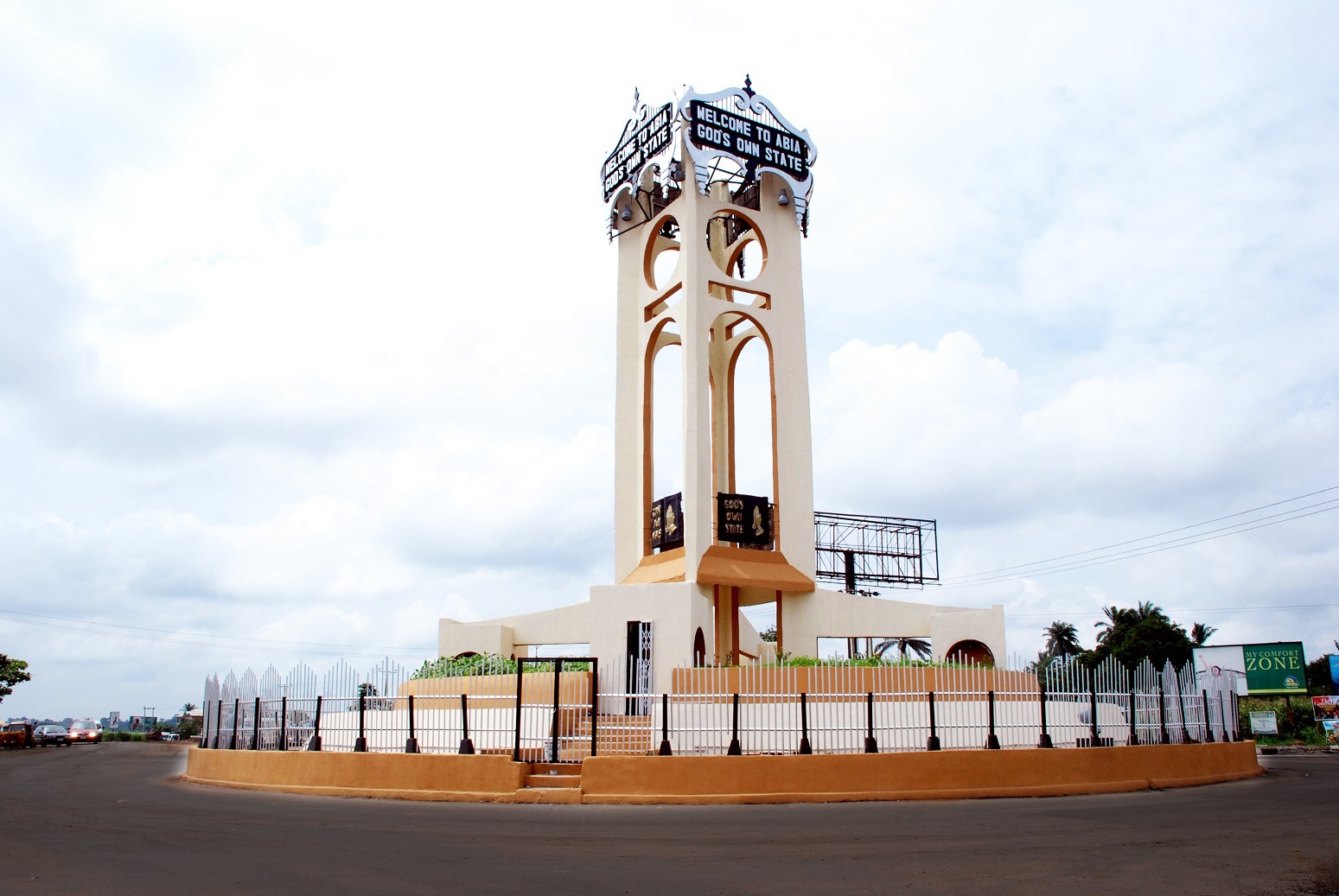
The African Development Bank (AfDB) has approved a loan of $115 million to support a major road rehabilitation project in Abia State, Nigeria.
This is contained in a statement issued by the Nigeria Country Department of the multilayer bank on Saturday in Abuja.
It said the project would see to the rehabilitation of roads, erosion control infrastructure and preparation of solid waste management facilities in the state capital, Umuahia, and the commercial hub, Aba.
“Financing for the project, estimated at a total cost of $263.80 million, will come through an AfDB loan of $100 million.
”A Canada–AfDB Climate Fund (CACF) loan of $15 million and a $125 million co-financing loan from the Islamic Development Bank (IDB).
“The Abia State government will provide $23.80 million in counterpart funding for compensation to people affected by the project and implementation of a Resettlement Action Plan,” the statement said.
The project, which is expected to be completed in 2029, has a total of 248.46 km of road. It was disclosed that it had 58.03 km of roads in Umuahia and 190.43 km of roads in Aba would be rehabilitated to asphaltic concrete standards at varying cross-sections.
“Erosion sites in Umuahia and Aba will be reinstated as well as preparatory studies undertaken for private sector participation in solid waste management for the two cities.
”The project will also include capacity building, project management and development of social infrastructure.
”This includes the rehabilitation of schools and the provision of sanitation facilities in schools, community markets and hospitals.”
It said with an estimated population of 553,000 and 814,000, respectively (2022 estimates), Umuahia and Aba, the commercial hub, are currently facing serious infrastructure challenges.
The statement said this aroused from decades of underinvestment amid rapid urbanisation, and the situation was aggravated by gully erosion and the emergence of huge piles of solid waste on the roads.
It said when completed, the 1.37 million population in these two cities would benefit from reduced travel time, vehicle operating costs and lower transport costs.
”The project will also create 3,000 temporary jobs (30 per cent for women) at the construction phase and about 1,000 permanent jobs during the operational phase.
”The permanent jobs will particularly benefit the youths, who will make up 50 per cent of the project.
”They will be trained in contract management by the State Youth Road Maintenance Corps for road maintenance, a body of young Abia engineers drawn from the 17 Local Government Areas of the state,” it said.
Speaking on this, Mr Lamin Barrow, the Director-General of AfDB’s Nigeria Country Department, said the project would build resilience by providing the town’s access to urban infrastructure services, including economic and social amenities.
Mr Barrow said, “The results from the implementation of the project will help expand access to economic and social amenities in the two cities and thereby contribute to building sustainable and liveable cities.”
General
TCN Confirms Destruction of Six Transmission Towers in Nasarawa
By Adedapo Adesanya
The Transmission Company of Nigeria (TCN) has confirmed the destruction of six transmission towers along the Apir–Lafia 330kV line in Nasarawa State, causing significant disruption to electricity supply in parts of the country.
In a statement issued on Wednesday, TCN spokesperson, Mrs Ndidi Mbah, said the incident occurred on May 30 at about 1:15 a.m. during a heavy downpour.
She explained that the transmission line initially tripped, prompting operators to attempt a trial reclosure of Line II at about 2:08 a.m., but the effort failed.
A subsequent inspection of the transmission corridor, however, revealed extensive damage to key components of towers T125 to T130, confirming that the infrastructure had been vandalised.
“The tripping of the lines prompted a physical line trace to determine the fault, which revealed damage to critical components of towers T125 to T130, confirming vandalism on the affected sections of the transmission corridor,” Mbah said.
The incident has forced both Apir–Lafia 330kV Transmission Lines I and II out of service pending the reconstruction of the damaged towers.
TCN said its engineers have been deployed to the site to assess the extent of the damage and determine the materials required to restore normal transmission along the corridor.
As an interim measure, the Lafia 330kV Transmission Station is being supplied through an alternative line to minimise the impact on electricity consumers within the franchise areas of Abuja Electricity Distribution Company (AEDC) and Jos Electricity Distribution Company (JEDC).
The company condemned the persistent vandalism of power infrastructure, warning that such acts undermine investments in the electricity sector and threaten the stability of the national grid.
It also urged residents and host communities to remain vigilant and report suspicious activities around transmission installations to security agencies or the nearest TCN office.
TCN stressed that safeguarding critical national infrastructure requires collective responsibility to ensure a reliable and uninterrupted electricity supply nationwide.
General
IFC, NGX Group, LCCI Unveil Nigeria Gender Country Programme
By Aduragbemi Omiyale
A Nigeria Gender Country Programme (NGCP) to advance private sector action on gender equality and inclusive economic growth has been unveiled at a high-level virtual CEO Roundtable convened by the International Finance Corporation (IFC), Nigerian Exchange (NGX) Group Plc, and the Lagos Chamber of Commerce and Industry (LCCI).
The NGCP builds on the momentum of Nigeria2Equal and other initiatives that have advanced workplace inclusion, women’s leadership, entrepreneurship, and sustainable finance across Nigeria’s private sector.
Designed as a more integrated and collaborative platform, the programme seeks to scale impact through coordinated action among development institutions, business leaders, regulators, and the organised private sector.
Anchored on three strategic priorities, the programme aims to increase women’s representation in leadership, improve access to quality employment, and expand access to productive assets—including finance, technology, and markets—for women and women-led businesses.
The partners are expected to formally launch the Nigeria Gender Country Program at a physical event scheduled for July 9, 2026, where stakeholders will further advance implementation of the programme’s strategic priorities.
At the virtual event, the Director General of the Securities and Exchange Commission (SEC), Mr Emomotimi Agama, said, “Gender inclusion is fundamentally an economic growth imperative. Closing gender gaps can unlock billions of dollars in value for Nigeria while strengthening business performance and national competitiveness. We must therefore move beyond viewing inclusion as a corporate social responsibility initiative or compliance exercise, and instead recognise it as a strategic driver of productivity, innovation, and sustainable economic growth.”
Commenting on the initiative, the chief executive of NGX Group, Mr Temi Popoola, said the initiative “presents a significant opportunity to deepen impact and accelerate progress across corporate Nigeria. By expanding women’s access to leadership opportunities, quality employment, finance, technology, and markets, we can unlock substantial economic value while building a more competitive, inclusive, and resilient private sector. At NGX Group, we believe the capital market has a critical role to play in advancing these outcomes through stronger governance, transparency, and stakeholder engagement.”
On his part, the IFC Head of Office in Lagos, Mr Christian Mulamula, said, “Closing the gender gap is one of the most significant opportunities to strengthen competitiveness and productivity. Across Africa, gender inequality is estimated to cost up to $2.5 trillion. Through the Nigeria Gender Country Program, IFC is working with the private sector to expand women’s leadership, improve access to better jobs, and increase opportunities for women-led businesses. Building on Nigeria2Equal, this initiative focuses on practical, measurable solutions that help businesses grow while advancing inclusive growth.”
In her remarks, the DG of LCCI, Ms Chinyere Almona, noted that the programme’s success would depend on leadership accountability and sustained commitment from business leaders, particularly in embedding gender inclusion into organisational strategy and execution.
General
VDR, ECDIS Data Retrieved as NSIB Probes Maersk Vessel Collision at Bonny Anchorage
By Adedapo Adesanya
The Nigerian Safety Investigation Bureau (NSIB) has commenced a forensic investigation into the collision between the container vessel MV Maersk Valparaiso and the oil tanker MT Lady Martina at Bonny Anchorage in Rivers State, following the download of Voyage Data Recorder (VDR) and Electronic Chart Display and Information System (ECDIS) data from the vessel for navigational analysis.
The bureau’s Director of Public Affairs and Family Assistance, Mrs Funke Adebayo Arowojobe, explained that in line with the International Maritime Organisation (IMO) Casualty Investigation Code and international obligations, NSIB had formally notified the Transport Safety Investigation Bureau (TSIB) of Singapore as a substantially interested State.
The incident, which occurred on May 20, 2026, has been classified by the bureau as a Very Serious Marine Casualty (VSMC).
She also said that NSIB activated its marine occurrence response protocols immediately after receiving notification of the incident, noting that the investigation Go-Team was deployed to Onne and Bonny on May 22 to commence evidence preservation and preliminary investigative activities.
The bureau disclosed that investigators boarded both vessels and conducted interviews with their masters and key crew members, while operational records and navigational data linked to the incident were secured.
Also, the director stressed that the bureau had commenced collaborative engagement with relevant local and international stakeholders as part of the investigation process, assuring the public and maritime stakeholders that the investigation would be conducted with professionalism, independence and thoroughness, stressing that the objective was to determine the causal and contributory factors of the occurrence and enhance maritime safety.
-
Feature/OPED6 years agoDavos was Different this year
-
Travel/Tourism10 years ago
Lagos Seals Western Lodge Hotel In Ikorodu
-
Showbiz3 years agoEstranged Lover Releases Videos of Empress Njamah Bathing
-
Banking8 years agoSort Codes of GTBank Branches in Nigeria
-
Economy3 years agoSubsidy Removal: CNG at N130 Per Litre Cheaper Than Petrol—IPMAN
-
Banking3 years agoSort Codes of UBA Branches in Nigeria
-
Banking3 years agoFirst Bank Announces Planned Downtime
-
Sports3 years agoHighest Paid Nigerian Footballer – How Much Do Nigerian Footballers Earn