General
Airtel Africa Advocates Enhanced PPP for Climate Action in Africa
By Modupe Gbadeyanka
To achieve sustainable development in Africa, efforts must be made to have an enabling policy environment and collaboration between the government and the private sector.
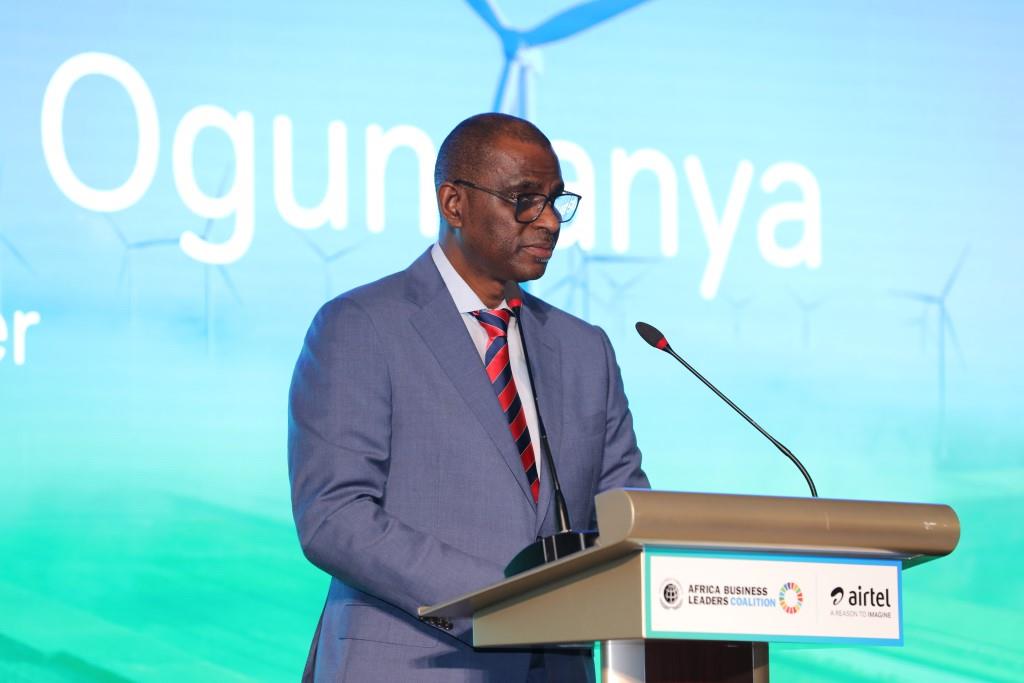
This was the submission of the chief executive of Airtel Africa, Mr Segun Ogunsanya, at a COP28 side event co-hosted by the telecommunications giant and the African Business Leaders Coalition (ABLC).
Mr Ogunsanya, who is a member of the United Nations Global Compact’s ABLC, stressed that African business leaders and governments to join forces to advance sustainable growth, development, and prosperity across the continent.
“We stress the importance of an enabling policy environment for sustainable development and climate action in partnership with Africa’s private sector. Livelihood and living must go together,” he said.
The Airtel Africa chief used the occasion to share details of his company’s environmental stewardship initiatives, including the Project Green programme launched in 2022, which focuses on circular economy practices, especially in the responsible replacement of end-of-life equipment to minimize potential adverse environmental impacts.
Furthermore, in March 2023, Airtel Africa joined the multi-stakeholder partnership to eliminate open waste burning from Africa.
This collaborative effort with local authorities, private companies, community groups, civil society and development partners targets a 60% reduction by 2030 and a complete elimination of open waste burning by 2040.
“Airtel Africa’s corporate purpose, our driving force, is to ‘transform lives.’ This is not simply a slogan but a genuine passion that informs every aspect of our operations and every decision we take,” Mr Ogunsanya declared.
“It is our firm belief is our firm belief that African businesses, including Airtel Africa, stand ready to leverage global markets to accelerate the transition to a future-fit economy.
“We must deliver economic development, inclusive growth and GHG emissions reduction at the same time to enjoy the fruits of sustainability,” he concluded.
Present at the gathering were the President of Botswana, Mr Mokgweetsi Masisi; the Finance Minister of Nigeria, Mr Wale Edun; the Minister of the Federal Capital Territory Nigeria, Mr Nyesom Wike; the Assistant Secretary-General of the United Nations Global Compact (UNGC), Ms Sanda Ojiambo; and the Chairman of BUA Group, Mr Abdul Samad Rabiu, among others.
ABLC is a collaborative initiative comprising African business CEOs committed to fostering sustainable growth, prosperity, and development throughout the African continent. Members in the coalition, including Airtel Africa, are committed to escalating the adoption of renewable energy, investing in climate adaptation solutions, and ensuring an equitable transition.
General
Vanilla Minecraft SMP: Why Simple Servers Keep People Playing
You Don’t Need Mods to Have Fun
It’s pretty common for people to throw in dozens of mods before they even begin a new world. Bigger caves, new mobs, extra weapons, hundreds of blocks. It sounds fun, and sometimes it is.
But after trying all that, I usually end up going back to the basic game.
There’s something nice about joining a world where everyone plays with the same rules. No complicated mechanics. No long list of commands to remember. Just Minecraft as it was meant to be played.
That’s one reason a minecraft vanilla smp still attracts so many players. The game already gives you plenty to do without changing everything.
Every Server Feels Different
People often think vanilla servers are all the same. They really aren’t.
I’ve joined servers where everyone built together in one town. I’ve also played on worlds where players spread out for thousands of blocks and only met each other once in a while.
The rules can be almost identical, but the community changes everything.
One server might become a trading hub with shops on every street.
Another turns into a group of friends building giant farms.
And sometimes the funniest moments have nothing to do with building at all. Someone gets lost. Another player accidentally blows up part of their storage room. Everyone laughs, then helps rebuild it.
Those moments are hard to plan. They just happen.
Starting From Nothing Is Part of the Fun
Joining a fresh server always feels different.
Nobody has enchanted gear.
Nobody owns stacks of diamonds.
Even finding enough iron for a full set of armor feels like progress.
The first house is usually a small wooden box. Maybe there’s a bed inside if you’re lucky.
A few days later the same area starts looking completely different. Roads appear. Farms get bigger. More people join. The empty field slowly turns into a real town.
Watching that happen is one of my favorite parts of survival multiplayer.
Small Projects Add Up
When I first started playing, I thought every build had to be huge.
Now I do the opposite.
I’ll build a bridge because crossing the river is annoying.
Then I add a path. Later I put lanterns along it.
None of these projects take all that long on their own, but together they make the whole world feel way more alive. The same thing happens on multiplayer servers.
One player plants trees. Another builds a dock.
Someone else creates a marketplace.
Weeks later nobody remembers who built what, but the whole place feels like a shared project.
Meeting Other Players Changes Everything
Playing alone is relaxing.
Playing with other people is less predictable.
Sometimes you’ll log in planning to mine for an hour. Then another player asks if anyone wants to explore an ocean monument.
Your original plan disappears.
Instead, five people grab boats and head across the map.
One random journey is sometimes all it takes to create a story the whole group remembers. That’s the magic of a vanilla minecraft smp compared to playing alone.
chatgpt.com
Good Servers Stay Busy
A busy server doesn’t mean there are hundreds of players online every minute.
Sometimes twenty active players are enough.
You’ll always find someone building, trading, fishing, or working on a farm.
The world feels lived in. Shops have supplies.
Community projects keep growing.
Messages appear in chat every few minutes.
That steady activity makes a big difference compared to joining a server where nobody logs in anymore.
If you’re planning to create a long-term community, reliable hosting matters too. Slow chunk loading and random crashes get frustrating pretty quickly.
Many server owners compare different options before choosing free minecraft server hosting because stable performance becomes more important as the community grows.
Some also decide to use godlike host after looking at pricing, hardware, and available locations. Honestly, there’s no universal answer here. The right choice depends mostly on player count and how big the world is likely to become after a while.
Rules Don’t Need to Be Complicated
The best servers I’ve joined usually had only a few simple rules.
Don’t steal.
Don’t mess with other people’s builds. Be respectful to everyone. That’s pretty much all there is to it.
Nobody needed pages of instructions.
When people understand what’s expected, most problems never appear in the first place.
Simple rules also make the server feel more welcoming for new players.
Why Vanilla Still Works
The game isn’t anything like it was when it launched, yet survival is still just as enjoyable to start.
You collect wood. You build a house. You go mining.
Soon you’re helping another player with their project instead of working on your own.
Hours pass without anyone noticing.
That’s probably why vanilla minecraft smps continue to stay popular. They don’t rely on massive mod packs or complicated gameplay systems. The players are what make everything interesting, along with the world they build together and all the small stories in between. Still, not every session is exciting. Sometimes you only organize chests or harvest crops. Strangely enough, those quiet evenings often become part of what makes the server feel like home. That’s something mods can’t really create. It comes from people spending time in the same world and slowly turning an empty map into a place that everyone recognizes.
General
Tinubu Authorises Salary Increases for Military
By Modupe Gbadeyanka
Salary increases of between 30 and 80 per cent have been approved for Nigeria’s armed forces personnel by President Bola Tinubu.
This was confirmed by a statement issued on Tuesday by the Special Adviser to the President on Information and Strategy, Mr Bayo Onanuga.
About 250,000 personnel are to benefit from the new deal, which takes effect on September 1, according to the statement. Officers above the rank of colonel will enjoy a 30 per cent salary increase. This applies to Brigadier-Generals, Major-Generals, Lieutenant Generals and Generals.
Personnel from colonel down to warrant officer will have a 50 per cent increase, while Private to Staff Sergeant will have an 80 per cent increase.
The President’s spokesman stated that the pay package will increase the yearly salary bill for the country’s armed forces personnel from N660 billion to N924 billion.
President Tinubu has always praised the courage and sacrifices of members of the armed forces as they confront the scourge of banditry, kidnapping and terrorism in some parts of the country.
“The men and women who help to keep us safe in our homes must be supported and appreciated in the course of their duties to our nation.
“Our administration will continue to prioritise troop welfare and modernise the armed forces by providing the weapons and technological tools needed to discharge their duties.
“Our administration believes that no nation can achieve greatness without security. We therefore remain resolute in mobilising all military and law enforcement assets to eliminate security threats and protect the lives and property of all Nigerians
“I urge our servicemen to take our gesture as a sign of our deep appreciation of the services they render to our fatherland. Together we shall prevail over the enemies intent on destroying the fabric of our nation,” Mr Tinubu was quoted as saying.
General
FG Issues Data Protection Compliance Directive to All MDAs
By Adedapo Adesanya
The federal government has issued a data protection compliance circular to all Ministries, Departments and Agencies (MDAs) to promote public trust through data-driven governance.
The compliance directive is contained in Circular No. 59805/S.I/74, dated 27 July 2026, and signed by the Secretary to the Government of the Federation, Mr George Akume, according to a statement by the Head, Legal, Enforcement & Regulations, Mr Babatunde Bamigboye.
The initiative forms part of a continuum of regulatory measures that will be vigorously pursued as Nigeria advances towards the decisive frontiers of the Fourth Industrial Revolution.
The circular drew the attention of MDAs to a statement of President Bola Tinubu, where he said: “Data is the new oil”.
Mr Akume then directed all Ministries, Extra-Ministerial Departments and Agencies to capture the information rigorously and safeguard it under the Nigeria Data Protection Act, 2023 (NDP Act).
The circular also directed MDAs to ensure full compliance with the NDP Act, Regulations, Guidelines, and Directives issued by the Nigeria Data Protection Commission (NDPC) in relation to the processing of personal data.
To this end, the Circular directs MDAs to, designate suitably qualified officers as Data Protection Officers (DPOs) to oversee data protection compliance and advise management on all matters relating to the lawful processing of personal data, ensure that the names and contact details of their designated DPOs are communicated to the NDPC for registration and official records; engage licensed Data Protection Compliance Organisations (DPCOs), where required, to facilitate compliance with the NDP Act and support the conduct of statutory compliance audits.
It also directed them to provide adequate budgetary allocation for data protection compliance activities, including capacity building, awareness programmes, deployment of appropriate technical safeguards, and periodic compliance audits; and submit all mandatory Data Protection Compliance Audit Returns and other statutory returns to the NDPC within the timelines prescribed by law.
The circular further states that “Permanent Secretaries, Accounting Officers and Chief Executive Officers of all MDAs shall be personally responsible for ensuring institutional compliance with the Circular and the provisions of the NDP Act.”
The National Commissioner/Chief Executive Officer of the NDPC, Mr Vincent Olatunji, expressed the commission’s commitment to supporting data-driven governance.
Mr Olatunji maintained that data accountability is pivotal to achieving the eight Presidential Priorities. To provide full technical support to MDAs for the purpose of achieving compliance, the commission has constituted a regulatory clinic.