General
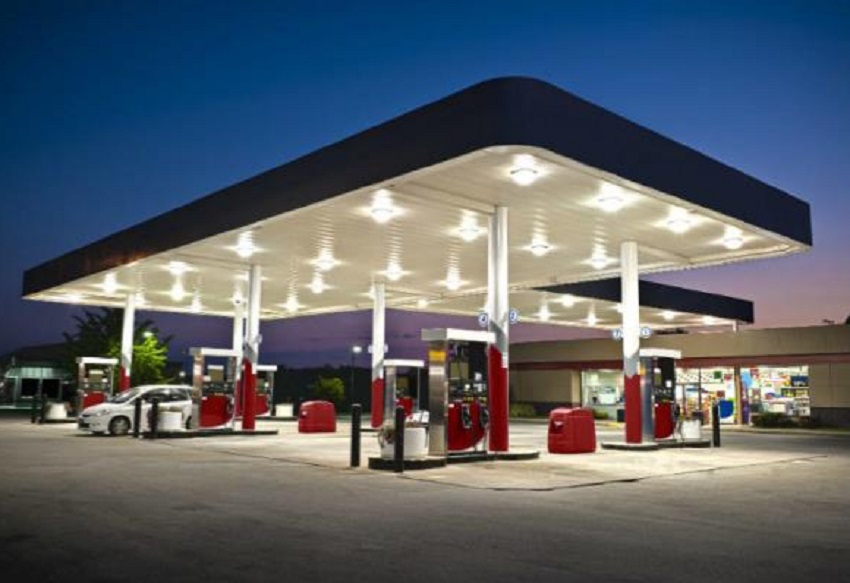
BCG Advises Fuel Retailers to Modernise Service Stations
By Modupe Gbadeyanka
If fuel retailers intend to survive and remain in business in the future, they must begin to make plans to modernise their service stations to support electric vehicles, supply biofuel as well as capitalize on their real estate, and zero in on sustainable practices.
In a new report by Boston Consulting Group (BCG), a leading global management consulting firm, it was disclosed that only those who heed this suggestion may continue to operate in the fast-emerging landscape.
The fuel industry has long been facing disruptive forces, and these have only accelerated since the beginning of the COVID-19 pandemic: electric vehicles (EVs) and alternative fuels have gained significant traction, mobility usage and attitudes have evolved, and customer behaviour has changed dramatically.
In the report titled A New Era for Fuel Retailers, 33 executives from 20 leading global retailers and operators with robust retail businesses were questioned and it was found that in-store sales and online offers during the pandemic offset sharp declines in gasoline and diesel sales volumes.
More recently, as geopolitical uncertainty and volatility have placed upward pressure on oil prices, many operators have realized that retail is a matter of business resiliency. As such, some 70 per cent of leading retailers are planning to expand their network in the coming years.
“The latest innovations in mobility and renewable power technology are encouraging stakeholders in Nigeria’s energy and automotive industries to develop and deploy solar-powered electric charging ports and expand gas stations in response to the growing fleet of electric and gas-powered vehicles.
“These initiatives, which are part of the pilot project of the National Automotive Design and Development Council (NADDC), will open more opportunities for investors to boost profitability and decarbonise the environment; encourage retail stations to expand their offerings and automobile technicians to upgrade their skills, when deployed at scale,” a Partner and Associate Director at BCG Nigeria, Ms Oluseun Solanke, was quoted as saying in the report made available to Business Post.
A Managing Director and Senior Partner at BCG, Mirko Rubeis, while commenting on the outcome of the survey, stated that, “Beyond extracting the most value from their traditional core business, fuel retailers’ survival depends on investing beyond the pump.
“They need to make ambitious moves into new digital businesses while also adapting the service station to support EV and other alternatives fuels, capitalize on their existing real estate, and zero in on sustainable mobility.”
General
We Did Not Ban Airtime, Data Borrowing Services—FCCPC
By Aduragbemi Omiyale
The Federal Competition and Consumer Protection Commission (FCCPC) has denied asking telecommunications companies to offer airtime and data lending services to their customers.
In a statement, the FCCPC explained that it only required the telcos to put in place a fairer and more transparent system for such offerings.
According to the agency, the telcos were only mandated to have proper registration, provide responsible lending conduct, clear disclosure of fees and terms, accessible consumer complaint channels, data protection safeguards, stronger accountability for third-party partners, and effective regulatory oversight.
It was stated that these requirements were mandated after “a deluge of consumer complaints bordering on opaque charges, unexplained deductions, aggressive recovery practices, poor disclosure standards, and inadequate accountability in segments of the digital lending and advance-services market.”
“The commission has not prohibited airtime borrowing or data advance services, and no directive was issued preventing consumers from accessing lawful telecom value-added services,” it clarified.
It stressed that the DEON Consumer Lending Regulations were introduced in July 2025 to, among other reasons, “curb the excesses of abusive service providers whose practices had generated persistent consumer harm and undermined confidence in the market.”
“In the telecom sector, our findings indicated that some operators engaged in exclusionary third-party technical arrangements in clear disobedience to the provisions of the Federal Competition and Consumer Protection Act, 2018. The Regulations sought to unlock the market to allow local participants alongside foreign partners, in line with free market principles.
“These measures benefit Nigerians by reducing abusive practices, improving transparency, strengthening consumer choice, and encouraging responsible innovation by legitimate operators,” the statement noted.
“We are aware that some vested interests and their foreign collaborators are opposed to the creation of safe markets and fair competition, therefore resorting to a campaign of disinformation.
“Operators are expected to structure their commercial relationships in a manner consistent with Nigerian law. Commercial arrangements or outsourcing decisions do not displace competition and consumer protection obligations.
“At the commencement of the framework in July 2025, affected operators were granted an initial 90-day compliance period to regularise their products, structures, and operations.
“That opportunity was not utilised within the prescribed timeframe, specifically in the telecom sector. The compliance window was subsequently extended until January 5, 2026, providing additional time for alignment with applicable requirements. Despite that further extension, the necessary compliance steps were still not completed by the relevant operators.
“Notwithstanding clear regulatory requirements, some operators chose to maintain the status quo by failing to register and regularise their services. In doing so, they continued operating monopolistic models that had long generated consumer complaints, including concerns relating to transparency, deductions, charges, and accountability.
“Any temporary suspension, restriction, or operational change introduced by service providers should therefore be understood as a business or compliance decision by those operators, not a ban imposed by the FCCPC.
“It is inaccurate to attribute avoidable disruption to regulation where regulated entities had adequate notice and sufficient opportunity to comply.
“Attempts to misrepresent temporary service inconvenience as the result of lawful consumer regulation are mischievous. Nigerians deserve accurate information, not sensational claims,” the FCCPC said, urging consumers and members of the public to disregard “false and misleading narratives on this issue.”
MTN Nigeria and Airtel Nigeria announced the suspension of their data and airtime borrowing services because of regulatory requirements.
General
Nigeria Pushes Bid to Host AU Monetary Institute
By Adedapo Adesanya
Nigeria has intensified its bid to host the African Union (AU) African Monetary Institute (AMI), with the Federal Ministry of Finance leading coordinating efforts to secure the institution ahead of its planned 2026 operationalisation.
The renewed push was made on the sidelines of the IMF/World Bank Spring Meetings in Washington D.C., where Nigeria is advancing its case as a credible host for the continental institution central to Africa’s monetary integration agenda.
Speaking through the Permanent Secretary of the Ministry, Mr Raymond Omachi, the Honourable Minister of Finance and Coordinating Minister of the Economy, Mr Wale Edun, underscored the country’s full political and institutional backing for the initiative. He stated that Nigeria has moved beyond policy commitments to concrete delivery, with the necessary infrastructure and administrative arrangements already in place.
The Nigerian government emphasised that hosting the institute aligns with Nigeria’s broader economic strategy of positioning Abuja as a hub for continental financial coordination.
It noted that the institute represents a critical step toward deeper monetary cooperation, improved macroeconomic convergence, and a more integrated African financial system.
Earlier, the Governor of the Central Bank of Nigeria, Olayemi Cardoso, had reaffirmed Nigeria’s readiness through his representative, the Deputy Governor, Economic Policy, Mr Muhammad Abdullahi.
He indicated that a dedicated office facility has already been secured in Abuja and made available for inspection, reflecting the country’s preparedness to meet host country obligations.
According to the Ministry, Nigeria remains actively engaged with the African Union and is prepared to conclude all required agreements to ensure a seamless take-off of the institute within the stipulated timeline.
The African Monetary Institute, approved in February, is designed to strengthen policy coordination, stabilise exchange rate frameworks, and lay the groundwork for eventual monetary unification across the continent.
On his part, the Chief Economist and Vice President of the African Development Bank (AfDB), Mr Kevin Urama, noted that the institute would strengthen financial stability, improve debt sustainability, and address structural constraints posed by multiple currencies across the continent.
Nigeria hosting the institute would mark the presence of another African-based organisation in Africa’s most populous country, which also plays host to the African Energy Bank.
General
Army Foils Oil Theft Operation, Arrests 14 Suspects Near Dangote Refinery
By Adedapo Adesanya
Troops of the 81 Division Nigerian Army have successfully foiled an illegal petroleum bunkering operation and arrested 14 suspected oil thieves at the Lekki Free Zone general area near the Dangote Refinery in Lagos State.
According to the troops, acting on credible and actionable intelligence, they conducted a swift and coordinated operation in the early hours of Thursday, April 16, 2026, at about 0130 hours.
During the operation, the suspects were apprehended while actively siphoning petroleum products.
The criminals had illegally connected a long pipeline from the high sea to a tanker concealed in a bush location and were using a generator-powered pumping machine to transfer the products into the vehicle.
On sighting the approaching troops, the suspects attempted to flee but were swiftly overpowered and arrested by the soldiers, with their operational equipment confiscated.
Items recovered from the scene include a petroleum tanker truck loaded with siphoned petroleum products, one Lexus Highlander SUV with Registration Number APP 67 JQ Lagos, one Ford Hilux vehicle with Registration Number BY 117 FST Lagos, one pumping machine, one 40HP boat engine, and a large quantity of industrial hosepipes and other related bunkering equipment.
The arrested suspects and recovered items are currently in the custody of the 81 Division of the Nigerian Army for preliminary investigation and subsequent handover to the appropriate prosecuting agencies in accordance with extant laws.
The Nigerian Army reiterates its unwavering commitment to combating crude oil theft and other economic sabotage, particularly within critical national infrastructure zones.
The Army in the statement said, “Members of the public are encouraged to continue providing timely and credible information to the military and other security agencies to enhance ongoing operations.”
-
Feature/OPED6 years agoDavos was Different this year
-
Travel/Tourism10 years ago
Lagos Seals Western Lodge Hotel In Ikorodu
-
Showbiz3 years agoEstranged Lover Releases Videos of Empress Njamah Bathing
-
Banking8 years agoSort Codes of GTBank Branches in Nigeria
-
Economy3 years agoSubsidy Removal: CNG at N130 Per Litre Cheaper Than Petrol—IPMAN
-
Banking3 years agoSort Codes of UBA Branches in Nigeria
-
Banking3 years agoFirst Bank Announces Planned Downtime
-
Sports3 years agoHighest Paid Nigerian Footballer – How Much Do Nigerian Footballers Earn