General
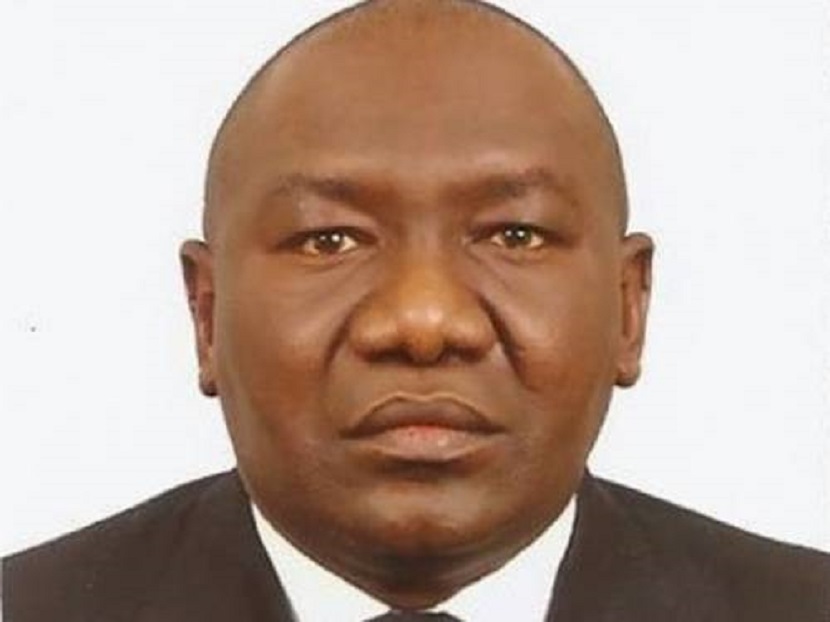
Benedict Peters Denies Funding Political Movement
By Modupe Gbadeyanka
Business mogul, Mr Benedict Peters, has refuted claims that he is the main financial of a new political movement in Nigeria called the Third Force.
The oil magnate, in a statement issued last weekend, distanced himself from the speculations, emphasising that he is not a “financier of the said organisation or any socio-political partisan association or political party in Nigeria or anywhere else in the world.”
According to him, he has received calls and messages advising him to “ignore” the tweet and regard the reports as the “handiwork of detractors,” but having taken into consideration his travails in recent times, fuelled largely by the adverse effects of incomprehensible media falsehood, he was forced to “immediately authorize the release of a rebuttal, given the malicious, damaging effect the unprofessional tweet is capable of creating.”
In the statement personally signed by him, Mr Peters said, “As an International businessman of repute, I have deliberately kept stayed away from politics preferring, instead, to focus and give my all to the development of my business interests across the African continent.
“Corporate Social Responsibility contributions has seen the Aiteo Group, which I lead, provide investment support in Medicine and Medical Research dedicated to seeking cures for several ailments which affect the African continent as well as investment in Sport and Sport as a panacea for the development of Africa’s teeming youth population.
“The latter has been particularly evident in the Sport of football where we have major relationships with the Nigerian Football Federation and Confederation of African Football (CAF). This is even as we continue to regularly provide financial support and investments to encourage building the ‘Nigerian Dream’ through multi-dimensional and multifaceted socio economic interventions.
“Neither I, my immediate family nor companies in which I have interests would embark on the sponsorship of a movement which is unknown to us. This would be crass, irresponsible and inconsistent with the commercial prudence that a businessman of my accomplishment would consider. To, therefore, name me as a financier of such a venture is not only vile and callous, it is insensitive and inconsiderate.
“It is a sad reminder of the length that some people, manipulating the malleable, depraved and downright dishonest elements of the media, can go (for reasons best known to them) in their despicable and contemptible attempts to continue to pitch me against the government of the day in Nigeria!
“Apart from seeking to impugn my integrity as the publication has done, the authors appear to premise the absurdity of their fabrication on my very well publicized relationship with former President Chief Olusegun Obasanjo.
“I confirm that I know the former President very well. He is like a father to me. He was a friend of my father, the late Chief F.B Peters and has a relationship with my family that dates back over 30 years.
“In the publishers’ indecent haste to malign the former president and I, amongst others, they demonstrated a shameful shallowness that paid no heed to the very personal nature of our relationship.
“For the avoidance of any doubt whatsoever, I also confirm, categorically, that the former President has, on no occasion, discussed or mentioned any such plan or intention to me. This situation very pointedly affirms the irrationality and farcicality of the allegations as a whole.
“As unconvincing and implausible as these allegations are, I am constrained to take steps to address these unbridled excesses as a means of protecting my family, my business and I from these unwarranted personal attacks.
“Accordingly, I have instructed my lawyers to immediately take steps to obtain a retraction, in the absence of which they are to take all steps available to provide me with protection, remedy and relief.
“I ask the general public and well-meaning Nigerians at home and abroad, to disregard the tweet and its contents. It is nothing but FAKE NEWS.
“Finally, my message to the COWARDS who have, again, sought to use cheap, fabricated publicity and dirty media propaganda to cause me embarrassment, is that no assemblage of hatchet jobs/men or media manipulation can shake my unwavering stand and belief in the fortunes of the Nigerian economy and the success of the ‘Nigerian Project’.
“Aiteo as a business endeavour has come to stay and will grow bigger in the years to come.”
General
NEC Approves $4.5bn Refinancing of NNPC Oil-Backed Loan
By Adedapo Adesanya
The National Economic Council (NEC) has approved a $4.5 billion arrangement for the Nigerian National Petroleum Company (NNPC) Limited aimed at strengthening the country’s external reserves and freeing up funds for infrastructure.
This is part of the refinancing of the $3.3 billion Project Gazelle Pre-Export Finance Facility through a new $4.5 billion facility named “Project Gazelle 2”.
The approval allows NNPC Limited to refinance the outstanding balance of approximately $1.5 billion under the original 2023 facility, while unlocking an additional $3 billion in liquidity to strengthen the country’s external reserves and support ongoing fiscal and infrastructure priorities of the government.
NEC’s approval followed a presentation by the Minister of Finance, Mr Taiwo Oyedele, which was presented by the Chairman of the Council, Vice President Kashim Shettima, underscoring the importance of the project.
NEC observed the significance of unlocking additional liquidity to the federation, among other benefits, pledging its support for the actualisation of the initiative.
The Finance Minister explained that the refinancing has been structured on more favourable terms than the original facility, including a reduction in the volume of pledged crude oil from 90,000 barrels of oil per day to approximately 78,750 barrels of oil per day – a 12.5 per cent reduction.
He noted that under the new arrangement, an additional 11,250 barrels of oil per day for the federation will be released, while there will be a reduction in the pledged crude volumes by the state oil company.
Mr Oyedele added that while accessing additional liquidity on improved terms, the arrangement is freeing up resources for strategic national priorities while strengthening the country’s financing structures.
“The arrangement is freeing up resources for strategic national priorities while strengthening the country’s financing structures,” he said.
VP Shettima called for a responsive, scalable, and data-driven social protection policy to tackle multidimensional poverty in Nigeria.
According to Mr Shettima, government policies are often heard before they are seen, speak through the price of food, condition of hospitals, records in schools, strain on families, the confidence of those who invest their labour in the nation’s future, and, very importantly, the ambitions of state governments.
He implored members of Council to ensure that every decision they make assure the citizens “that their government is paying attention to the pulse of the nation and is resolved to respond with competence, compassion and purpose.”
General
FG Seeks Public Input on National Policing Bill
By Modupe Gbadeyanka
Members of the public have been invited to submit memoranda and policy proposals on the proposed National Policing Bill.
The Chairman of the Working Group, Mr Femi Gbajabiamila, announced this on Monday after the team’s meeting at the State House in Abuja.
The group, headed by the Chief of Staff to President Bola Tinubu, is calling for input from Nigerians as part of efforts to establish a comprehensive legal and operational framework for state policing.
It is reviewing the Police Act 2020, the Police Service Commission framework, police regulations, and other relevant laws to support the development of an effective, modern policing system.
The proposed framework will set national minimum standards, define state readiness and grant certification, clarify jurisdictional responsibilities, ensure independent oversight, uphold human rights, and guarantee sustainable funding. It would also spell out an orderly transition to a dual-policing structure.
The call for memoranda will run for two weeks, allowing citizens, professionals, civil society, security agencies, state and local governments, academics, and other stakeholders to contribute. Submissions will be reviewed and integrated into the draft bill, which will then be subject to further national consultation before being finalised and sent to the National Assembly.
The Working Group has adopted a seven-week work programme running from July 27 to September 14, 2026. The draft Executive Bill is scheduled for presentation to President Bola Ahmed Tinubu on September 3, 2026, with national consultations to follow before the final approval.
The new National Policing Bill will set out requirements for recruitment, training, oversight, funding, and transition arrangements to ensure credible, effective, and accountable policing nationwide.
“A proposed State Police Service must demonstrate that it has credible arrangements for recruitment, vetting, training, pay, pensions, equipment, custody, complaints, discipline, data, firearms control, independent oversight and financial sustainability before it begins policing,” Mr Gbajabiamila said.
The representative of the Nigeria Governors’ Forum and Governor of Ogun State, Dapo Abiodun, who described State Police as a landmark reform, described the initiative as one of the defining reforms of President Tinubu’s administration.
Responding to concerns about federal overreach, he clarified that there is no Federal attempt to control State Police. He added that the proposed legislation is intended to provide an operational framework rather than centralise control.
Prince Lateef Fagbemi, the Attorney-General of the Federation and Minister of Justice, said the proposed National Policing Bill is designed to guarantee the security of lives and property while ensuring that the establishment of state police does not become a tool for political persecution.
The Attorney-General added that states not immediately ready to establish their own police services would continue to benefit from the presence of the Federal Police until they meet the required standards.
Other participants at the meeting included the Inspector General of Police, Tunji Disu; President of the Nigerian Bar Association, Afam Osigwe; Chairman, Policy Advisory Committee, Justice Abdullahi Liman (rtd); Professor Olu Ogunsakin, Head, Nigeria Police Reform Secretariat; Senior Special Assistant to the President on Planning and Research, Nnadubem Moghalu; and Brigadier General Olutayo Muyiwa Adesuyi, representing the National Security Adviser.
General
NMDPRA Records 30% Drop in Gas Imbalance on Western Network
By Adedapo Adesanya
The Nigerian Midstream and Downstream Petroleum Regulatory Authority (NMDPRA) says it recorded a 30 per cent reduction in gas imbalance on the country’s Western Network following the conclusion of its first-half 2026 Nigerian Gas Network Reconciliation (NGNR) Workshop.
The workshop brought together gas transporters, suppliers, shippers and off-takers to reconcile gas volumes traded between January and June 2026, while introducing a Network Entry/Exit Point Measurement Infrastructure Audit Template aimed at improving metering accuracy and accountability across the gas transmission network.
In a communiqué issued after the workshop, the authority said participants also reviewed the performance of the Nigerian Gas Transmission Network, assessed progress on major pipeline infrastructure projects, and received updates on the ELPS Gas Shrinkage Factor and Hydraulic Modelling Project.
Discussions focused on addressing metering gaps, improving network visibility through Supervisory Control and Data Acquisition (SCADA) integration, and enhancing system reliability ahead of the commissioning of the Ajaokuta-Kaduna-Kano (AKK) Pipeline System.
The workshop adopted key resolutions, including the execution of outstanding Network Exit Agreements, mandatory submission of measurement audit templates and closer collaboration among industry stakeholders to improve network pressure management.
Speaking at the closing session on behalf of the authority’s chief executive, Mr Rabiu A. Umar, the Director of Transportation Systems and Networks, Mr Joseph G. Musa, said the biannual reconciliation exercise had become critical to promoting equitable gas transactions, transparency, investor confidence and efficient network operations.
Mr Musa noted that since the NGNR process was introduced in 2023, it had significantly improved gas measurement, strengthened regulatory compliance through consequence management, reduced operational imbalances and contributed to a more reliable domestic gas supply.
The workshop concluded with participants adopting the reconciled H1 2026 gas volumes, reaffirming the authority’s commitment to a transparent, efficient and reliable domestic gas market.