Connect with us

General

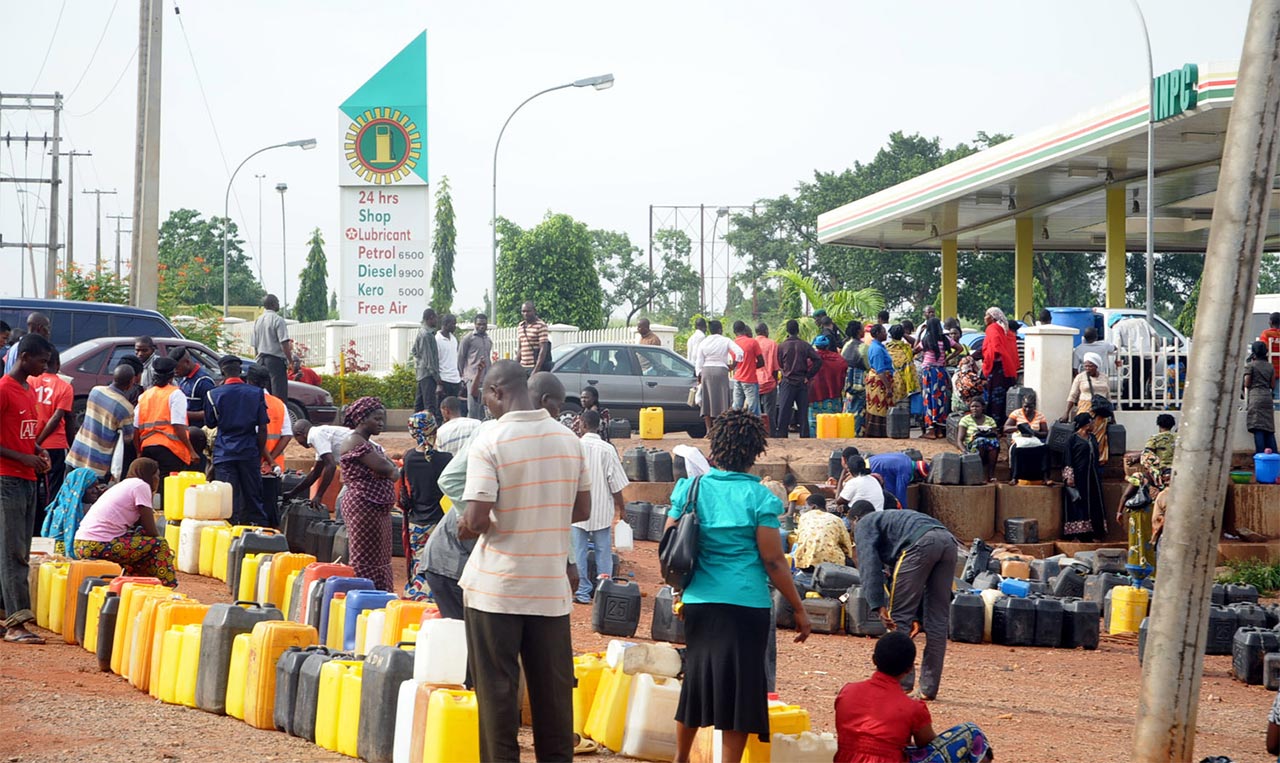
Coronavirus Won’t Cause Scarcity of Petrol, Diesel, Kerosene—PPPRA

Published

on

petrol scarcity

By Adedapo Adesanya

The Petroleum Products Pricing Regulatory Agency (PPPRA) has assured consumers that the entry of coronavirus in Nigeria will not result into scarcity of petroleum products as there are enough in stock to cover for the next 40 days.

The deadly disease, now present in over 50 countries, has affected sales of commodities at the markets, with Nigeria recording its first case on Thursday, February 27 from an Italian national who came into the country from Turkey.

In a statement signed by the Executive Secretary of the agency, Mr Abdulkadir Saidu, over the weekend, the PPPRA said despite the fears of slowing global demand for crude oil, there won’t be scarcity of Premium Motor Spirit (PMS), which in commonly referred to as petrol, in the country. The agency said it has a sufficiency of 41.34 days.

The PPPRA further said for Automotive Gas Oil, (AGO or diesel), it has for 45.04 days; Household kerosene for domestic use (HHK or kerosene) has 9.36 days; Aviation Turbine Kerosene (ATK) has 53.73 days; while Low Pour Fuel Oil (LPFO) has 33.75 days.

Mr Saidu explained that the PPPRA January 2020 report on Oil and Gas sector operations showed that the national supply of PMS was 1.8 billion litres, while AGO and ATK were 423.27 million litres and 96.70 million litres respectively.

He noted that a similar report highlighting activities of the agency for week 4, (21 – 27 February, 2020) revealed that the average days sufficiency stood at 42.28 days for PMS, AGO was 44.73 days while HHK was 20.36 days and ATK 36.22 days.

“During the week in view, the total volume of PMS and AGO discharged were 551.01 million litres and 84.84 million litres respectively,” he added.

PPPRA also stated that crude oil prices in January averaged $63.51, $64.06 and $58.29 per barrel for Brent, Bonny and WTI respectively, as against the December average prices of $67.02, $65.94 and $60.67 per barrel.

“Available data for week 4 of February 2020 indicated declines in the prices of Brent, Bonny and WTI, which averaged$57.17, $57.14 and $52.86 per barrel respectively”.

The PPPRA Chief said the agency also ensured that the NNPC and other marketers maintained strict compliance to approved guidelines for importation of petroleum products.

He, therefore, reassured the public that it would continue to work with other relevant stakeholders towards maintaining efficient petroleum products supply in the country adding that efforts were taken to ensure to combat anything that could affect availability.


Adedapo Adesanya is a journalist, polymath, and connoisseur of everything art. When he is not writing, he has his nose buried in one of the many books or articles he has bookmarked or simply listening to good music with a bottle of beer or wine. He supports the greatest club in the world, Manchester United F.C.

General

Billing, Collection Gaps Leave DisCos with N80.49bn Shortfall in February

Published

on

Nigerian DisCos

By Adedapo Adesanya

Latest data from the Nigerian Electricity Regulatory Commission (NERC) showed that Nigeria’s electricity Distribution Companies (DisCos) recorded an N80.49 billion collection shortfall in February 2026.

According to NERC’s February factsheet on DisCos’ commercial performance, the 11 companies received N277.09 billion worth of electricity from the national grid.

The total energy received by the energy distribution firms increased by 17.64 per cent from January’s N235.53 billion. However, the DisCos billed customers N242.29 billion and collected only N196.68 billion.

This reflected a collection efficiency of 81.17 per cent and a billing efficiency of 87.44 per cent. Average recovery efficiency across all DisCos was 80.67 per cent.

The report also detailed a reduction in government subsidies to N24.03 per unit from N38.33 in January, indicating a N14.30 drop, so customers paid an average of N100.27 per unit against an allowed tariff of N124.30.

The commission further highlighted gains in tariff realisation, stating that “the actual average collection per kilowatt-hour increased to N100.27, representing a 16.64 per cent improvement compared to January 2026.”

This, it said, pushed recovery performance upward, noting that “overall revenue recovery efficiency rose to 80.67 per cent, an increase of 11.51 percentage points month-on-month.”

Providing a breakdown across utilities, the Commission stated that “Eko, Kano, and Abuja DisCos recorded the highest billing efficiencies at 97.20 per cent, 99.04 per cent, and 93.70 per cent, respectively.”

Conversely, it noted that “Yola and Kaduna DisCos recorded the lowest billing efficiencies at 66.09 per cent and 72.46 per cent respectively.”

On collections, the report said “Eko DisCo led with 94.12 per cent collection efficiency, followed by Abuja at 89.28 per cent,” while “Kaduna DisCo recorded the lowest collection efficiency at 49.27 per cent.”

In terms of cost recovery, the commission disclosed that “Eko DisCo achieved a recovery efficiency of 100.67 per cent, exceeding the allowed tariff benchmark,” while “Kaduna DisCo recorded the weakest recovery performance at 41.20 per cent.”

An analysis of the figures shows that compared to January, energy received rose by N41.56 billion (17.64 per cent), Billings fell by N25.79 billion (9.66 per cent), and Collections declined by N8.09 billion (3.94 per cent).

This indicates that although DisCos are becoming more efficient operationally, the sector is still grappling with weak demand, collection losses, and customer liquidity constraints.

The commission also disclosed that “reduced ATC&C loss targets averaging 16.64 per cent have been approved for 2026 to reflect the expected impact of DisCo investments made in 2025.”

It added that the February performance “demonstrates gradual improvements in commercial efficiency, though significant gaps remain in revenue realisation across the industry.”

Continue Reading

General

Court Judgment: Group Await Details of Ogun, ARISE IIP Deal Within 14 Days

Published

on

Ope Banwo Dapo Abiodun

By Modupe Gbadeyanka

A group known as Naija Lives Matter (NLM), established by Mr Ope Banwo, has expressed optimism that the Ogun State government will obey the judgment of Justice Abiodun Adeyemi of the Federal High Court in Abeokuta on the release of the full details of a 45-year Public-Private Partnership (PPP) agreement with ARISE Integrated Industrial Platforms (ARISE IIP).

NLM had approached the court under the Freedom of Information (FOI) Act, 2011, to compel the state government under Governor Dapo Abiodun to release details of the Remo Economic Industrial Cluster project in Sagamu.

The organisation, through Mr Yemi Salman, filed the suit after the state government refused to provide key details of the project.

While delivering the judgment, Justice Adeyemi ordered the Ogun State Government and its key ministries to release critical documents and information relating to the agreement to NLM and Mr Banwo.

Reacting to this, the founder of the group said, “This is about the right of the people to know how a long-term agreement involving public resources was structured.

“We believe the Governor has an opportunity to demonstrate that, despite all the drama about him, he still respects the rule of law by choosing transparency over secrecy; accountability over avoidance; and respect for the rule of law over resistance, because at this point, disobedience of a lawful court order is not just a legal issue—it is a public accountability issue.

“And we at Naija Lives Matter are hopeful that Governor Dapo Abiodun will not add disregard for judicial authority to the list of questions already before the people of Ogun State. We expect all documents regarding the Ogun State–ARISE IIP project within 14 days, as ordered by the court.

“We hope other organisations fighting for transparency and accountability from our governments will be encouraged by this bold ruling to keep up the fight for justice in our nation.”

Continue Reading

General

SERAP Rejects FCT High Court Verdict in DSS Officials’ N5.5bn Suit

Published

on

SERAP

By Adedapo Adesanya

The Socio-Economic Rights and Accountability Project (SERAP) has rejected the judgment of the Federal Capital Territory High Court (FCT) Abuja, in the N5.5 billion defamation lawsuit filed against the organisation by two officials of the Department of State Services (DSS).

Justice Yusuf Halilu of the High Court of the Federal Capital Territory on Tuesday ordered SERAP to pay N100 million in damages to the DSS officials for alleged defamation.

The court also directed the organisation to issue public apologies, pay N1 million in litigation costs, and a 10 per cent annual post-judgment interest on the damages until fully paid.

Reacting in a statement signed by its Deputy Director, Kolawole Oluwadare, SERAP said: “This judgment is totally unacceptable to us. It is a travesty and a serious blow to civic space in Nigeria. It reflects a troubling pattern under the government of President Bola Ahmed Tinubu of using defamation laws to punish legitimate criticism and suppress accountability.”

SERAP added, “We have instructed our lawyers, Tayo Oyetibo, SAN, and Ebun-Olu Adegboruwa, SAN, to immediately appeal this judgment.”

The statement read in part: “This case represents a textbook example of judicial harassment and a strategic lawsuit against public participation (SLAPP), designed to intimidate civil society and deter legitimate human rights advocacy.

“The Tinubu government is misusing both the DSS and the judicial system to target activists, journalists, and ordinary Nigerians who are peacefully exercising their fundamental human rights.

“Rather than deploying state institutions to intimidate critics, the government should be protecting those working to expose corruption, including allegations involving the Nigerian National Petroleum Company Limited.

“We strongly disagree with the judgment, which fails to reflect the evidence presented before the court and disregards Nigeria’s constitutional guarantees and international human rights obligations.

“This judgment sends a dangerous message and creates a chilling effect on freedom of expression, civic participation, and anti-corruption work.

“Strategic lawsuits against public participation undermine the rule of law by diverting judicial processes from their proper purpose—justice—to repression.

“Courts have a duty to prevent the misuse of legal proceedings and to safeguard the rights to freedom of expression and association.

“The judgment raises serious concerns regarding compliance with international human rights law. Judicial authorities must ensure that defamation laws are not weaponised to silence dissent or suppress legitimate advocacy.

“We are committed to pursuing all available legal avenues, including appeal, to ensure that the rule of law is upheld and that fundamental rights are protected. We stand resolute. We will continue to defend civic space, promote transparency, and advance accountability in Nigeria.

“Our work—particularly in promoting transparency, challenging corruption, and addressing illicit financial flows—is carried out in the public interest and in accordance with the law.”

SERAP further stated: “The Tinubu government has continued to fail to investigate the allegations of corruption our organisation raised against the Nigerian National Petroleum Company Limited (NNPCL).

“We call on Nigerian authorities to uphold their constitutional and international human rights obligations, including the duty to protect human rights defenders and ensure that security agencies operate lawfully, transparently, and accountably.”

The lawsuit arose after SERAP, on September 9, 2024, alleged that DSS officials unlawfully entered its Abuja office following the organisation’s call on President Tinubu to investigate corruption allegations in the NNPC Limited and reverse fuel price increases.

Continue Reading

Trending