General
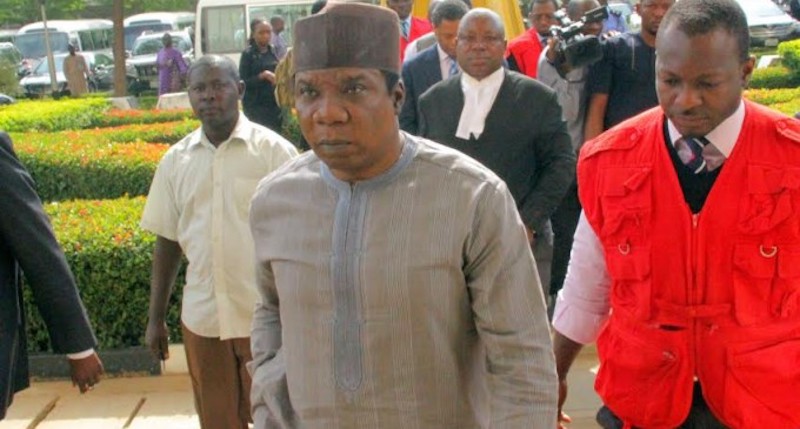
Court Acquits Jide Omokore of $1.6bn Fraud, Convict Two Others
By Aduragbemi Omiyale
Mr Jide Omokore, an ally of former Minister of Petroleum, Ms Diezani Alison-Madueke, has been acquitted by Justice Nnamdi Dimgba of the Federal High Court sitting in Abuja.
Mr Omokore was accused by the Economic and Financial Crimes Commission (EFCC) of laundering funds to the tune of $1.6 billion.
However, at the ruling on Tuesday, February 7, 2023, Justice Dimgba held that the anti-money laundering organisation could not prove its case against Mr Omokore and two companies linked to him, Atlantic Energy Brass Limited and Atlantic Energy Drilling Concept Limited.
But two other persons linked to the matter, Victor Briggs and Abiye Membere, both former top officials of the Nigerian National Petroleum Corporation (NNPC), were convicted by the court today.
They were found guilty of “unethically collecting car gifts as public officials,” in contravention of section 98 of the Criminal Code Act.
According to the trial judge, public officials must act at arm’s length with private individuals, especially those that have business relations with their departments or agencies. They would be kept in the custody of the EFCC pending their sentencing on Wednesday.
In a statement issued after the ruling, the EFCC expressed shock over the acquittal of Mr Omokore, vowing to challenge it at the appeal court.
The agency dragged Mr Omokore and others to court, alleging that he used the Strategic Alliance Agreement signed between the NPDC and Atlantic Energy Drilling Concept Limited to swindle the NPDC and the Nigerian government of monies running into billions of dollars through the lifting of crude oil from some oil wells between March 2013 and May 2014.
The other defendants, who were senior management staff of the NNPC, were accused of conspiracy in inducing the NPDC to facilitate the lifting of crude by Mr Omokore, Atlantic Energy Brass Development Limited and Atlantic Energy Drilling Concept Limited; and receiving car gifts from Omokore, Atlantic Energy Brass Development Limited and Atlantic Energy Drilling Concept Limited.
“That you, Olajide Jones Omokore, Atlantic Energy Brass Development Ltd, Atlantic Energy Drilling Concept Ltd and Kolawole Akanni Aluko (now at large) between May 2013 and March 2014 within the jurisdiction of this court obtained by false pretence and with intent to defraud, 7,551,867 barrels of crude oil (Brass blend) valued at the sum of $823,75,189.95 from Nigerian Petroleum Development Company (NPDC), Nigerian National Petroleum Corporation (NNPC) and the Federal Government of Nigeria on the false pretence that you had funds (both local and foreign) necessary to support the Nigerian Petroleum Development Company Limited in petroleum operation for the OML 60,61, 62 and 63 and you thereby committed an offence contrary to Section 1(a) of the Advance Fee Fraud and Other Fraud Related Offences Act Cap. A6, 2010, Laws of the Federation of Nigeria and punishable under Section 1(3) of the same Act,” one of the charges read.
General
Tinubu Confirms Killing of Abu-Bilal Al-Manuki by Nigerian, US Forces
By Modupe Gbadeyanka
President Bola Tinubu on Saturday confirmed the killing of a senior ISIS leader, Mr Abu-Bilal Al-Manuki, in an overnight operation carried out by the United States and Nigeria.
President Donald Trump had earlier announced the elimination of the notorious terrorist via a post on his Truth Social.
Later, in a statement today, Mr Tinubu praised the action, describing it as “a significant example of effective collaboration in the fight against terrorism.”
“Our determined Nigerian Armed Forces, working closely with the Armed Forces of the United States, conducted a daring joint operation that dealt a heavy blow to the ranks of the Islamic State,” he said in the statement.
According to him, early assessments confirm the elimination of the wanted IS senior leader, Abu-Bilal Al-Manuki, also known as Abu-Mainok, along with several of his lieutenants, during a strike on his compound in the Lake Chad Basin.
He commended the partnership between Nigeria and America in waging war against terrorists, thanking his US counterpart “for his leadership and unwavering support in this effort.”
“I commend the personnel involved on both sides for their professionalism and courage, and I look forward to more decisive strikes against all terrorist enclaves across the nation,” the Nigerian leader added.
General
Nigeria Steps up AI Surveillance, Anti-Drone Systems for National Security
By Adedapo Adesanya
Nigeria is set to strengthen its defence architecture by deploying artificial intelligence-powered surveillance systems and advanced anti-drone technology as part of efforts to modernise the country’s military capabilities, according to the Minister of Defence, Mr Christopher Musa.
He disclosed this during a high-level visit to Monaco, where he led a Nigerian delegation to conclude discussions on the multi-domain Hybrid Intelligence Shield (HIS) project.
According to Mr Musa, the initiative is designed to enhance border security, protect urban centres and improve the country’s response to emerging security threats.
The project is expected to introduce AI-driven surveillance systems capable of identifying threats rapidly through smart algorithms, while anti-drone technology will be deployed to intercept and neutralise unmanned aerial threats.
The government also plans to establish national and regional command-and-control centres to improve real-time coordination and response to security incidents across the country.
Mr Musa said the initiative would place strong emphasis on technology transfer and local capacity development through the establishment of a military Centre of Excellence in Nigeria.
He added that the federal government would leverage partnerships with international firms, including Marss UK Ltd, while simultaneously building indigenous capabilities to address insurgency, illegal mining, piracy and other security threats.
Nigeria has continued to battle multiple security challenges in recent years, including insurgency in the North-East, banditry and kidnappings in the North-West, farmer-herder clashes in the North-Central region, crude oil theft in the Niger Delta and piracy in the Gulf of Guinea.
Nigeria is stepping up its defence as the border region of Nigeria, Benin and Niger on the southern edge of the Sahel region is becoming a new stronghold for jihadists, as militants turn forests and pastoral networks in West Africa into bases for recruitment and international attacks.
Attacks in Nigeria have also risen, with data from the website of the Armed Conflict Location & Event Data (ACLED), a conflict-monitoring group, affirming that the number of suicide bombings in Nigeria by March already matched the annual average over the past six years.
The Nigerian military has also been dealt a blow to its military bases and senior figures targeted. In April, Brigadier-General Oseni Omoh Braimah was killed when Islamist fighters attacked a base in Borno State.
To also meet the defence goal, Nigeria is stepping up efforts to build domestic arms-manufacturing capacity.
General
Nigeria, Morocco to Seal Atlantic Gas Pipeline Deal by Q4 2026
By Adedapo Adesanya
Nigeria and Morocco are set to sign a major intergovernmental agreement later this year to push forward the long-delayed Nigeria-Morocco Gas Pipeline project, a multi-billion-dollar energy corridor expected to reshape gas trade across West Africa and Europe.
The agreement, expected to be signed in the fourth quarter of 2026 by President Bola Tinubu and King Mohammed VI of Morocco, follows the completion of preliminary technical studies for the ambitious project, according to officials from both countries.
The pipeline, also known as the African Atlantic Gas Pipeline, is projected to stretch about 6,900 kilometres along offshore and onshore routes across West Africa, making it one of the largest gas infrastructure projects on the continent.
With an estimated cost of $25 billion, the pipeline is designed to transport up to 30 billion cubic metres of gas annually once completed.
Discussions on the project gained fresh momentum during a telephone conversation between Nigeria’s Minister of Foreign Affairs, Mr Bianca Odumegwu-Ojukwu, and her Moroccan counterpart, Mr Nasser Bourita.
The project would not only strengthen energy cooperation between the two countries but also improve regional economic integration and expand Africa’s access to European energy markets.
According to Morocco’s hydrocarbons and mining agency, ONHYM, part of the gas supply will support Morocco’s domestic energy demand, while large export volumes will be directed to Europe.
The project, first proposed about a decade ago, is seen as a strategic alternative gas supply route amid rising global energy security concerns and Europe’s search for more diversified energy sources.
Beyond the pipeline, Nigeria and Morocco are also exploring broader economic partnerships, particularly in fertiliser production and distribution to support food security across Africa.
Both countries also agreed on the need to revive the Nigeria-Morocco Business Council to strengthen trade and investment relations under the African Continental Free Trade Area framework.
Analysts noted that the project could significantly boost gas monetisation opportunities for Nigeria, expand regional infrastructure development, and deepen economic ties between West African nations and Europe if successfully executed.
-
Feature/OPED6 years agoDavos was Different this year
-
Travel/Tourism10 years ago
Lagos Seals Western Lodge Hotel In Ikorodu
-
Showbiz3 years agoEstranged Lover Releases Videos of Empress Njamah Bathing
-
Banking8 years agoSort Codes of GTBank Branches in Nigeria
-
Economy3 years agoSubsidy Removal: CNG at N130 Per Litre Cheaper Than Petrol—IPMAN
-
Banking3 years agoSort Codes of UBA Branches in Nigeria
-
Banking3 years agoFirst Bank Announces Planned Downtime
-
Sports3 years agoHighest Paid Nigerian Footballer – How Much Do Nigerian Footballers Earn