
General
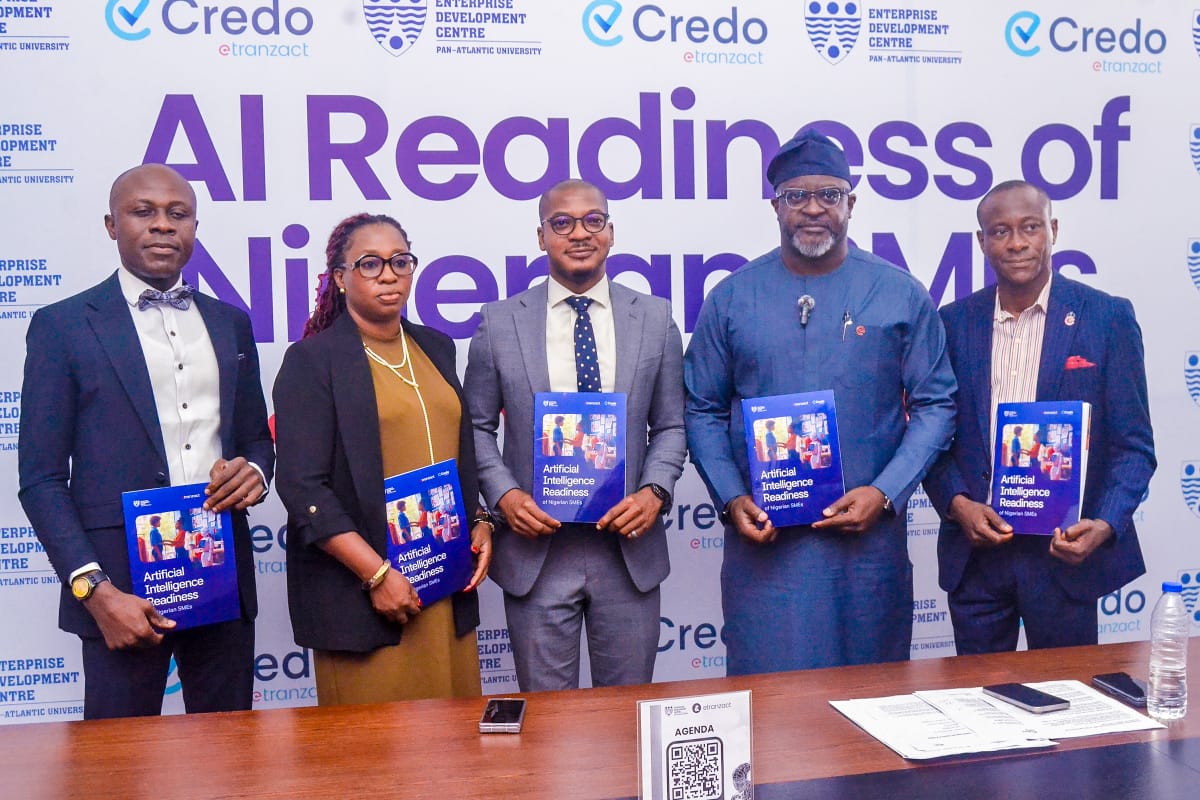
EDC, eTranzact Highlights AI Readiness of Nigeria SMEs

By Modupe Gbadeyanka
A new report showing how small businesses in Nigeria are adopting Artificial Intelligence (AI) to scale up their operations has been released by the Enterprise Development Centre (EDC) of the Pan-Atlantic University in partnership with eTranzact International Plc.
The survey, titled Artificial Intelligence Readiness of Nigeria SMEs, explored where businesses in the Nigerian Small and Medium Enterprises (SMEs) currently stand on the AI journey, including their readiness, their hurdles, and the incredible opportunities ahead.
It also made some recommendations, including tasking the government to prioritise and invest in locally relevant AI solutions, and also focus on affordable tools for SMEs.
The report called for the promotion of indigenous AI tools that are culturally sensitive and linguistically accessible, and recommended the development of AI –friendly policies, including tax incentives, simplified regulations, and data privacy safeguard.
The private sector was also charged to develop and offer affordable, user-friendly AI solutions tailored to SME needs and invest in AI skill training and capacity building through partnership and educational programmes.
At the unveiling of the study in Lagos, the Director of Programs and Partnerships at EDC, Dr Olawale Anifowose, said, “The AI readiness study reveals both challenges and opportunities, while awareness of AI technologies is growing, especially in information and communication technology (ICT) and creative sectors, overall adoption remain low, particularly in agriculture and fashion.”
“SMEs are drawn to affordable and user-friendly AI tools like Google, Maps, ChatGPT, and Google Assistant, but face significant barriers, including high implement costs, inadequate infrastructure and lack of technical expertise.
“Lack of local adaptation and acceptance, data privacy concerns and the absence of a supportive regulatory framework further hinder AI adoption,” he added.
He said, “At the EDC, Pan-Atlantic University, we’ve always championed the growth and resilience of SMEs. They are not just business- they are builders of livelihood, innovators, and job creators. And we believe that embracing emerging technologies like AI is no longer optional; it is essential.”
On his part, the chief executive of eTranzact, Mr Niyi Toluwalope, said, “As a superfintech enabling inclusive growth in Nigeria, we recognise the vital role SMEs play in driving economic development, employment, and innovation.”
“What emerged from the study is clear, while there is strong enthusiasm for AI-powered solutions, there is still a gap in awareness, access and contextual relevance.
‘The insight from this report offer a timely compass for policymakers, financial service providers, innovators, and SME leaders seeking to design the next ear of inclusive digital tools for Nigeria’s mostly informal SME sector,” he added.
At eTranzact, he said, “This is a not a research, it is a call to action. It affirms our resolve to co-create with the ecosystem, deploy intelligent solutions tailored for real-world business challenges, and continue investing in technologies and solutions that empower SMEs and businesses every day.”
It was learned that the study adopted a mixed-method research approach, involving the use of both quantitative and qualitative data collection and analysis methods. The quantitative approach was implemented through a sample survey of SMEs with 5,290 responses across 36 states of the federation, including the Federal Capital Territory (FCT).










By Aduragbemi Omiyale
The annual retreat for business managers and executives organised by the Nigeria Employers’ Consultative Association (NECA) will take place from April 16 to 18, 2026, at the AAE & T Hotel, Kuto, Abeokuta, Ogun State.
This year’s edition is themed The Resilient Enterprise, People and Systems: Building and Managing Businesses that Outlive Seasons, Cycles and Crises.
The programme aims to equip leaders with the insights, tools, and networks required to build resilient organisations in an increasingly complex business environment.
It will provide a unique platform for executive-level engagement through high-level conversations, peer learning sessions with experienced leaders, strategy reflection workshops, and curated networking opportunities.
Expected to attend are industry leaders, senior executives, and business managers from across sectors. They will explore strategies for sustaining organisational performance through leadership transitions, economic cycles, regulatory shifts, and market disruptions.
Participants will also benefit from interactive discussions focused on strengthening corporate governance, developing agile leadership capabilities, and building organisational systems that can withstand periods of uncertainty and transformation.
A notice from NECA said the event is open to both members and non-members, with participation fees set at N300,000 for members and N320,000 for non-members. Discounts will also be available for Gold and Silver members, subject to applicable terms and conditions.
Interested participants are encouraged to register via the official registration link to secure their place at the retreat, which promises to deliver valuable insights and connections for executives seeking to build enterprises capable of thriving through seasons of change and uncertainty.
The Director-General of NECA, Mr Adewale Smatt-Oyerinde, noted that by convening business managers and senior executives in a collaborative learning environment, the association aims to contribute to the development of stronger, future-ready enterprises that can drive economic growth, create jobs, and support national development even in the face of evolving global and local challenges.
He added that the retreat will provide executives with the opportunity to step away from daily operational demands and engage in deeper strategic conversations with peers and industry experts.
“The theme of this year’s retreat speaks directly to the realities businesses face today. Across sectors, organisations are navigating leadership transitions, regulatory shifts, economic pressures, and technological disruption.
“What distinguishes enduring enterprises is their ability to build strong systems, develop capable leaders, and create organisational cultures that can adapt and respond effectively to change,” the NECA chief said.

By Modupe Gbadeyanka
In further demonstration of its unwavering commitment to its workforce, Nigeria’s foremost power generation company, Egbin Power Plc, has unveiled 80 new residential housing units for employees within its plant premises in Egbin, Lagos State.
This comprises 40 fully furnished three-bedroom apartments and 40 furnished studio apartments, all designed to contemporary standards.
The units feature modern infrastructure and thoughtfully planned utilities, creating a safe, comfortable, and conducive living environment that supports both employee productivity and family well-being.
This strategic investment underscores the company’s philosophy that a well-supported workforce is fundamental to sustained operational excellence.
The new housing units are part of a holistic strategy to cultivate a stable, motivated, and future-ready workforce.
This strategy extends beyond infrastructure to encompass robust career development and recognition. Over the past three years, Egbin Power has promoted 112 employees across various cadres, reinforcing a culture that rewards merit, performance, and long-term dedication
“At Egbin Power, our people are our most valuable asset. Even amidst the prevailing liquidity and operational realities within the broader power sector, our focus on employee welfare has remained deliberate and consistent.
“This significant expansion of our residential estate is a tangible expression of that commitment.
“It is one of several key initiatives aimed at ensuring our employees feel genuinely supported, allowing them to thrive both personally and professionally,” the chief executive of Egbin Power, Mr Mokhtar Bounour, said.
Initiated in 2025 and completed in January 2026, this project is the latest milestone in Egbin Power’s structured and ongoing approach to enhancing employee welfare. It reflects the energy firm’s dedication to fostering a culture where every team member feels valued, secure, and motivated.

By Aduragbemi Omiyale
On Tuesday, March 10, 2026, at the Nigerian Exchange Group House in Lagos, the role of capital markets in promoting gender equality will be reemphasised through the closing gong ceremony in commemoration of International Women’s Day 2026.
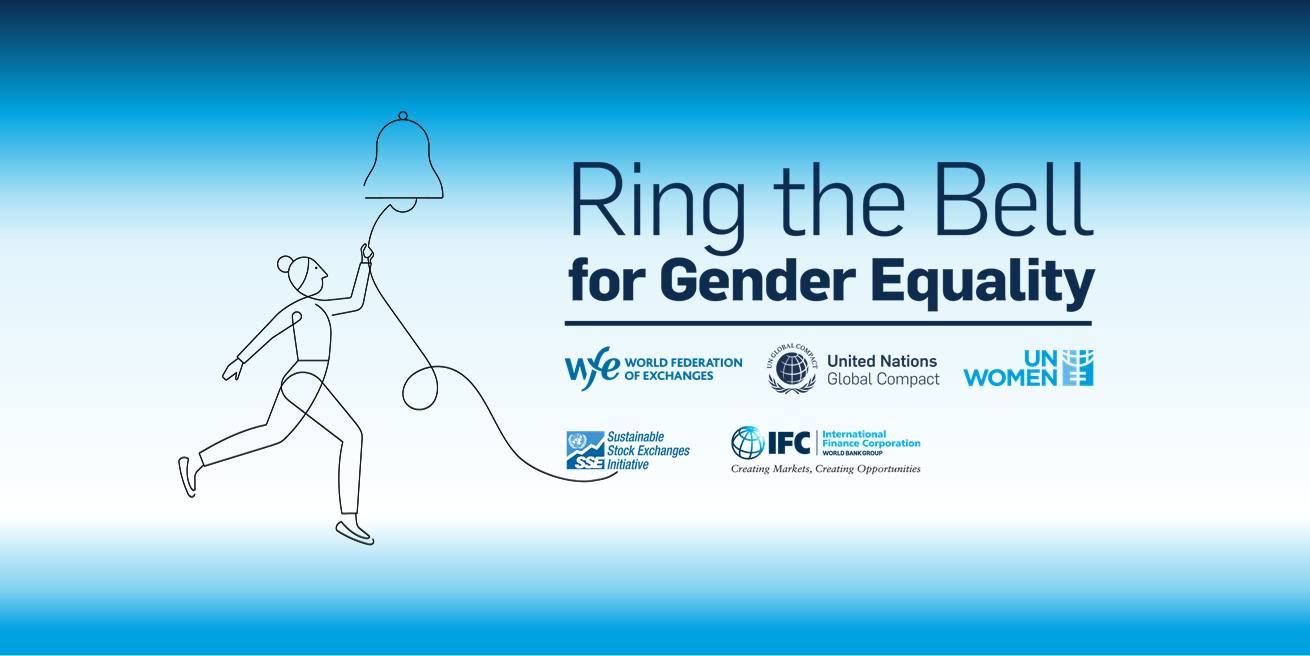
The ceremony is part of the global Ring the Bell for Gender Equality campaign, which mobilises stock exchanges worldwide to expand women’s participation in the economy and advance gender-inclusive practices.
In Nigeria, the NGX Group is partnering with the Central Securities Clearing System (CSCS) Plc and Women in Management, Business and Public Service (WIMBIZ) to make it memorable under the theme Rights. Justice. Action. For ALL Women and Girls.
Dignitaries expected at the ceremony include the Minister of State for Foreign Affairs, Mrs Bianca Odumegwu-Ojukwu; the First Lady of Imo State, Mrs Chioma Uzodimma; the Executive Commissioner for Legal and Enforcement at the Securities and Exchange Commission (SEC), Ms Frana Chukwuogor; foremost actor, Ms Funke Akindele; a Director at the NGX Group, Ms Ojinnika Olaghere; and another staffer of NGX Group, Mrs Fatima Wali-Abdulrahman, alongside board members of NGX Group, regulators, capital market stakeholders, and industry leaders.
NGX Group is joining other exchanges worldwide in sounding the NGX Gong to underscore the importance of inclusive leadership, equal opportunities, and stronger market accountability in advancing gender equality.












-
 Feature/OPED6 years ago
Davos was Different this year
-
Travel/Tourism10 years ago
Lagos Seals Western Lodge Hotel In Ikorodu
-

 Showbiz3 years ago
Estranged Lover Releases Videos of Empress Njamah Bathing
-
 Banking8 years ago
Sort Codes of GTBank Branches in Nigeria
-

 Economy3 years ago
Subsidy Removal: CNG at N130 Per Litre Cheaper Than Petrol—IPMAN
-

 Banking3 years ago
Sort Codes of UBA Branches in Nigeria
-

 Banking3 years ago
First Bank Announces Planned Downtime
-

 Sports3 years ago
Highest Paid Nigerian Footballer – How Much Do Nigerian Footballers Earn