
General
Farmers Warn Nigerians to Prepare For Serious Food Crisis in 2025

By Adedapo Adesanya
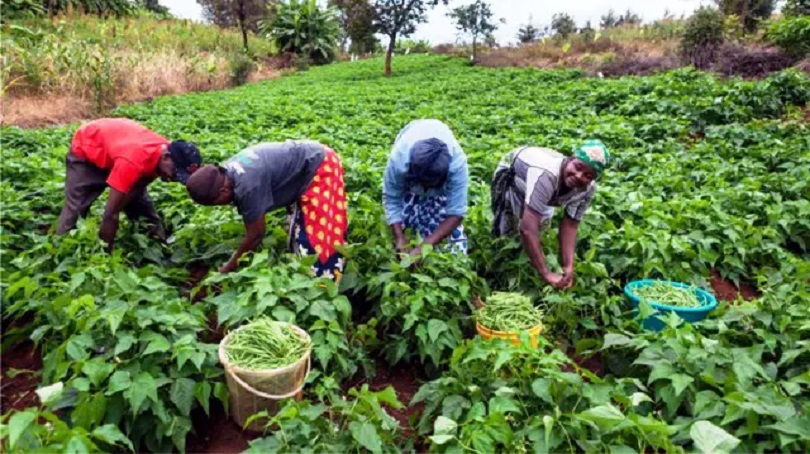
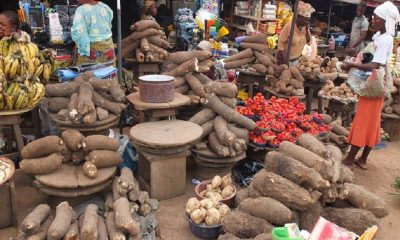
Farmers under the aegis of the All Farmer Association of Nigeria (AFAN) have warned of a looming food crisis in 2025, urging citizens to prepare for tough times ahead.
The association based the warning on the macroeconomic instability arising from the triple whammy of Naira volatility, insecurity, and climate change.
AFAN made the call via its National President, Mr Kabir Ibrahim, in a new year message.
Mr Ibrahim warned that Nigeria is on the cusp of experiencing a major catastrophe of food insecurity, adding, “If extreme care is not taken judging from the macroeconomic instability arising from currency volatility, insecurity, climate change and inequity.”
However, Mr Ibrahim emphasised the urgent need for the country to prioritise food sufficiency, particularly during the crucial first quarter of the year.
The AFAN President urged that stakeholders like the government and farmers must work together to get Nigeria out of the stranglehold of hunger and extreme poverty.
“While not trying to sound despondent, I hasten to say that the attainment of food sufficiency for Nigerians in the first quarter of 2025 may be the elixir for the continued existence of Nigeria as a working unit.
“I say this with all sense of responsibility having been involved in agricultural advocacy for the better part of my 66 years on earth.
“In 2024 we saw various efforts at stabilising Nigeria’s food system through various windows of support to the SHFs, the MSMEs, the SSPs and the vulnerable people but food inflation is still at an all-time high at 39.93 per cent which portends extreme hunger to a very good number of Nigerians.
“In 2025 we must coalesce as stakeholders/farmers with the government to get Nigeria out of the stranglehold of hunger and extreme poverty. We can only do this if we work as a unified body with common interests and operating from common ground.”
He noted that there is a possibility of tackling the crisis, only if the proper measures are put in place.
“It may appear ambitious but evidently doable through a collective resolve to extricate our country from looming existential challenges,” he added.
Business Post reports that President Bola Tinubu promised to tackle the food crisis, and reiterated it during his New Year’s message.








By Aduragbemi Omiyale
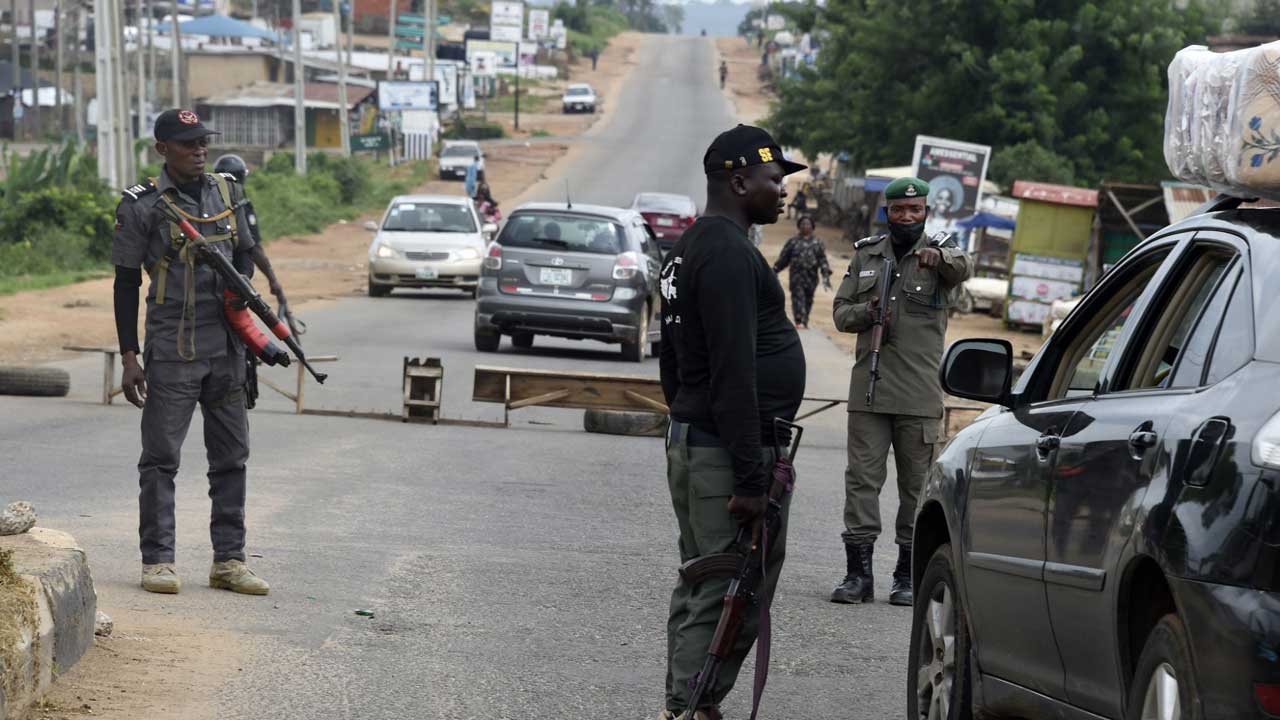
A Federal High Court in Warri, Delta State, has affirmed the right of Nigerians to film personnel of the Nigeria Police Force (NPF) on duty.
The judgment was given by Justice H. A. Nganjiwa on Tuesday in a case filed by Mr Maxwell Uwaifo in suit number FHC/WR/CS/87/2025.
The court held that Nigerians have the constitutional right to use any device to record police officers executing their official duties in public.
It was ruled that police officers must wear visible name tags, display their force numbers, and must not harass, intimidate, arrest, or seize devices from citizens documenting their activities.
The court awarded the applicant N5 million in damages for the violation of his fundamental rights and N2 million for the cost of litigation.
Business Post reports that the respondents in the case were the Inspector General of Police (IGP), the NPF, the Police Service Commission (PSC), and the Attorney-General of the Federation (AGF).
The lawyer filed the case in accordance with Sections 34, 35, 36, 37, 38, 39, 40, and 41 of the Constitution of Nigeria and others.
“This judgement has significant implications for policing standards, civil liberties, and public accountability across Nigeria,” Mr Uwaifo said after the judgement.
By Aduragbemi Omiyale
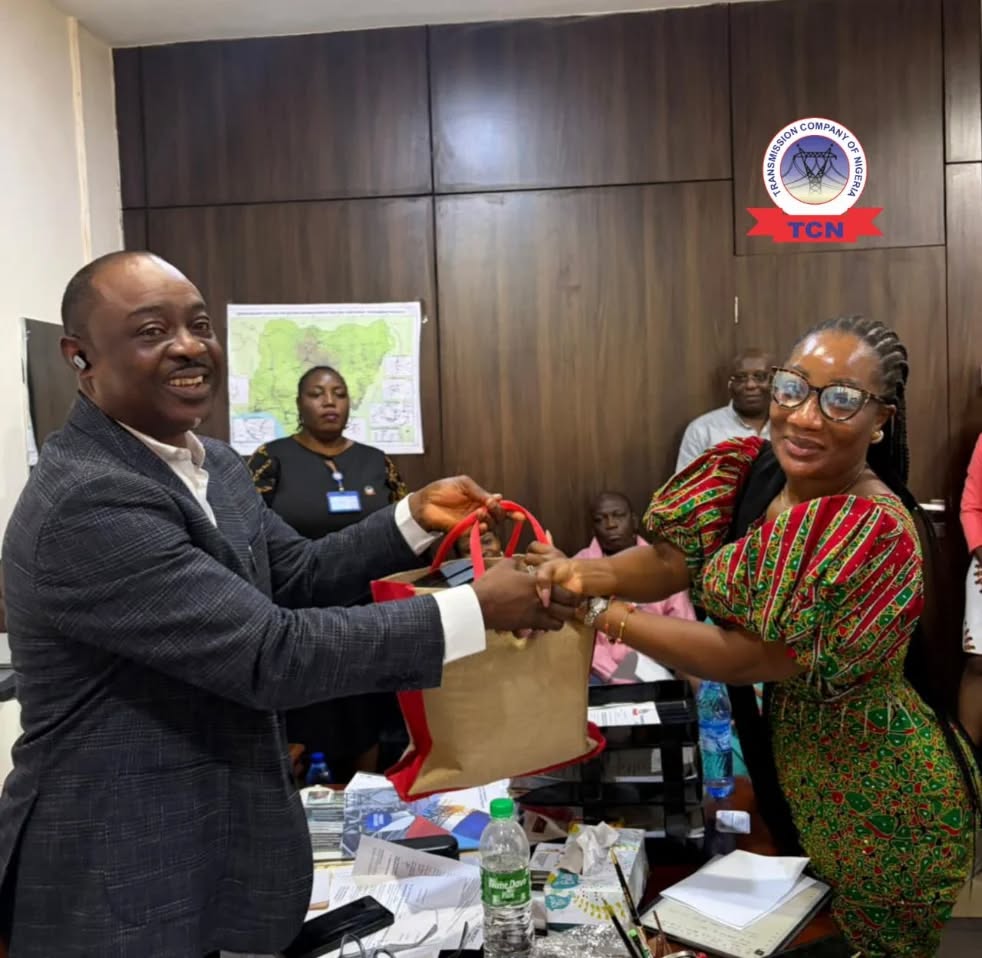
The General Manager in charge of Transmission for Lagos Region of the Transmission Company of Nigeria (TCN), Mr Adeshina Adeonipekun, has stressed the critical role of Lagos in the national grid.
While receiving the chief executive of Eko Electricity Distribution Company (EKEDC), Ms Wola Joseph Condotti, at his office on Monday, he said the Lagos region accounts for about 30 per cent of total power off-take in Nigeria.
He stated that TCN was implementing strategic expansion and project upgrades aimed at enhancing grid stability and operational efficiency in response to rising demand.
Mr Adeonipekun highlighted recent key milestones achieved in the region, including the commissioning of a 100MVA power transformer at the Ijora 132/33kV Transmission Substation, a 300MVA transformer at the Lekki 330/132kV Transmission Substation, and a 125MVA unit at the Agbara 132/33kV Substation, among others.
According to him, these additions have further increased the region’s installed capacity to 5,470MVA on the 132/33kV network and 4,110MVA on the 330/132kV network.
He further said that there were several ongoing rehabilitations at key substations within the region, including Amuwo GIS, Akoka 132/33kV, and Itire 132/33kV Transmission Substations, all geared towards further improving reliability, reducing system constraints, and enhancing the overall efficiency of power delivery.
In her remarks, Ms Condotti expressed appreciation for TCN’s continued partnership and support, underscoring the importance of sustained collaboration between transmission and distribution companies in building a more stable and efficient electricity transmission and supply network.
Both parties explored ways to strengthen collaboration and ensure a more stable and efficient power supply in Lagos, the nation’s commercial hub.

By Adedapo Adesanya
The Governor of Anambra, Mr Chukwuma Soludo, says the years-long sit-at-home is now a thing of the past in the state as it will bring back lost economic viability to the South East state.
The governor spoke on Tuesday during his inauguration for a second term as the leader of the state, noting that security has improved in Anambra.
“The debilitating one-sit-at-home is over, and our schools, markets, businesses, and public servants are back to work. Reports say that ours is now the safest, or at least one of the safest states in Nigeria,” Mr Soludo said.
The second inauguration of the former governor of the Central Bank of Nigeria (CBN) witnessed eminent Nigerians, including ex-presidents Mr Goodluck Jonathan and Mr Olusegun Obasanjo, as well as the Vice President, Mr Kashim Shettima, among others.
“I’m sure many of you flew into Anambra yesterday, being Monday. Previously, it was not possible,” he said at the Alex Ekwueme Square in Awka, the state capital.
Primarily associated with the Indigenous People of Biafra (IPOB), a separatist group advocating for an independent Biafran state, the sit-at-home saw millions of South-East residents remain indoors, shut their businesses, and stay off the roads on Mondays. Initially, it was declared as a weekly protest (especially on Mondays) to demand the release of IPOB leader, Mr Nnamdi Kanu, in 2021 by the Federal Government and draw attention to the separatist cause.
The cause had significant socio-economic consequences in the South-East states like Abia, Anambra, Ebonyi, Enugu, and Imo.
However, Mr Soludo referenced several milestones, including the destruction of criminal camps and the “mass return” of Anambra indigenes during the Yuletide, as evidence of improving security in the state.
“Some 62 criminal camps have been dismantled, and 8 local governments previously under total siege have been liberated,” the governor said.
“Anambra had its best Christmas season in decades last December with a mass return and over 10,000 visitors per day to the Solution City every day until the 10th of January.”
Part of the measures to address insecurity in Anambra was the Homeland Security Law 2025, a measure the governor said contributed to the reduction in criminality.
The Independent National Electoral Commission (INEC) declared Mr Soludo as the winner of the November 8, 2025, governorship election in Anambra State. The APGA candidate polled a total of 422,664 votes, defeating his closest rival, the candidate of the All Progressives Congress, Mr Nicholas Ukachukwu, who scored 99,445 votes, while the candidate of the Young Progressives Party, Mr Paul Chukwuma, came third with 37,753 votes.








-
 Feature/OPED6 years ago
Davos was Different this year
-
Travel/Tourism10 years ago
Lagos Seals Western Lodge Hotel In Ikorodu
-

 Showbiz3 years ago
Estranged Lover Releases Videos of Empress Njamah Bathing
-
 Banking8 years ago
Sort Codes of GTBank Branches in Nigeria
-

 Economy3 years ago
Subsidy Removal: CNG at N130 Per Litre Cheaper Than Petrol—IPMAN
-

 Banking3 years ago
Sort Codes of UBA Branches in Nigeria
-

 Banking3 years ago
First Bank Announces Planned Downtime
-

 Sports3 years ago
Highest Paid Nigerian Footballer – How Much Do Nigerian Footballers Earn