Connect with us

General

Farmers Warn Nigerians to Prepare For Serious Food Crisis in 2025

Published

on

smallholder farmers

By Adedapo Adesanya

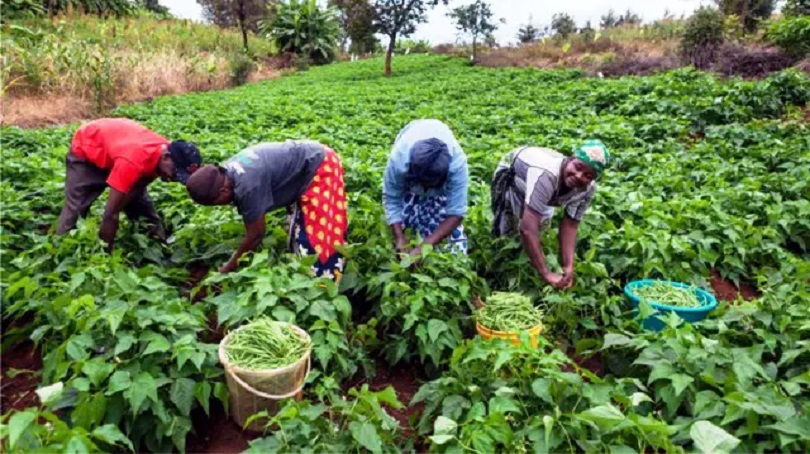
Farmers under the aegis of the All Farmer Association of Nigeria (AFAN) have warned of a looming food crisis in 2025, urging citizens to prepare for tough times ahead.

The association based the warning on the macroeconomic instability arising from the triple whammy of Naira volatility, insecurity, and climate change.

AFAN made the call via its National President, Mr Kabir Ibrahim, in a new year message.

Mr Ibrahim warned that Nigeria is on the cusp of experiencing a major catastrophe of food insecurity, adding, “If extreme care is not taken judging from the macroeconomic instability arising from currency volatility, insecurity, climate change and inequity.”

However, Mr Ibrahim emphasised the urgent need for the country to prioritise food sufficiency, particularly during the crucial first quarter of the year.

The AFAN President urged that stakeholders like the government and farmers must work together to get Nigeria out of the stranglehold of hunger and extreme poverty.

“While not trying to sound despondent, I hasten to say that the attainment of food sufficiency for Nigerians in the first quarter of 2025 may be the elixir for the continued existence of Nigeria as a working unit.

“I say this with all sense of responsibility having been involved in agricultural advocacy for the better part of my 66 years on earth.

“In 2024 we saw various efforts at stabilising Nigeria’s food system through various windows of support to the SHFs, the MSMEs, the SSPs and the vulnerable people but food inflation is still at an all-time high at 39.93 per cent which portends extreme hunger to a very good number of Nigerians.

“In 2025 we must coalesce as stakeholders/farmers with the government to get Nigeria out of the stranglehold of hunger and extreme poverty. We can only do this if we work as a unified body with common interests and operating from common ground.”

He noted that there is a possibility of tackling the crisis, only if the proper measures are put in place.

“It may appear ambitious but evidently doable through a collective resolve to extricate our country from looming existential challenges,” he added.

Business Post reports that President Bola Tinubu promised to tackle the food crisis, and reiterated it during his New Year’s message.


Adedapo Adesanya is a journalist, polymath, and connoisseur of everything art. When he is not writing, he has his nose buried in one of the many books or articles he has bookmarked or simply listening to good music with a bottle of beer or wine. He supports the greatest club in the world, Manchester United F.C.

General

Sumsub Unveils New Partner Hub to Overcome Operational Friction

Published

on

Sumsub Partner Hub

By Modupe Gbadeyanka

A new partner hub designed to help organisations overcome operational friction has been launched by Sumsub, a leading full-cycle verification platform that enables scalable compliance.

This new addition comes as businesses across Africa and other emerging markets continue scaling rapidly, driving greater demand for compliance, verification, and fraud prevention infrastructure as fintech and digital finance ecosystems continue evolving across the continent.

The new portal unites all the required sales, marketing, deal management and compliance education resources.

A statement from the firm said the Sumsub Partner Hub was designed to address the most common challenges in partnerships, namely, scattered resources, slow alignment, and limited partner visibility. It replaces fragmented workflows with a structured, scalable system built for growth.

By centralising resources, enablement, and deal processes, the Hub helps partners operate faster in client engagements and move towards their business goals with greater confidence, transparency and consistency.

“Our collaboration with Sumsub was noticeably enhanced with the launch of the Partner Hub”, confirms Walid Bou Abssi, Country Manager for Nigeria and Ghana at SHELT Global Ltd. “We appreciate having direct access to all the consolidated resources and training materials within the platform, which boosted deal management and operational efficiency of our partnership”.

“Most partnerships don’t fail because of strategy. They fail because of unnecessary friction”, says Tom Schoon, Head of Strategic Partnerships for Africa at Sumsub. “That’s why we built the Sumsub Partner Hub: to help our allies across tech, compliance, financial services and other sectors move quickly across the partnership lifecycle, from onboarding and certification to deal activation and co-marketing. Ultimately, our shared goal is to capture new opportunities faster and reinforce each other’s business growth strategies from day one”.

Continue Reading

General

EFCC Probes Undeclared $461,600 at Kano Airport

Published

on

EFCC undeclared $461600 Kano Airport

By Modupe Gbadeyanka

Two suspects are currently being investigated for not declaring $461,600 in their possession to the Nigeria Customs Service (NCS) at the Mallam Aminu Kano International Airport.

Two male passengers, identified as Mr Jamilu Shuaibu Waya and Mr Usman Namadi, were arrested on Friday, May 8, 2026, at the airport with an undeclared sum of money. They arrived in the country from Dubai via Ethiopian Airlines ET941.

While they initially declared $130,000 and $180,000, respectively, at the currency declaration desk, a subsequent physical examination by customs officials revealed an additional undeclared $120,000 on the first suspect (bringing his total to $250,000) and an additional $31,600 on the second suspect (bringing his total to $211,600). The undeclared amounts contravene Sections 3 and 4 of the Money Laundering (Prevention and Prohibition) Act 2022.

In a statement on Monday, the Economic and Financial Crimes Commission (EFCC) said its Kano Zonal Directorate was looking into the matter after the suspects were handed over to the agency by the acting Customs Area Controller for Kano/Jigawa Area Command, Deputy Comptroller UU Adamu.

The Zonal Director of the EFCC, ACE1 Friday S. Ebelo, assured customs of his organisation’s commitment to a full-scale investigation.

“The EFCC will conduct a thorough and uncompromising investigation into this matter. We will prosecute the case with the utmost diligence to ensure that violators of our anti-money laundering laws face the full weight of justice,” he said.

He further expressed deep appreciation to the NCS for the long-standing and consistent cooperation of the service with the EFCC over the years, noting that such inter-agency collaboration remains critical in combating the illegal movement of cash and financial crimes.

Earlier in his remarks, Mr Adamu expressed his deep appreciation to the EFCC for its unwavering support to customs.

“Let me express appreciation for the continuous collaboration with the EFCC Kano Zonal Directorate for their support in realising our goal while combating the illegal movement of cash,” he said.

Continue Reading

General

DAPPMAN Faults Dangote’s Suit to Halt Fuel Imports

Published

on

DAPPMAN Oil Marketers

By Adedapo Adesanya

The Depot and Petroleum Products Marketers Association of Nigeria (DAPPMAN) has kicked against a lawsuit filed by the Dangote Petroleum Refinery to invalidate fuel import licences issued by the Nigerian Midstream and Downstream Petroleum Regulatory Authority (NMDPRA).

Last week, the refinery asked the Federal High Court in Lagos to void import permits granted by the NMDPRA to fuel importers.

The marketers said it would not fold its arms and allow its depots to go into extinction through a court ruling, arguing that the licences being challenged were not mere administrative favours but legal instruments issued under the PIA to guarantee the country’s fuel supply security.

The development followed the recently issued import license by the NMDPRA to six Nigerian oil marketers to bring in over 600,000 metric tonnes of petrol into the country.

Since the 650,000 barrels-per-day refinery began supplying petroleum products to the local market, Dangote has repeatedly argued that continued issuance of fuel import licences to marketers undermines domestic refining, weakens investment incentives, and encourages dependence on imported products despite existing local capacity.

The refinery already handles 90 per cent of the domestic supply.

In the statement, the marketers maintained that the NMDPRA acted within its statutory powers in approving the licences, stressing that the regulator’s responsibility was to ensure uninterrupted product availability for Nigerian consumers and not to protect the commercial interests of any single refinery, regardless of its size.

The association stated that its members had invested billions of naira in petroleum depots, logistics systems, and compliance infrastructure based on the understanding that the licences granted to them were lawful, valid, and protected under the law.

According to the marketers, any attempt to retroactively void those approvals would create uncertainty across the downstream petroleum sector at a time when stability in fuel supply remains critical.

“The news that Dangote Petroleum Refinery has filed a fresh lawsuit seeking to set aside fuel import licences issued by the NMDPRA to marketers and the NNPC demands a clear response from this association.

“The import licences at the centre of this lawsuit are not administrative courtesies. They are the legal instruments through which Nigeria’s fuel supply chain functions. They were issued under a regulatory framework established by the Petroleum Industry Act, by an authority empowered to make exactly this kind of determination. The NMDPRA has consistently maintained, correctly, that these licences exist to protect supply security, not to disadvantage any single producer, however large.

“DAPPMAN’s member companies have invested billions of naira in depot infrastructure, logistics networks, and compliance systems on the basis that their operating licences are valid, lawful, and durable. A legal action designed to retroactively void those licences does not just affect individual businesses, it introduces uncertainty into the entire downstream supply chain at a moment when Nigeria can least afford it,” the association maintained.

It added that the NMDPRA had consistently defended the issuance of import permits as necessary tools for safeguarding national supply, insisting that the position had previously been upheld in court and should continue to stand.

DAPPMAN rejected what it described as the underlying argument that a private refinery’s commercial interests should supersede the statutory mandate of the regulator.

It further warned against any attempt to turn Nigeria’s downstream petroleum industry into a monopoly, arguing that the market had evolved over many years into a multi-player system serving millions of Nigerians daily.

The association disclosed that it would engage legal counsel, work with affected member companies, and make formal representations to the relevant authorities over the matter.

“We respect Dangote Petroleum Refinery’s right to pursue legal remedies. What we do not accept is the premise that a private refinery’s commercial interests should override a regulatory authority’s mandate to ensure adequate supply to Nigerian consumers.

“The PIA is clear: import licences may be issued where the regulator determines it necessary. That determination has been made. It has been defended in court before. It should be defended again.

“Nigeria’s fuel market is not a monopoly waiting to happen. It is a competitive, multi-participant market that has taken years to build and that serves millions of Nigerians every day. DAPPMAN will be engaging legal counsel, coordinating with affected member companies, and making formal representations to the relevant authorities on this matter,” the statement added.

The group argued that the strength of Nigeria’s downstream sector lies in the participation of multiple operators, warning that efforts aimed at shrinking the number of market participants would ultimately hurt consumers through reduced competition and supply vulnerabilities.

According to DAPPMAN, “A lawsuit that seeks to reduce that field of players is ultimately a lawsuit against Nigerian consumers,” adding, “Our members did not build this industry to watch it be argued out of existence in a courtroom,” emphasising its commitment to continually serve Nigerians.

Continue Reading

Trending